Term Two at School
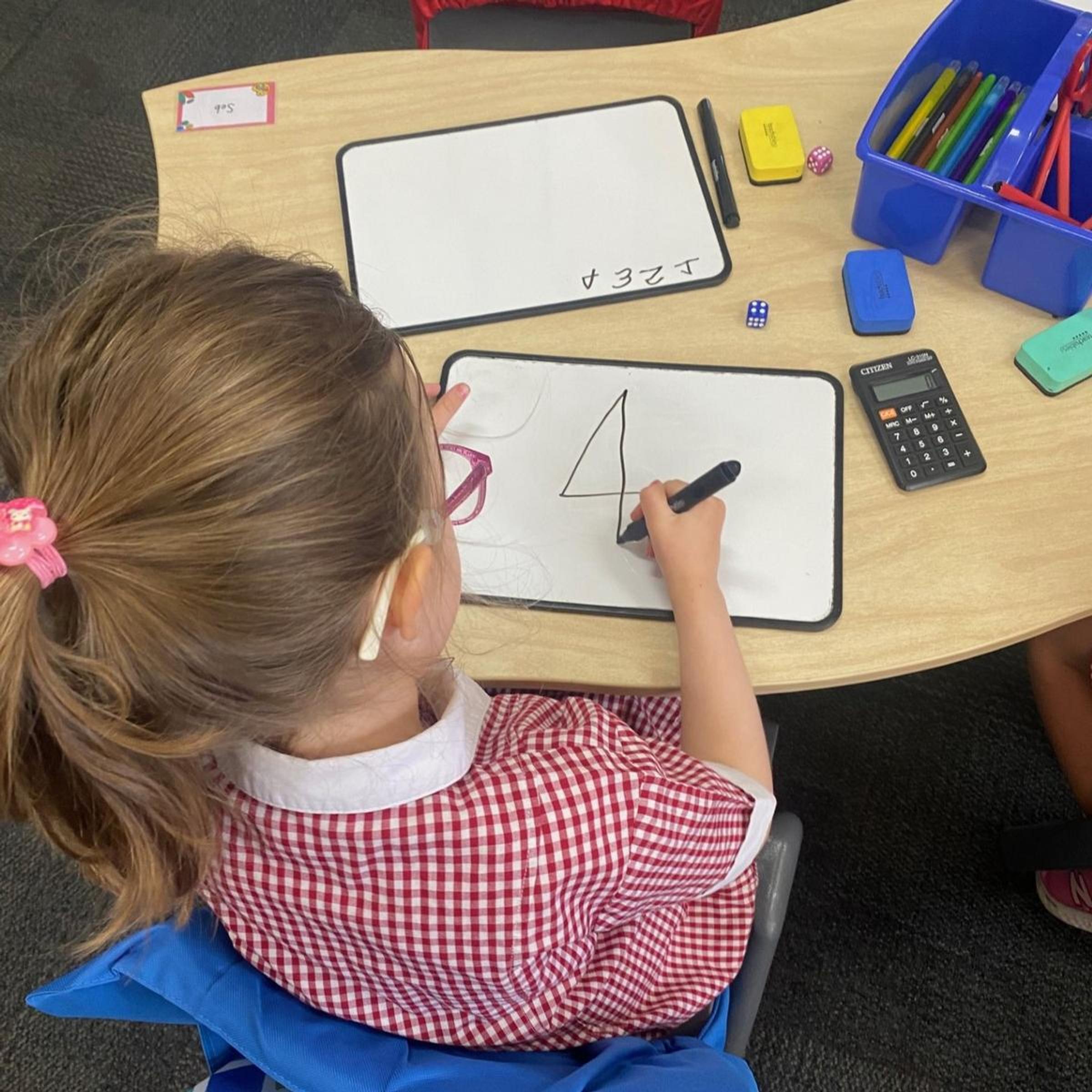
Ready to Continue Building
Foundation students have done an excellent job at settling into the routines and procedures of the day. They have continued to follow the expectations of entering and exiting the classroom respectfully, and moving quietly around the school. They have worked to develop their independence beginning set tasks straight away as well as transitioning to early finisher activities once they have completed their set tasks. Term one was a big term for our students, and we are incredibly proud of how much they have already achieved, and are excited to continue to build upon their skills and knowledge.
Literacy Block
This term our topic is about Personal Safety. Over the term the students will be answering the question ‘How do we stay healthy and safe?’ The students will explore topics such as body safety, water and road safety, hygiene practices and fire safety!
The beginning of each day is predictable and starts the same with the literacy block, where students revise current sounds and actions, complete activity sheets and do partner reading. This is followed up with writing activities including syntax, handwriting, modelled writing and responding to texts about our unit topic. The routines developed in this block have been foundational in their learning and consolidation of their literacy skills.
Reading
This term in reading we will be working through the stage 3, 4 and 4+ sounds from Little Learners Love Literacy (LLLL). Information about this will be sent home weekly up to the stage 4 sounds. In stage 4+, the students will be learning about the Floss Rule. The floss rule (or FLSZ rule) is a spelling generalisation stating that in a one-syllable word with one short vowel, the final consonant f, l, s, or z is doubled. For example, such words include hiss, buzz, cliff and bell. Further information about the floss rule is explained on the website below.
- The LLLL chitter chants for the floss rule from stage 4 + are as follows:
- ff - huff and puff
- ll - up the hill
- ss - what a mess
They will also be building on their understanding of comprehension strategies, such as sequencing, predicting and connections. We will be starting to introduce fluency, where students will practise reading simple sentences with partners in effort to develop accuracy, pace and expression.
Some of the reading strategies that we are working on in the classroom are:
- Learning to blend successively. e.g. cat - c - ca - cat.
- Identifying the letter sounds in unknown words.
- Breaking words up into syllable groups.
- Adding and removing syllables from words.
- Identifying and investigating the meaning of common prefixes and suffixes, as well as understanding the etymology and morphology of high frequency words.
Writing
The students will continue to develop the foundation skills of writing by revising syntax, handwriting and punctuation. As their letter-sound knowledge continues to develop, they will have more confidence to write simple words and sentences. Our focus will be constructing simple sentences with a noun and verb using mostly CVC words (three-letter, single-syllable words following a Consonant-Vowel-Consonant pattern) and heart words (high-frequency words with irregular spelling patterns that cannot be fully decoded phonetically). An example of a simple sentence is 'The cat sat on the mat'.
Some of the writing strategies that we are working on in the classroom are:
- Drawing and responding to a range of texts. e.g. After reading the story ‘Come Over to My House’, students drew and wrote about what activities they like to do at their homes.
- Focusing on syntax and sentence structure, e.g. every sentence must have a noun (who) and a verb (do).
- Ending the sentence with punctuation.
- Using their finger to mark a space between each word.
- Focusing on using lowercase letters.
- Correct letter formation of lowercase letters, e.g. size, shape, and starting point.
- Mapping each word by its sounds, and writing a letter (or letters) to match. This may show up as invented spelling, such as ‘prte’ for ‘party’, which is an indication of strong phonemic awareness.
Things you can do at home to support this learning:
- Encourage real life opportunities for writing – birthday cards, shopping lists, messages to friends or family.
- Practise letter formation, focusing on the starting point to add in writing fluently.
- Drawing to encourage fine motor muscle development.
- Read together every night. Read to your child to demonstrate fluency.
- Notice environmental print such as signs at the supermarket, writing on cereal boxes, and street signs.
- Encourage and support your child to map each word by its sounds, writing a letter (or letters) for each sound they can hear in a word.
- Syllables I Spy: The focus of this game is syllable counting using a collection of items. Collections could include toy animals in a basket, a picture in a book or food in the fridge. Examples: “I spy a 1-syllable animal,” or “I spy an animal with 4 syllables.” You could also add in beginning sounds. For example, "I spy an animal with one syllable that begins with a /b/ sound". Answer: Bird.
- Syllable deletion: Give clues that require students to remove the final syllable from a word and say what’s left. Examples: “I spy a spaceship without the ‘ship’” (space).
- Initial Phoneme Blending: Students listen to two parts of a word you say (pausing a few seconds in between the initial phoneme and the rest of the word) before blending them together. Examples: "I spy a c-lock (clock), s-wing (swing), s-ki (ski)".
- Identify beginning, middle, and ending sounds of words. What sound do you hear at the beginning of this word? (repeating the sound, not the name of the letter)
- Pronunciation: Mirror Sounds – when reading a sound, have your child watch how your mouth makes the sound and then they can practise making the sound while looking in the mirror.
- Heart words (orthographic mapping) – if your child is ready to begin identifying heart words, you can map the words by their corresponding sounds. For example, write the word ‘with’ but place a box around the ‘th’ and a heart above it, to demonstrate that ‘th’ is the irregular sound in this word, and makes one sound.
Numeracy
In Foundation we teach numeracy explicitly. This term we will cover a range of concepts to help build their number knowledge including partitioning numbers, comparing numbers to 20, and exploring teen numbers. Other non-number topics we will cover include collecting and interpreting data and exploring time, such as days of the week, daily routines and sequencing events.
Once students have a strong understanding of the concepts in a unit, they will apply their skills in open-ended maths experiences. These tasks allow students on varying levels to adapt their current knowledge to complete the same tasks as their peers. This provides great opportunities for students to learn from each other.
We call these activities ‘challenging tasks’ or ‘sweaty brain exercises.’ One of the tasks completed recently in the Foundation classrooms was exploring subitising. Students were given worded problems and were asked to show their thinking and create solutions using counters and drawings.
This activity has allowed students to begin learning about subitising and to develop a strong number sense. E.g., knowing that 9, can be shown as 4 and 5 for efficient counting. Subitising aids students in knowing how many objects there are in a collection without counting.
Things you can do at home to support this learning:
- Practise correct number formation.
- Explore numbers in the environment e.g., prices at the shops, letter boxes, number plates. You could even turn the numbers on number plates into 2 or 3 digit numbers and talk about the value of each digit.
- Play games at home e.g., card games, Monopoly, Snakes and Ladders.
- Write numbers with chalk or other special writing tools.
- Count groups of items at home (making predictions first).
- Looking at the score when watching footy (or other sports) and noticing any counting patterns.
- Estimating and comparing large amounts of items.
- Comparing numbers as ‘bigger’ or ‘smaller’ and talking about how you know which is which.
- Creating a visual schedule/timetable of events during the week, e.g., swimming lessons, school days, weekends.
- Creating simple tallies of kitchen items/books/toys.
Resilience, Rights and Respectful Relationships & ‘Talking the Talk’
As part of the Resilience, Rights and Respectful Relationships (RRRR) program, Foundation students are developing their help seeking skills and are exploring gender norms and stereotypes. This term, the Foundation students will also be undertaking their sexuality education lessons through the Talking the Talkprogram. These lessons will be completed prior to the students commencing their swimming lessons. More information about Talking the Talk and the Learn to Swim program will be sent out separately.
Specialist Subject
Performing Arts
In Music, Foundation students will explore the pentatonic scale using various Orff instruments. They will follow simple choreography found in folk dancing around the world and use actions to create characters in Drama.
Physical Education
Foundation students will continue to practise their gross motor skills while doing movement activities. They will also begin exploring some fundamental motor skills such as underarm throw and catching.
Science
This term our Foundation students are continuing with their work on materials, delving deeper to explore how these properties can help objects do a job.
Visual Arts
Students will continue to create secondary colours, adding print and pattern-making to transform their work. They will be channelling Albert Namatjira’s obsession with Australian gum trees, as they head outside to sketch their own. A range of drawing tools will be explored.
Here's to a wonderful second term!
Lucy, Jayde, Katie & the Specialist teachers