Grade 3 News

Dear Year 3 Parents/Guardians,
The Year 3 students have had an amazing time on their excursion to the National Art Gallery of Victoria, where they saw the exhibition of Yayoi Kusama. A really big shout out to the students, as other schools were complimenting them on their behaviour as they walked around the galleries.
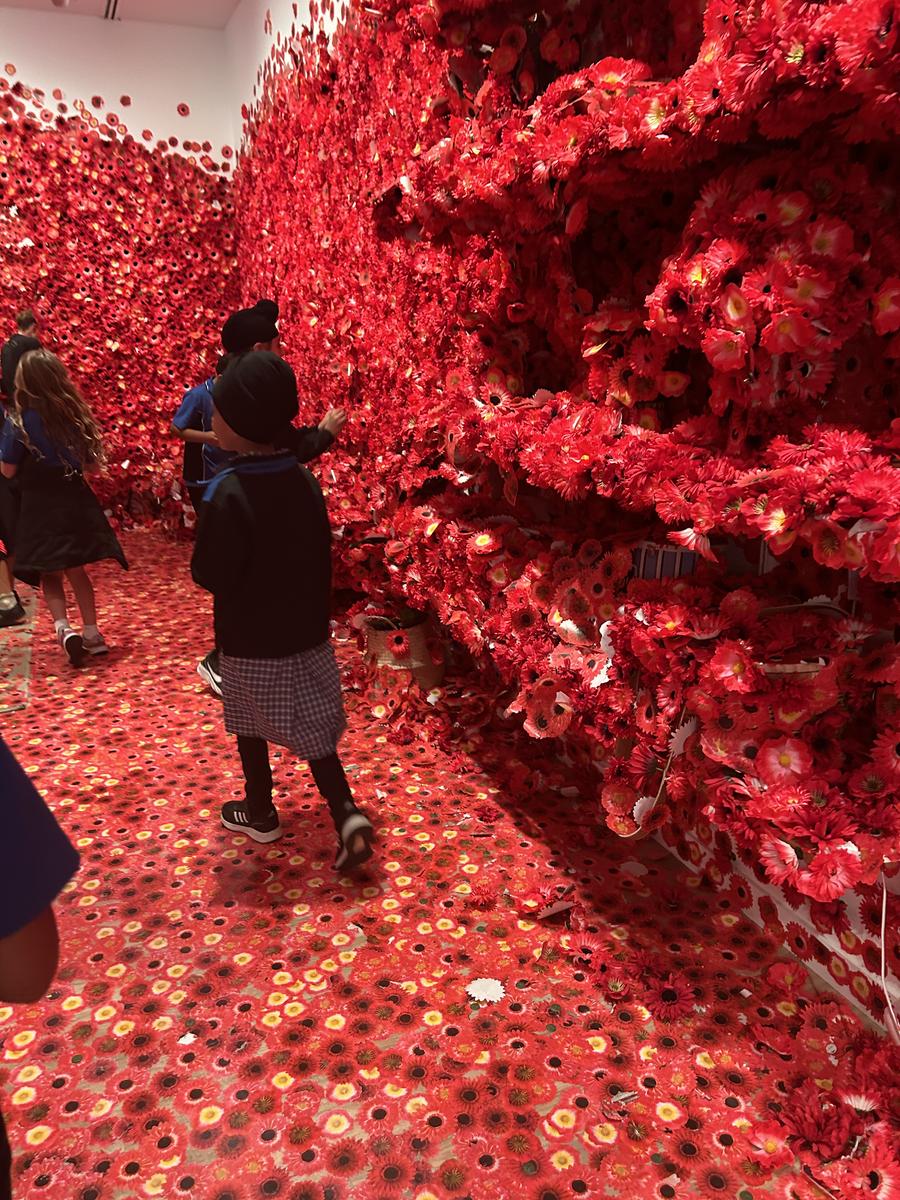
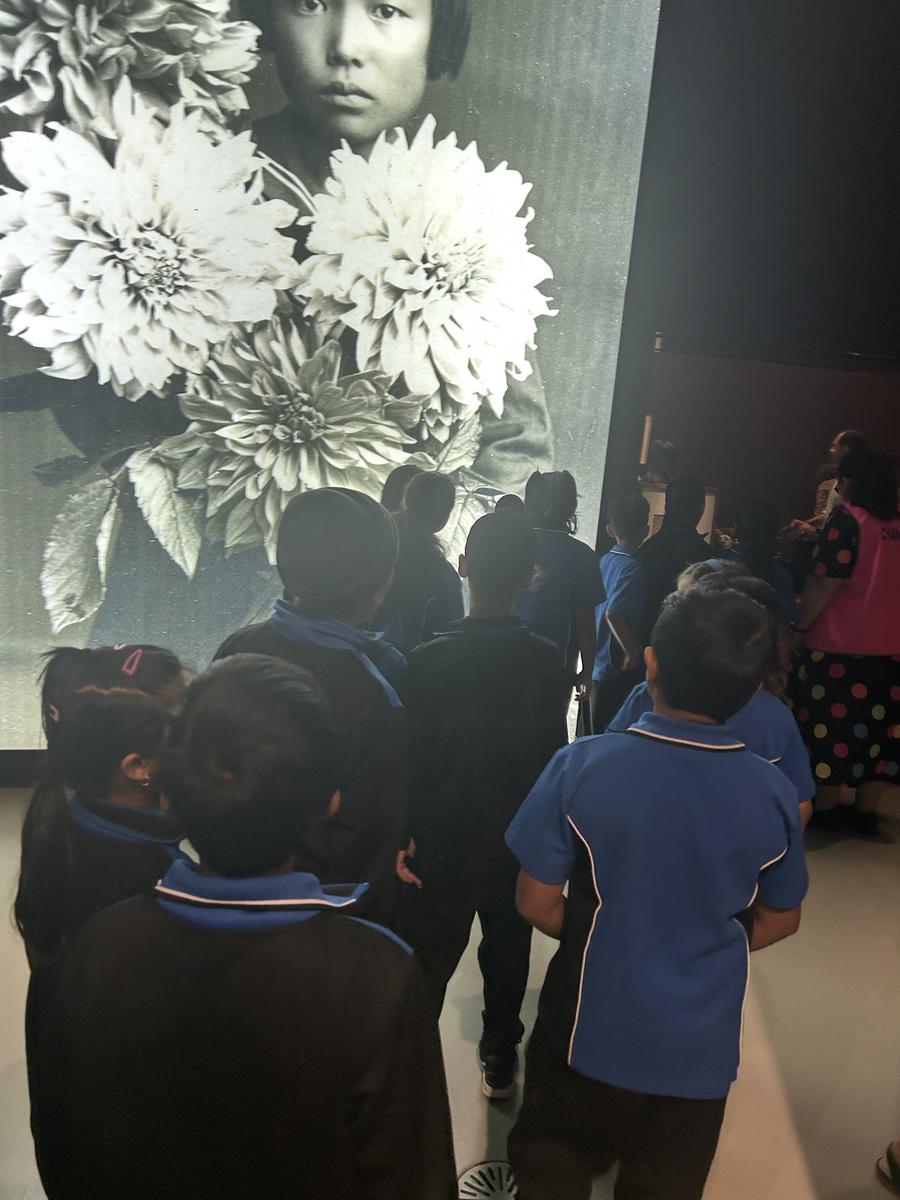
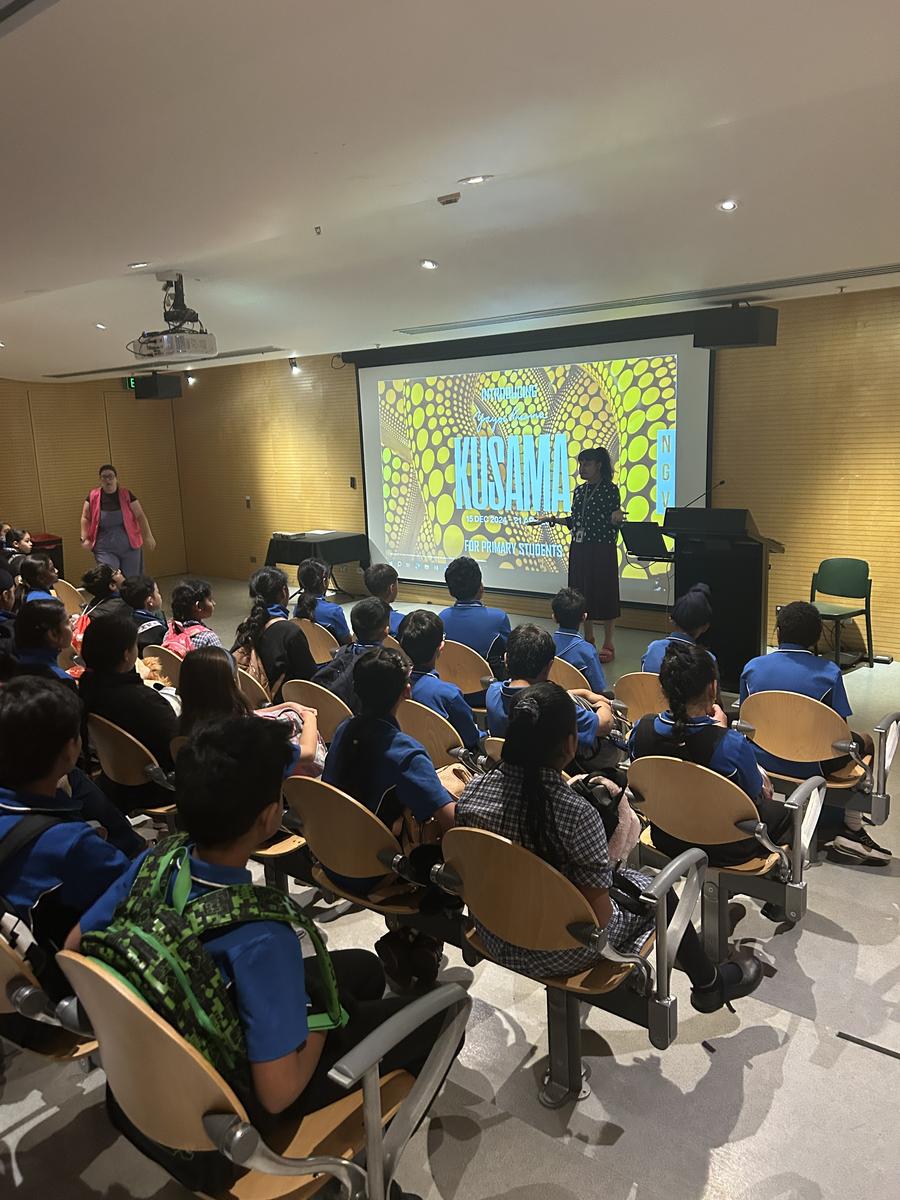

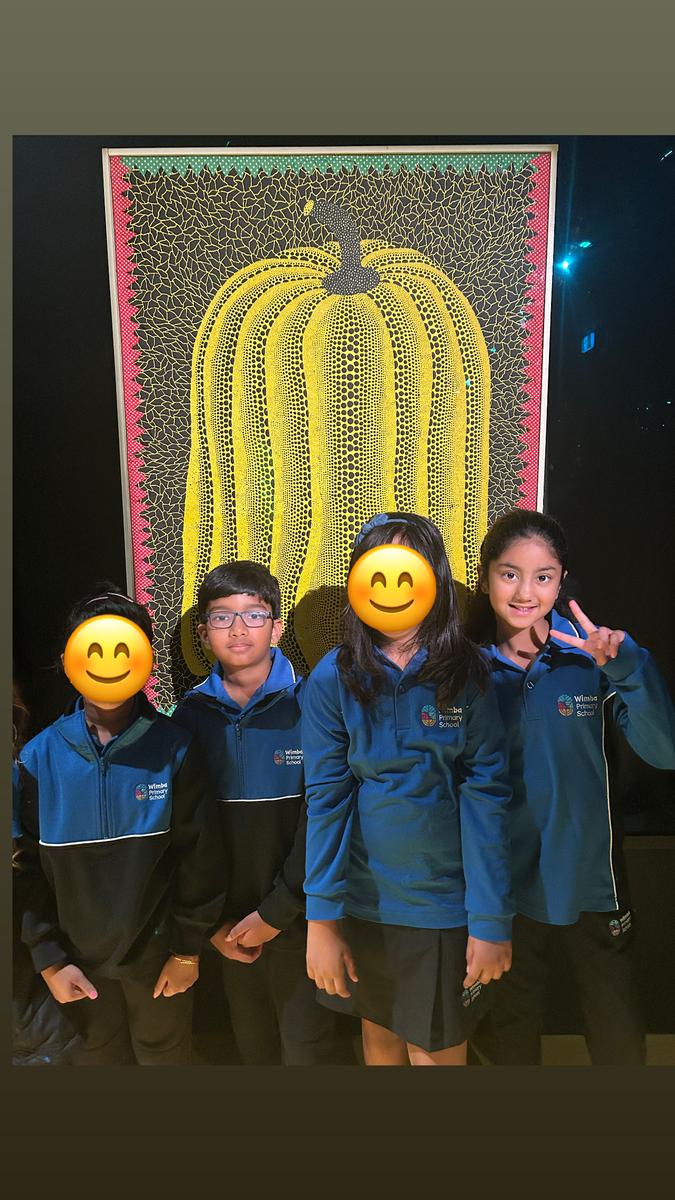
Just a quick reminder that students need to bring their satchel and diary to school every day. This helps with organisation, tracking reading progress, and ensuring teachers can send home any important notes.
Also please keep checking Compass to stay up to date with any information that is being released to you, including CATS. Our first CATS were released, please take the time to view your child's work and leave a comment in the conversation box so that their teacher is aware of you viewing it.
Also, nightly reading is a big part of our routine. Regular reading at home helps build fluency and comprehension skills. To support this, students can also access extra reading practice on Little Learners.
Permission forms: As the term progresses, we kindly request that you confirm with the office whether all necessary school-based forms have been completed. These forms include photo approval, technology agreement, head lice check, and local walking excursion consent. Without permission, students will be unable to participate in technology-related activities. We appreciate your support in ensuring these forms are submitted.
Learning Focuses
Below is what we have been focusing on with our learning at the start of this term. We have also suggested some activities you can do with your child/ren to support their learning outside of the classroom if you wish to.
Phonics
Over the last few weeks, we have been revising sounds with alternative spelling patterns to help strengthen students’ reading and writing skills. The English language has many sounds that can be tricky because they can be spelled in multiple ways.
Recently, students have been learning about different ways to spell the short o sound /o/, the short u sound /u/ and the short oo sound /oo/.
The short o sound can be spelled as
/o/ - hot /a/ - watch
The short u sound can be spelled as
/u/ - cup /o/ - mother /ou/ - young
The short u sound can be spelled as
/oo/ - shook /u/ - bush
Here are some simple ways to reinforce this learning at home:
🔹 Reading Together – Encourage your child to read a variety of books and look for words with different spellings of the sounds they’re learning. Point out tricky words and talk about the spelling patterns together. (Don’t forget about the Little Learners online platform!)
🔹 Sound Games – Play “I Spy” with a focus on spelling patterns. For example, “I spy something with the /u/ sound” (e.g., bus or mum).
🔹 Word Hunts – While reading or during everyday activities, challenge your child to find words with the target sounds. This helps them connect sounds to their spellings in real-life contexts.
Morphology
In our lessons, we’ve been working on the prefixes im- and in-, and the suffix -less to help students see how words are built and how their meanings change.
- Im- means in, into, on, or upon (e.g., immerse – to dip into something or be fully involved in an activity).
- In- means not (e.g., incorrect – not correct).
- -less means without (e.g., endless – without an end).
Here are some easy ways you can keep practising at home:
🔹 Word Hunts – Look through a book, newspaper, or even around the house and see how many words you can find that start with in- or im-, or end in -less. Write them down and chat about what they mean and how the prefix or suffix changes the word.
🔹 Sort & Match – Write a mix of words on small pieces of paper, some with these prefixes and suffixes and some without (e.g., visible, invisible, patient, impatient, fear, fearless). Get your child to sort them into groups and talk about what changes when you add the prefix or suffix.
🔹 Everyday Examples – Use real-life moments to point out these words in action:
- In- (invisible ink, incomplete puzzle)
- Im- (impossible task, impatient driver)
- -less (careless mistake, hopeless situation)
These activities help children see how these word parts are used in everyday language.
Grammar & Syntax
Recently, we have been focusing on building students' understanding of sentence structure and improving their use of precise language in writing and speaking.
Fragments vs Complete Sentences
Students have been learning how to recognise sentence fragments (incomplete thoughts) and transform them into full sentences by adding necessary details and the correct punctuation.
- Fragment: Because it was raining (missing punctuation).
- Complete Sentence: We stayed inside because it was raining. (Complete thought with punctuation)
Sentence Types
Students have been identifying and writing the four main sentence types using different images or topics. Each type has its own structure and punctuation.
- Statement A statement provides information or makes a declaration. It ends with a full stop.
- Example: The dog is sleeping.
- Question A question asks for information or clarification. It ends with a question mark.
- Example: Why is the dog sleeping?
- Command A command gives an instruction or tells someone to do something. Commands can end with a full stop or exclamation mark, depending on the tone or emphasis.
- Example: Wake up the dog. (simple instruction)
- Example: Wake up the dog! (strong emphasis)
- Exclamation An exclamation expresses strong feeling or emotion. It ends with an exclamation mark.
- Example: That dog snores so loudly!
Upgrading Verbs in Speaking and WritingWe have been working on strengthening vocabulary by encouraging students to use more precise and engaging verbs.
Speaking verb:
- She looked out the window during class. → She gazed out the window during class.
- He walked into the room quietly. → He crept into the room quietly.
- They spoke loudly at the event. → They announced loudly at the event.
Action verb:
- The dog ran to the door when it heard the bell. → The dog dashed to the door when it heard the bell.
- She ran to catch the bus. → She sprinted to catch the bus.
- He jumped over the puddle. → He leaped over the puddle.
Using more descriptive verbs helps students bring their writing and speaking to life, making their ideas more engaging and exciting for their audience. Below is a list of alternative verbs that can replace common ones, adding extra detail and flair to their language:
- Went: ran, jogged, scurried, dashed, meandered
- Saw: spied, observed, spotted, witnessed
- Said: yelled, whispered, bellowed, muttered
- Walked: strolled, sauntered, marched, trudged
- Made: created, crafted, assembled, constructed
- Told: explained, informed, advised, shared
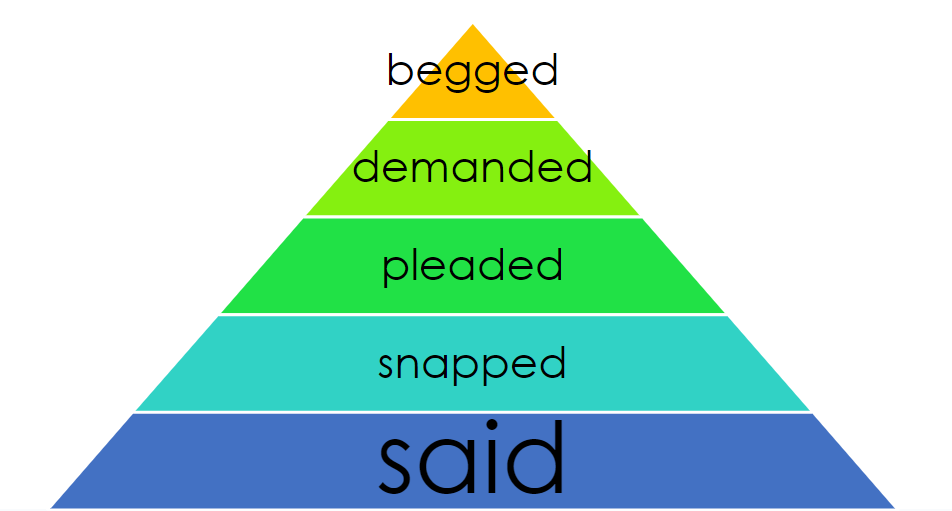
Examples of how we could improve the word said when asking for something
Examples of how we could improve the word said when asking for something
Ways to Support Learning at Home
🔹 Fix the Fragments Game – Share sentence fragments (e.g., Because it was raining) and have your child turn them into complete sentences (e.g., We stayed inside because it was raining).
Celebrate every sentence they complete—see how many full sentences they can create!
🔹 Sentence Challenge – Pick an image or topic and have your child write one of each sentence type:
- Statement -The astronaut floated in space.
- Question -How do astronauts sleep in space?
- Command -Put on your space helmet.
- Exclamation -That planet looks amazing!
🔹 Upgrade the Verbs – Encourage your child to use stronger verbs in everyday conversations. If they say I ran to the bus, ask, Did you sprint, dash, or jog?
These activities help reinforce classroom learning in a fun and meaningful way.
Knowledge
In Knowledge and Literature, we’ve been learning about different animals and the habitats they live in. We’re exploring how animals adapt to survive in their environments and how human actions have changed these habitats over time. It’s been fascinating to discover how animals have developed adaptations to help them thrive in their specific surroundings.
We are also starting our unit on the First Australians, where we’ll learn about the rich history and culture of the Indigenous peoples of Australia. This will involve understanding how they lived in harmony with the land, the animals, and the environment, as well as the impact of colonisation.
At home, you can support this learning by reading books or watching videos about animals and their habitats, as well as learning more about the history and culture of the First Australians. Talk about how animals adapt to their surroundings, discuss human impacts on environments, and explore the deep connection the First Australians have with the land.
Maths
In Maths, we’ve been working on addition within 1000 and focusing on understanding place value. We started with mental addition strategies, like reordering numbers to make them easier to add. Students also learned how to break numbers down with the split strategy, which helps when adding numbers with and without regrouping.
We’ve been practicing adding numbers up to 1000, with a focus on both regrouping and not regrouping. Students have been using place value to break numbers apart, making addition more manageable. Another area we’ve been exploring is estimation, where students practice estimating their answers and checking if they make sense.
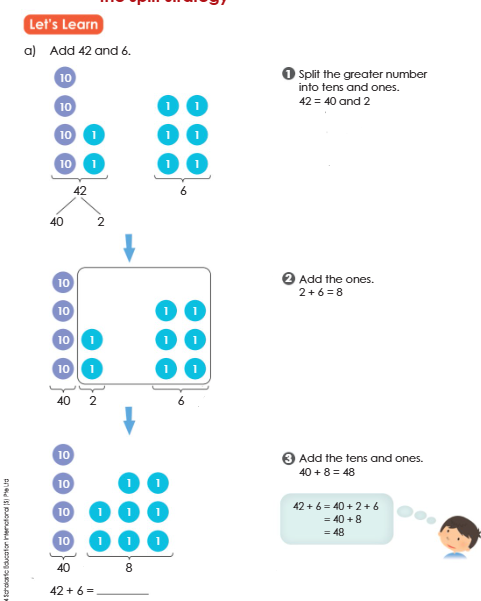
Split Strategy
Split Strategy
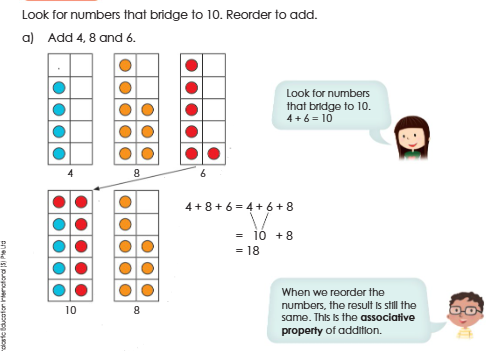
Split Strategy
Split Strategy
To support their learning at home, students can engage in fun and practical activities that reinforce their recent learning about addition, place value, and estimation. These activities will give your child a chance to practice the strategies and skills they’ve been learning in class while making it fun and relevant to real life. Here are some great ideas:
Number of the Day- Choose a number each day (e.g., 2,483). Have your child:
- Write it in words (two thousand, four hundred eighty-three).
- Break it down into place value components (2,000 + 400 + 80 + 3).
- Use the split strategy to add two parts of the number together (e.g., add 2,000 and 400, then 80 and 3).
- Practice adding the parts to get the whole number.
Place Value Face-Off
- Use a deck of cards (or write numbers on paper).
- Each player picks four cards
- Arrange them to make the largest possible number.
- Compare the numbers—who has the highest? The lowest?
Bonus: Have your child round the number to the nearest 10, 100, or 1,000!
Estimation Challenge - Fill a jar with small objects (e.g., beans, pasta, marbles). Ask your child to estimate how many objects are inside before counting. Then, check their estimate and discuss how close they were. Talk about rounding the actual number—if the number is 374, what is it rounded to the nearest 10, 100, or 1,000?
Adding with the Split Strategy - Give your child two numbers (e.g., 287 + 168). Have them split both numbers into place value components (e.g., 287 = 200 + 80 + 7, 168 = 100 + 60 + 8), then add the components separately and put the sums together.
Number Estimation in Daily Life - While driving or walking, point out numbers like house addresses, street numbers, or store prices. Ask your child to estimate the total number of letters or how many digits are in the number. Discuss how rounding might be used in everyday life (e.g., rounding a price to the nearest dollar).
Addition Story Challenge - Ask your child to create a story using numbers.
For example, “You have 285 marbles. You find 129 more marbles. How many marbles do you have now?” Have them practice adding the numbers using their strategies, focusing on breaking down the numbers into smaller parts or estimating the sum.
SEL
In Social and Emotional Learning, students have been working on recognising and using their personal and cultural strengths. They've been exploring their character strengths and how these can help them show respect for others and for Country. We've also been discussing the importance of acknowledging and respecting Country, and how we can use our strengths to build respect in our interactions. Through these activities, students are learning how to apply their strengths to grow respect for themselves and others.
To support this learning at home, you can:
- Talk about your own strengths and how they help you in different situations.
- Discuss what respect means and ask your child how they show respect to others in their day-to-day life.
- Encourage your child to think about their own strengths and how they can use them to build positive relationships at home and at school.
Miss Stapleton & Miss Henzell