Prep D
By Shveta Mahajan
Prep D
By Shveta Mahajan
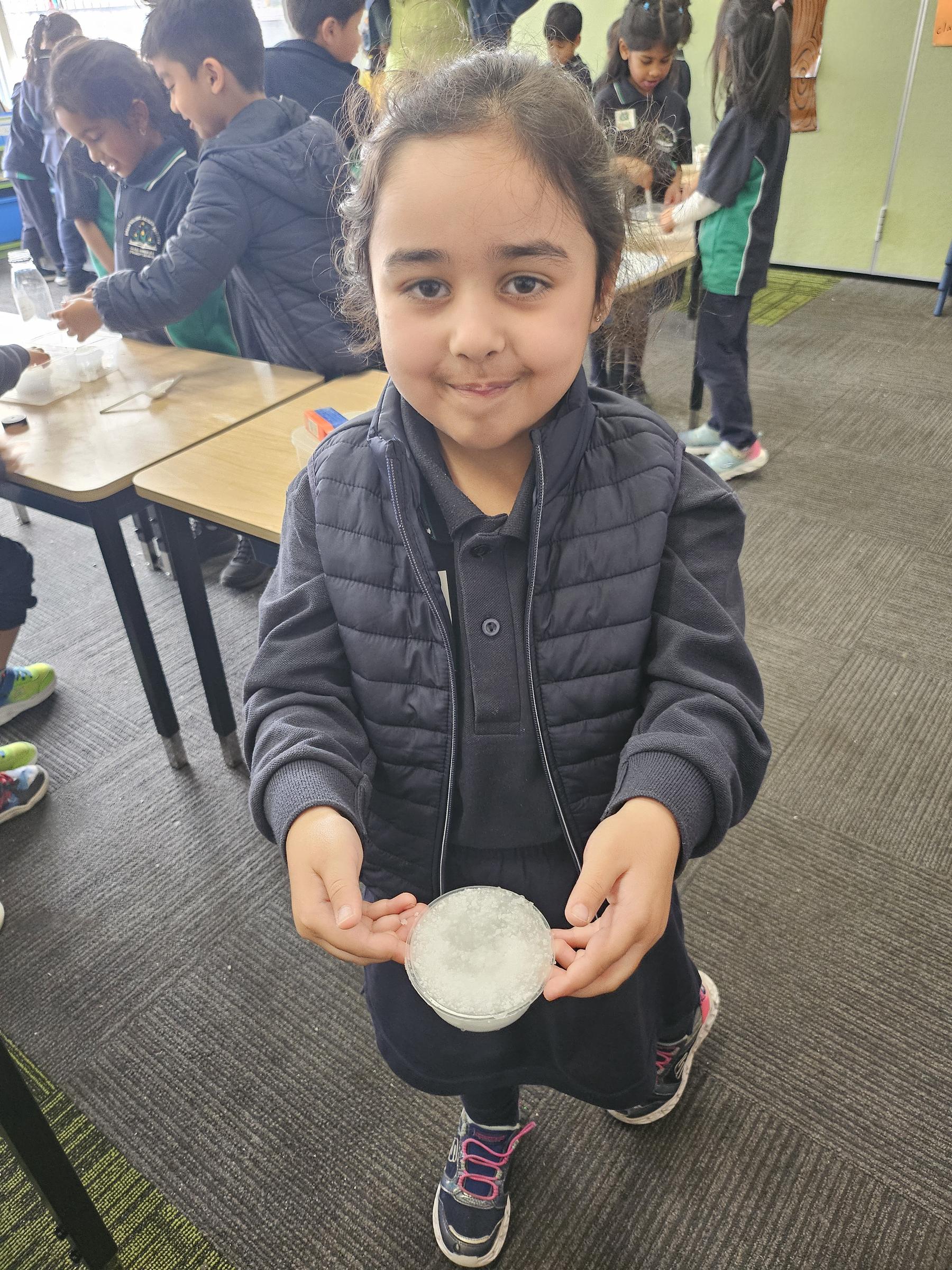
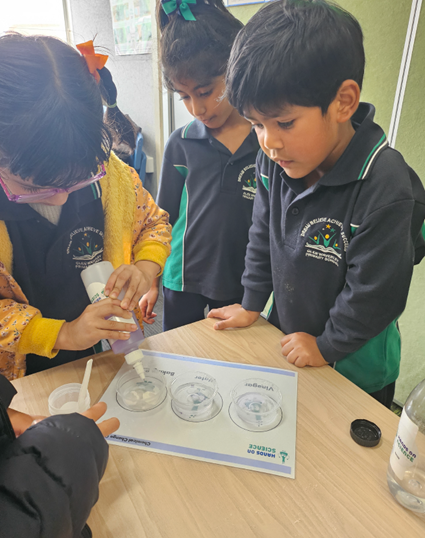
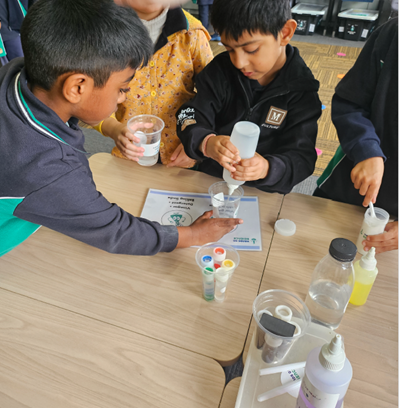
Our Prep learners became young scientists during the exciting “Hands-On Science – Materials & Mixing” incursion at school last week. Connected to our inquiry topic, “How do I show respect to my environment?”, students explored different materials, mixtures, and chemical reactions through fun, hands-on activities. They used their senses to investigate mystery liquids, sensory sand, colour-changing reactions, and magnets for separating metals from sand. One of the biggest highlights of the day was creating “instant snow” and watching it expand before their eyes.
Throughout the session, students practised thinking like real scientists by making predictions, observing changes, and explaining their ideas. There were many smiles, surprised faces, and excited discussions as students worked together and explored the world around them in a safe and engaging environment. It was wonderful to see our Prep students showing curiosity, teamwork, and confidence as they became little scientists for the day.
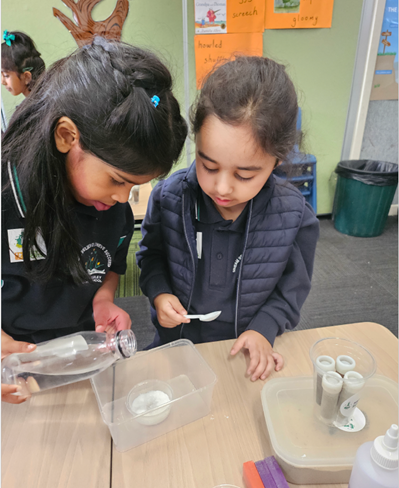
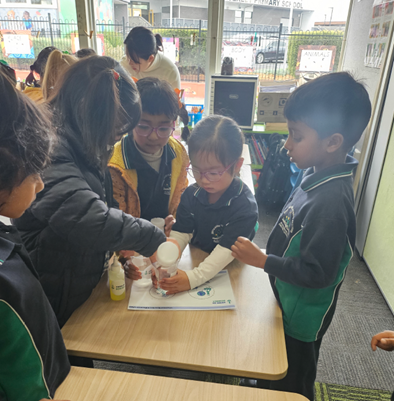
Activity: Instant Snow!
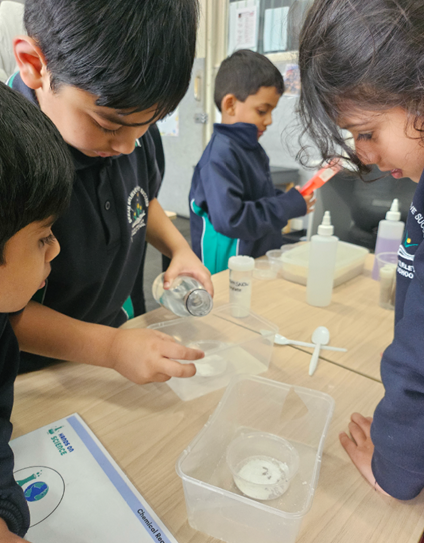
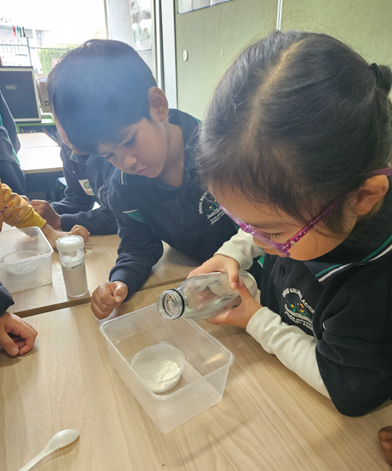
In this experiment, students added a spoonful of sodium polyacrylate into a small container and placed it inside a larger container. Then, they added four cups of water and observed the dramatic reaction as the mixture transformed into a fluffy snow-like substance.
Student reflections:
Activity: Colour Change with Cabbage Water
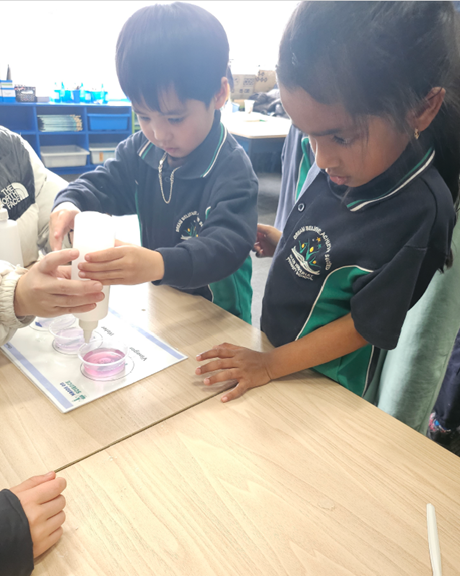
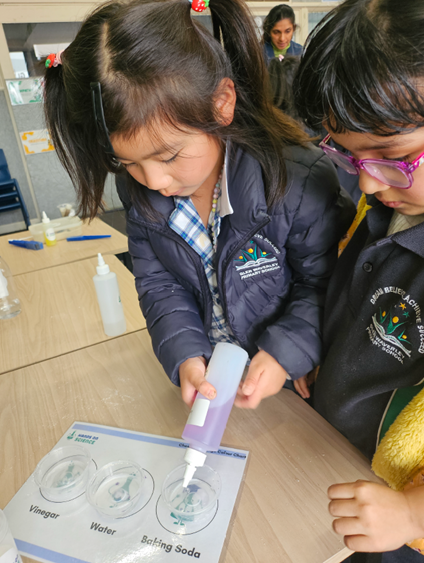
Using red cabbage water as a pH indicator, students added vinegar, water, and baking soda to observe the chemical reactions and resulting colour changes.
Student observations:
Activity: Separating with Magnets
Students explored how magnets work by investigating which materials are attracted to magnets. Using familiar metal objects, they discovered that magnets could pull certain metals towards them and learned how magnets can be used to separate materials.
Student noticings:
Throughout the session, students remained enthusiastic and actively involved, excited to discuss and share what they observed. The experience inspired curiosity, encouraged scientific thinking, and provided students with the opportunity to explore real-world science through fun and interactive learning experiences.
It was a wonderful day of hands-on discovery, and most importantly, the students thoroughly enjoyed every moment!