CURRICULUM
News from Kris O'Farrell
Director of Studies

CURRICULUM
News from Kris O'Farrell
Director of Studies
As assessments approach, many of our young men find themselves navigating a familiar mix of anticipation, pressure and opportunity. These moments are an important part of their learning, inviting students to demonstrate what they know, reflect on their progress and continue to grow.
Assessment plays a vital role in this process, providing opportunities for students to demonstrate their knowledge and skills while offering valuable feedback for staff. At the same time, it is important to acknowledge that these periods can also bring increased stress and anxiety for many students.
This sense of anticipation is also shared by our Year 10 students, who will hear from heads of department next Thursday regarding the preliminary stage of senior subject selection, with further information to be provided to families next week.
In responding to both the opportunities and challenges of this time, our approach is grounded in the spirit of St Marcellin Champagnat and the Marist characteristics of presence, simplicity and family spirit.
Presence
A calm and reassuring presence, both at school and at home, helps reduce anxiety, supports emotional regulation, and provides a sense of stability during demanding periods.
Simplicity
Clear expectations, predictable routines and structured communication reduce cognitive overload, enabling students to focus more effectively on revision and preparation.
Family spirit
A strong sense of belonging builds confidence and resilience. When students feel known and supported, they are more likely to approach assessment with self-belief.
It is important to recognise that some stress is a normal part of the learning process. Research shows that moderate stress can enhance motivation, while excessive anxiety can hinder performance. Students are most likely to succeed when they feel calm, prepared and supported.
Family support plays a vital role during assessment periods. Practical strategies include:
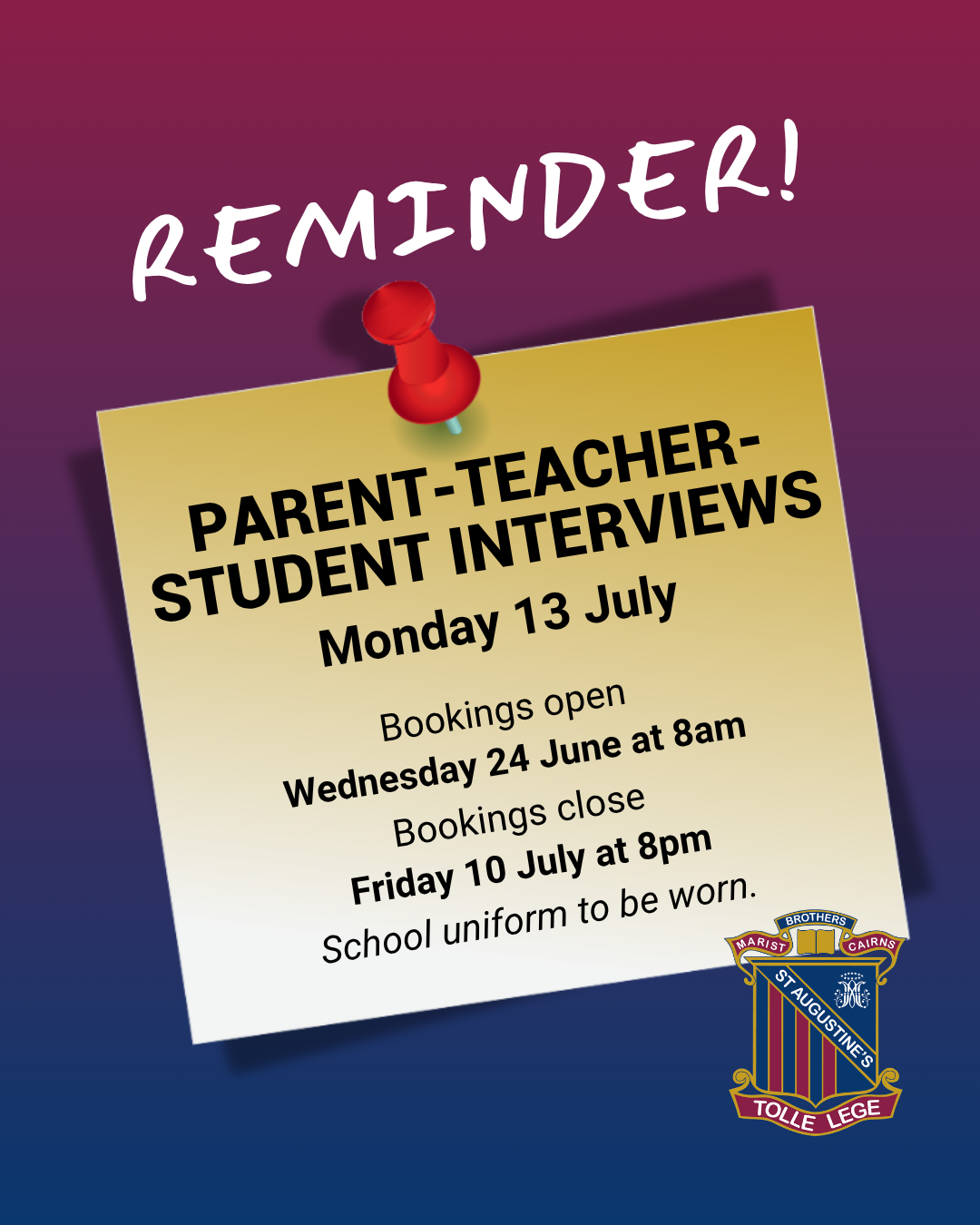
When families and the College work together, students are best positioned not only to achieve strong academic outcomes, but also to develop the resilience and self-management skills that will serve them well beyond school. This partnership is further strengthened through parent–teacher–student interviews, which provide an important opportunity for meaningful dialogue following the release of Semester 1 reports, with bookings opening via Booked at 8am on Wednesday 24 June (Week 10) and closing at 8pm on Friday 10 July.