KITE

Delivering Excellence: Leveraging the Classroom to Prepare for the Future
“Learning is a consequence of thinking. Retention, understanding, and the active use of knowledge can be brought about only by learning experiences in which learners think about and think with what they are learning.” David Perkins
Researchers from Project Zero have long reminded us that good thinking is a disposition, rather than a skill, cultivated over time. Their work highlights three dimensions of thinking dispositions inherent within the learning environment of a classroom: sensitivity (noticing when thinking is required), inclination (the motivation to engage in thinking), and ability (having the strategies and skills to think well). Framed by this understanding, our Staff Day on 5 June focused on deepening who we are as a Culture of Thinking and what it means to educate young women who can investigate the world, understand diverse perspectives, and take responsible action.
This work is increasingly important in a world shaped by artificial intelligence, information overload, and growing socio-political complexity. As futurist Sinead Bovell argues, classrooms must become places of deep learning where students develop the capacity to think critically and navigate uncertainty, so that they can engage thoughtfully with the challenges they will inherit. The day challenged us to consider the habits of mind that will ensure our students thrive in a rapidly changing future.
Working within curriculum teams, staff used Dr. Ron Ritchhart’s Review of Current Practice routine to reflect on how learning experiences might be amplified through the lens of a Culture of Thinking, translated our Philosophy for Dispositional Learning. With a focus on the classroom as the place where our vision for students is enacted, teams explored how existing practices could more intentionally foster the dispositions we value, ensuring that every learning experience contributes to developing globally minded learners, whose learning has inspired them to tackle complexity with curiosity and courage.
Thought Leadership: Sharing and Building our Professional Excellence
At the heart of the Kambala Institute for Teaching Excellence (KITE) is a commitment to ensuring our staff engage with world-leading research, innovative practice, and professional networks that inspire continuous growth and educational excellence.
As Kambala continues to strengthen its contribution to global conversations about girls’ education, Principal Jane Danvers, Deputy Principal – Pastoral Care, Samantha Gooch, and Executive Director Professional Practice & Learning Culture, Lauren Walsh, will be participating in and presenting at the 2026 International Coalition of Girls’ Schools Global Forum in Toronto. By joining educators and advocates from around the world, we continue to explore research-informed strategies and innovative practices that advance girls’ education. These experiences provide valuable opportunities to bring back practical insights that strengthen our capacity to prepare young women for the future.
We are also proud that our 2026 Global Action Research Collaborative (GARC) Fellow, Head of Languages Irina Braun, will share the findings of her action research project, Boosting Confidence and Ability in Spontaneous Spanish Speaking Through AI-Supported Feedback, showcasing the impact of rigorous practitioner inquiry on student learning. Head of Year 11 Henry Clarke will also be starting his journey as a ‘27 GARC Fellow.
In addition, Leigh Barlow (History Teacher and Debating Coordinator), Samantha Nahum (History Teacher), Megan Wright (Co-Lead Science), and Coco Peirce (Visual Arts, Design & Technology Teacher) are this year’s recipients of the KITE Scholarship to attend Project Zero Classroom. These teachers will continue our longstanding partnership with Project Zero, Harvard, and deepen our engagement with the practices that underpin our Culture of Thinking approach.
Together, these opportunities ensure Kambala remains at the forefront of educational innovation and thought leadership in girls’ education.
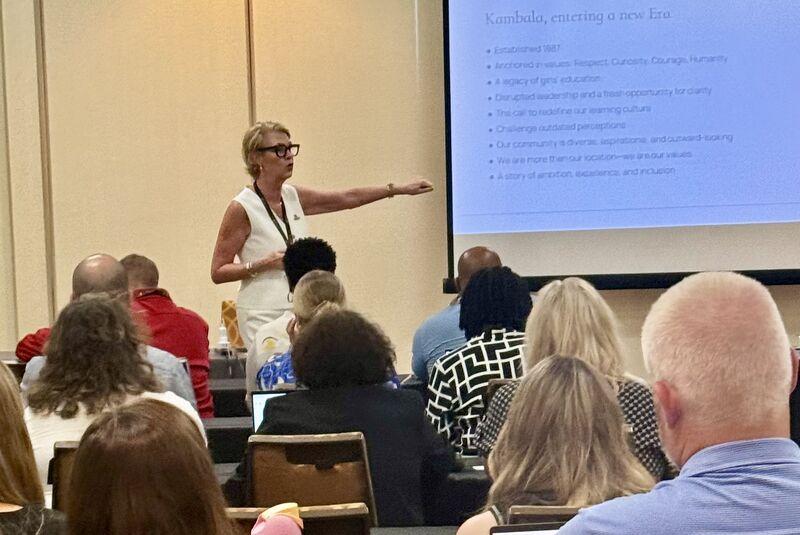
Jane Danvers presenting at the 2025 ICGS Conference - Philadelphia
Jane Danvers presenting at the 2025 ICGS Conference - Philadelphia
Humanity in Action: Student-Led Global Citizenship
As we continue to deliver experiences that reflect our commitment to developing globally minded young women, who can engage thoughtfully with complexity and intercultural empathy, our student leaders have sought opportunities to translate this to dynamic initiatives. With both our Global and Cultural Connections committee and Model UN club providing such opportunities, global citizenship stands as a powerful antidote to division, misinformation, and uncertainty.
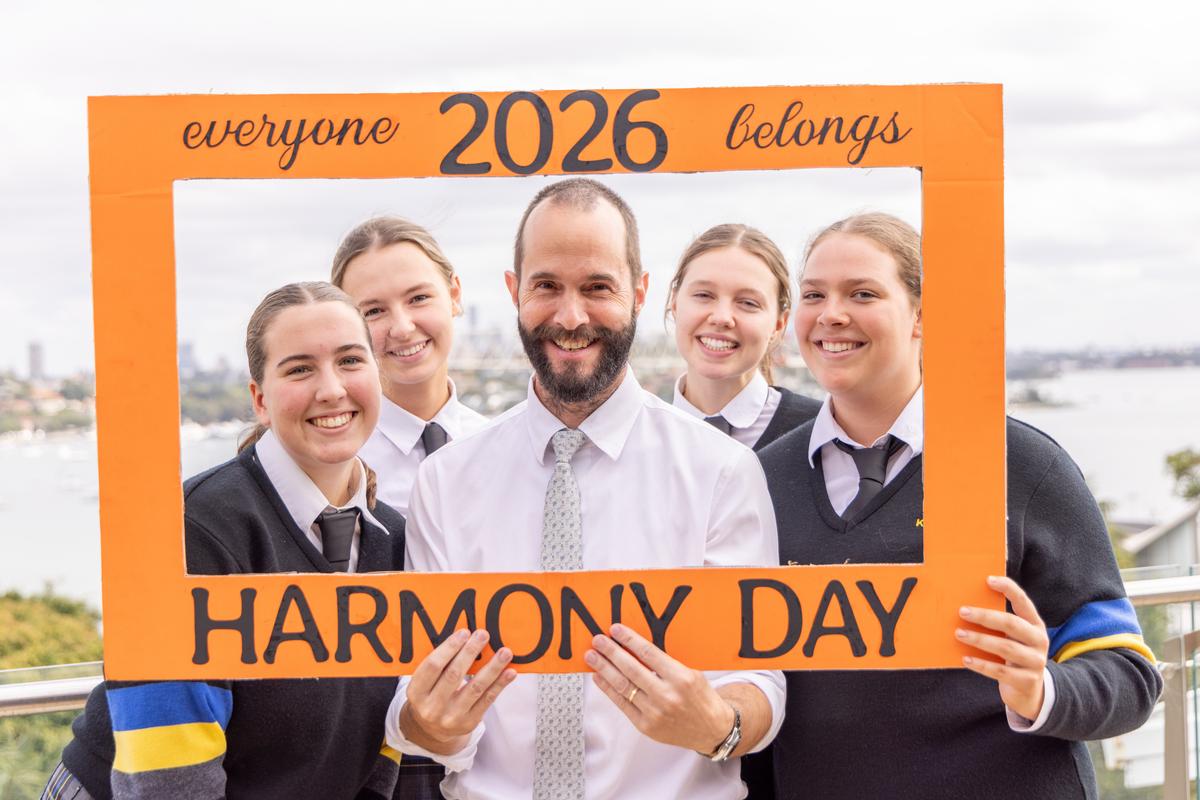
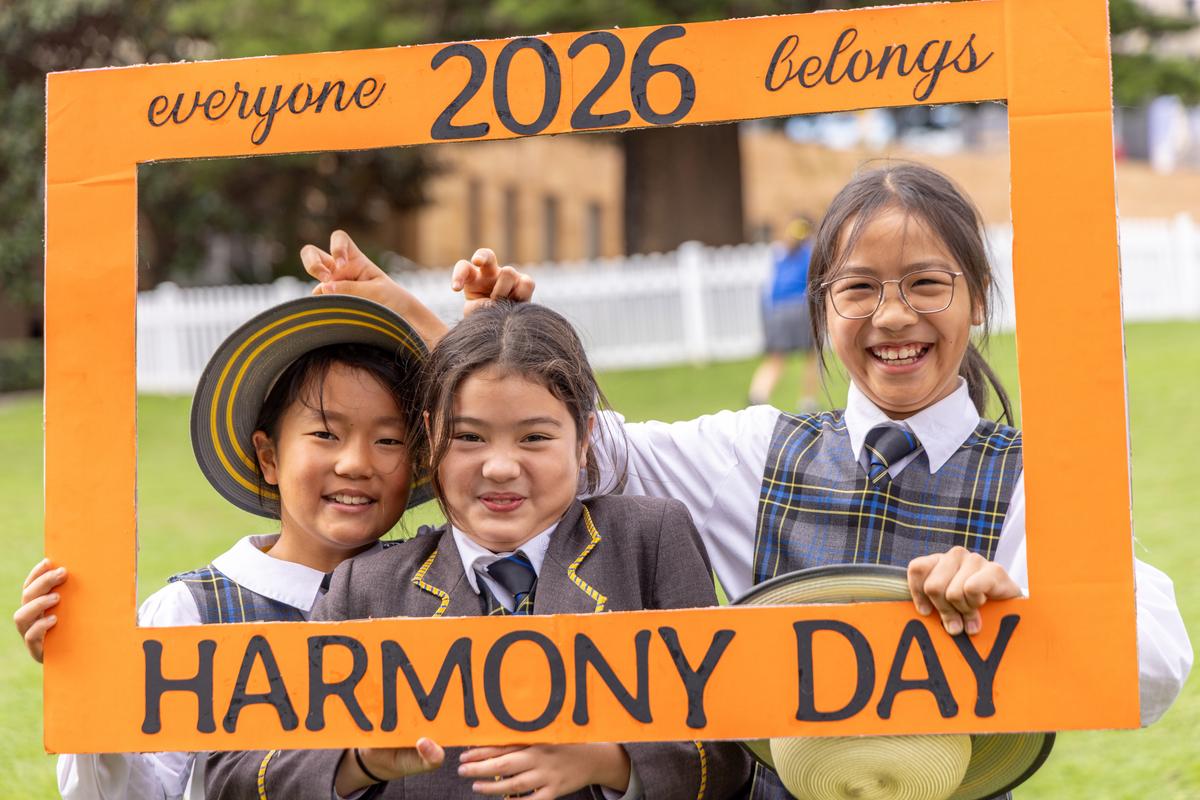
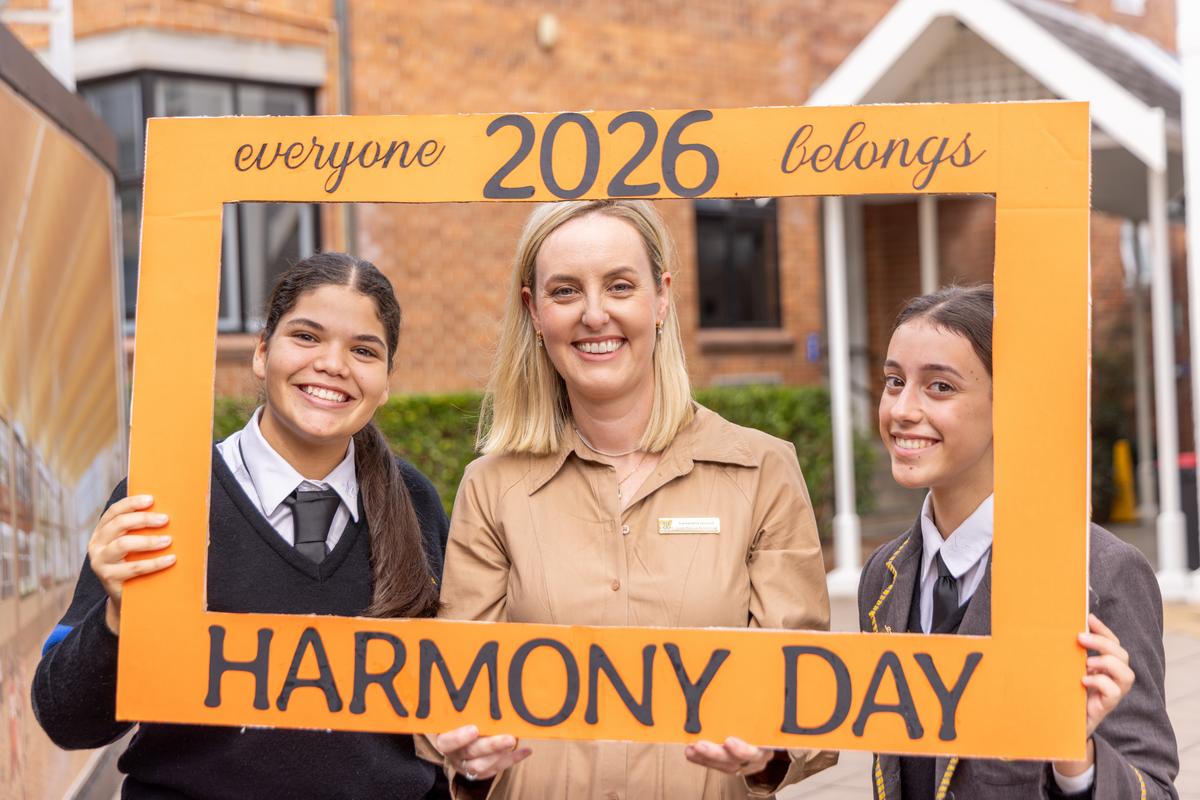
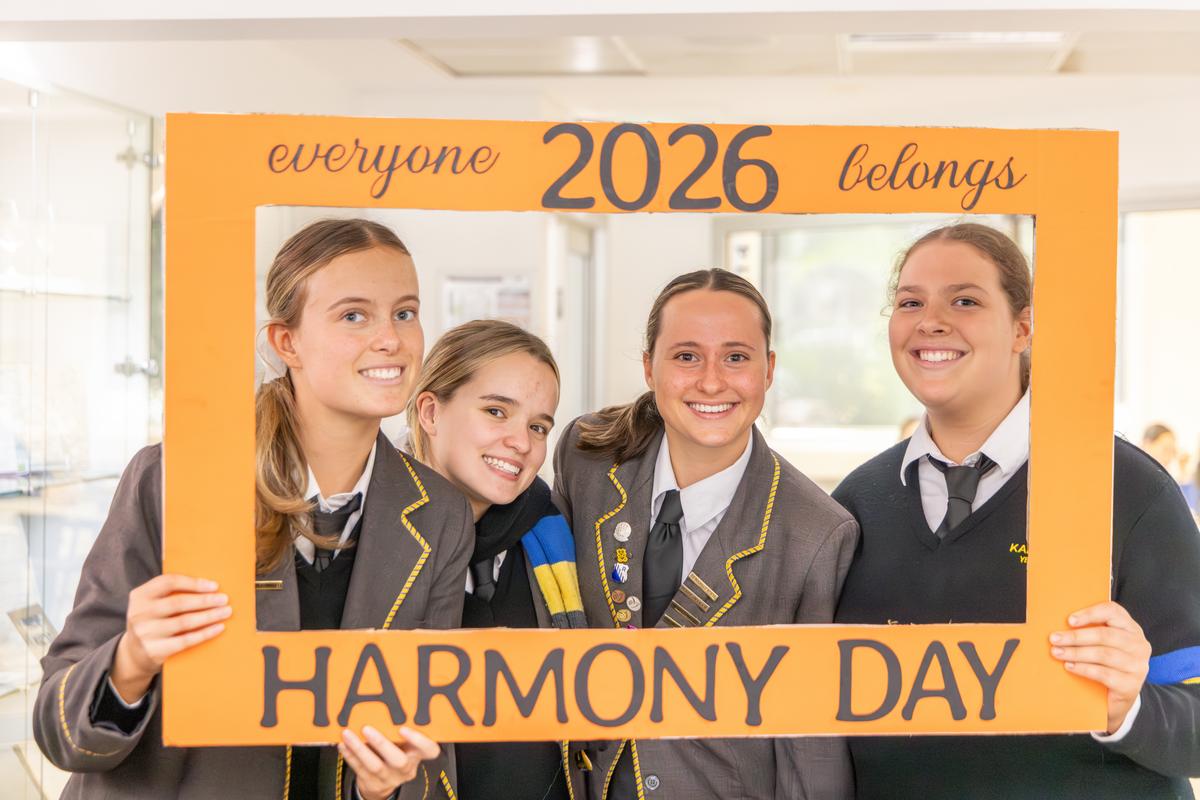
Global Threads - Using Fashion to Thread Global Connections
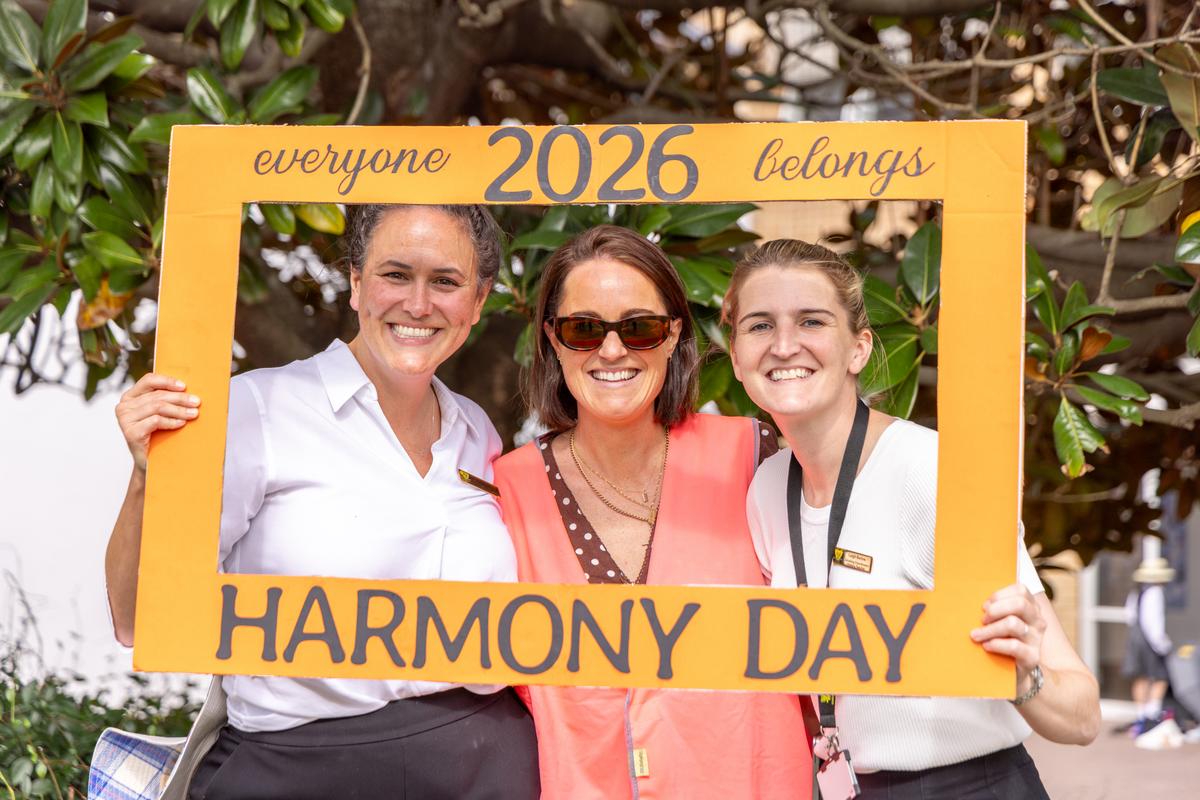
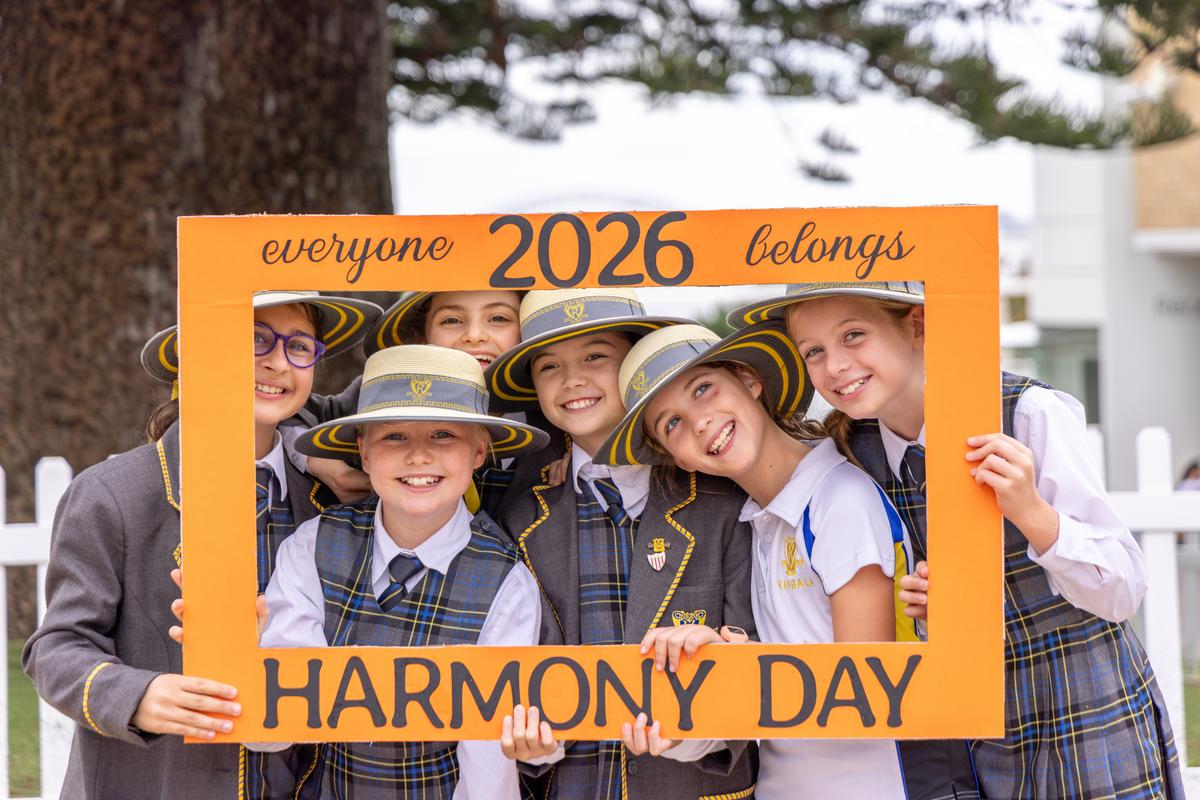
Under the leadership of Global and Cultural Connections Prefect, Sophia Dan, Global Threads celebrated culture, identity, and connection through clothing and design. As part of Harmony Day celebrations, students and staff also participated in a whole-school photo initiative, using a specially designed frame to capture and share the diverse cultures and experiences that enrich our Kambala community.
The fashion show highlighted how traditional garments can represent heritage and personal stories while bringing people from different backgrounds together. By showcasing outfits from a range of cultures, the event encourages appreciation for diversity and creates an opportunity to learn about traditions from around the world.
The show features many culturally significant garments, each with its own history and meaning. Examples include the Greek Thasitiki Foresia and mainland ceremonial dress, which reflect regional traditions and detailed craftsmanship, and the Indian lehenga and Chinese qipao, which symbolise elegance, family heritage, and cultural pride. The Korean hanbok is recognised for its vibrant colours and connection to celebration and tradition. Other outfits, such as the Samoan puletasi, Bavarian dirndl, Atayal-inspired clothing from Taiwan, and Scottish tartan attire, demonstrate how clothing can preserve cultural identity across generations while still adapting over time.
Overall, Global Threads aims to promote understanding, respect, and appreciation for different cultures, showing how clothing and tradition can connect people in an increasingly globalised world.
Tackling Global Issues: Harvard Model UN
Kambala students had the privilege to compete alongside hundreds of high school students from around the world in the prestigious Harvard Model UN competition. Over four gruelling days, students were pushed to debate, negotiate, and formulate resolutions to complex global issues. It was an amazing experience for all students involved: Darcey Bell, Neve Mortimer, Lucy Pan, Mingyui Wu, and Skye Wells, with students expressing excitement to return to the competition next year.
Special congratulations to Skye Wells, who was named Best Delegate of the United Nations Human Rights Council - an exceptional achievement at a competition of this calibre. A special thank you to Model UN Club leaders Antonia and Cecilia, as well as Kambala, for making this opportunity possible.
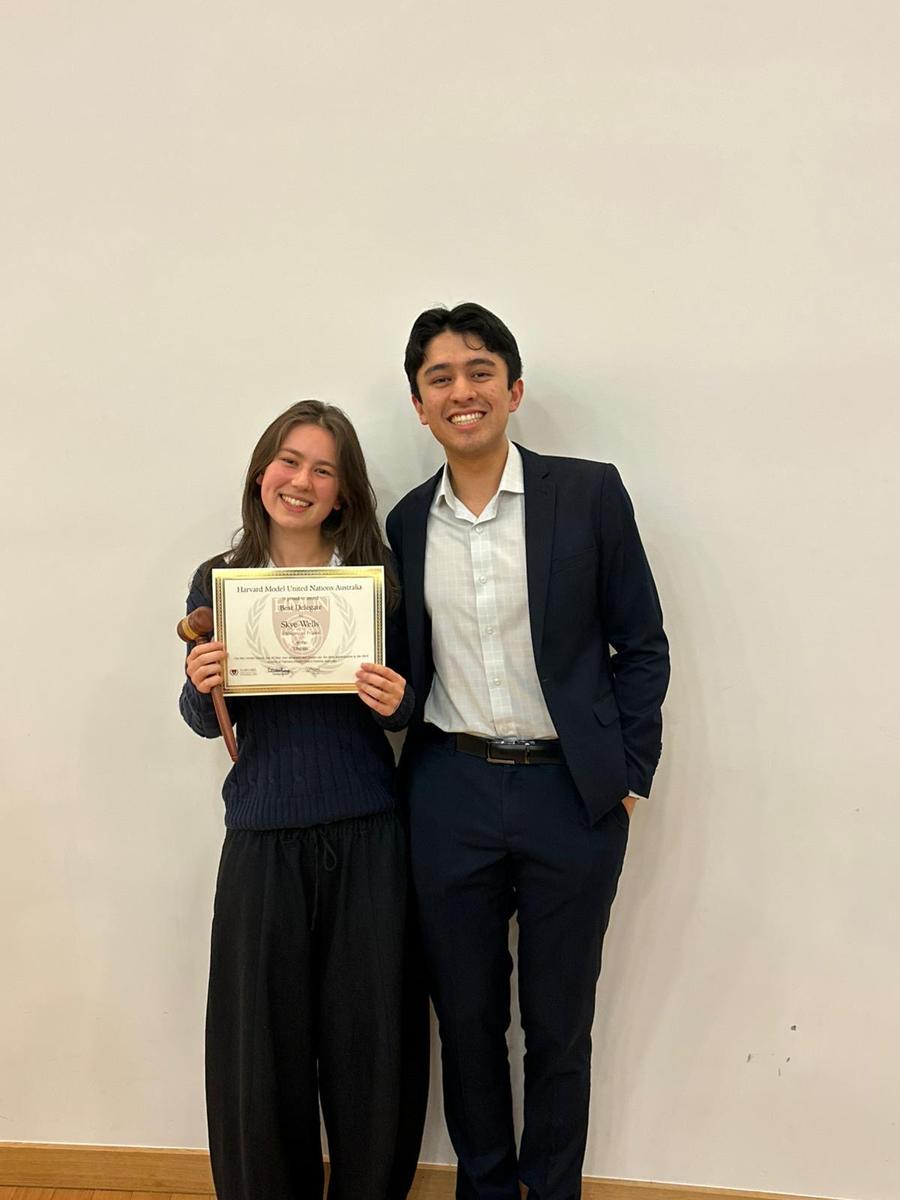
Skye Wells
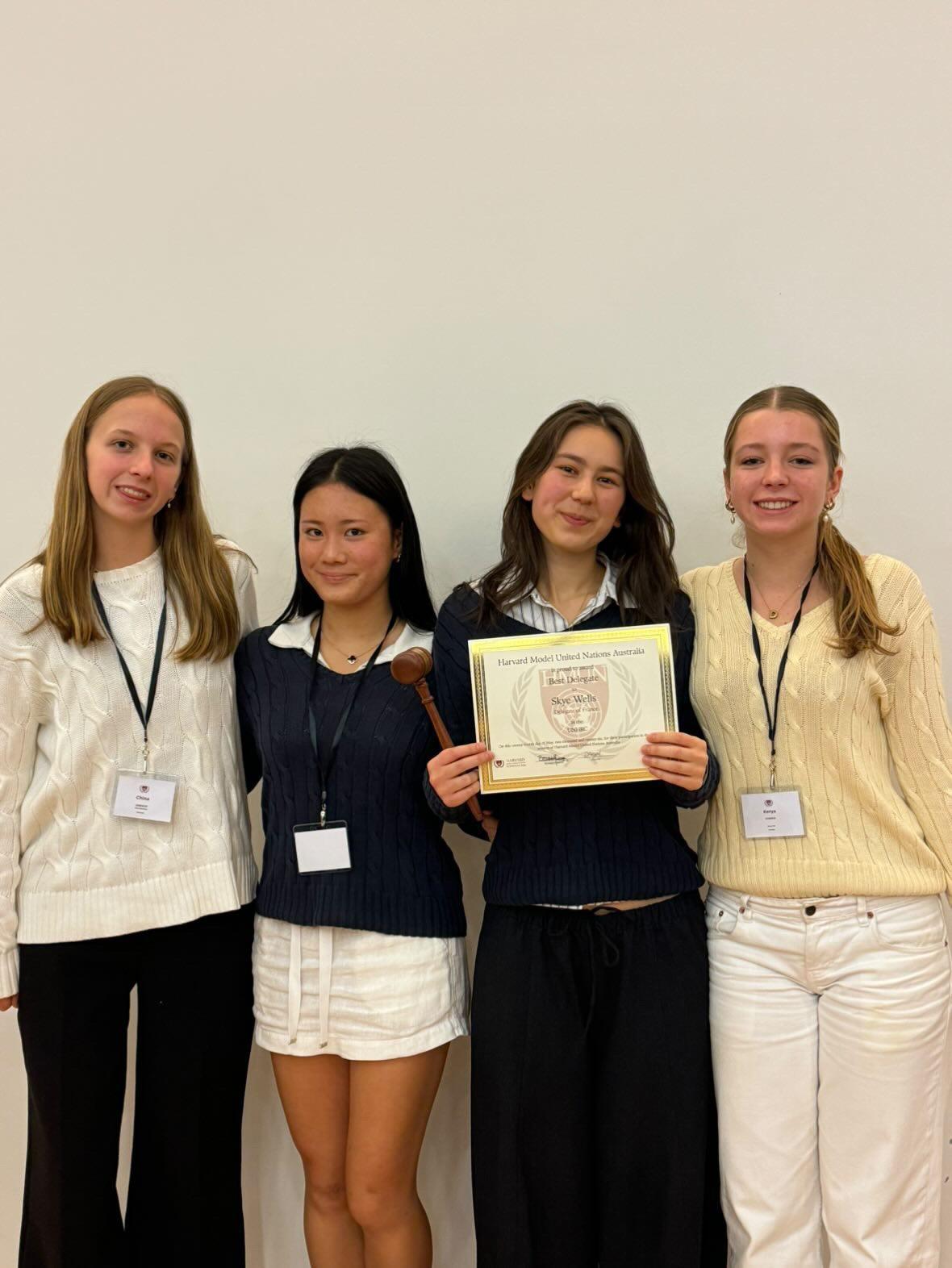
Skye Wells