
Staff Spotlight
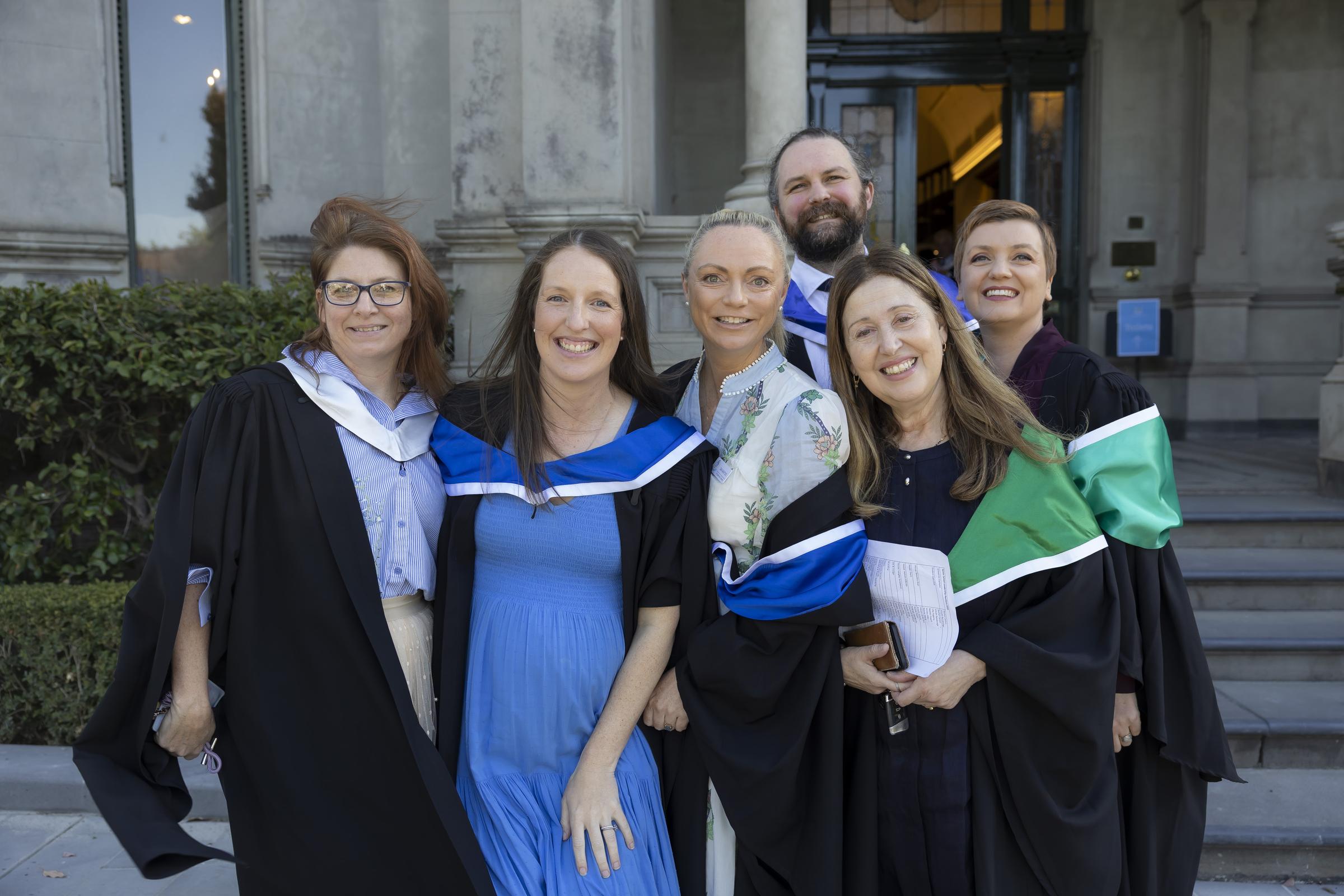
The staff member under the spotlight for this issue is Ms Nicole Horton, one of our Humanities teachers who, prior to completing a Masters of Teaching (primary and secondary), worked as a lawyer.
Nicole presents a summary of her personal research project, which explores valuable insights into the role of technology in today’s classrooms. Her findings are reflected in practice at the School, where technology‑free lessons provide greater opportunity to intentionally cultivate students’ character and strengthen their relationships.
Reclaiming Thinking in the Year 12 Legal Studies Classroom

At the beginning of this year, I started reflecting on a simple but important question in my Year 12 Legal Studies classroom: how much space are we really creating for students to think deeply?
After reading The Digital Delusion by educational neuroscientist Dr Jared Cooney Horvath over the summer break, I found myself reconsidering the role that technology played in my lessons. The research highlighted how easily digital tools can fragment attention and interrupt the deep thinking that meaningful learning requires. One statistic that particularly struck me suggested that students can spend between 24 and 38 minutes off-task per hour when laptops are present in the classroom.
Reflecting honestly on my own practice, I could see moments where this played out in previous classrooms. While laptops are powerful tools, they were often competing with the kind of sustained thinking that I wanted students to engage in, particularly when we were unpacking complex legal concepts or constructing written responses.
This reflection led me to trial a small inquiry in my Year 12 Legal Studies class. Each week, we now run a tech-free lesson, where students leave their laptops behind and instead work with physical notes and textbooks, printed case studies and collaborative writing tasks. What began as a small experiment has quickly become one of the most powerful shifts in my teaching practice.
Without laptops on desks, the classroom dynamic feels noticeably different. Conversations are more sustained, students are more willing to ask questions in the moment, and lessons flow more naturally without the interruptions that come from moving between screens and tasks.
Importantly, this shift has also helped align my classroom practice more closely with St Catherine’s Teaching for Thinking framework. This encourages teachers to design learning experiences that deliberately move students across the four quadrants of effective thinking, namely thinking about content, applied thinking, regulating thinking, and ownership of thinking and learning.
In planning lessons, I have been more intentional about creating learning sequences that compel students to think hard about the content. Students engage in retrieval practice, analyse printed case studies, and collaboratively construct responses to exam-style questions. These activities encourage students to move beyond simply recording information and instead begin applying and making meaning from the legal concepts we are studying.
Another key element of the framework is ensuring that thinking is visible throughout the lesson. As a result, I have incorporated frequent checks for listening and understanding through strategies such as mini whiteboards, quick multiple-choice questions and guided writing. These small but frequent checks allow misconceptions to be addressed immediately and help maintain student engagement with the thinking process.
While this inquiry is still ongoing, the early observations have been encouraging. Students are noticing that they understand concepts more clearly and are developing stronger structures in their written responses earlier in the year. In addition, their recent Practice SAC indicates that students are retrieving and applying key knowledge more accurately and are responding in a cohesive structure.
This early observation is very exciting, especially in responses where students are required to integrate unseen stimulus material, such as a case study or a piece of legislation, into their answers. I have found that in previous classes and in my role as a VCAA Legal Studies exam assessor, the application of source material is one skill that many students find challenging. This can be disheartening for some students, as over 50% of the Unit 3/4 examination expects this skill to be demonstrated. Therefore, it is crucial that students are explicitly taught this skill and are regularly provided with learning activities to practice it without distractions.
The goal of this inquiry is not to remove technology altogether. Digital tools can remain a useful tool in the learning process when used with purpose. However, the experience has encouraged me to think more deliberately about when technology enhances learning and when it may unintentionally compete with it. For me, the most powerful takeaway so far has been simple: when the screens disappear, student thinking becomes much more visible.
And in a Year 12 classroom where students are developing the ability to analyse, evaluate and reason through complex legal issues and concepts, that thinking is exactly what matters most.
Ms Nicole Horton
Humanities Teacher