Learning Area News
Foundation News
Literacy
In Literacy, we have been exploring the letters 'o' and 'c' and the sounds that they make. Students have enjoyed identifying words that begin with each sound and coming up with their own creative examples. We have also been practising the correct, lower-case letter formation of these letters, using both whiteboards and paper to strengthen writing skills.
Numeracy
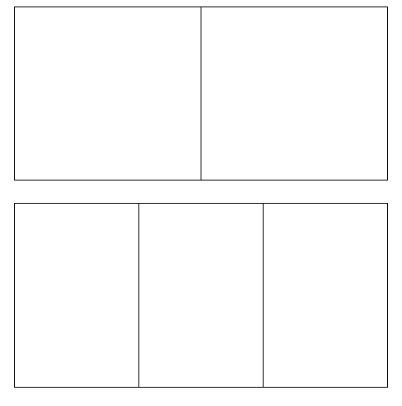
In Numeracy, we have been learning about portioning numbers into two and three parts using concrete materials.
Religion
In Religion, our topic is, ‘Our Catholic Church’. Students have been learning about different types of celebrations that happen within our church, at home, at school and in the wider community.
Inquiry
In Inquiry we have been learning about the 4 seasons of the year, Summer, Autumn, Winter and spring, and the changes that occur during these seasons.
At home you could reinforce learning by:
- Read a story with someone at home.
- Listening to your child read their reader each night.
- Practise writing your name with a capital letter at the start, followed by lower case letters (we may need an adult to assist/model this).
- Practise writing the letters ‘m', 's', 't', 'a', 'p', 'i', 'f', 'r', ‘o’, ‘c’, using lower case letters.
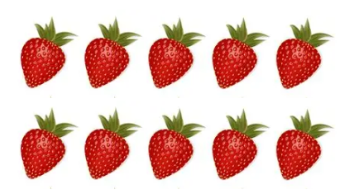
- Use the below collection of 10 Strawberries to cut out and practise portioning into two and three parts.
Year 1 News
Literacy
In Literacy, students have been learning about adjectives and how they are used to describe nouns. They have been practising this by describing familiar objects, such as elephants and teddy bears. To support their learning, students have also been engaging with an adjective song. In addition, students have been exploring spelling patterns that make the long “oo” sound. They have focused on the letter combinations ue (as in glue) and ew (as in grew), recognising that different spellings can produce the same sound.
Numeracy
In Numeracy, students have been learning to compare numbers using a variety of hands-on materials, including MAB blocks, tens frames, and icy pole sticks. These tools support their understanding of how numbers are built. Students have also been using place value charts to create the largest and smallest numbers they can using tens and ones, helping to strengthen their understanding of place value. In addition, they have been exploring numbers that are one more and one less.
Religion
In Religion our topic is ‘Lent and Easter’, students have explored the Easter story and its significance, focusing on the resurrection of Jesus. As part of their learning, students created a classroom display to celebrate this important event, joyfully reflecting the message, “Alleluia! Jesus has risen!”
Inquiry
In Inquiry, students have been learning about the seasons. They have been identifying which months belong to each season and discussing the different activities that can be enjoyed throughout the year. As part of their learning, students are now designing outfits suitable for each season, helping them make connections between weather and appropriate clothing.
At home you could reinforce learning by:
Literacy
- Ask your child to choose a toy or object at home and describe it using 3–5 adjectives (e.g. a soft, brown, cuddly teddy).
- Write 1–2 simple sentences using an adjective and a “oo” word (e.g. The blue bird flew. or I have a cute, fluffy toy.).
- Listening to your child read their reader each night.
Numeracy
- Ask your child to build a number using items at home (e.g. sticks, pasta, or small toys).
- Give your child 3–4 digits (e.g. 10, 22, 15) and ask them to arrange the digits to make the largest and smallest numbers possible.
Year 2 News
Literacy
In Literacy, during spelling, we have been learning about removing bossy "e" when we add "ing" to the end of a bossy ''e'' word (ride – riding). The students have also been exploring the ''ar'' sound (star, argue, shark), the ''y'' sound (puppy) and the ''_ey'' sound (key).
During grammar, the students have been learning about pronouns. Examples of these are him, her, them.
During comprehension, the students have been making connections between and text and personal experiences and text to text.
Numeracy
In Numeracy, the students have been exploring addition and subtraction. Our focus has been using number lines and ten frames to bridge to 10 as well as representing addition and subtraction using MAB blocks.
Religion
In Religion our topic is ‘Pentecost’. We are learning how Jesus sent his Holy Spirit to the disciples, just as he had promised to do. The students reflected on the symbols of fire and wind and their importance in the story of Pentecost.
Inquiry
In Inquiry, students have been learning about the seasons. They have been identifying which months belong to each season and discussing the different activities that can be enjoyed throughout the year. As part of their learning, students are now designing outfits suitable for each season, helping them make connections between weather and appropriate clothing.
At home you could reinforce learning by:
Literacy
- Practice reading and spelling our tricky words (bought, thought, work, alright, always & said).
- Write a list of words with the spelling sound ''ar", "ý” (puppy) and” "_ey”(key)
- Listen to your child read their reader each night.
Numeracy
- Practise adding two numbers to make friends of ten, twenty or one hundred. For example:
Friends of ten: 8+2 =10, 4+6 =10, 9+1=10 etc.
Friends of twenty: 12+8=20, 16+4=20, 15+5=20 etc
Friends of one hundred: 30+70=100, 90+10=100, 70+30=100 etc
Year 3 News
Welcome back to Term 2! We hope you all had a wonderful break. We are looking forward to another busy, productive, and exciting term of learning.
Literacy
In Literacy, students have been learning how to write a factual recount using strong topic sentences, supporting details, introductions and body paragraphs. We have also explored how to use because, but and so, past tense verbs, time connectives, adjectives, and stronger verbs to make writing clearer and more interesting.
During our SpellEx program, students have been learning tricky words such as please, really, people and believe, as well as long vowel sounds like /ī/ and /ō/. They have also been practising phonemes, graphemes, homophones, prefixes, suffixes, sentence dictation, and spelling rules, including when to double letters before adding endings. We are immensely proud of the learning we are seeing, and the connections students are making in their writing.
Mathematics
In Maths, students have been building their understanding of fractions by exploring halves, thirds, quarters, fifths, and tenths. They have been learning to recognise fractions in shapes and collections, write fractions correctly, and show them in different ways using pictures, counters, diagrams, and fraction strips. Students have also been practising how fractions can be combined to make one whole, helping them grow in confidence when working with parts and wholes.
Religious Education
Our new RE unit for the first five weeks of term is titled ‘Circle of Life’. Students are learning about love, connection, change, and loss. They will explore how we stay connected to the people we love and to God, as well as how Jesus experienced sadness and loss. Together, we are discussing how people can have different feelings and responses during times of change.
Science
In Science, our focus has shifted to Living and Non-Living Things. Students have been learning to describe the features that all living things share, including that living things are made up of very small components called cells.
Humanities
In Humanities, students have begun a journey around Australia, using maps to locate each state and territory. They have explored natural and human features, including landscapes, climates and environments.
Homework activities to reinforce learning:
Fraction hunt: Find examples of halves or quarters around the house, such as fruit, sandwiches or folded paper. Talk about what fraction you can see.
Draw and shade: Draw simple shapes and divide them into equal parts. Shade one half, one quarter or one third.
Make a collection: Use small objects like buttons, pasta, or LEGO to show fractions such as 1/2, 1/4 or 1/5.
Reading fluency: Please encourage your child to read their take-home book regularly using a clear voice, pointing to tricky words, rereading for fluency, and talking about what happened in the text.
Conjunctions: Write three sentences using because, but and so.
Topic sentences: Create a topic sentence about a favourite animal and add two supporting details.
- Recount writing: Write a short factual recount about the weekend using First, Next and Finally.
Year 4 News
Our Year 4 students have made a fantastic start to Term 2. It has been wonderful to see them return to school with a positive attitude and a strong readiness to learn.
Students are continuing to build confidence, work collaboratively, and take increasing responsibility for their learning. We are looking forward to another engaging and productive term ahead.
Below is an overview of what we have been learning across key areas, along with some suggested activities to support learning at home.
Literacy
In reading, we have begun exploring our new class text Uncle Xbox. Students have been highly engaged in the story and are continuing to build their comprehension skills by discussing key events, characters, and themes. We are encouraging students to think deeply about what they read, make connections, and justify their ideas using evidence from the text.
A strong focus this term has been improving reading fluency through our paired reading program. Students are working with partners to practise reading aloud and provide each other with constructive feedback. This includes focusing on expression, phrasing, smoothness, and pace. Developing fluency supports both comprehension and confidence when reading.
In writing, students are learning how to create a factual recount. They are focusing on clearly retelling events in the correct order, using appropriate structure, and including important details. We are also reinforcing the use of correct grammar and punctuation to ensure their writing is clear and engaging.
To further support spelling and grammar development, we have been implementing the Spellex program. Students complete short daily activities designed to strengthen their spelling knowledge, grammar skills, and overall writing accuracy.
These combined approaches are helping students become more confident, fluent readers and more capable, structured writers.
Literacy Activities to do at Home:
Paired Reading Practice (10 minutes) - Have your child read aloud to you or another family member. After reading, provide feedback on:
- Expression (Do they sound interested and engaged?)
- Phrasing (Do they group words smoothly?)
- Smoothness (Are there lots of stops and starts?)
- Pace (Are they reading too fast or too slow?)
Factual Recount Practice - Ask your child to write a short recount of something they did during the day or week. Encourage them to:
- Write events in order
- Use time words (first, next, then, finally)
- Include key details
Mathematics
In Mathematics, we are currently finalising our unit on decimals. Throughout this unit, students have been developing a strong understanding of:
- Place value of decimal numbers
- Comparing and ordering decimals
- Representing decimals in different ways
Applying decimal knowledge to real-world problems
Students have been working hard to build both their accuracy and confidence when working with decimal numbers, and it has been pleasing to see their progress.
We are now beginning our new unit on length and area. Students will explore how to measure, compare, and calculate length using appropriate units, as well as develop their understanding of area through hands-on and visual activities. This will include measuring real objects and solving practical problems involving space and measurement.
Maths Activities at Home:
- Decimal Spotting Look for decimals in everyday life (e.g. prices at the shops). Ask your child to read and explain the value of the numbers.
- Measure at Home Give your child a ruler or tape measure and ask them to measure items around the house. Compare lengths and discuss which items are longer or shorter.
Science
In Science, students are exploring distance forces. They are learning about how forces such as gravity and magnetism can act on objects without direct contact, and investigating how these forces influence movement.
Religious Education (RE)
In RE, students are learning about the Circle of Life. They are exploring themes of growth, change, and the connections between living things.
Thank you for your continued support at home. It is wonderful to see students building confidence and enthusiasm in their learning, and we look forward to the exciting opportunities that Term 2 will bring.
Year Five News
We have come back to The Risen Christ, as we focus on what it was like for the disciples dealing with the aftermath of Jesus's crucifixion.
In our Religious Education unit, we will reflect on the mystery of the resurrection by entering the experience through the eyes of the disciples who first gave witness to Jesus’ risen presence and explore ways we can integrate the resurrection experience into our own lives.
English
In English we have begun our study of Black Cockatoo, as we explore the life of Mia, a young aboriginal girl and the challenges she faces in her hometown community. As our study unfolds, we will explore character descriptions using the DIAL strategy. This strategy allows us to gather our thoughts and consider our own interpretations of a character. Describe – Illustrations – Act – Language = DIAL.
Mathematics
In mathematics we have been exploring factions using a number line to show proper factions, improper factions, and mixed numbers. The children need to continue to improve on their knowledge of the times tables as they are instrumental in solving number problems.
Need something to work on at home?
Turn off the TV, put all devices away and spend time with your child. You could play a board game. Challenge them to a game of card or UNO. Share some of your childhood stories.
Remind your child to read each school night for at least 20 minutes, practice the timetables. Spending 30 minutes of quality time together is the best learning you will ever experience.
Year 6 News - What's Been Happening in Year 6?
Literacy
In Literacy, we have been constructing our fables, inspired by our class novel ‘The Silver Donkey’. To help us develop our author voices, we have been learning how to effectively combine literary devices like personification, onomatopoeia with similes and direct speech with adverbials.
Numeracy
In Numeracy, we have been learning about time. We have been creating and interpreting timetables to help us calculate the duration of events and improving our ability to read bus/train timetables.
Religious Education
In Religion, our current topic is, "The Risen Christ". During this period of celebration in our liturgical calendar, students have been learning about how followers of Jesus felt and reacted to his resurrection and the days following.
Science
In Science, we have been learning about soluble and insoluble substances and identifying different ways of separating them.
Humanities
In Humanities, we have begun learning about the spread of European empires and how historic movements across land and sea have influenced the world we live in today.
At home you could reinforce learning by:
1. Independent/Guided Reading
It is the expectation in Grade 6 that your child practices reading independently or to a family member for at least 20 minutes per night. This will help develop good routines for secondary school and reinforce reading fluency. Students are expected to take a book home from school from either the classroom or borrowed from the library.
Students are also welcome in the library at 8:30am every day to borrow and return books, read to themselves or a staff member.
2. Fluency Practice
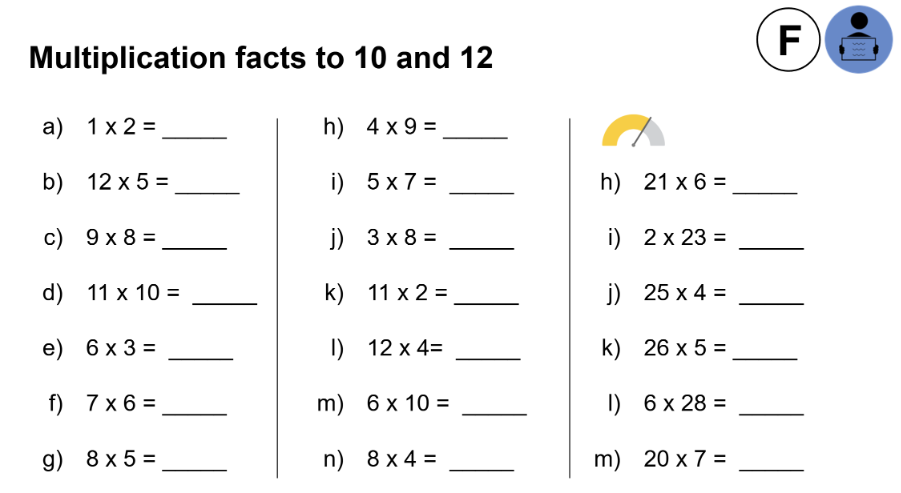
To help reinforce learning in the classroom, we ask students to practice their number facts in addition, subtraction, multiplication and division. Complex concepts in mathematics relies on solid foundational knowledge, so students can focus on the learning and not be held up by simpler calculations. This can be just focusing on one area for 5 minutes per night to help develop speed and accuracy. If you have any questions about how to support your child’s fluency practice, please contact your child’s classroom teacher.