
Wellbeing
PBL
At SFS, our PBL (Positive Behaviours for Learning) school wide expectations are:
Respect, Responsibility and Kindness
We have a whole school social skills lesson where we explicitly teach an expected behaviour from our Behaviour Expectation matrix.
This week we have continued to focus on Respect in all areas of the school: Use good manners.
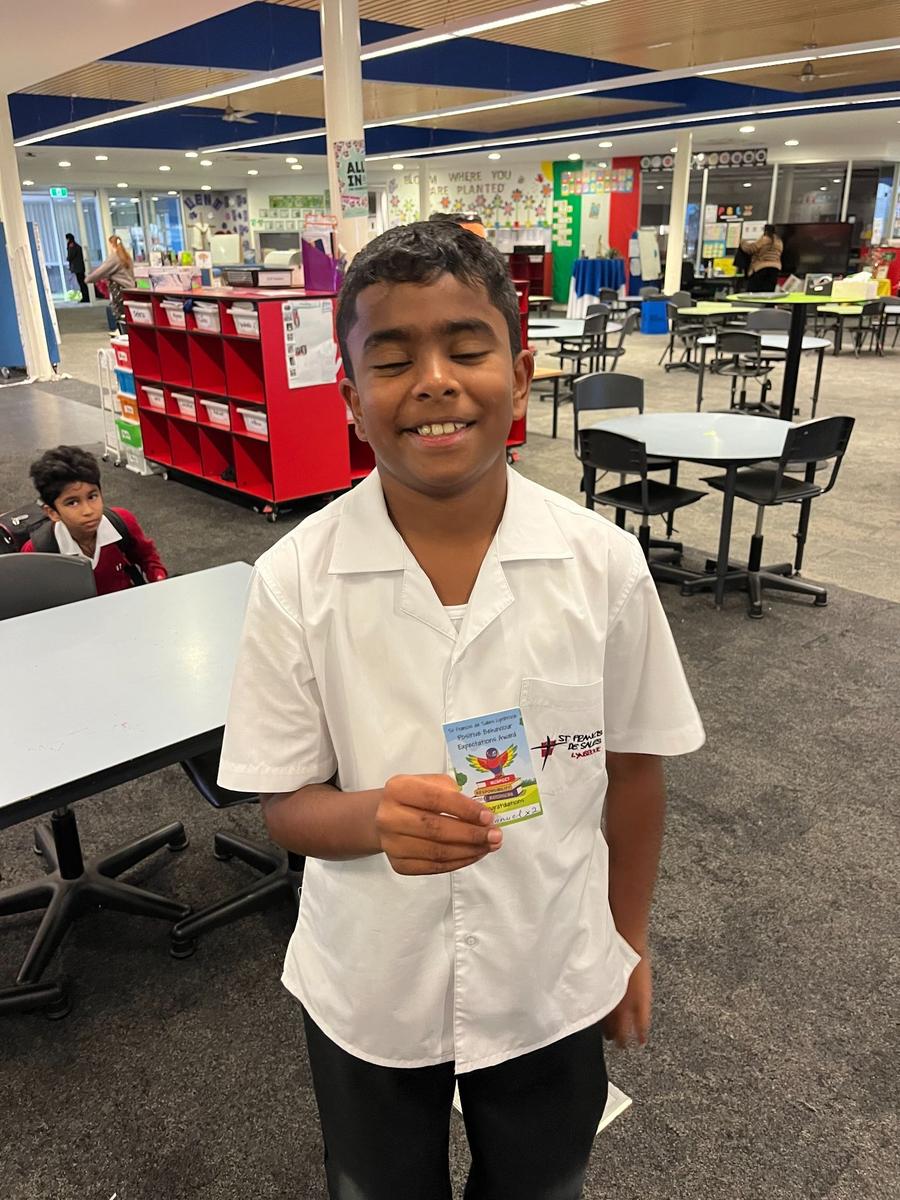
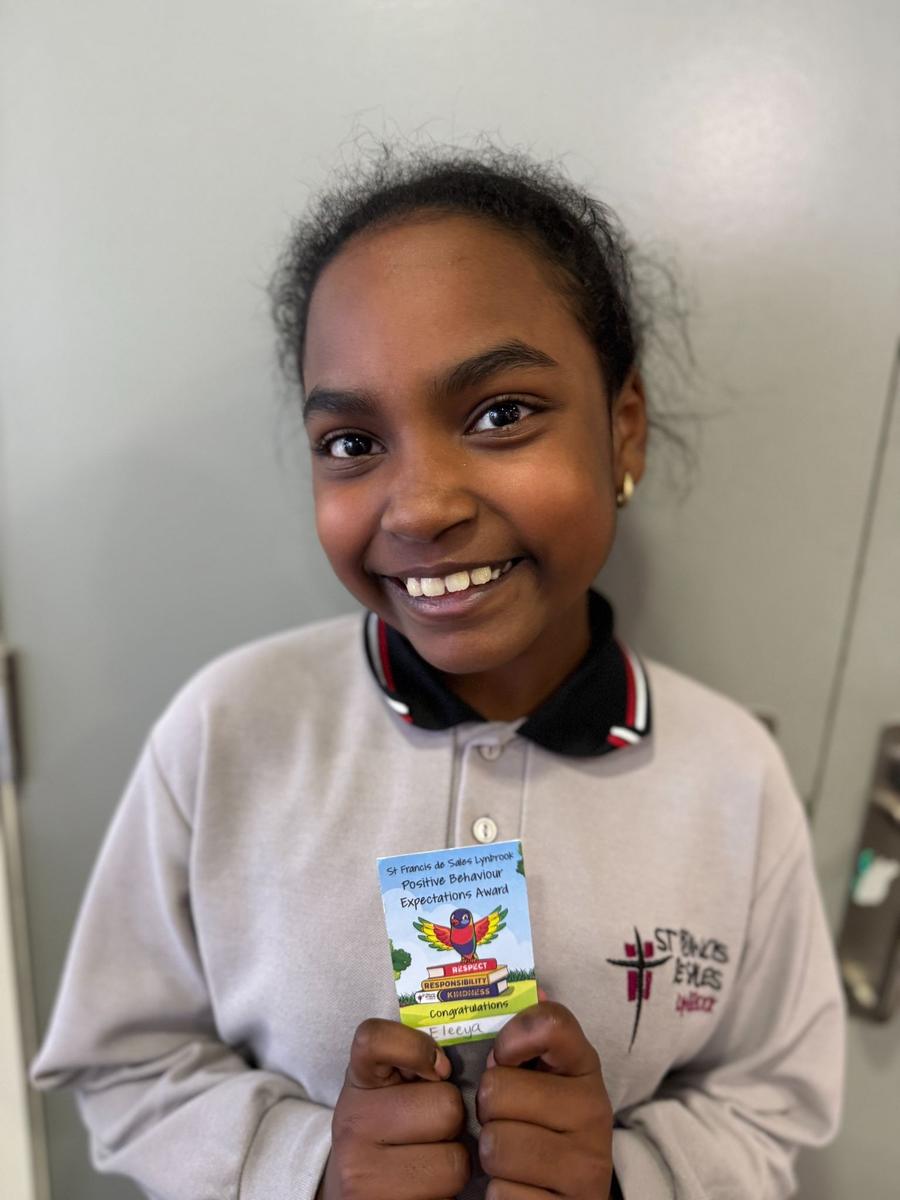
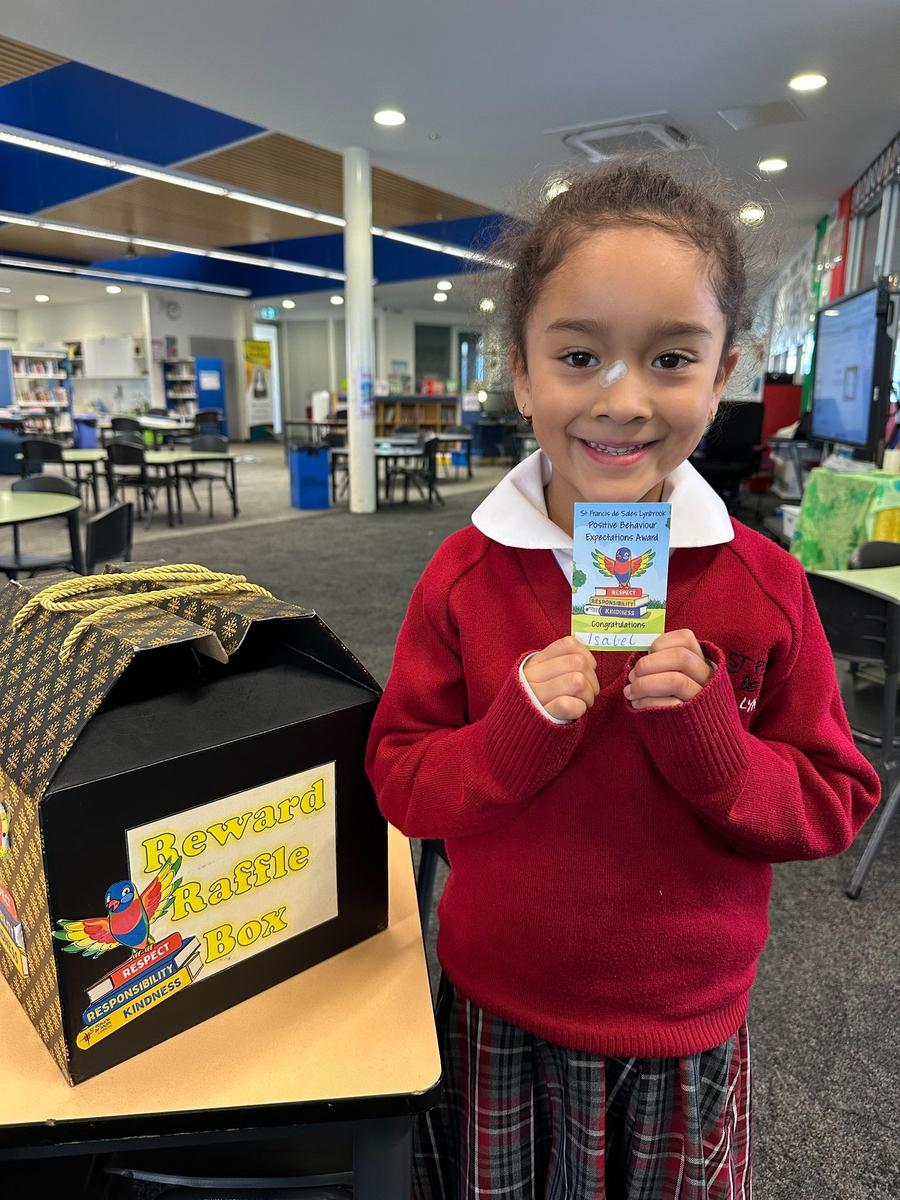
We discussed with the students why it is important to use good manners.Using good manners helps us to interact with others in a more positive way and helps create a kinder, more considerate environment at school. We need to respect the dignity of the human person as we are all created in the image of God. The students practiced using different phrases that demonstrate good manners such as please, thank you and excuse me. Here are some of our PBL raffle winners who have been seen demonstrating school expected behaviours.
Child Safety standards
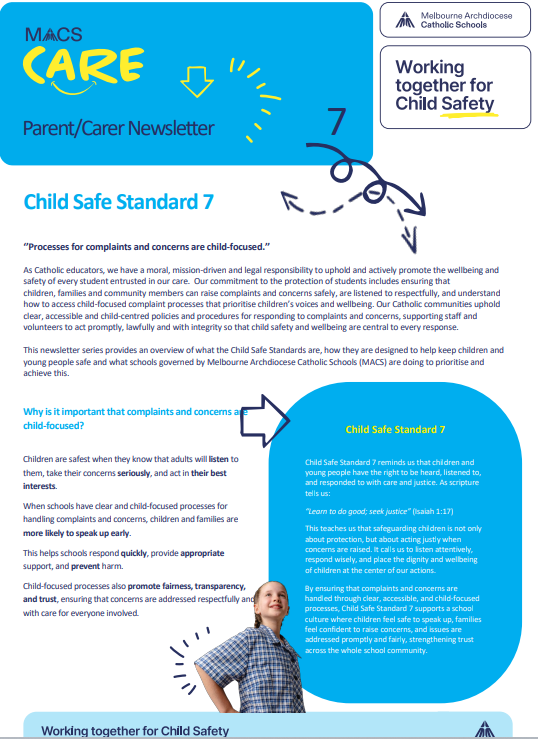
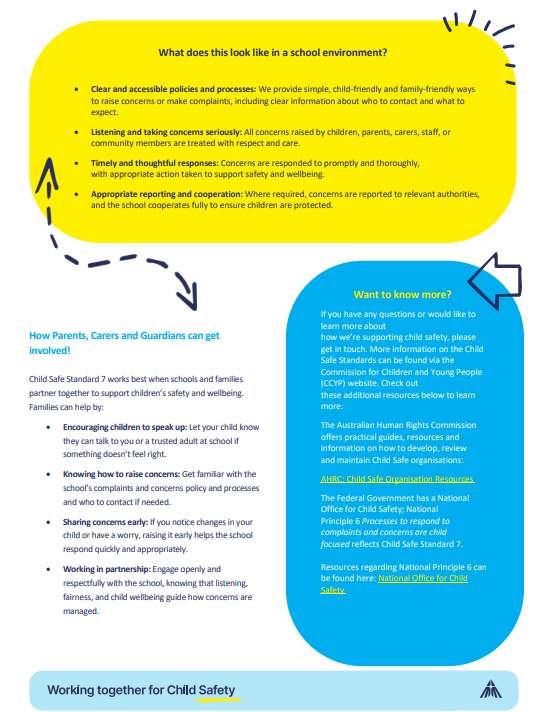
To highlight the importance of Child Safety in schools, MACS (Melbourne Archdiocese Catholic Schools) has created a resource called “11 standards in 11 months.”
Let’s look at Child standard 7 in more detail through a newsletter created for parents and carers by MACS. Child safe standard 7 is there are processes for complaints and concerns at school and these processes are ‘child-focused’.
Healthy families
The following fact sheet has been taken from the BeYou website. BeYou is a government resource for educators that promotes and supports a mentally healthy school community. This fact sheet is all about healthy families. For more information, visit www.beyou.edu.au
“Healthy family relationships and safe and supportive home environments are central to children and young people’s healthy development and wellbeing.
Family diversity
Be You uses the term ‘family’ to encompass parents, carers, extended family members and other adults responsible for children and young people’s care. Family members may not necessarily be biologically related or even live with the child or young person all the time. Some individuals may have one or several parents or carers, including grandparents, step-parents, kinship carers, aunts and uncles, foster parents or adoptive parents.
A family can be made up of anyone a person considers to be their family.
For most individuals, the family environment and family relationships have a big impact on life outcomes. In other words, positive family relationships can help children and young people flourish.
All families are unique, and supporting families involves acknowledging the strengths and diversity that each brings.
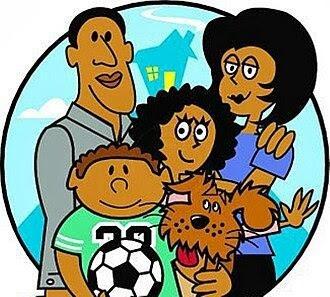
Research shows the quality of family relationships is more important than their size or who makes up the family. Whoever the family is made up of, they can build strong, positive relationships that promote wellbeing and support children and young people’s mental health.
Families matter
Childhood experiences can have lasting impacts. The relationships children and young people experience can impact their wellbeing.
Those provided with social, emotional and physical support are more likely to reach their full potential and experience better health outcomes in adulthood.
The home environment matters
The home environment, family functioning and the learning environment are all important influences on child and young people’s development.
Healthy family relationships help children and young people feel secure and loved. This can impact their brain development and sense of self, including their strengths and sense of belonging.
Positive relationships with family can support individuals in building independence, responsibility, confidence and trust. They provide a place where these can be explored safely, where there’s guidance and room for learning and experiences.
Families also give children and young people a model from which they learn about relationships and how to build connections throughout their lives. Children and young people who learn healthy relationship skills are more likely to experience positive peer relationships and grow up to become confident and resilient individuals.
Healthy families
In healthy family relationships, people trust and rely on each other for support, love, affection and warmth. Families often share common goals and work together to reach those goals (for example, children and young people may help their families get do the dinner dishes so that everyone can relax).
Family members feel safe and connected to one another. Sometimes these relationships involve conflict, which is a normal part of family life. Conflict can occur between adults, children and young people. In healthy relationships, these conflicts are dealt with in a safe and respectful way. For example, listening, showing understanding, and finding solutions together.
Healthy family relationships mean that positive interactions outweigh the difficult times. Adults experiencing difficult life situations can provide learning opportunities in teaching and modelling coping strategies – children and young people shouldn’t be burdened with stress, but it can be helpful for them to see families successfully managing it with positive coping strategies.
The key qualities of a strong family unit identified by Australians in the Family Strengths Research Project were:
•communication – listening to each other and communicating with openness and honesty
•togetherness – sharing similar values and beliefs that create a sense of belonging and bonding
•sharing activities – spending time together doing things they enjoy (for example, sports, reading, camping or playing games)
•affection – showing affection and care regularly through words, hugs, kisses, kindness and thoughtfulness
•support – offering and asking for support, with family members knowing they will receive help, encouragement and reassurance from one another
•acceptance – understanding, respecting and appreciating each family member’s unique qualities
•commitment – seeing family wellbeing as a priority and acting accordingly with commitment and loyalty
•resilience – being able to tolerate difficulties and adapt to changing situations in positive ways.
The biggest challenges in family relationships are often communication breakdown, parenting issues and difficult relationship dynamics.
Risk factors in families
There are many reasons why some individuals are more vulnerable than others to developing mental health issues. Risk factors for children and young people are things that increase the likelihood of mental health issues developing.
Risk factors within the family include things like:
•family conflict, instability or separation
•lack of involvement with children and young people, or inconsistent parenting
•family violence, child abuse or neglect
•mental health issues or substance abuse
•traumatic experiences including intergenerational trauma
•a serious illness or disability
•financial difficulties.
Protective factors in families
Protective factors decrease the chance of an individual experiencing mental health issues. These are related to good outcomes for children and young people and serve to protect them if they’re exposed to risk.
Protective factors within the family include:
•strong and stable family relationships – for example, consistent, caring relationships
•supportive parenting – for example, being available to listen to and talk with children and young people
strong family values for example, a shared understanding of how to treat others
•connection to country and community for First Nations peoples
•connection to culture for multicultural families
•consistency in routines and limits – for example, responding the same way to children or young people’s behaviour.
How you can support families
Many factors within the family and community impact a child or young person’s mental health and wellbeing. Because these factors occur within the home or community, as an educator, you may not always be directly aware of them.
Acknowledging that there are multiple influences on children and young people’s wellbeing can help you better understand and assist an individual who you think may be experiencing a mental health issue. Your early learning service or school can support children and young people’s mental health through efforts to connect with and support families.
Build partnerships with families
•Value family and community members’ knowledge of each child or young person.
•Create a safe space to share. Families should feel safe to choose what and how much they want to share.
•Value the family’s contributions to, and role in, each child or young person’s life.
•Communicate openly and respectfully with families.
•Share insights and perspectives about children or young people.
•Engage in collaboration and shared decision-making where everyone feels valued.
•Develop inclusive environments where diversity is acknowledged, respected and embraced.
Communicate openly and build trust with families
Shared information helps everyone gain a deeper understanding of:
•how to best work together to support children and young people
•children and young people’s behaviour at home and in the learning environment
•the most effective ways to support learning
•what children and young people enjoy and what their strengths are
•resources for addressing social and emotional challenges.
Working together with families
There are things families can do to actively build strong and healthy family relationships.
When working with families, you might like to share strategies that you have observed work well.
For families wanting some support, you might suggest they try the following activities at home:
•Spending regular time together as a whole family and with each child or young person, even if it’s for a few minutes each day.
•Encouraging connection by reading stories together at home (if age appropriate).
•Offering help and support to one another.
•Doing fun things and laughing together.
•Encourage praising children and young people for their achievements big or small.
•Talking to each other.
•Telling each other what you like about your family (for example, “Dad, I like your hugs” or “Cara, you asked for that very politely”).
•Having family discussions to organise family events and to work through difficulties.
•Trying to include children and young people in decisions affecting them (for example, giving younger children choices to help them make a decision).
•Teaching and modelling problem-solving skills to children and young people so they become more confident at resolving their own conflicts.
•Getting support from family, community, friends or professionals when they need help juggling demands.
Children and young people need the support of a nurturing, well-functioning family. The strength of family relationships can impact their development and wellbeing.”
If you have any concern about your child’s mental health or wellbeing, please do not hesitate to contact me or make a time to speak with me. My working days are Monday to Wednesday and Friday.
Rachel Lenko
Mental Health and Wellbeing Leader
rlenko@sfslynbrook.catholic.edu.au

Positive Quote for the Day
Positive Quote for the Day