
Teens & Screens
Digital Habits - tips for parents/carers

Teens & Screens
Digital Habits - tips for parents/carers
There was a time when boredom was unavoidable.
Children stared out car windows. Teenagers waited at bus stops with nothing but their thoughts and watching the traffic. Families sat in waiting rooms flipping absentmindedly through old magazines. Moments of silence, stillness and mental wandering were woven naturally into daily life.

For Gen Alpha (those born between 2010 and 2025), they face a challenge no previous generation has ever confronted: they’ve never known a world where boredom wasn’t immediately solvable.
For Gen Alpha, entertainment is their default state. Boredom isn’t a natural occurrence – it is a problem they solve with the nearest screen. There are now very few moments in the day that are not filled with stimulation. And…it is hindering them.
But there’s good news: Boredom isn’t the enemy. It’s the secret ingredient to creativity, resilience, and authentic self-discovery. Neurons fire. Imagination wanders. Ideas emerge from nothing. Original ideas, not ideas implanted by algorithms.
Why Boredom is Good
Neuroscientists have found that when the brain is not focused on external tasks, a network known as the “default mode network” becomes more active. This network is associated with internal reflection, daydreaming, imagination and future planning. In other words, some of the brain’s most important developmental work happens not when we are consuming information, but when the mind is free to wander.
Adolescence is a period of enormous brain development. The parts of the brain involved in reward-seeking and social sensitivity develop earlier than the systems responsible for impulse control, planning and self-regulation. This helps explain why teenagers are naturally drawn to novelty, peer interaction and immediate rewards.
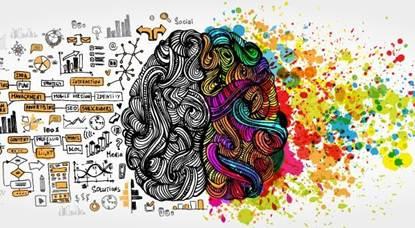
How Screens are Eroding Boredom
Modern digital platforms are exceptionally good at engaging reward systems in the brain. Infinite scrolling, autoplay features, notifications and rapidly changing short-form content all provide frequent bursts of novelty and unpredictability that keep users engaged for long periods of time.
Importantly, researchers are careful not to argue that technology itself is inherently harmful. Screens can support learning, creativity, communication and connection. The concern is less about technology itself and more about the disappearance of cognitive rest - the gradual loss of quiet moments in which the brain can consolidate learning, reflect deeply and practice sustained attention.
Studies increasingly suggest that heavy or highly fragmented screen use may be associated with difficulties in sustained attention, emotional regulation and executive functioning. Executive functions are the mental skills that allow us to focus, manage impulses, plan ahead and persist with difficult tasks. These abilities continue developing well into early adulthood.
Such studies suggest that constant exposure to rapid, highly stimulating content may reduce opportunities for young people to practice boredom tolerance, deep concentration and reflective thinking.
There is also growing concern about what researchers call “continuous partial attention”, a state in which attention is constantly divided between multiple streams of information. Many teenagers now move rapidly between videos, messages, notifications and schoolwork with very little uninterrupted cognitive focus. While the brain adapts remarkably well to fast-paced digital environments, learning itself still depends heavily on attention, memory consolidation and sustained mental effort.

What Schools and Parents can do
Research consistently suggests that balance, intentionality and modelling healthy habits are far more effective than total screen bans. Small changes can make a meaningful difference: device-free meals, phone-free car rides, protected reading time, outdoor activity, creative hobbies and opportunities for uninterrupted focus.
Equally important is helping students understand how attention works. Young people are often highly receptive when they learn that many digital platforms are intentionally designed to capture and retain attention for as long as possible. Understanding the psychology of persuasive design can help students make more conscious choices about their technology use.
Tanya Moran
Leader of Professional Practice