
Student Wellbeing

Class Refusal
What’s Really Going On & What You Can Do About It
Sometimes school just feels like too much. Maybe there’s a class you really don’t want to go to, or you’ve started avoiding certain lessons altogether. Maybe it feels easier to skip it, leave early, or ask to go home.
If this sounds familiar, you’re not alone, and it doesn’t automatically mean something is wrong with you or that you’re just being lazy.
A lot of the time, avoiding class is actually a sign that something else is going on underneath.
So, what might be going on?
Class refusal or avoidance is often linked to anxiety or stress. That could come from things like:
not feeling comfortable with people in the class
worries about a teacher or how you’ll be treated
feeling overwhelmed by the work
fear of getting it wrong or looking “stupid”
feeling like you don’t belong
general stress that builds up over time
Sometimes it’s not even one big thing, it can be lots of small things adding up until it just feels easier not to go.
Ultimately, avoiding things doesn’t always help!
Avoiding the class might make you feel better in the short term, but over time it can actually make things harder. The work piles up, it can feel more awkward going back, and it can start to affect friendships, confidence, and motivation.
That doesn’t mean you should just push through everything on your own, it just means avoiding it completely usually doesn’t fix what’s underneath.
So what can help?
You don’t have to figure it all out at once. A good first step is asking yourself, “what is it about this class that feels hard right now?”
From there, some things that might help include:
talking to someone at school you trust (like a wellbeing staff member or teacher)
asking for support or adjustments in class if you need them
breaking things down into smaller, more manageable steps
having a plan for how to get through the class rather than avoid it
letting someone know what’s actually going on instead of holding it in
Sometimes just saying it out loud makes it feel less heavy.
Avoidance is usually your brain trying to protect you from something uncomfortable. The problem is, it can also keep you stuck.
Facing things doesn’t have to mean doing it perfectly or liking it straight away. It can just mean showing up, even if it feels uncomfortable, and building from there.
One important thing to remember is the longer you avoid something, the harder it can feel to go back. But the opposite is also true, small steps back into things can slowly make them feel more manageable again.
Progress doesn’t have to look big. Sometimes it’s just walking into the classroom. Sometimes it’s staying for part of the lesson. Sometimes it’s just not giving up completely. That still counts.
Remember, you don’t have to do it alone.
If things feel hard, you don’t have to just push through on your own. Talking to someone, a teacher, wellbeing staff, or another trusted adult can actually make a big difference.
Most people don’t expect you to have all the answers. They just want to understand what’s going on and help you find a way through it.
Looking For Support?
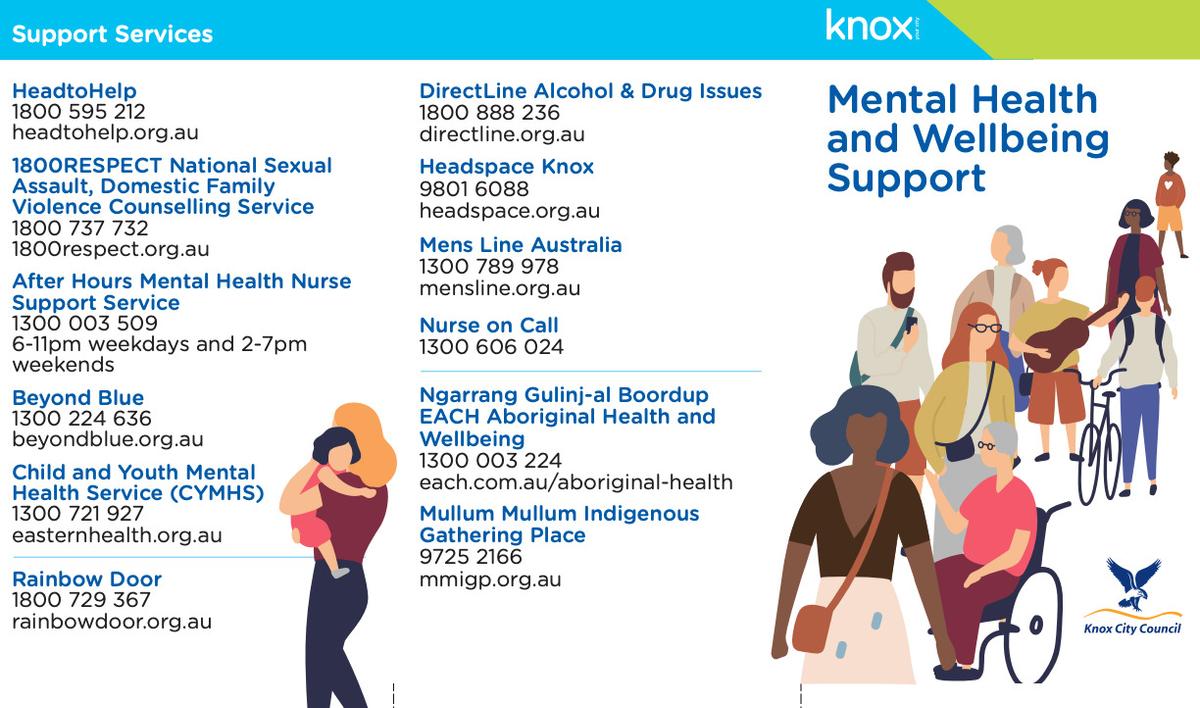
Knox Youth Services
Free support for young people aged 10 to 25yrs.
2 Capital City Blvd, Wantirna South
(03) 9298 8469
Headspace Knox
Confidential support for young people aged 12 to 25Y
Westfield Knox Ozone
(03) 9801 6088
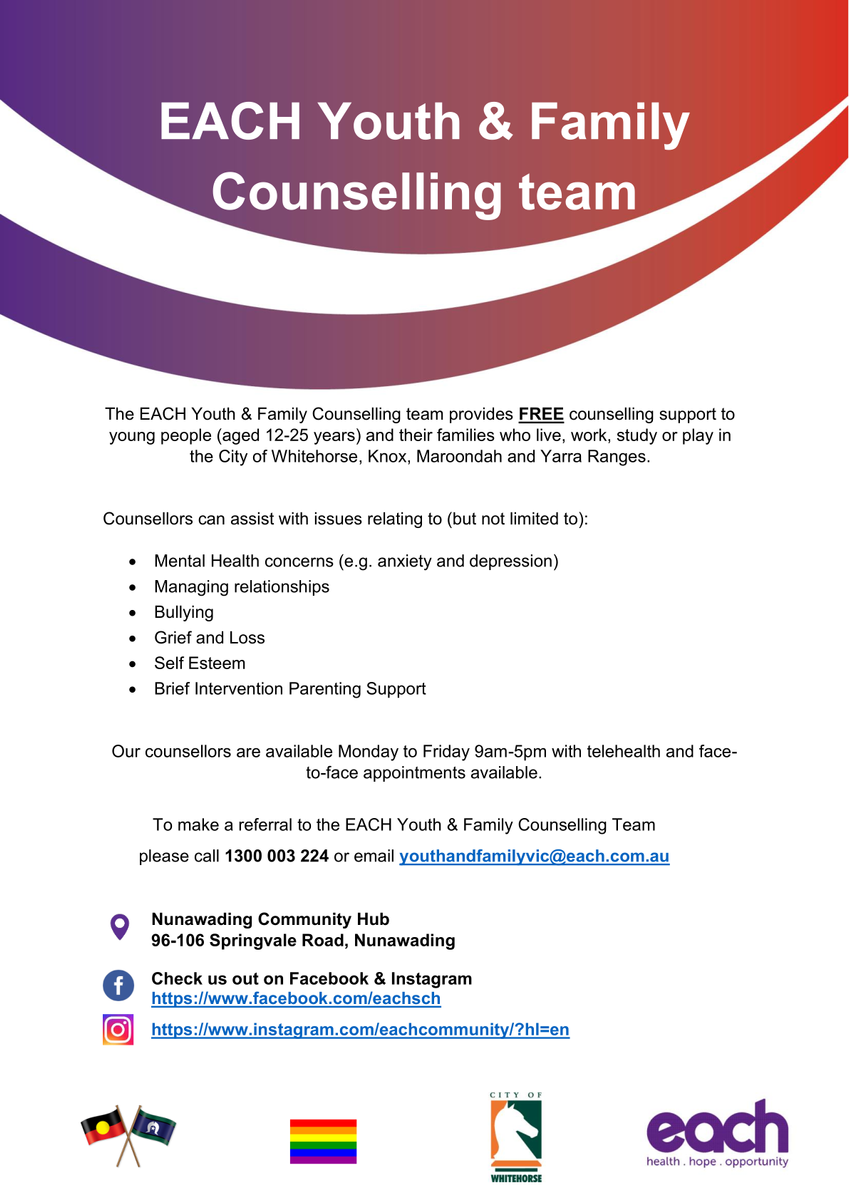
EACH Community Health
Counselling, mental health and wellbeing services
Phone: 1300 003 224
EACH - Health Services 1300 003 224
These services are free or low-cost.
93 Boronia Rd, Boronia
Youth Mental Health Services 9298 8469
2 Capital City Blvd, Wantirna South
headspace 1800 650 890
2 Capital City Blvd, Wantirna South
Safe Steps Family Violence Response Centre 1800 015 188 (24 Hours)
1800 Respect 1800 737 732 (24 Hours)
Nurse on Call 1300 60 60 24
The Butterfly Foundation 9822 5771
FriendLine 1800 424 287
24/7 Mental Health Hotlines:
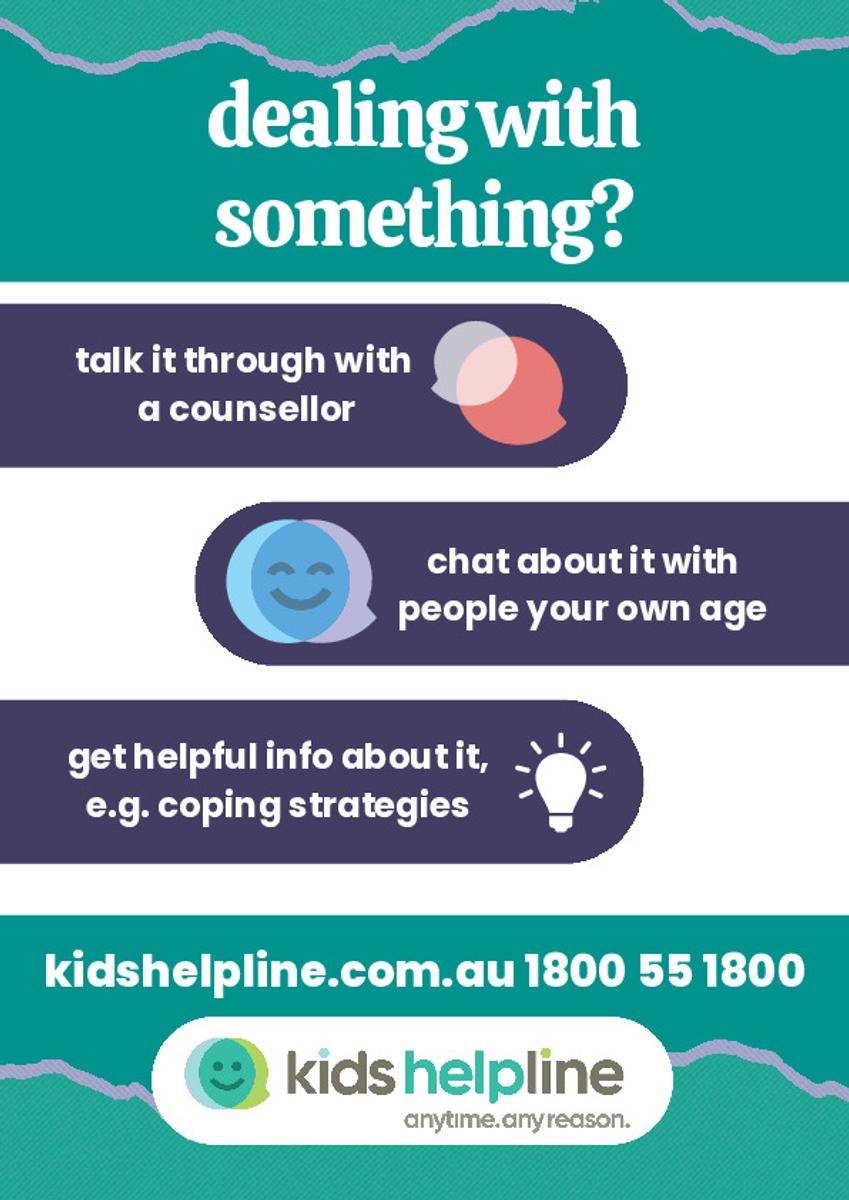
Kids Helpline 1800 55 1800
Lifeline - Call 13 11 14, text 0477 13 11 14 or chat online.
Suicide Call Back Service 1300 659 467 or suicidecallbackservice.org.au
Beyond Blue 1300 224 636

Student Wellbeing Team
Email: wellbeing@wantirnacollege.vic.edu.au
Chelsea Collings - Leader of Wellbeing
Guiseppe Relia – Wellbeing Counsellor
Talea-Jane Simpson – Wellbeing Counsellor
Jane Winning - Social Worker
Tajinder Wulff - Mental Health Practitioner 7-8
Joel Taylor - Mental Health Practitioner 9-12