
Inclusion Team
Our Secret Senses
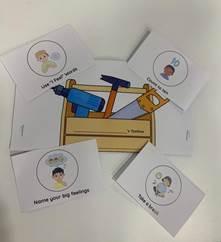
In our wellbeing sessions this week, students have been creating their own emotional toolbox with a collection of strategies and techniques they can use when experiencing big emotions.
Strong emotions can sometimes feel overwhelming and difficult to manage. When this happens, having a toolbox of practical strategies helps students pause, regulate and process what they are feeling in a safe and constructive way.
These tools may include deep breathing, having a sip of water, counting to 10, movement breaks, talking to a trusted adult or drawing and quiet time. By practising these strategies in a calm environment, students build confidence in using them when they need them most.
Developing an emotional toolbox supports healthy coping skills, emotional regulation and resilience. It empowers students to understand their feelings, respond thoughtfully and move forward in a positive way.
We are all familiar with the 5 senses of the body; touch, taste, hearing, smell, sight. This week we have also been learning about our other ‘hidden’ senses including proprioception (body position), vestibular (balance), and interoception (internal sensations), all driven by specialised nervous system receptors.
Most children have adequate interoception awareness, however some may be inhibited by illness, disease or disability. Our interoception is our ability to recognise and feel what is happening inside our body such as hunger, needing the toilet, scratching an itch or recognising our body temperature and heart rates. Interoception is the foundation required for self regulation skills.
Our bodies rely on important sensory systems to help us move, balance and feel secure in our environment.
Proprioception is our sense of body position in space. It allows us to feel our muscles contract and stretch and helps us know where our body is without needing to look. This sense supports coordination, body control and confidence in movement, whether children are sitting on the floor, writing at their desk or playing in the yard.
The vestibular system is responsible for our sense of head position and balance. It is located in the inner ear and brainstem and helps us control posture, balance and body movement. When this system is working well, children are better able to sit upright, move smoothly and feel steady. However, it can be disrupted by stress or anxiety, which may impact a child’s ability to regulate their body and focus on learning.
Supporting these systems through movement breaks, stretching and play can help children feel more regulated, calm and ready to learn.
The Inclusion Team