Learning & Teaching
What happening Maths…
Prep Mathematics: Counting and Place Value
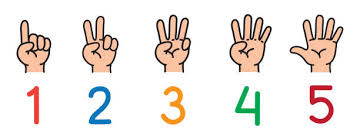
In Mathematics, children in Prep are learning about Counting and Place Value.
Children were learning to:
- Read, write, make and order numbers using a variety of materials and strategies.
- Count and compare collections of objects using concrete materials to strengthen their understanding of number.
- Practise quick recall of numbers up to 5, including recognising numbers in familiar patterns such as on a die or dominoes.
- Split and combine collections of objects, initially to 10 and then beyond (for example, recognising that 6 can be made using 4 and 2, or 3 and 3).
- Represent numbers by breaking them into tens and ones, helping them understand place value and the important role of the zero digit.
How Families Can Support Learning at Home
Families can support this learning by:
- Counting everyday objects together, such as toys, cutlery, steps, or items in the shopping trolley.
- Encouraging children to recognise numbers in their environment, including house numbers, calendars and clocks.
- Playing simple games using dice or cards to practise recognising numbers quickly.
- Asking children to show different ways to make a number (for example, “Can you make 6 using two groups?”).
- Using household items to create groups of tens and ones, such as bundles of sticks, blocks or coins.
- Talking about numbers during daily routines, such as setting the table or packing items away.
Year 1-2 Mathematics: Addition and Subtraction
In Mathematics, children in Grades 1–2 were learning about Addition and Subtraction.
Children were learning to represent and solve addition and subtraction problems using a variety of strategies. For addition, children explored the idea of combining quantities (for example, “something and something make…”) and used the plus symbol (+) to record their thinking. Strategies included counting on, partitioning numbers, and rearranging parts to make problems easier to solve.
For subtraction, children developed an understanding of subtraction as taking away and finding the difference. They explored a range of strategies including counting back, counting up, using facts of 10, using doubles, making a ten, and adding up to find answers.
At Home you may explore Addition and Subtraction:
Deck of Cards:
Using a deck of cards, this activity can be played with 2 to 4 people. Each person picks up two cards. They then need to add or subtract the two numbers and provide the answer.
Dice:
Make that Number is a simple dice game to practice addition and subtraction. All you need is 2 or 3 dice and a list of numbers 0-12 (for 2 dice) or 0-18 (for 3 dice). Children can roll the dice and add or subtract their numbers together. If they are using 3 dice, they can add one number and subtract the other.
Blocks:
Use building blocks and ask the child to build a tower with a certain number of blocks, for example 5. Then, ask them to add or subtract blocks to the tower, like 3 more or 3 less. Ask what are you left with?
Year 3-4 Mathematics: Addition and Subtraction

In Mathematics, children in Grades 3–4 were learning about Addition and Subtraction.
Children focused on solving addition and subtraction problems using a range of mental and written strategies. These included partitioning numbers, rearranging parts, and regrouping to make calculations more efficient and accurate.
Children also recognised and explained the relationship between addition and subtraction as inverse operations. They explored how one operation can be used to undo the other, which supported them to partition numbers, check their answers, and find unknown values in number sentences.
As part of this learning, children developed problem-solving strategies and used digital tools to model, solve and check addition and subtraction problems. They were encouraged to explain their thinking and select strategies that best suited the problem.
How Families Can Support Learning at Home
- Encouraging children to solve everyday addition and subtraction problems, such as working out totals, change, or differences.
- Asking children to explain which strategy they used and why, rather than focusing only on the answer.
- Practising mental maths using partitioning (e.g. breaking numbers into hundreds, tens and ones).
- Using addition to check subtraction answers, and vice versa, to reinforce inverse operations.
- Playing games that involve adding and subtracting larger numbers, such as scorekeeping or budgeting games.
- Using digital tools or apps that allow children to practise addition and subtraction in engaging ways.
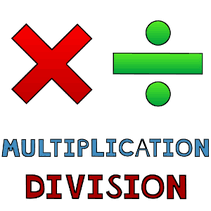
Grade 5-6 Mathematics: Operations: Multiplication and Division
In Mathematics, children in Grades 5–6 were learning about Operations, focusing on Multiplication and Division.
Multiplication:
Children practised solving problems involving larger numbers multiplied by one- or two-digit numbers. They explored strategies for selecting the most efficient mental and written methods, used digital tools where appropriate, and checked the reasonableness of their answers to ensure accuracy.
Division:
Children focused on solving division problems by choosing the most effective strategies. They interpreted remainders according to the context of the problem, expressing results as whole numbers, decimals, or fractions as needed.
Children also explored the relationship between multiplication and division as inverse operations. They developed families of number facts, which helped improve their problem-solving skills and flexibility when working with numbers.
How Families Can Support Learning at Home
- Encouraging children to practise multiplication and division with real-life problems, such as sharing items, working out costs, or measuring ingredients.
- Asking children to explain their strategies and why they chose them.
- Using multiplication to check division answers and vice versa to strengthen understanding of inverse operations.
- Practising number fact families to improve speed and confidence with calculations.
- Exploring remainders in context, for example, when dividing items between friends or packaging products.
- Using digital tools or apps to explore larger number calculations in a fun and interactive way.
Literacy News:
Prep: Our newest learners are off to a fantastic start. The prep children are currently mastering our first set of sounds: s, a, t, p, i, n, m, and d.
By learning these specific sounds first, children are quickly discovering "blending" to read and write CVC (consonant-vowel-consonant) words like sat, pin, and mad. We are also learning about "tricky words" those high-frequency words that don't always follow the rules: The tricky words we are currently learning include I, is, the, and a.
In writing, we are focusing on:
Letter Formation: Learning exactly where to start and finish each letter.
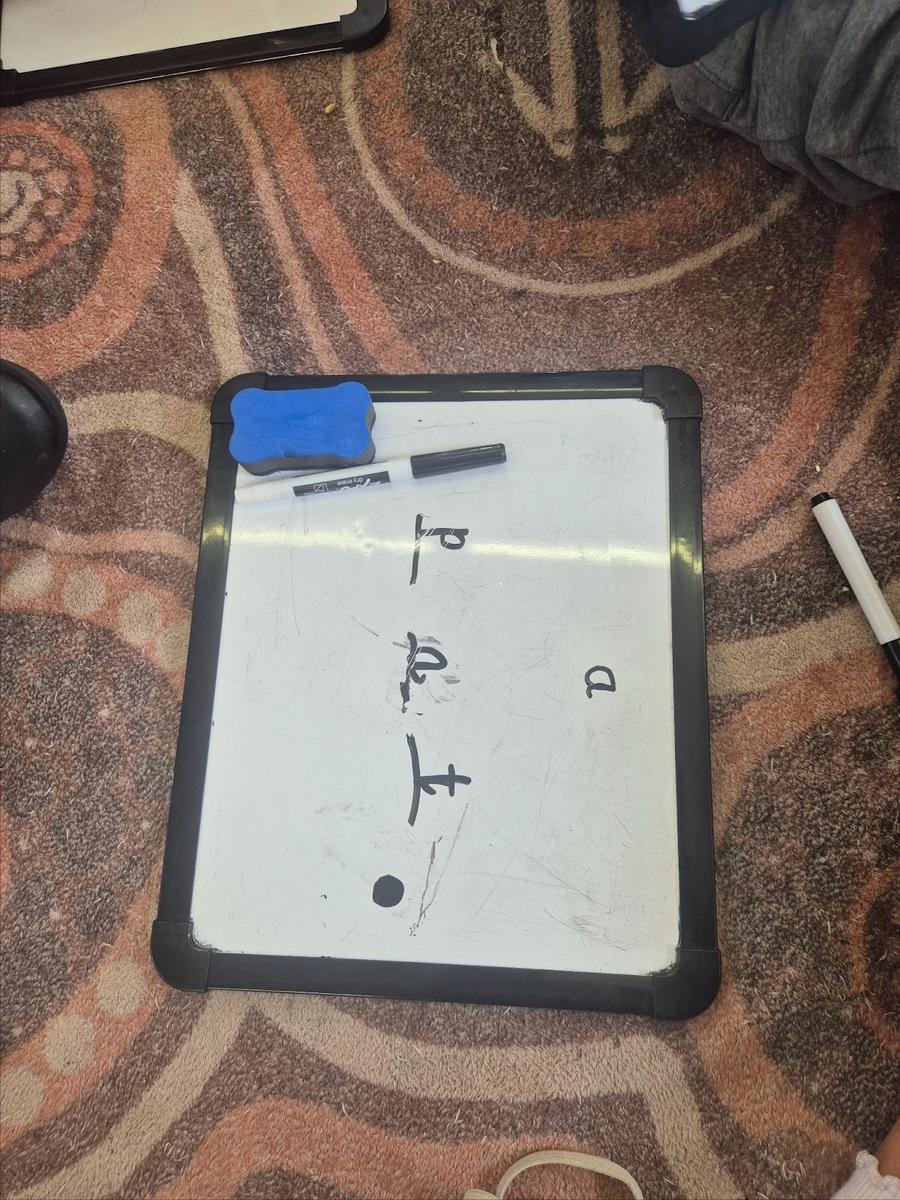
Punctuation: Remembering that every sentence needs a full stop at the end.
Year 1 & 2:
This month, our grade 1-2 children will be focusing on different ways to read and write long vowel sounds, such as /ee/ (as in tree or leaf) and /oa/ (as in boat or snow). They will be developing their reading confidence by reading longer words by breaking them down into smaller syllable parts such as pic-nic and muff-in.
To strengthen children’s understanding of texts, the grade 1-2 children are practicing answering literal questions (what happened?) and inferential questions (how was the character feeling?).
In writing, children will learn how to expand simple sentences by including who, when and where. Children will include adjectives in their writing to make it more interesting.
Our spelling focus will include the sounds ‘ar, or, ur, ow, oi/oy, ow , ear, air, ure, -er’ and apply this knowledge to write dictated sentences.
Year 3 & 4:
The Grade 3/4s have continued reading Roald Dahl’s Fantastic Mr. Fox. To deepen their engagement, we have re introduced Book Clubs. Children are rotating through roles that help them understand the story. The roles involved include: Word Wizard where they find interesting vocabulary, Discussion Director, Passage Pickers highlight the most important parts of the text, Connector and finally Summariser.
Between our novel study, we have also been preparing for NAPLAN and sharpening our grammar by mastering word contractions (like don't or can't) and using conjunctions to turn simple sentences into complex ones.
Year 5 & 6:
Our senior students are currently reading Gabrielle Wang’s The Ghost in My Suitcase. They are using this mentor text to elevate their own writing style.
The key focus for our 5/6 children was to include sophisticated grammar when exploring the relationship between independent and dependent clauses that create flow and suspense. Our 5/6 children are using their book club roles to analyse why an author chooses specific words to evoke emotion or atmosphere. In spelling, we are investigating the morphology of words by studying suffixes like -ish and -ure, helping us understand how word meanings change.
Literacy at Home: How You Can Help
| Level | Try This at Home... |
| Prep | Sound Hunt: While driving or shopping, look for things starting with our sounds of the month (S, A, T, P, I, N, M, D). Can they "body blend" the word sat (s-a-t)? |
| Year 1/2 | Syllable Clap: When you encounter a long word in a bedtime story, clap out the beats (e.g., u-ni-corn). This helps them tackle multisyllabic words with confidence. |
| Year 3/4 | The Connector: Ask your child to be a "Connector." How does Fantastic Mr. Fox remind them of another book, a movie, or even something that happened in their own life? |
| Year 5/6 | Word Detective: Look for our suffixes (-ish or -ure) in the wild! See who can find the most words ending in these (e.g., greenish, pressure, childish, adventure) in a magazine or newspaper. |