
Artificial Intelligence
Our changing relationships with the technology...
Artificial Intelligence
Our changing relationships with the technology...
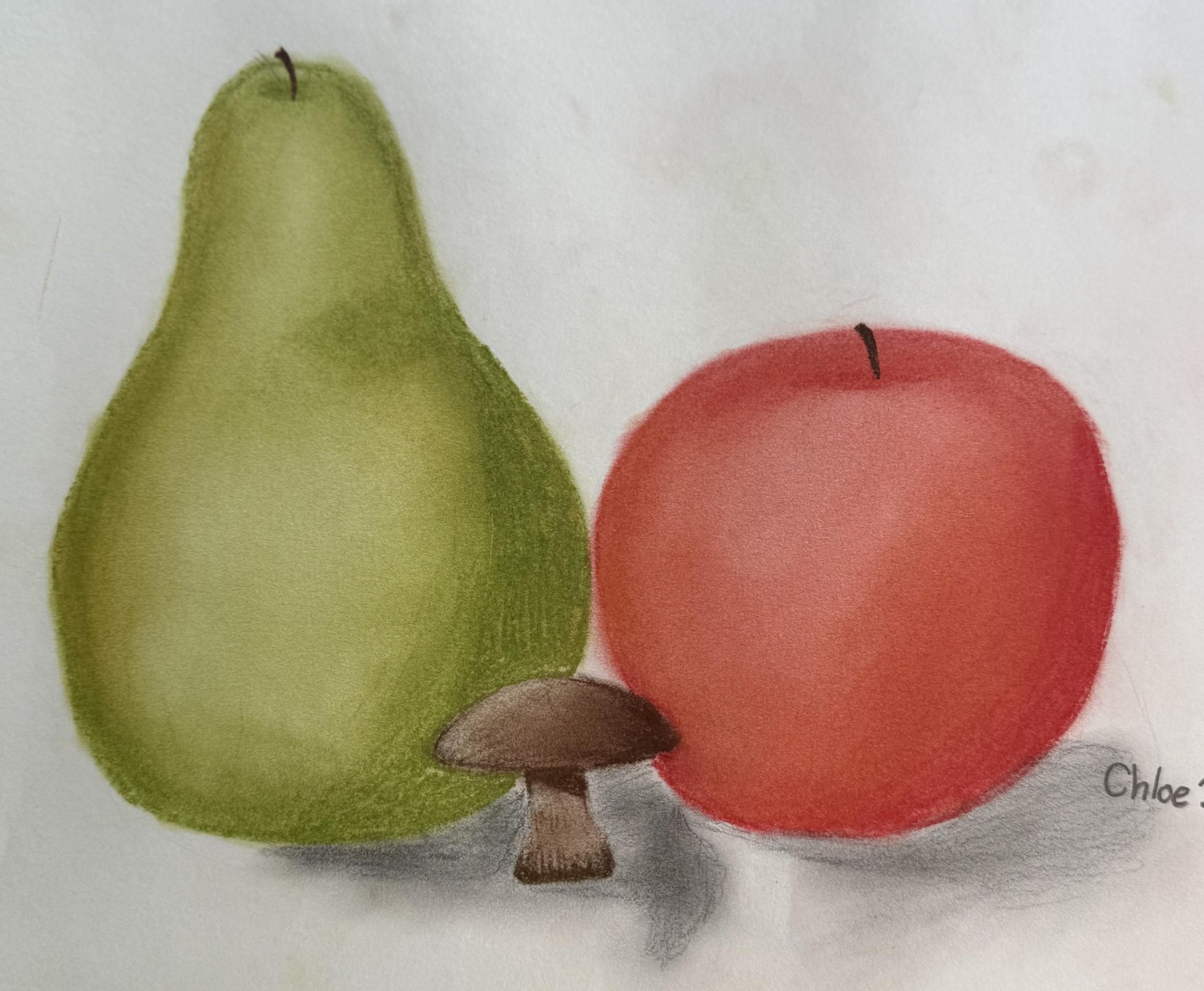
Artwork: Chloe Donnellan, Year 7, Plenty Campus
AI: Friend, Foe Or Somewhere in Between?
Ms McCowan, Ridgeway Campus
It might seem predictable for a Literature teacher to be sceptical of the virtues of AI, so at the risk of being a walking stereotype, I am here to vouch for a considered and prudent use of AI in English and Literature.
Usually, I am an enthusiast for digital tools and applications that might enhance enjoyment and interest for students in English and Literature classrooms and help streamline learning. My favourite purchase during the pandemic of 2020 was my 12.9-inch iPad Pro. I may have been heard to say at the time that it was ‘life-changing’!
What I have seen over the last 12 months with increased student use of AI is, however, that we may be at risk of missing the most important step in learning - ‘doing the thinking’. Sure, you can keep refining the prompts to get sharper, more reliable and more useful information via machine learning and you can shortcut some tasks in a way that saves time and leads you to the new and (perhaps) the unexpected. I can see the value of this for lower order thinking tasks, and even for the more prosaic parts of our daily lives.
A while ago, I read a great article on the implications of AI published in a University of Melbourne Pursuit Health and Medicine article1. It rang a bell with what could possibly happen in my classrooms (if we don't have a considered AI approach) - that students could overlook the value of process in learning, and perhaps begin to see effort as unnecessary (even foolish) and avoid the kind of ‘unplugged’ thinking needed for growth at school and for life in general.
I teach the IB Literature course, and I think it is perhaps a kind of madness for anyone to believe they would be prepared for the Paper 1 assessment by relying on AI to provide interpretations of unseen or new texts. In the VCE English course, Section C requires comparable skills of analysis; a kind of thinking on the spot that is a skill best acquired with practice and intention, or with ‘unplugged thinking’. In both assessments it will be you alone with the exam paper trying to work out your understanding of a text you have just met. It will be your ability to think that you are reliant on.
So, with full expectation that this may engender an eye roll, I would like to encourage everyone to embrace the hard yards of deep and intense thinking. AI may not be friend or foe, but it could limit your capacity to think at a time in your life when you have the potential for the greatest growth.
How is AI changing everyday life?
Alex Zhou, Year 9, Ridgeway Campus
Artificial Intelligence (AI) has slipped into our daily lives so smoothly that most of us didn’t even notice. One minute we were typing our own search queries; the next minute our phones were finishing our sentences like an overconfident friend. Today AI recommends what to watch, checks our spelling, predicts traffic, and occasionally gives us suspiciously accurate shopping suggestions. It’s helpful… and slightly unsettling.
PROS
AI helps make simple tasks quicker. When Google Maps tells you the fastest route to school, that’s AI. When Netflix somehow knows you’re about to start a new detective-crime obsession, that’s AI too. These systems analyse your habits so accurately that sometimes it feels like they’re reading your mind - and honestly, they probably know more about your music taste than your best friend.
At school, AI can help students revise by explaining hard topics or producing practice questions. Teachers can use AI to organise lessons or mark worksheets, which saves time and nerves. So yes, AI makes things easier, but occasionally it makes them too easy - like when a tool writes a whole paragraph for you and you suddenly understand why English teachers look so tired.
AI isn’t just about entertainment. It’s already playing a big role in healthcare and safety. Doctors can use AI to detect diseases earlier, and banks use AI to block suspicious transactions. There are even AI programs that help manage city traffic so we don’t have endless traffic jams - although the technology hasn’t figured out how to stop people from merging badly.
In these cases, AI works like a super-fast assistant: it doesn’t replace experts, but it gives them sharper tools. If humans are the brain, AI is the extra-fast calculator that does the complicated bits.
CONS
Of course, not everything about AI is brilliant. The first problem is privacy. AI systems learn from data, and they love collecting it - your location, your searches, your messages, and probably the number of hours you spend on your device. The issue is: who controls all this information, and how safely is it kept? It’s not exactly comforting to know that random companies might know your entire personality just because you accepted the terms and conditions without reading them (like everyone else).
Another major issue is the impact on jobs. As AI becomes smarter, it can perform tasks humans used to do - self-checkouts, chatbots, and automated emails are already everywhere. This doesn’t mean 'robots taking over', but it does mean people may need to adapt, learn new skills, and prepare for jobs that didn’t exist a few years ago. It’s like the world is updating itself, and everyone must download the new version.
A big misconception is that AI is always accurate. It isn’t, even though it thinks it’s very accurate. It can misunderstand questions, misidentify faces, and even generate false information that looks real. Deepfakes - AI-generated videos can show people saying things they never actually said. That’s scary enough that even celebrities have started double-checking whether they really appeared in certain videos .
Another problem is bias. Since AI learns from humans, it can pick up human mistakes. If the data it uses is unfair, the decisions it makes might also be unfair - like rejecting job applications for reasons no one can explain. It’s a reminder that, no matter how futuristic and fancy AI appears, it’s still built by humans and capable of human errors.
Countries dominating in AI
Some nations are investing heavily in AI, shaping how the future will look.
United States - home to big tech companies and major research labs; leads in tools, apps, and innovation.
China - a global AI powerhouse, especially in facial recognition, robotics, and large-scale data systems like transport and cars.
South Korea and Japan - leaders in robots and advanced technology.
United Kingdom and European Union - strong in AI ethics, safety rules, and medical applications.
These countries are setting the pace, but AI affects everyone, not just the big players.
So…is AI good or bad?
The truth is that AI is both helpful and complicated. It has made life more convenient, more personalised, and often more efficient. But it also raises serious questions about privacy, fairness, and responsibility. AI isn’t a superhero or a villain - it’s more like a powerful tool that needs rules, guidance, and occasionally, a reality check.
Our society doesn’t need to fear AI, but we shouldn’t hand it control of everything either. The goal is to use AI wisely: to help doctors, assist teachers, solve problems, and make life easier without letting it replace human judgement or creativity.
In the end, AI might be smart, but it still needs us. After all, someone must decide what the 'recommended for you' page should not show.