Wellbeing
Friendship Challenges
Learning how to build and maintain friendships is an important part of growing up. At school, children move from the security of home into a social environment where they are learning to interact with many different people. This can sometimes mean experiencing moments of disagreement, changes in friendships, or even feeling left out. These experiences, while difficult, are also part of how children develop social and emotional skills that support them throughout life.
Research from the Victorian Department of Education highlights that children benefit from developing a range of friendships rather than relying on just one “best friend.” Learning to cope with the natural ups and downs of relationships helps children build confidence, resilience, and the ability to connect with different people over time.
As adults, it is important that we remember our students are still learning these social skills. Many behaviours we see in the playground or classroom reflect age-appropriate developmental stages as children practise communication, problem-solving, and friendship skills. Our role as parents and educators is to guide, coach, and support students as they navigate these experiences in positive and respectful ways.
At school we continue to explicitly teach social skills, encourage inclusive play, and support students to broaden their friendship groups. By working together as a community, we can help our children develop the confidence and resilience they need to manage friendships and feel a strong sense of belonging at school.
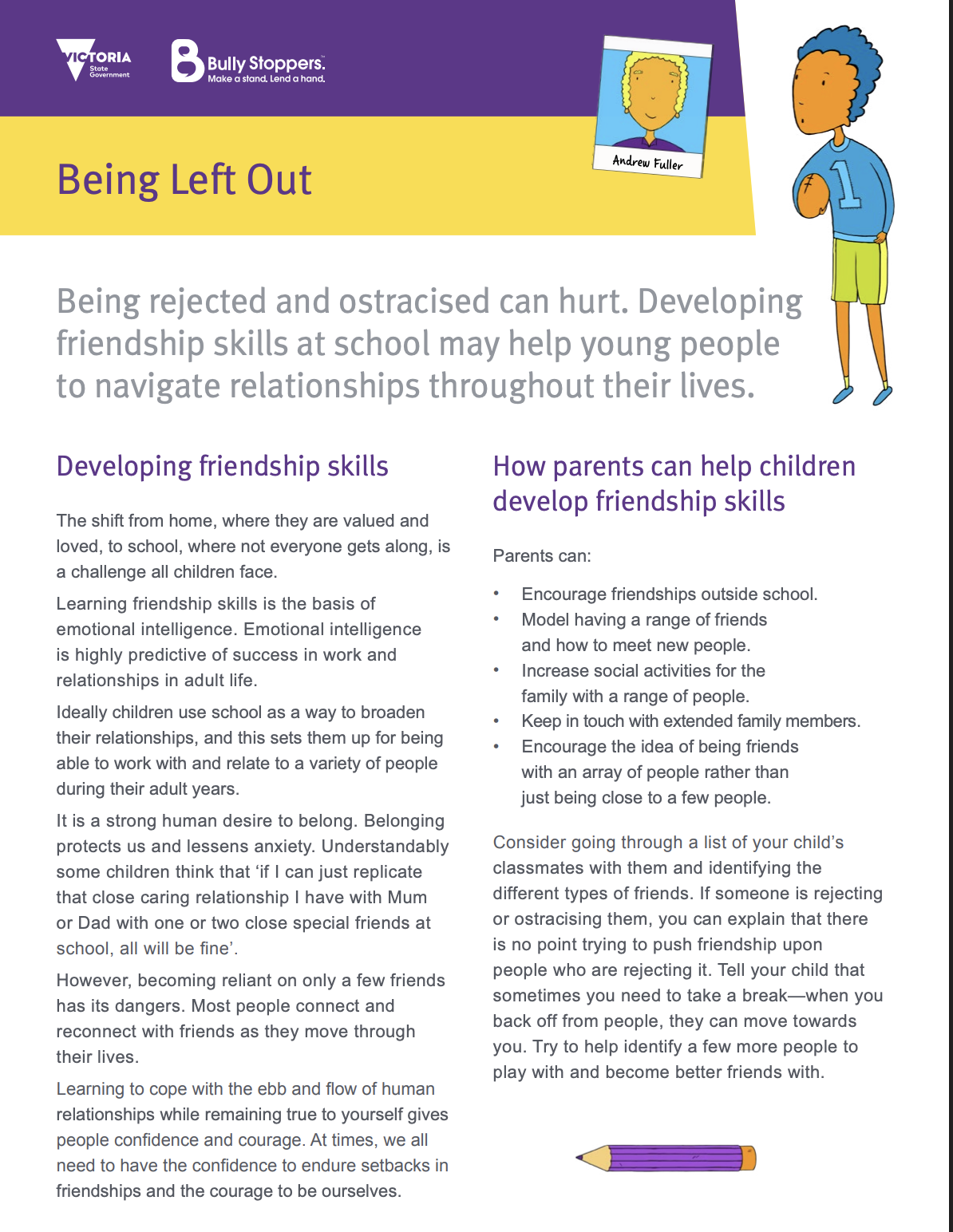
If you would like to read more about supporting children with friendship challenges, the Department of Education’s Bully Stoppers resource “Being Left Out” provides helpful guidance for families.
Take care,
Liz Penny
Mental Health Wellbeing Leader