Wellbeing
Navigating Friendship and Conflict
As children grow, they are still learning how to manage friendships, emotions and disagreements. Occasional conflict between children is a normal and expected part of social development. Through the Victorian Department of Education and its Bully Stoppers guidance, it is recognised that disagreements, arguments or friendship changes between children of equal power are not considered bullying, but rather opportunities for students to learn important life skills.
Throughout the primary years, students gradually develop the ability to communicate their feelings, compromise, negotiate and repair relationships. At school, staff actively support students to practise these skills by modelling respectful communication, helping students problem-solve and guiding them to rebuild friendships when things go wrong. As adults, it is helpful for us to remember that children are still learning these skills and benefit from calm guidance and opportunities to practise resolving challenges.
Below is a simple overview of how social conflict typically develops across childhood:
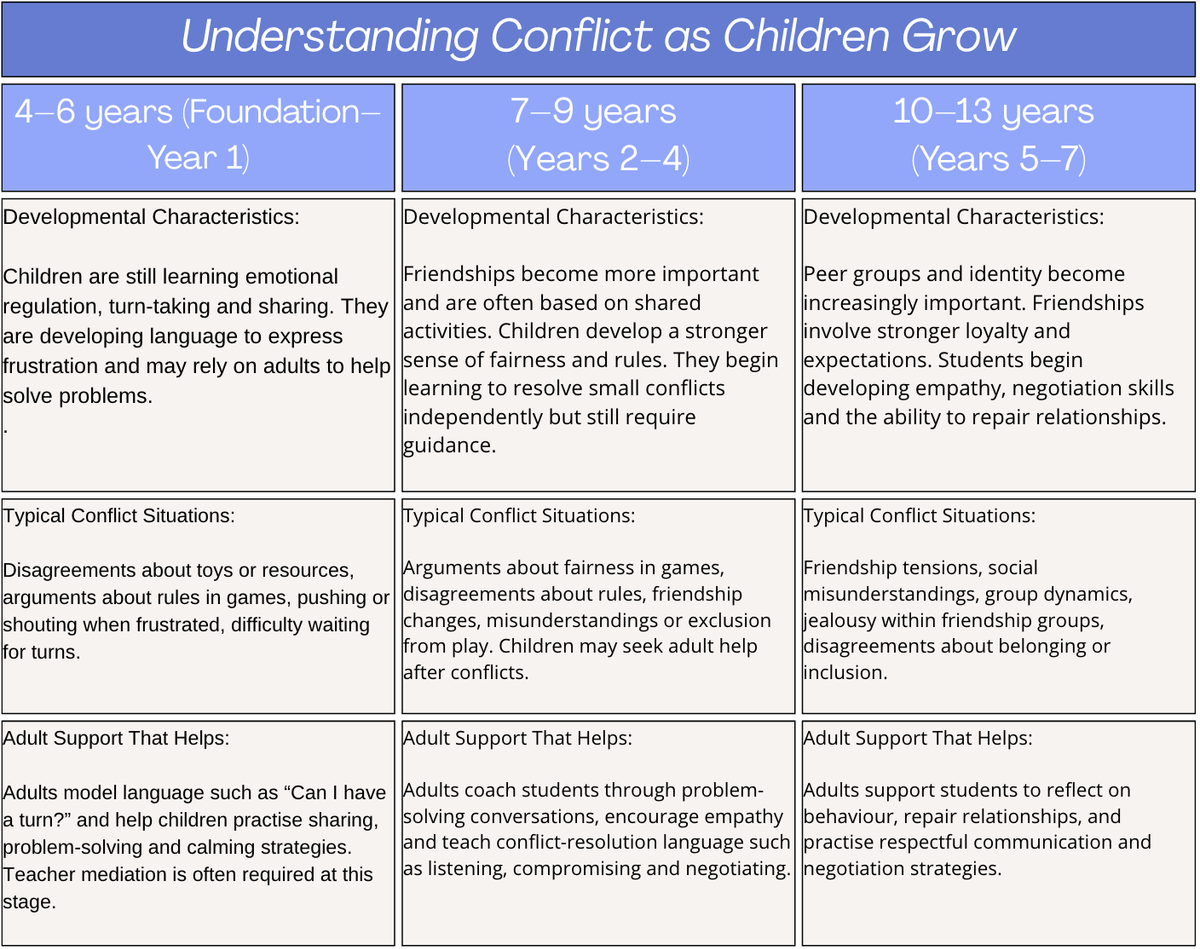
Learning how to navigate friendships and disagreements takes time and practice. With consistent guidance from both school and home, children gradually develop the skills needed to manage challenges, repair relationships and develop positive, respectful friendships.
Take Care,
Liz Penny
Mental Health and Wellbeing Leader