
Teens & Screens
Digital Habits - tips for parents/carers

Teens & Screens
Digital Habits - tips for parents/carers
The following has been composed from a number of sources to summarise the impact of screen time on reading and how parents can change the reading habits of their teens.
Teenagers Will Read Anything - Except Books
That seems to be the consensus as screens replace books in our lives. The time kids spend in front of a screen has increased dramatically. According to one survey, daily screen use is five hours and 33 minutes for tweens (ages 8 to 12).
The Decline of Reading Among Teens
For teens (ages 13 to 18), that time skyrockets to eight hours and 39 minutes. Most of that time is spent on TV/videos, gaming, browsing websites, and social media.
E-reading accounts for only 15 minutes of screen time a day. However, as screen time increases with age, time spent reading books decreases - 46% of 6- to 8-year-olds read books five or more days a week. At ages 9 to 11, this declines to 32%. At ages 12 to 14, it’s 21%.
By the time kids are 15 to 17 years old, only 15% are reading regularly.
Is Reading Becoming a Thing of the Past?
Some will tell you not to worry. As one children’s author said, “Your child reads, just not books” (referring to social media, texting, etc.) which is about as reassuring as “Your child eats, just not fruits and vegetables.”
Parental Involvement Is Key
Left to choose between screens and books, the winner is obvious. Reading is declining, meanwhile, screen time has exploded, and screens dominate our social interactions, education, and entertainment.
The only way forward is through parental involvement. Parents can foster good habits in their children if they are actively involved and prudently regulate screen time for their offspring.
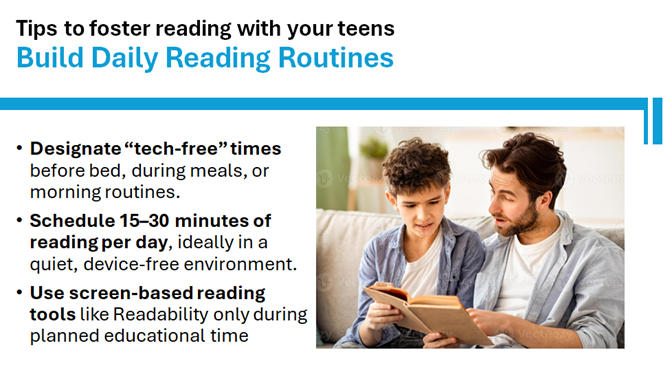
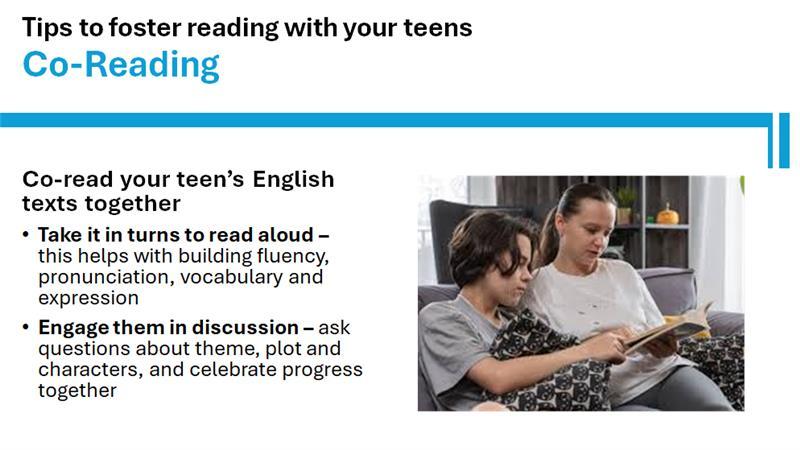
Tips for fostering reading with your teens:

What research tells us about reading:
Reading printed text is more beneficial than the ‘digital distractions’ of reading on screens.
Independent reading is the primary cause of vocabulary growth, aiding comprehension across all disciplines.
Skilled readers read more, boosting their vocabulary and knowledge, which in turn improves their reading (the "rich get richer" effect). Conversely, struggling readers often read less, falling further behind.
Daily reading in childhood is linked to better mental health (lower hyperactivity) in early adolescence. Lifelong readers experience slower cognitive decline, with studies showing readers may live an average of 23 months longer than non-readers.
Extensive voluntary reading improves writing skills, including text organisation, vocabulary, and spelling, particularly for students aged 10-16
Conclusion: A Balanced Approach to Screens and Books
Screens are here to stay, but they don’t have to dominate our lives. It’s not too late to develop a screentime plan with your family. With proper guidance and consistency, children will read all sorts of wonderful things - even books.
Tanya Moran
Leader of Professional Practice
Sources:
https://homeschoolconnections.com/help-teens-read-more/
https://www.edweek.org/teaching-learning/how-do-kids-learn-to-read-what-the-science-says/2019/10