From the Head of Junior School
Dear Families, Students and Community,
High Expectations and High Support – Getting the Balance Right.
This week we have started NAPLAN and there has been a lot of talk in the media and different groups about the purpose and validity of these assessments, particularly given the interruption, and ill-feelings it can cause for students. As a school we view NAPLAN as one of many methods that students can use to show their understanding, and we use it as a piece of a much bigger learning puzzle.
However, it is timely as we think about learning and assessment to find a balance between challenge and support. Striking the right balance between these two elements is essential for helping our young people develop confidence, resilience, and a genuine love of learning.
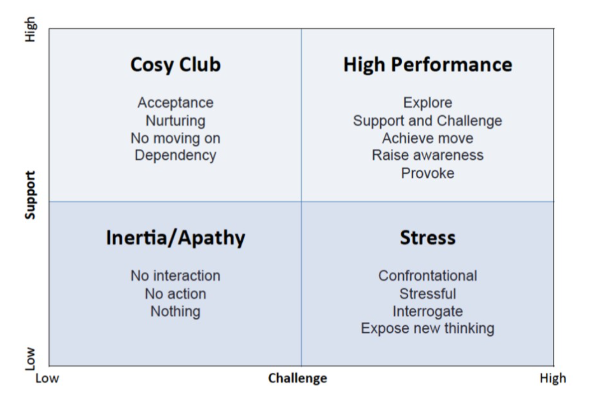
Educational research highlights the importance of what is often called the Support–Challenge Matrix, a framework that suggests students perform best when they experience high levels of encouragement alongside meaningful academic challenge. When students are supported but not challenged, learning can become comfortable but stagnant. Conversely, when challenge is high but support is low, students may feel overwhelmed and disengaged. True growth occurs when both are present together.
The model identifies four different learning environments. In situations where both challenge and support are low, students can drift into apathy, lacking the motivation or direction to progress. When support is high but challenge is limited, students may feel safe but not stretched, remaining within their comfort zones. A high-challenge, low-support environment can create stress and anxiety, which may hinder learning and risk-taking. The most powerful learning occurs when students are both encouraged and stretched, an environment where teachers believe in their potential and challenge them to go further than they thought possible.
This balance is at the heart of effective teaching and leadership. Support includes the relationships, care, guidance, and encouragement that allow students to feel secure and valued. Challenge involves setting high expectations, asking thoughtful questions, and encouraging students to think deeply, take risks, and persevere when learning becomes difficult. When these elements work together, students develop both the confidence to try and the determination to improve.
In our Junior School, our classrooms are intentionally designed to operate in this “growth zone.” Teachers provide structured guidance and feedback while also encouraging students to grapple with complex ideas, explore new perspectives, and take ownership of their learning. This approach helps students move beyond simple answers toward deeper understanding.
Importantly, learning in this space is not always comfortable and that is often a sign that meaningful learning is taking place. With the right support, moments of challenge become opportunities for students to build resilience, discover new strengths, and experience the satisfaction of overcoming obstacles.
Getting the balance between challenge and support is dynamic and responsive process. It requires teachers to know their students and how they learn, as well as their content and how to teach it. Sometimes there is a temptation in schools to setup learning like a wind-up toy: at the start of the year we gear all the parts up and then let them unfurl over the year. This, of course is not responsive to student needs and does not take into account individuals. I am confident that our teachers do the opposite to this. One of the flagship strengths, as I see it, is the personalisation of learning and deep relationships staff have with all out students.
As a school community, we remain committed to maintaining this balance of high expectations and high support. By doing so, we ensure that every student at Blue Mountains Grammar School is not only cared for but also inspired to grow, strive, and reach their full potential.
Christopher Sanders
Head of Junior School