Primary News
Melanie Sluyters
Primary News
Melanie Sluyters
The Power of Student Leadership
At the heart of every thriving primary school is something that no curriculum document or school policy can manufacture on its own, it is that of student leadership. It is the voice, energy, and ownership of its students. Student leadership is not simply about badges and titles, it is about nurturing the belief in every child that they have something meaningful to contribute, and that their school is a better place because of who they are.
Research consistently shows that when students are given genuine leadership opportunities, the benefits ripple far beyond the individual. Students who lead develop stronger communication skills, greater empathy, and a deeper sense of responsibility, not just for themselves, but for the wellbeing of those around them. They learn to listen, to problem solve, and to act with integrity even when no one is watching.
Our Primary leadership looks different from what we might imagine in the adult world and even as a Year 10 at our College. It is a Year 6 student noticing a younger child sitting alone and choosing to sit with them. It is a Portfolio Leader working with their Secondary counterpart to promote an activity or raise awareness. It is a House Captain rallying their peers with enthusiasm before, during and after a carnival - which we have already seen. It is a Restorative Practice Leader helping two classmates find a way through a conflict with honesty and care. These are the quiet, powerful moments that shape character for life.
Student leaders also play a vital role in shaping our school culture. When students see their peers leading with kindness and purpose, it sets a standard that inspires others. Leadership becomes something achievable and real, not a distant concept, but something they witness everyday in the classroom, on the basketball court, in the playground and throughout all areas of the Primary.
Importantly, leadership is not reserved for the loudest voice in the room. Within the Primary we are committed to recognising leadership in all its forms. The student who leads through steady reliability, the one who leads through creative thinking, the one who leads through compassion, the student who contributes in and out of the classroom. The student who displays resilience and pushes through the uncomfortable moments and the leader who shows a deep respect for themselves,their classmates, their teachers and the College. Every child has leadership potential, and it is our privilege to help them find and grow it.
Introducing Our 2026 Primary Leaders
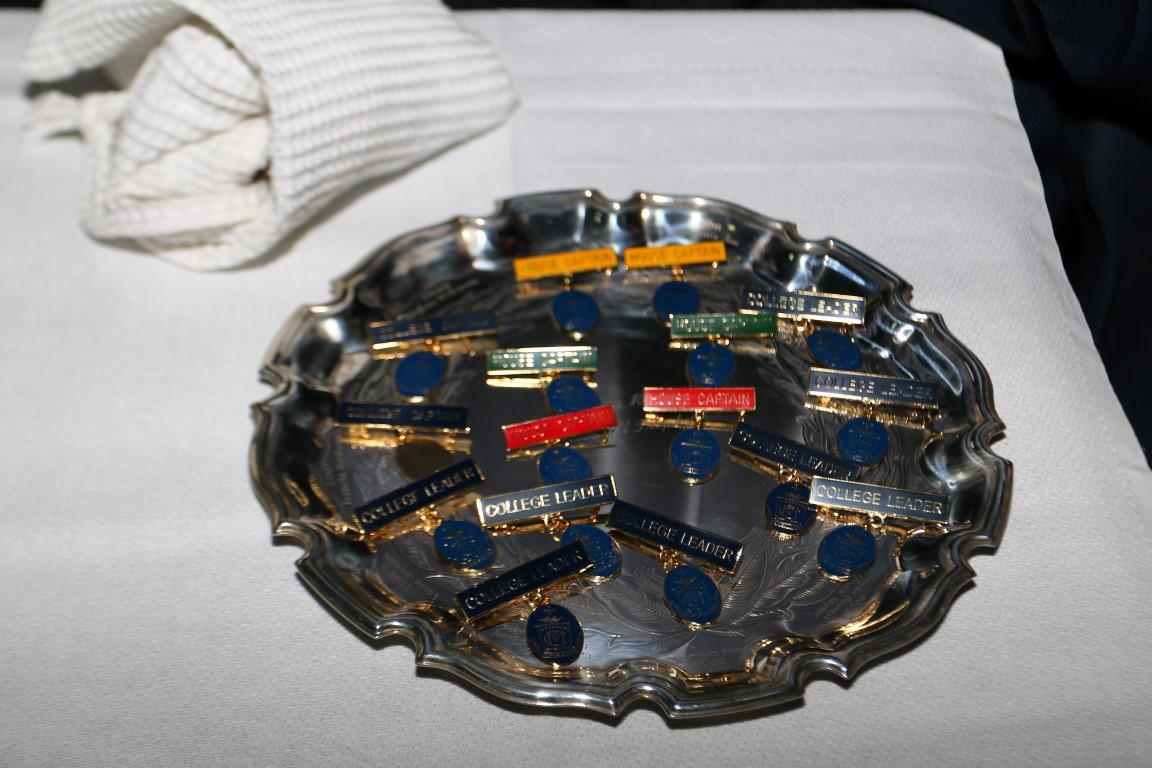
It is with enormous pride and excitement that I have the pleasure of introducing this year's Primary Leaders. The selection process was not an easy one and I know the Year 6 staff were genuinely overwhelmed by the quality, thoughtfulness, and genuine care demonstrated by every student who put themselves forward. To each of you who applied or was nominated: the courage it takes to step up is itself an act of leadership, and it did not go unnoticed.
The students have been chosen because they embody the values of our school, Resilience, Respect, Contribution and Compassion. They are kind, committed, and ready to serve. They will take on responsibilities across our portfolio areas, represent and inspire their houses, and support our school's restorative practice approach by helping build a community where every student feels safe, heard, and valued.
It gives me great pleasure to introduce our Portfolio Leaders, House Captains, and Restorative Practice Leaders for this year:
| Portfolio Leaders | |
|---|---|
| Curriculum | Doris Jiang & Vivienne Pedersen |
| Environment | Freya Finlayson & Eliza Round |
| Mission | Bonnie Lyon & Rosalea Taylor |
| Wellbeing | Emmy & Mila McLennan |
| House Captains | |
|---|---|
| Carmel | Layla Cranefield & Aggie Murphy |
| Loreto | Sophie Alice & Shanaya Prajit |
| Lourdes | Mia Jackson & Miranda Sherrin |
| Restorative Leaders | ||
|---|---|---|
| Sophie Alice | Violet Burt | Layla Cranefield |
| Lilliana Dos Santos | Pippa Gifford | Amelia Glancy |
| Lily Harrison | Jasmine Kaur | Bonnie Lyon |
| Emmy McLennan | Mila McLennan | Sophia Merklin |
| Maisie Moriarty | Vivienne Pedersen | Shanaya Prajit |
| Olivia Ribbon | Eliza Round | Miranda Sherrin |
| Grace Stanger | Susanna Stevens | Rosalea Taylor |
| Anna Thickett | Ella Vanier | Lucy Woodhouse |
Parent Connections Evening
Last week we held our Parent Connections Evening at the College, and it proved to be a truly valuable occasion for all who came along. This evening is one of the most important events in our calendar, a wonderful opportunity to meet your daughter's teacher or teachers face to face, reconnect with familiar parents, and build new relationships within our school community. To those who attended, thank you; your presence and engagement made the evening a real success, and we hope you left feeling informed, connected, and confident in all we do.
For those who were unable to join us this time, we strongly encourage you to make it a priority next year. These evenings are not simply a formality — they are an essential part of understanding the College, staying connected with staff, and playing an active role in your daughter's education. Even if you are a seasoned Mount Carmel parent who has seen several children come through our doors, this evening remains just as relevant for you. Our College is constantly evolving, staff change, new families join, and there is always something new to learn or share. Your experience and wisdom are also invaluable to newer parents finding their feet, and events like this are the perfect setting to pass that on. We look forward to seeing even more of you next year.

Seesaw
A reminder to all parents (Kinder - Year 6) if you have not activated their Seesaw (especially in our Early Years) it is important that you. This platform allows you to see what is happening and keep up to date with last minute changes or reminders. If there is an issue please see your daughter’s class teacher.
NAPLAN
The National Assessment Program – Literacy and Numeracy (NAPLAN) is an annual assessment conducted across Australia for students in Years 3, 5, 7, and 9. The assessment covers reading, writing, language conventions (spelling, grammar, and punctuation), and numeracy.
NAPLAN is not something students need to prepare or study for - it is designed to provide schools, parents, and governments with a snapshot of how students are tracking against national benchmarks in key foundational skills. The results help identify students who may benefit from additional support and assist schools in their improvement planning.
Today, students in Years 3 and 5 completed a practice test to familiarise themselves with the format of the actual assessment and to ensure everything is in order ahead of next week. The NAPLAN tests will be held next Wednesday, Thursday, and Friday. Where possible, I kindly ask that students are not taken out of school for appointments during these days and that late arrivals are avoided if at all possible.
Learn to Swim
All students from Kinder - Year 6 will be attending the Learn to Swim program at the Collegiate Pool from Monday 23 March - Friday 27 March. Information about this went out to families on Monday and below is just a few points to help with the process.
| What to Wear | What to Bring | Parents |
|---|---|---|
| PE uniform to be worn to school every day | Swimming bag, College navy sports bag or school bag | Not permitted to attend sessions until Friday 27 March |
| Bathers worn underneath PE uniform | Plastic bag for wet bathers and towels | |
| Towel | ||
| Change of underwear | ||
| Swimming Cap (compulsory) | ||
| Goggles (optional) |
Special Report - SchoolTV

With the recent escalation of conflict involving Iran, children may be hearing or seeing distressing updates through the 24-hour news cycle, social media and conversations at school. Even when events are geographically distant, repeated exposure to images, headlines and commentary can heighten anxiety, particularly for young people whose understanding of the world is still developing.
It is important for parents and caregivers to be mindful of overexposure, as constant coverage can amplify fear and uncertainty. Reassurance is key. Children need to feel safe and supported as they process complex global events.
Before beginning these conversations, take a moment to check in with your own emotions. Children often take their cues from the adults around them. Remaining calm, listening openly and offering reassurance can help your child regulate their feelings and maintain a sense of security.
This Special Report provides practical guidance to help families navigate conversations about war and conflict in a measured, age-appropriate way, while reinforcing hope, empathy and resilience. We encourage you to take a moment to review the information provided. If this topic raises concerns about your child’s wellbeing, please consider seeking appropriate medical or professional support.