
From the Archives
Behind the Lunchroom Door - Memories of St Joseph’s in the 1960s
Peter Judge
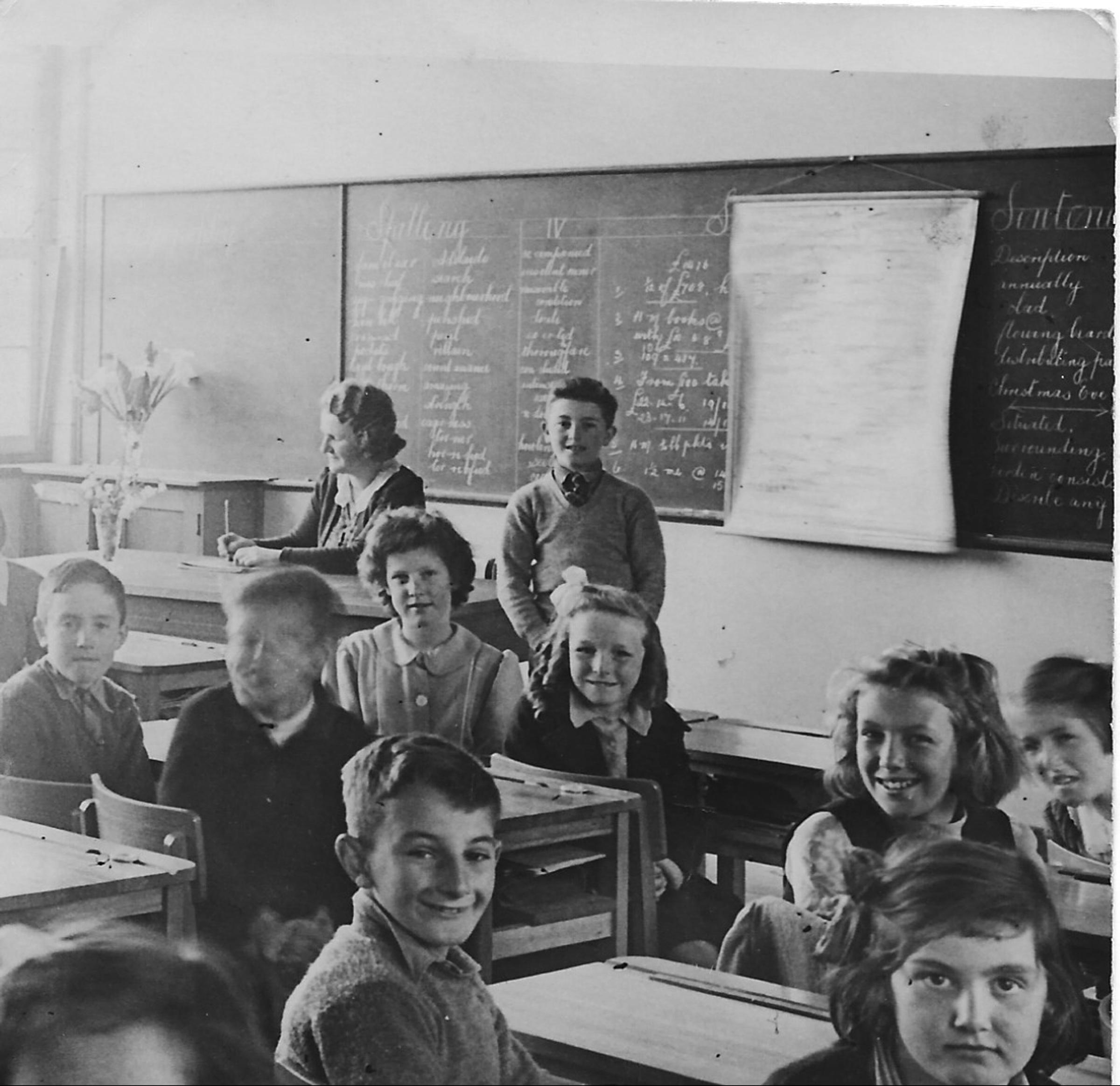
In the 1960s, my grandmother, Mrs Gertrude Judge taught at St Joseph’s school in Macquarie Street, Hobart. During this time she was transferred to St Francis Xavier's school in South Hobart.
The head teacher at the time was Sr Pauline Staunton and while I did not attend St Joseph’s, I often visited with my grandmother. Many memories of the sisters remain with me; one in particular. The sisters always ate privately in a room on the school premises. As a child, the door that led to their ‘lunch room’ seemed ominous. We were not allowed to enter, and if my memory serves me well, my grandmother ate in her classroom.
She had a great respect for the Sisters of Charity, often purchasing punnets of raspberries, asking me to deliver to the sisters at Aikenhead House in Harrington Street.
My grandmother with her red hair was a stern woman, who bore no nonsense. Before retiring she taught at Goulburn Street Primary School and she was responsible for organising student balls at Hobart City Hall; using a maypole for dances, no doubt a strong Celtic influence.
We often wonder what happened to that maypole; a rare sight no doubt! We also wonder what motivated her to employ a maypole in her dance lessons. It is not clear to me whether she continued the dance classes at St Joseph’s.
Following her retirement at Goulburn Street, she continued to teach at St Joseph’s, and then at Holy Rosary, Claremont. At Holy Rosary, I believe she was the first lay teacher. She may have also been the first lay teacher at St Joseph’s, but I cannot verify this.
Now and then you read a comment on Facebook about Mrs Judge, and her stern ways. As a child, I never feared her; it was only recently that I became aware that she ran her classroom with strict discipline.
Mrs Judge championed cursive writing. I managed to sight one of her previous lesson planners at St Joseph’s countersigned by Sr Pauline. It had a heavy concentration on cursive writing. Many students would remember this. Many too would be grateful for this training in writing. Recently I was asked to ‘translate’ a cursive writing text. I realised that my earlier introduction to this style was in many ways a ‘gift’. These early educators provided us with a good foundation in understanding the written text.
My grandmother died in 1968 and is buried at Cornelian Bay. An interesting anecdote is that the family never provided her burial site with a headstone until a few years ago. Her headstone mentions her daughter June, who was deceased when Mrs Judge died, and Douglas, her son, who was not deceased when Mrs Judge died. However, the headstone records Douglas as ‘deceased’. I mention this as an illustration of how you should always review what you put in print! My grandmother, a ‘stickler’ for correct form would be horrified!