Pedagogy and Academics
Helping Our Girls Trust Their Own Minds
Something small is shifting in the way our girls approach their learning and, as a College community, I’d really like us to pay attention together.
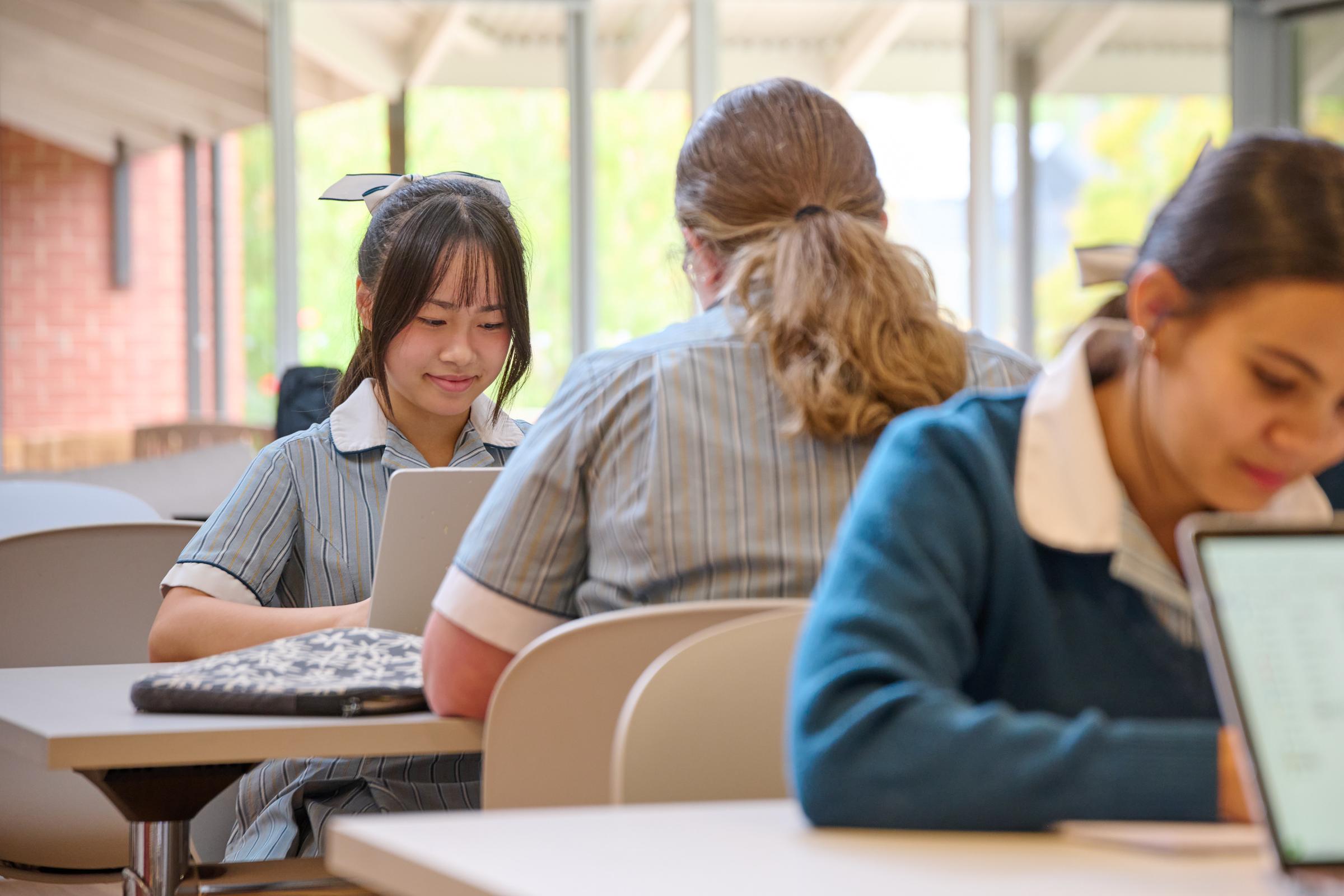
Across schools in Australia, we’re seeing a growing tendency for students to lean on AI not just as a tool, but as a stand-in for their own thinking. To be clear, this isn’t a story of wrongdoing so much as it is a story of temptation. When something can produce a polished response in seconds, it’s understandably hard to resist.
What’s reassuring is that, by and large, our girls really do care deeply about their work. They want to do well, they value their ideas, and they take pride in what they produce. But they are also navigating a new landscape, and like all young people, they will test the boundaries of it.
This is where your influence as parents and carers matters more than ever.
The most powerful thing we can do is stay aligned in what we value, and to actively support the processes our College has in place to uphold meaningful learning. At Loreto, we are asking our students to engage deeply in the process of learning, to think with integrity, and to take ownership of their ideas within a clear framework of expectations that includes our AI guidelines and the use of tools such as lockdown browsers and in-class conditions where appropriate. These are not about restriction for its own sake, but about protecting the integrity of the thinking process and building genuine AI resilience. We are asking them to draft, to refine, to sit with challenge, and to persist through it, even when it feels easier to shortcut the process. It is not always efficient, and it is not always neat, but it is where real growth happens.
At home, that same message can be reinforced in simple ways. Ask your daughters how they approached a task, what they found challenging, what they changed along the way. Show interest in their thinking, not just the final mark. Model this in your own work and show your daughters that their own words and thoughts are enough.
Because the real risk here is not simply academic integrity. It is something quieter and more consequential: the erosion of intellectual confidence. When students outsource thinking to AI, even occasionally, it chips away at their belief that they can do it themselves.
We want our girls to trust their minds. To know that they can grapple with complexity and create original responses.
This requires confidence. The kind of confidence that doesn’t happen by accident. It is built slowly and consistently when the adults around them send the same message.
And so, I’d really love your support with this, because believe it or not, there are other topics I would eventually love to fill these newsletters with!!
Have a wonderful Easter – I look forward to strengthening our partnership in Term 2.
Mel Pedavoli
Assistant Principal: Pedagogy and Academic Leadership