Health News and Tips:

















 Western Heights School

Outdoor Time Is Good For Your Kids' Eyesight. It Protects Against Myopia :
by Maria Godoy
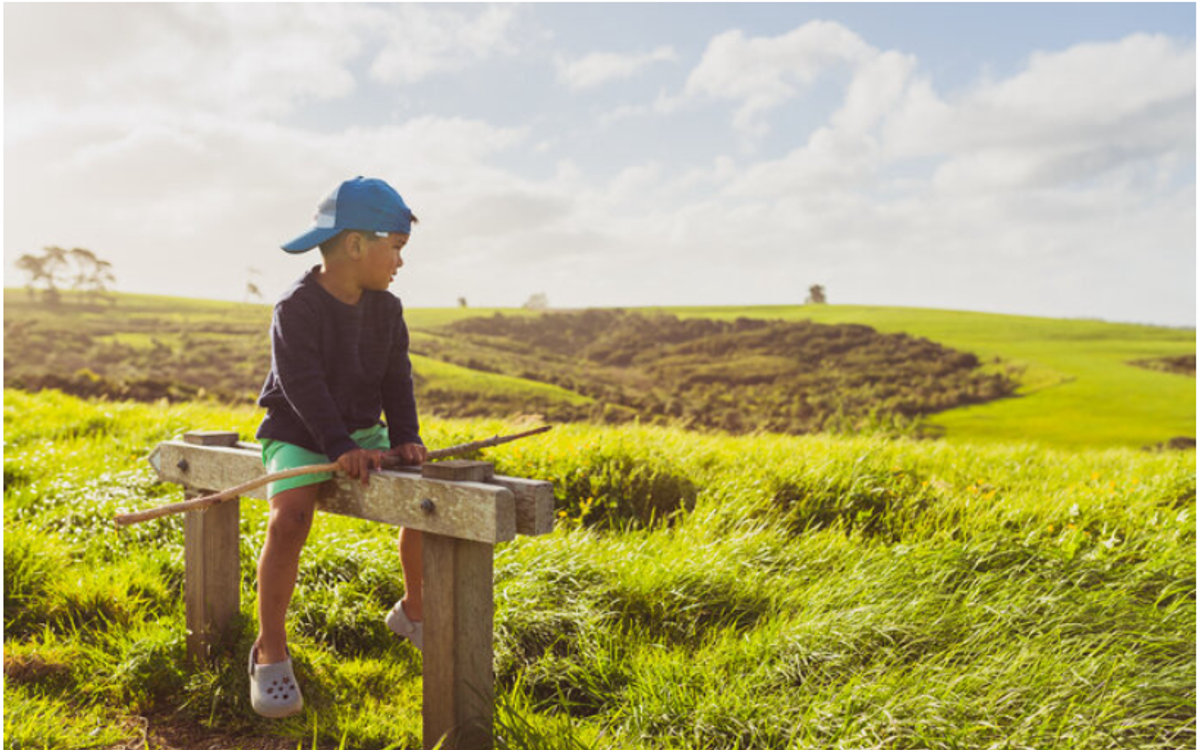
If you're a parent struggling to get your children off their devices and outdoors to play, here's another reason to keep trying: Spending at least two hours outside each day is one of the most important things your kids can do to protect their eyesight.
"We think that outdoor time is the best form of prevention for nearsightedness," says Dr. Noha Ekdawi, a pediatric ophthalmologist in Wheaton, Ill.
And that's important because the number of kids with nearsightedness – or myopia – has
been growing rapidly in many other parts of the world.
In the U.S., 42% of people are now myopic – up from 25% back in the 1970s. In some
East Asian countries, as many as 90% of people are myopic by the time they're young adults.
It's a trend Ekdawi has seen among her own young patients. When she started practicing
15 years ago, one or two of the children she saw had myopia. But these days, "about
50% of my patients have myopia, which is an incredibly high number." Ekdawi calls the
increase astronomical.
Myopia occurs when the eyeball stretches and grows too long, which makes far away
objects look blurry.
Once a child gets myopia, their eyeball will keep stretching, and the condition will get
progressively worse. If they develop high myopia, it can increase the risk of serious eye
problems down the road, such as retinal detachments, glaucoma and cataracts. It can
even lead to blindness.
There are treatments available to help slow the progression of myopia, including
prescription atropine eye drops, special soft disposable contact lenses called MiSight,
and hard contacts worn overnight, known as orthokeratology or ortho-K. But Ekdawi says
the best approach is to protect children from developing myopia in the first place.
So how can spending time outside help?
That's what Ian Morgan wanted to find out. Morgan is a myopia researcher at the
Australian National University. A couple of decades ago, he noticed that the rates of
myopia in East Asia were much higher than they were in Sydney.
He knew from animal studies that light stimulates the eye to release the neurotransmitter
dopamine, which can slow the eyeball from stretching. "Australians are famous for their
outdoor-oriented lifestyle," he thought. "Maybe there's a link between getting outside a lot
and preventing myopia development."
To test that theory, he and his colleagues designed a two-year study involving more than
4,000 6 and 12-year-olds in Sydney. Turns out, the researchers were right.
"The children who reported spending more time outdoors were less likely to be myopic
and, we showed later on, less likely to become myopic," Morgan says of the finding,
which was published in 2008.
Morgan's research caught the attention of Dr. Pei-Chang Wu, an ophthalmologist in
Taiwan. As a retina specialist at Chang Gung Memorial Hospital in Kaohsiung, he'd seen
the consequences of high myopia in patients as young as 10 with tears in their retina.
Some even had retinal detachment – which can result in blindness if not treated quickly.
At the time, Wu's young son was starting first grade, and he worried about Taiwan's sky--
high rates of myopia. Around 90 per cent of teens there have it by the end of high school.
Wu says the academic culture in Taiwan's primary schools didn't allow for much outdoor
recess. "Many teachers want students to practice their homework during recess," he
says.
But Wu convinced his son's elementary school to increase outdoor time. He also recruited
a control school. A year later, his son's school had half as many new myopia cases as the
other school. "We saw the results – they were very successful," Wu says.
He did more research at more schools and eventually convinced Taiwan's Ministry of
Education to encourage all primary schools to send students outdoors for at least 2
hours a day, every day. The program launched in September 2010. After decades of
trending upward, the rate of myopia among Taiwan's elementary school students began
falling – from an all-time high of 50% in 2011 down to 45.1% by 2015. It's a major
achievement, says Ian Morgan.
"Certainly, the people who have led the field are the people in Taiwan," Morgan says.
Other studies have found that outdoor time can reduce the chances that kids will develop
myopia even if they're doing lots of near work, such as reading or looking at screens –
something that has also risen dramatically in recent years. Outdoor time also helps even
if kids have parents who have myopia.
To get that eyesight protection, research suggests kids should spend at least two hours outdoors – every single day. And the younger you intervene, the better.
"To me, it's like, eat your vegetables. You have to spend time outside," Ekdawi says.
It doesn't even matter if it's sunny or cloudy – or what the kids are doing. "You can go to
the park, you can ride your bike, you can sit and be a tree, walk your dog. All these things
count," she says.
And if you are worried about leaving time for homework, Ekdawi suggests having kids do
that outside, too. As long as they are outdoors, that's what matters.