LITERACY

Developing Reading Fluency
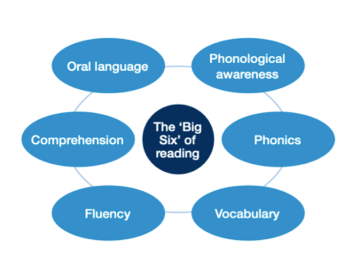
At BSPS we understand that learning to read is a complex process. We plan for your child’s reading development using the Big 6 of Reading: oral language, phonological awareness, phonics, fluency, vocabulary, and comprehension. Earlier this term the Foundation - Year 2 teachers participated in a whole day professional learning to further develop our understanding of these important components of reading.
In the early stages of reading, we concentrate on supporting our students to build their knowledge of letters and sounds, so that they can automatically decode the print on the page. This takes a lot of effort and our goal is for our students to read fluently.
What is reading fluency?
Reading fluency is the ability to read text accurately, at an appropriate pace, and with expression. A fluent reader doesn’t have to stop and think about every word, instead they can read at a steady pace and focus on the meaning of the text.
Why is fluency so important?
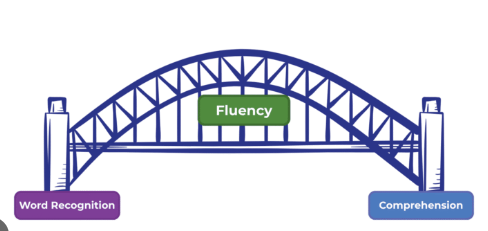
Fluency acts as the bridge between decoding and comprehension. When children are still working hard to sound out each word, most of their brainpower is used on decoding. This leaves little capacity for understanding the story or information. As reading becomes more fluent, children can shift their attention from sounding out words to making meaning and comprehending the text.
How can you help at home with building reading fluency
- Model fluent reading by reading out loud to your child in English or home language
- Encourage your child to read out loud to you everyday
- Encourage your child to read the same text multiple times. Repeated reading is an important part of developing reading fluency
- When your child finds a word challenging to read, support them to sound out the letters and blend those sounds to read the word. This is better than relying on picture clues.
- Practice ‘tricky words’ with your child. ‘Tricky words’ are those words like, “the, was, put”, that use less common spelling patterns or sounds that your child hasn’t yet learned.
- For more advanced readers, have them search for prefixes or suffixes to read the word e.g. playful, disconnected, unhelpful
- Praise your child's efforts and make reading time enjoyable and relaxed
- Talk with your child to provide lots of opportunities to develop their vocabulary
- If you want to read more about The Big 6 of Reading for Families, click on this link.
Cate Doherty
Literacy Learning Specialist