
R.E. News
Religious Education News - Week 4 Term 1
RELIGIOUS EDUCATION DATES FOR 2026 |
Reconciliation
- Wednesday 25th February - Reconciliation Parent/Child Information Night at 6pm
- Wednesday 20th May - Sacrament of Reconciliation - 6pm
Confirmation
- Wednesday 6th May - Confirmation Information Night - 6pm
- Saturday 30th May - Confirmation Commitment Mass - 5pm
- Wednesday 5th August- Confirmation Reflection Day
- Thursday 6th August- Confirmation Reconciliation service - 11:40am
- Saturday 15th August- Sacrament of Confirmation – 1pm and 3pm
Eucharist
- Wednesday 22nd July - First Eucharist Parent/Child Information Night at 6pm
- Saturday 8th August – First Eucharist Commitment Mass – 5pm
- Thursday 22nd October - Reconciliation at 11:40am
- Friday 23rd October - Eucharist Reflection Day
- Saturday 24th October - Sacrament of First Eucharist mass at 5pm
- Sunday 25th October - Sacrament of First Eucharist mass at 9:30am
Whole School Mass/Events
- Friday 20th March- Year 6 leaders attending the Catholic Ed Week mass at St Patrick’s Cathedral
- Friday 20th March - Harmony Day
- Friday 2nd April - Easter paraliturgy at 12:45pm
- Friday 24th April - St Mark’s Feast Day mass at 2:10pm and activities 11.40- 1.30
- Friday 15th May - Family Week mass at 2:10pm and activities during the day
- Friday 29th May - Reconciliation Week liturgy (assembly) and activities in own class
- Friday 26th June - Naidoc Week assembly (1pm)
- Friday 14th August - Feast of the Assumption Mass at 9am
- Friday 6th November - St Francis Blessing of the animals service from 9am to 9:15am
- Tuesday 11th November - Remembrance Day service at 10:55am
- Thursday 10th December - Year 6 Graduation at 6pm
- Monday 15th December - End of School Mass at 9am - TBC
Junior Information Nights
- Preps in Pyjamas – Wednesday 10th June at 6pm
- Year 1/2 Good Shepherd Night – Tuesday 11th August (6pm)
Children’s Liturgy
Children's Liturgy at St Mark's Church is up running this term. It will be starting this weekend
The Children's Liturgy provides a great opportunity for primary aged children to engage with the gospel in a way that is accessible and meaningful to them. It runs every Sunday at the St Mark's 9:30am mass during school terms. At the start of mass the Children’s Liturgy adult leaders take the primary school age children into the hall for a small lesson and activity about the gospel of the day. Parents are welcome to join the session if they would like. If any parents are interested in volunteering to help with the Sunday sessions, please email Andrew Davies - andrew@smdingley.catholic.edu.au

First Sunday of Lent
Genesis 2:7-9; 3:1-7 | Ps 51:3-4, 5-6, 12-13, 17. R. v.3 | Romans 5:12-19 | Matthew 4:1-11
Nelson Mandela said that education was the most powerful weapon we can use to change the world. There are plenty of people who would agree with him. One of them is Oprah Winfrey who said that education was the way to move mountains, build bridges and, yes, to change the world.
Today’s readings certainly suggest the value of learning. The story from the Book of Genesis comes from pre-history. It has often been misunderstood to suggest that sin entered the world through one woman. This is not true. On the contrary, the readings tell us that the world is good. When humans try to overstretch their boundaries, trouble follows, and the experience of beauty and harmony is threatened. We need to choose our teachers. Are we going to listen to God or the serpent? In our modern world, the serpent takes many forms. There are countless threats to the harmony of the human race and the beauty of our natural environment.
Likewise, today’s story of the temptations in the wilderness from Matthew’s Gospel shows us that some lessons are difficult. Jesus teaches the devil. He tells the evil one that God is in charge. Jesus must decide which voices he will follow. He must learn that some ideas may not be as good as they sound. All the kingdoms of the world, Jesus learns, are no substitute for an honest and life-giving relationship with God.
Each week during Lent, Caritas Australia asks us to think about the world and learn more about our role in building God’s kingdom. Today we start with an introduction to Project Compassion, which allows us to appreciate how much the Catholic community, has been able to achieve across the decades for the most marginalised people of the world. We are all still learning. Pope Leo XIV has reminded us that the vulnerable are great teachers.
In Dilexi Te he writes:
Christians must not abandon almsgiving… It is always better at least to do something rather than nothing. Whatever form it may take, almsgiving will touch and soften our hardened hearts… for our part, we need to give alms as a way of reaching out and touching the suffering flesh of the poor.
The evil spirit will always focus on the negative and convince us that change is too difficult. The spirit of grace and truth will show us what is truly possible and help us sort our priorities.
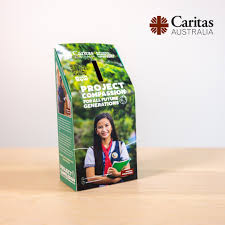
Last week each family was sent home a Project Compassion box. During Lent families can put money into the money box. This box can sent sent back to school and the money raised will go to overseas missions to help people in need.
Ash Wednesday
Kids love Ash Wednesday and they are often interested in the meaning behind the ritual of ashes. Here are some common questions and answers about the day.
1. Who can receive ashes?
On Ash Wednesday the procession to the altar is as diverse as we will ever see it! Mothers carrying babies, toddlers holding on to Dad’s hand, teens, parishioners, neighbors, employees from nearby places of business, the elderly—we all come together to mark the beginning of Lent. Anyone, including kids and non-Catholics, can receive ashes.
2. Are ashes a sacrament?
The act of receiving ashes is not a sacrament. Actually, ashes are what we call a “sacramental.”
Sacramentals are dynamic signs that help us prepare for receiving the sacraments. They help us receive the graces of the sacraments and they help make holy various occasions in our lives. They also remind us that all of creation has the potential to reveal God’s presence and receive his blessing.
3. Where do the ashes come from?
The ashes are traditionally made by burning last year’s Palm Sunday palms. In the Australia, the custom is to mark the cross on a person’s forehead, but in other parts of the world, including in Italy, the ashes are sprinkled on a person’s head.
4. How do you get ashes?
Ashes are blessed and distributed on Ash Wednesday, often during Mass or a prayer service. People walk up to the altar using the same process as Communion. The person distributing the ashes marks the recipient’s forehead and says either, “Remember that we are dust and unto dust we shall return,” or “Repent and believe in the Gospel.”
5. Should I do anything special before I receive the ashes?
In receiving the ashes, we are entering into the time of Lent, preparing for Easter with prayer, fasting, and almsgiving. We are embracing Jesus’ journey: the cross of suffering and the promise of Resurrection. The ashes help us connect the spiritual aspect of Christ’s cross and Resurrection with our everyday lives.
In addition to the liturgical significance of receiving ashes, we also are called to remember that in our repentance is a call to proper relationship between ourselves, God, and each other. Saying a prayer of repentance and remembering your sins is an appropriate way to prepare to receive the ashes.
6. How long should I leave on the ashes?
The ashes on our foreheads are a visible sign that we are followers of Jesus. The ashes are also a way to tell ourselves and those around us that we are beginning the holy season of Lent—the forty days leading up to Easter. Leaving them on helps you remember this throughout the day, but there are no rules requiring how long you leave them on or when you wash them off.
7. Is Ash Wednesday a Holy Day of Obligation?
Despite being one of the most-attended holy days of the year by Catholics around the world, it is not an official holy day of obligation.
Following in the footsteps of Christ during Lent
From our Jewish roots we learn the importance of caring for the poor. We teach our children the importance of giving alms and sharing resources, and we teach them how to choose who will receive the resources that we share. Jesus also teaches us about the importance of prayer. Jesus prays seventeen times in the Gospels; he models prayer for us today. In the Scriptures Jesus prays often, morning and night. He prays during critical events in his life and he prays before ministering to people in need. Lent calls us to follow in the footsteps of Christ. Ashes mark the beginning of our walk.