Specialist News
Visual Arts - Physical Education - Music & Performing Arts & S.T.E.M.
Mrs Denise, Mr Rees, Mr Lytton and Mr Brokate
Specialist News
Visual Arts - Physical Education - Music & Performing Arts & S.T.E.M.
Mrs Denise, Mr Rees, Mr Lytton and Mr Brokate
STEM Donations
The STEM room is in the need of cardboard tubes (from paper towel) for an activity in Term 2. If you could collect any you use over the next week, or during the school holidays and donate them to the school - both myself and the students will be very happy.
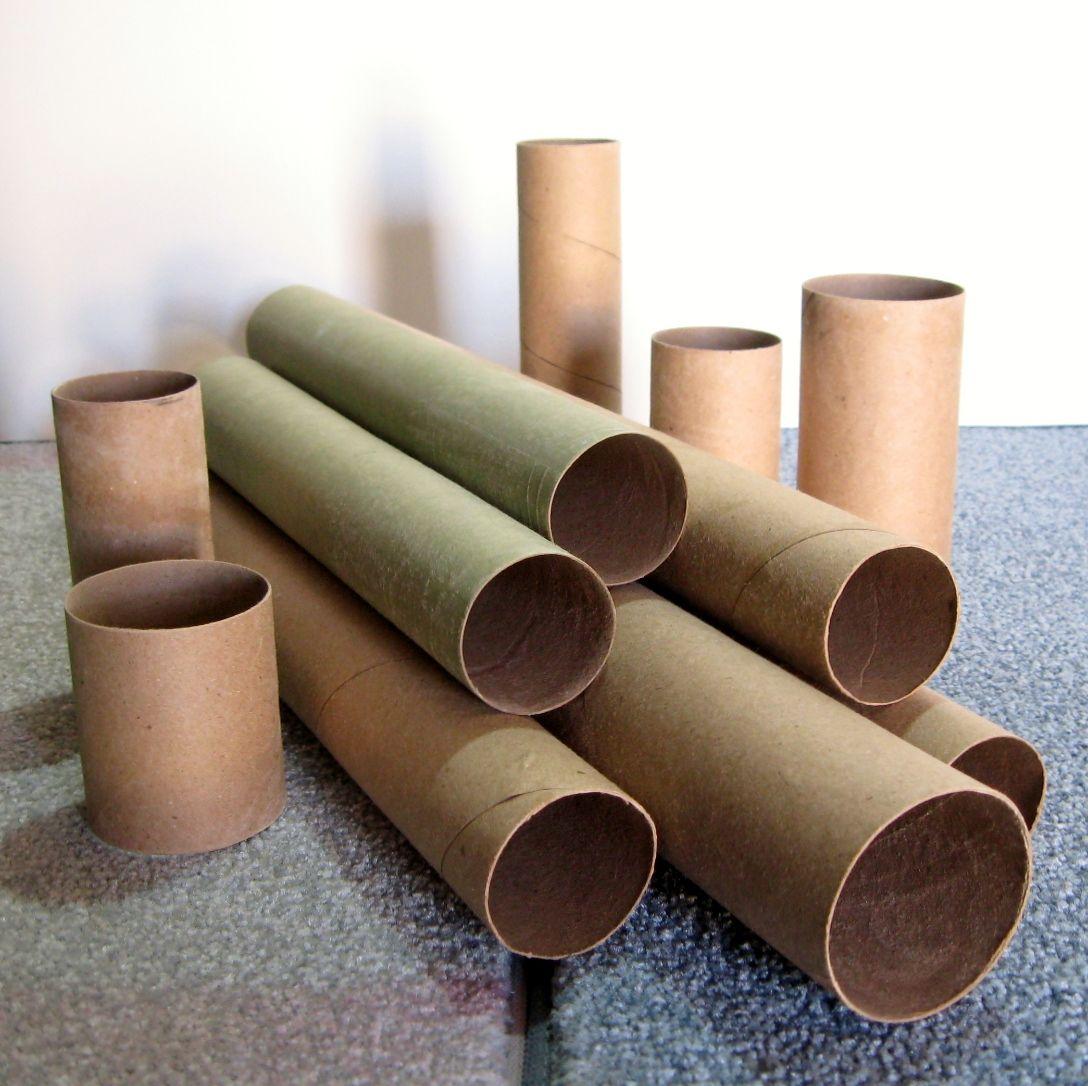
These items can be: -
Thank you, Stephen Lytton STEM Specialist
Visual Arts
Dear PVNPS families,
We sure have been pretty busy in Visual Arts this term, creating beautiful compositions that will look awesome and spectacular at the Art Show later in the year. My apologies in advance for inserting just a few photos of our students’ work as I don’t want to spoil the surprise. Many of the the artworks produced in Term 1 will be at the Art Show. Look out for more information about our Art Show closer to the date, you would not want to miss it! Here’s a snapshot of what we have done so far.
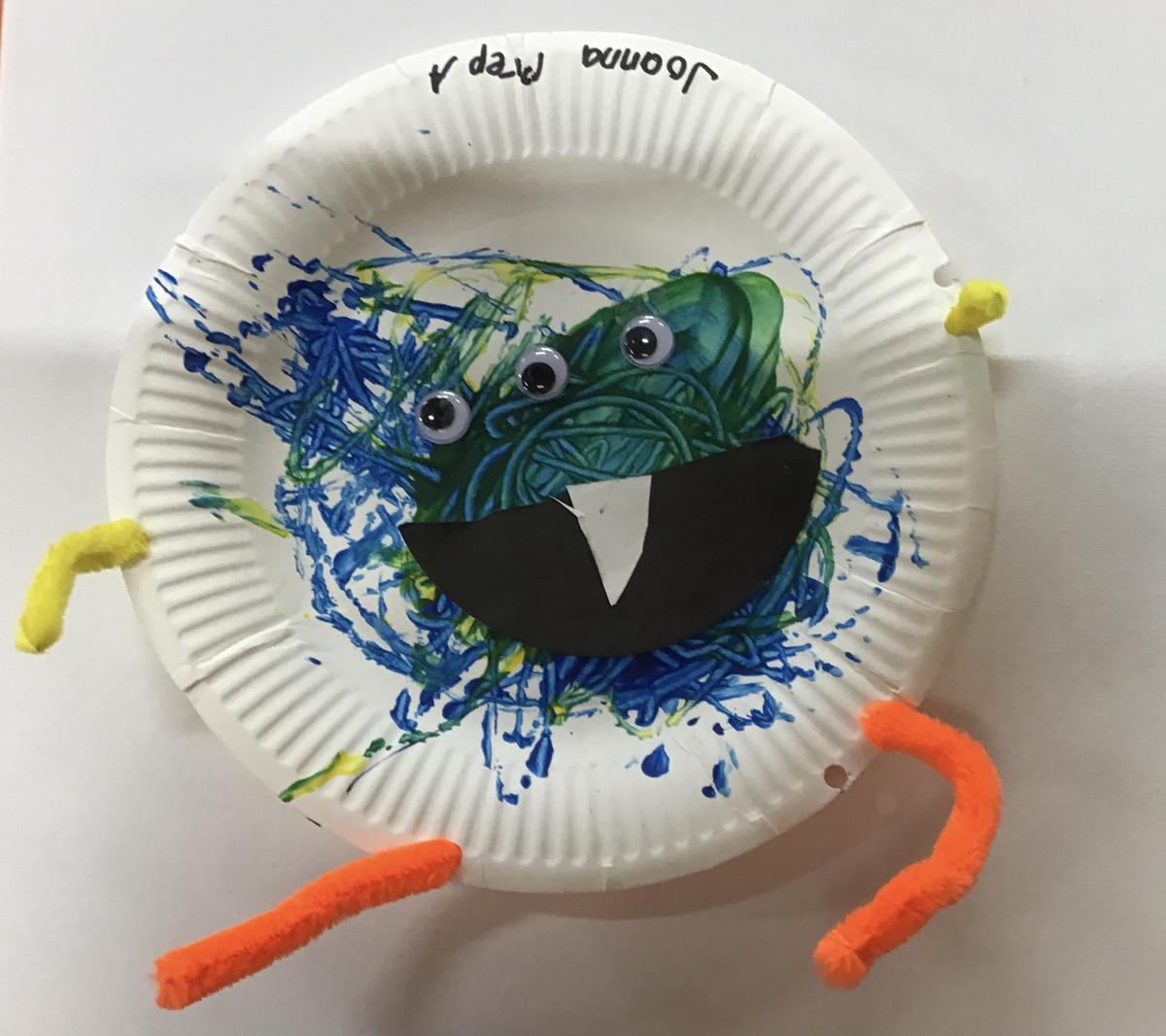
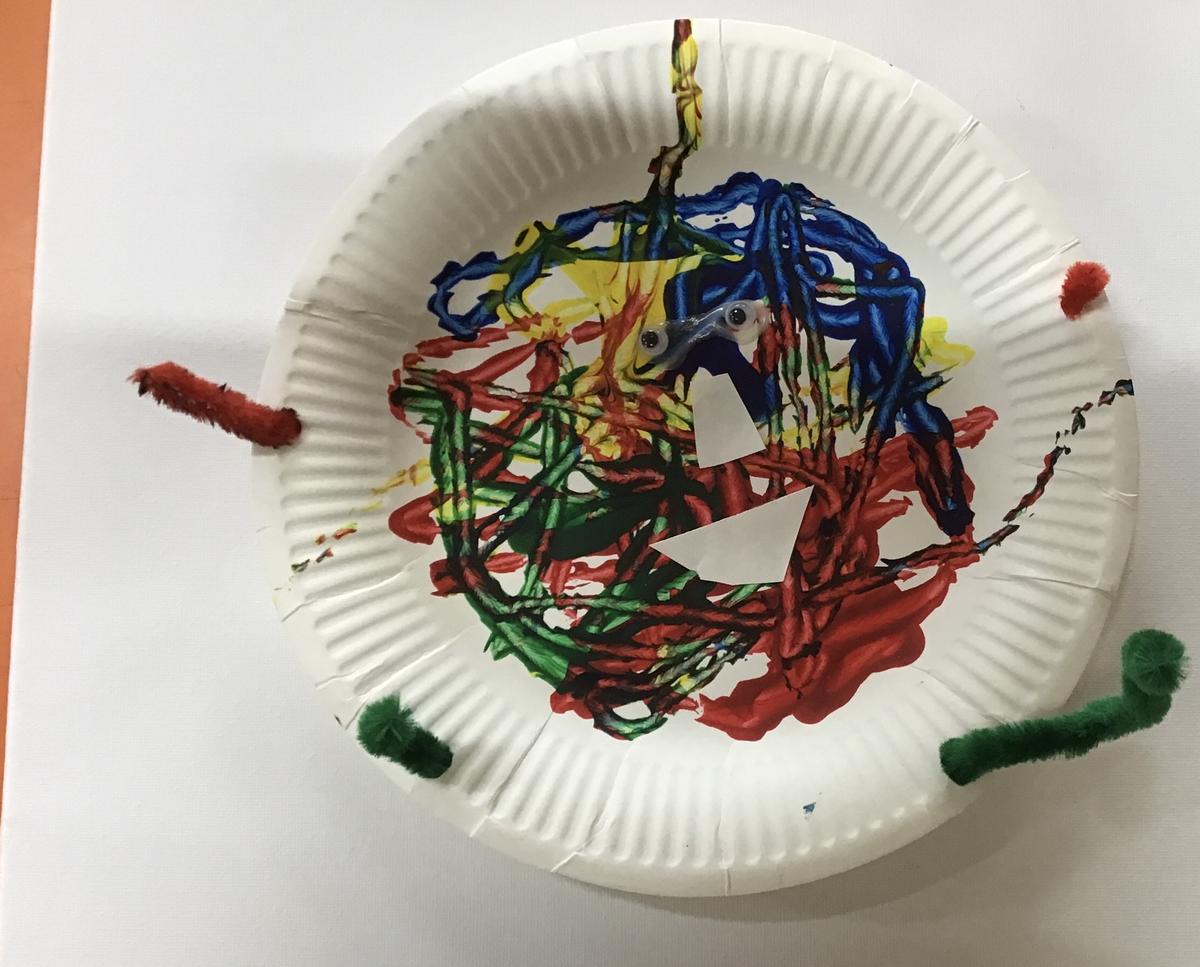
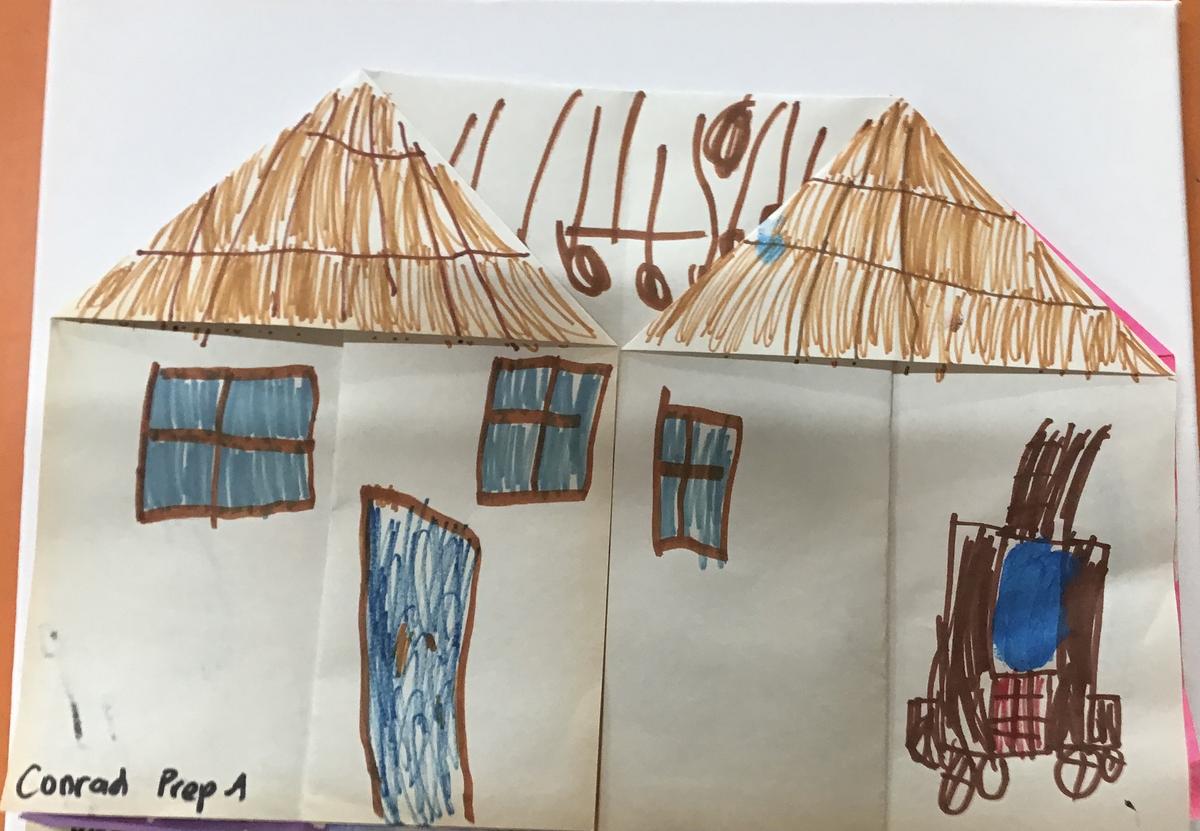
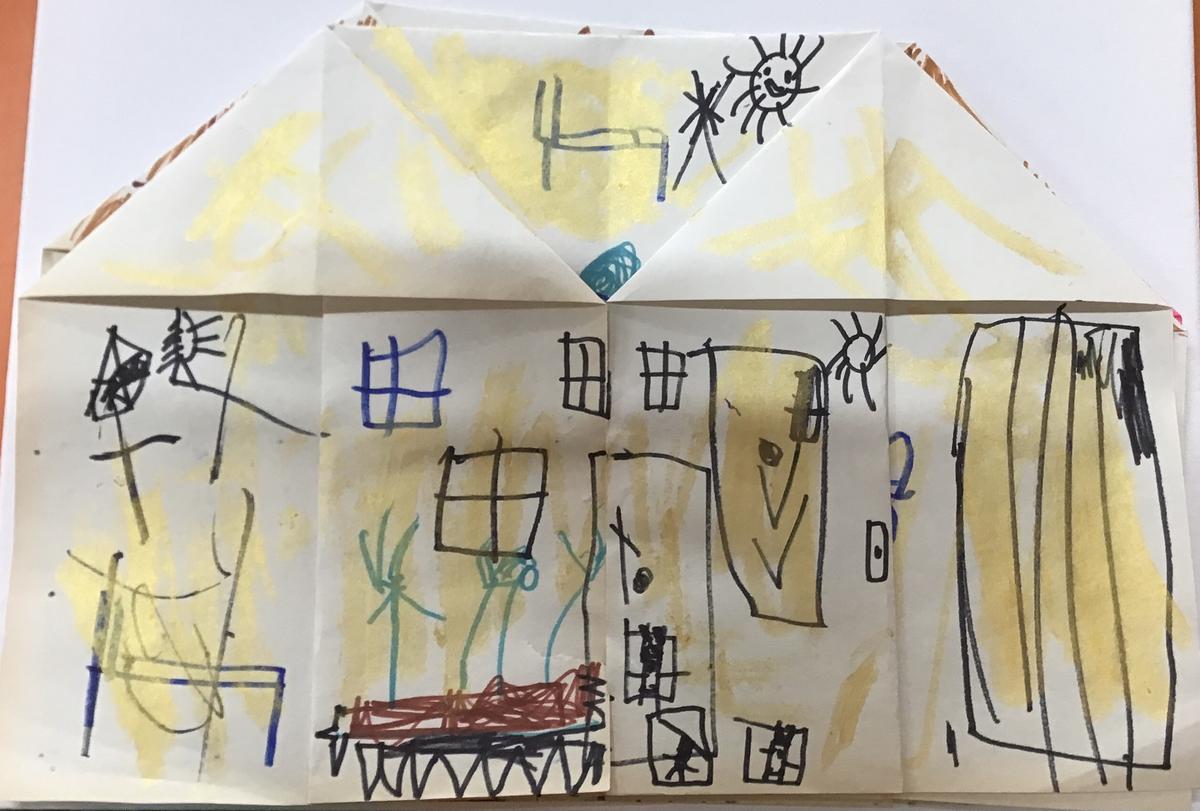
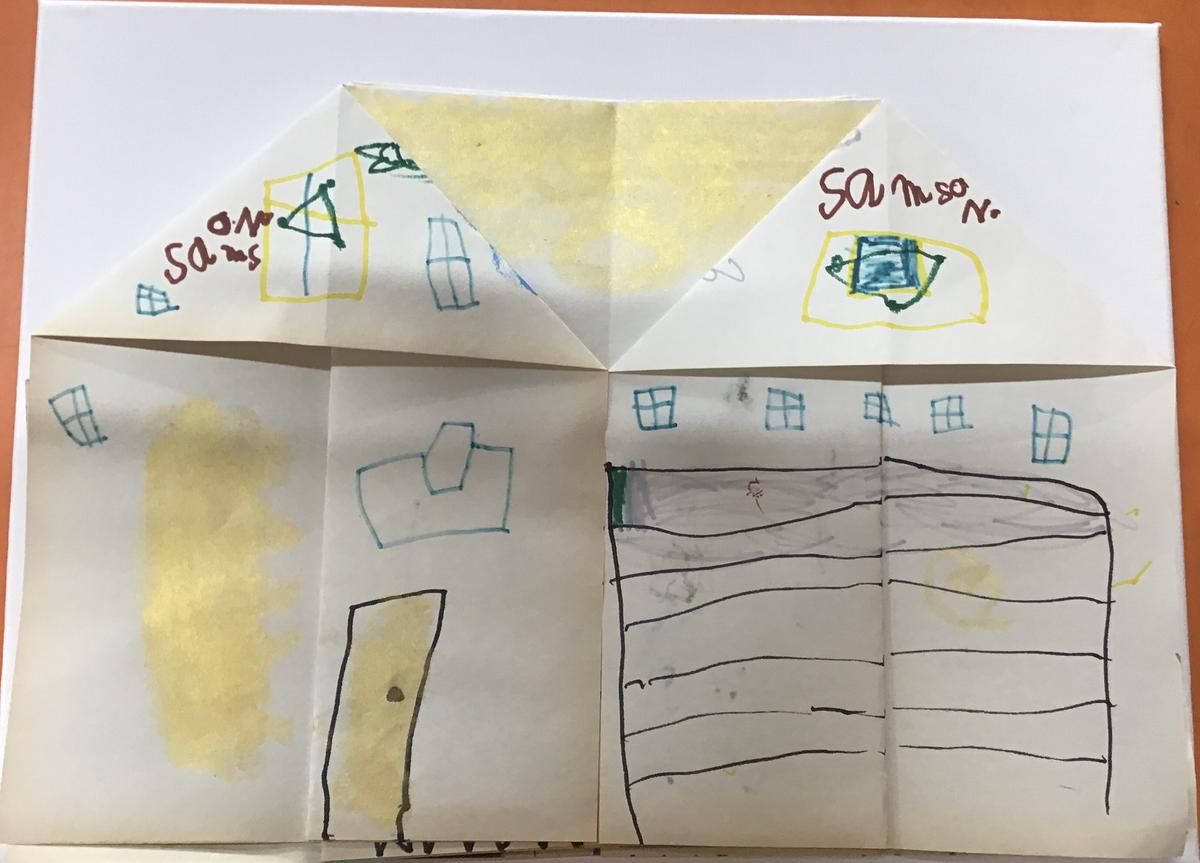
Our Preps talked about primary and secondary colours and had fun identifying both colours in drawings, painting and their own work. They learnt which two primary colours to mix to make a specific secondary colour. Our Preps were excited over the painting activities in which they could experiment with different colours and various painting techniques. They explored the topic of symmetry and learnt to make symmetrical shapes out of paper circles. Our Preps also created beautiful and colourful symmetrical beetles using acrylic paints. They had a go at drawing their families and making their own story books with colour pencils, textas, colour slicks and black markers. Check out their amazing Visual Arts journey so far!
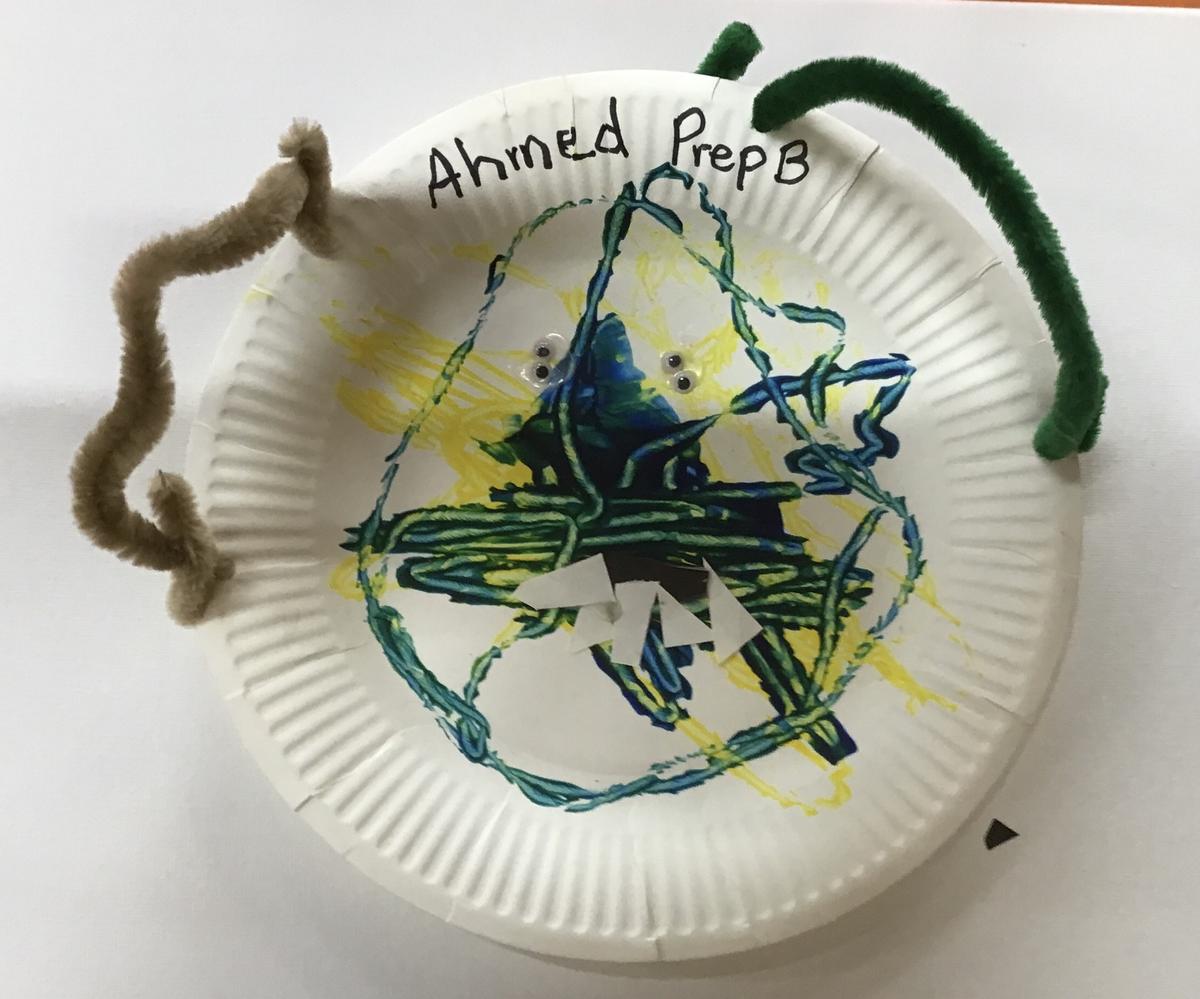
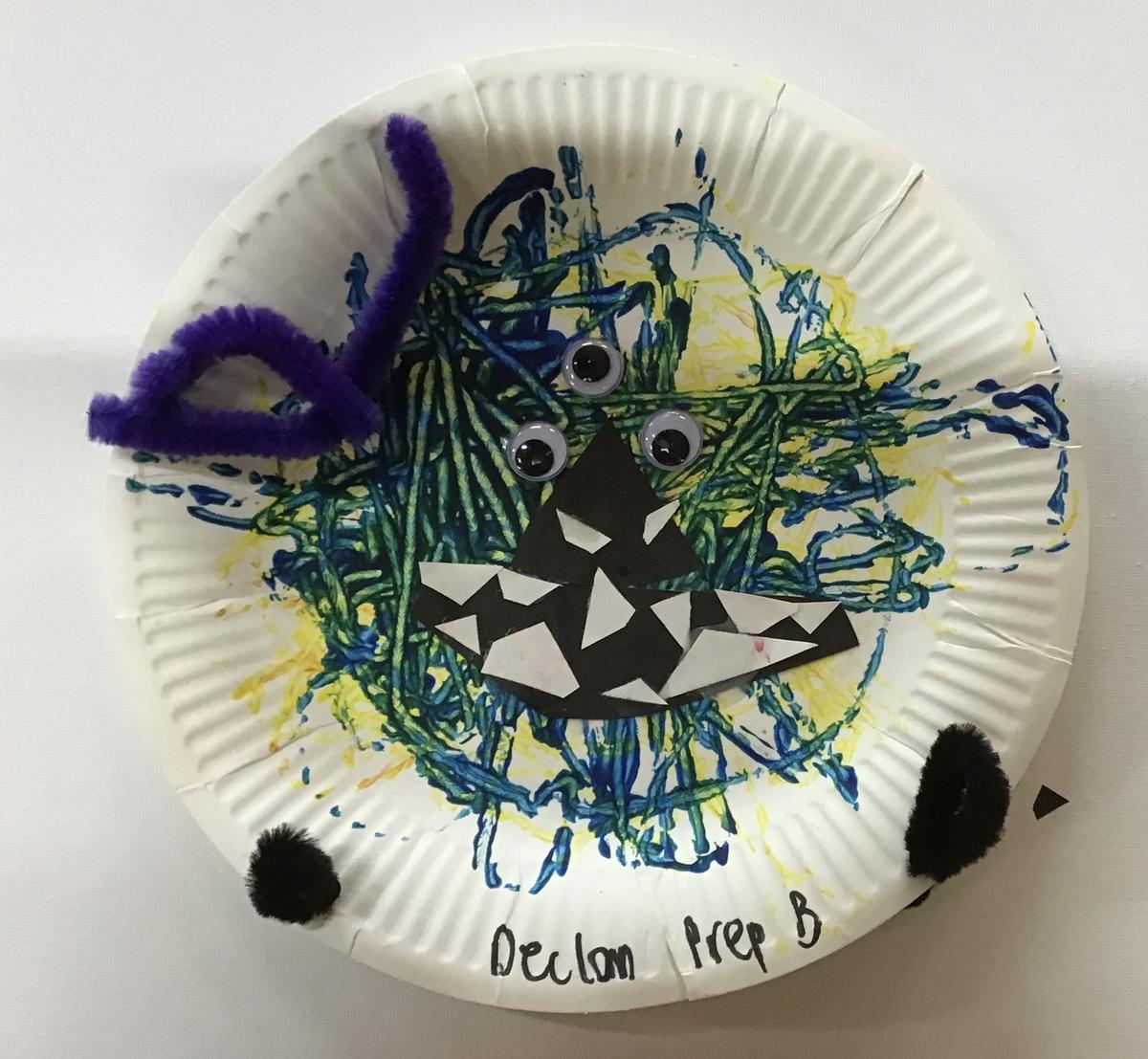
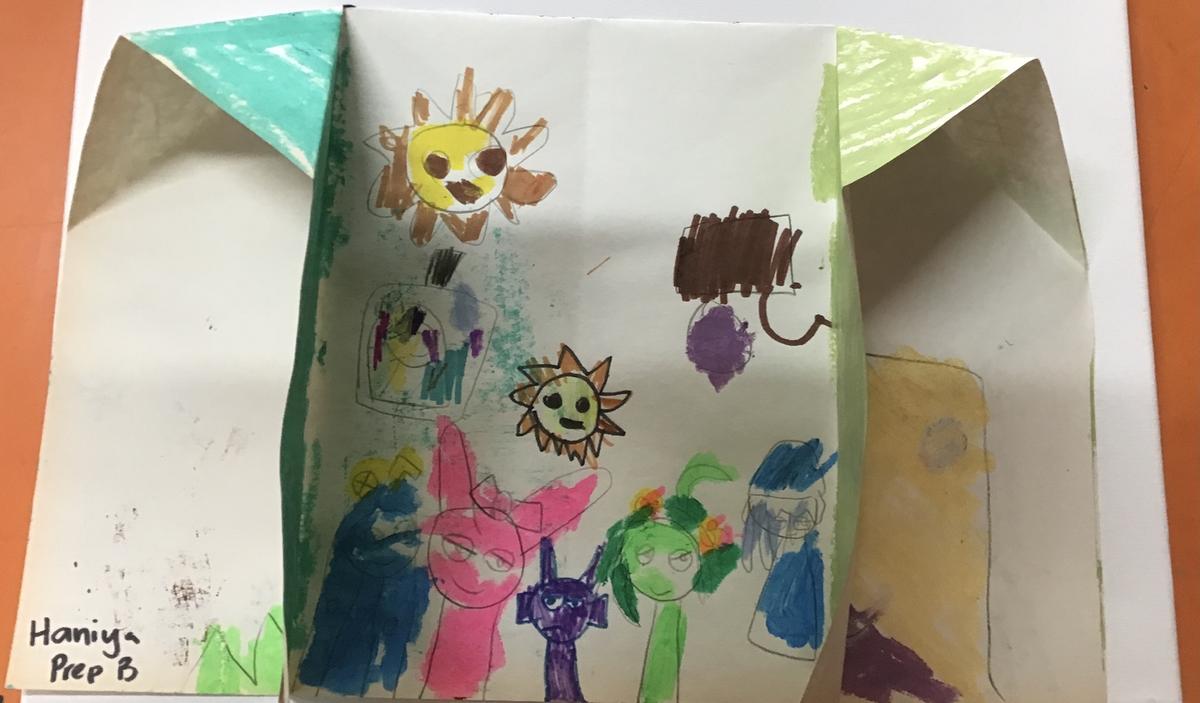
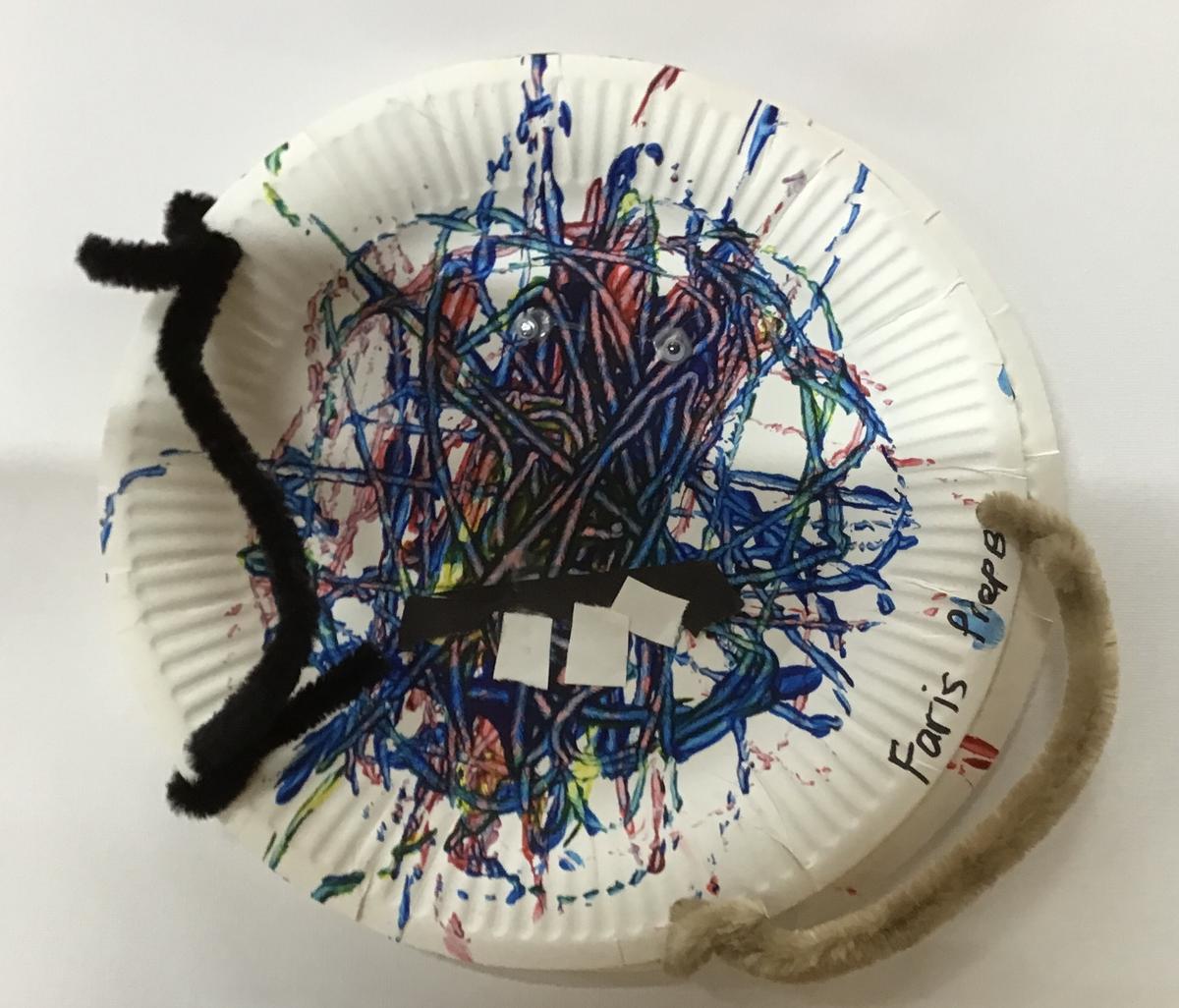
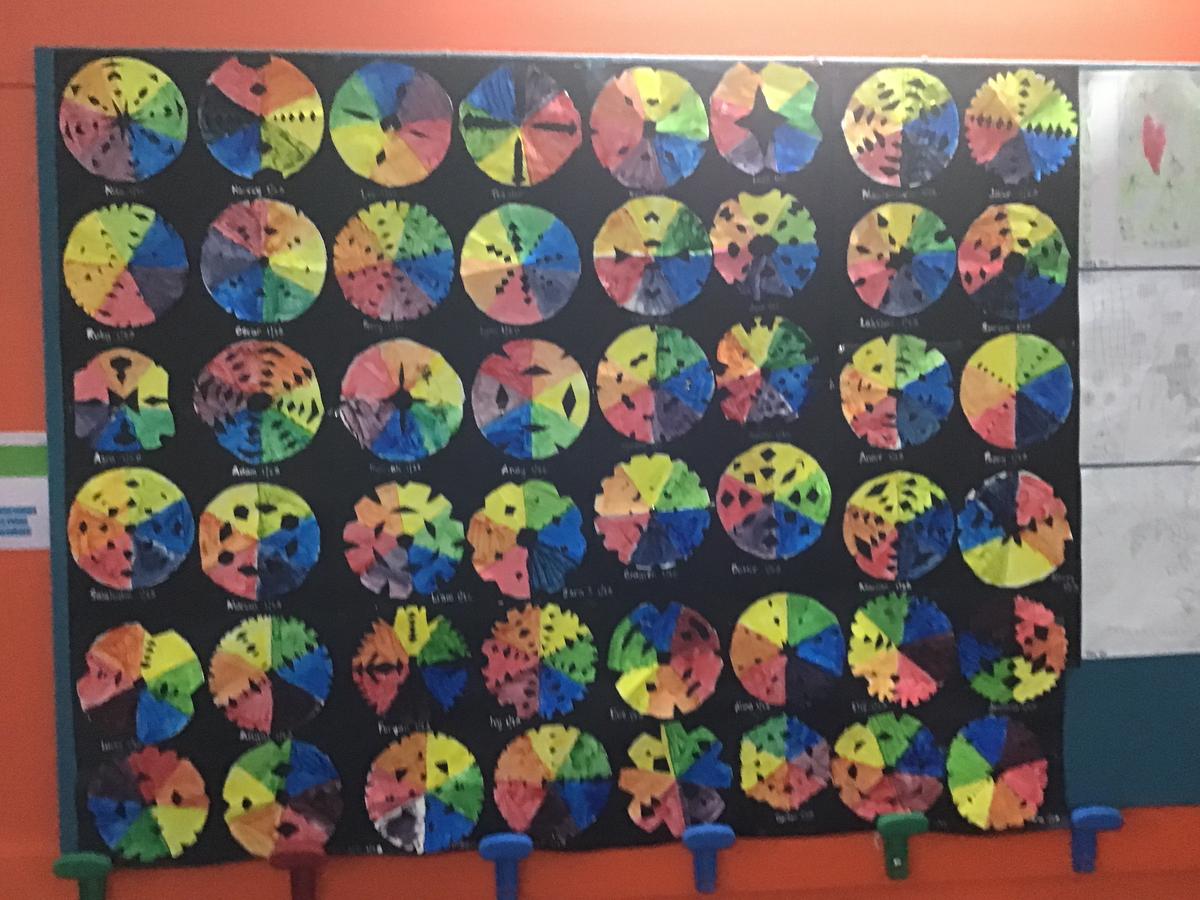
The 1/2s explored positive and negative spaces that come under the Art Element: Value and Art Principle: Space. They traced objects to create the positive space and decorated the negative space or the area around the object with patterns and lines. The 1/2s learnt the difference between monochrome (black and white) and monochromatic colours (a colour of the colour wheel mixed with white to create tints and black for shades). They created their own colour wheels and learnt to mix two primary colours to make a specific secondary colour. The 1/2s learnt to draw fish with its correct features and painted them using monochromatic colours. They were introduced to Wassily Kandinsky, a Russian painter known for his abstract artwork, and created Kandinsky inspired prints using lines and shapes. Here are some photos of their work.
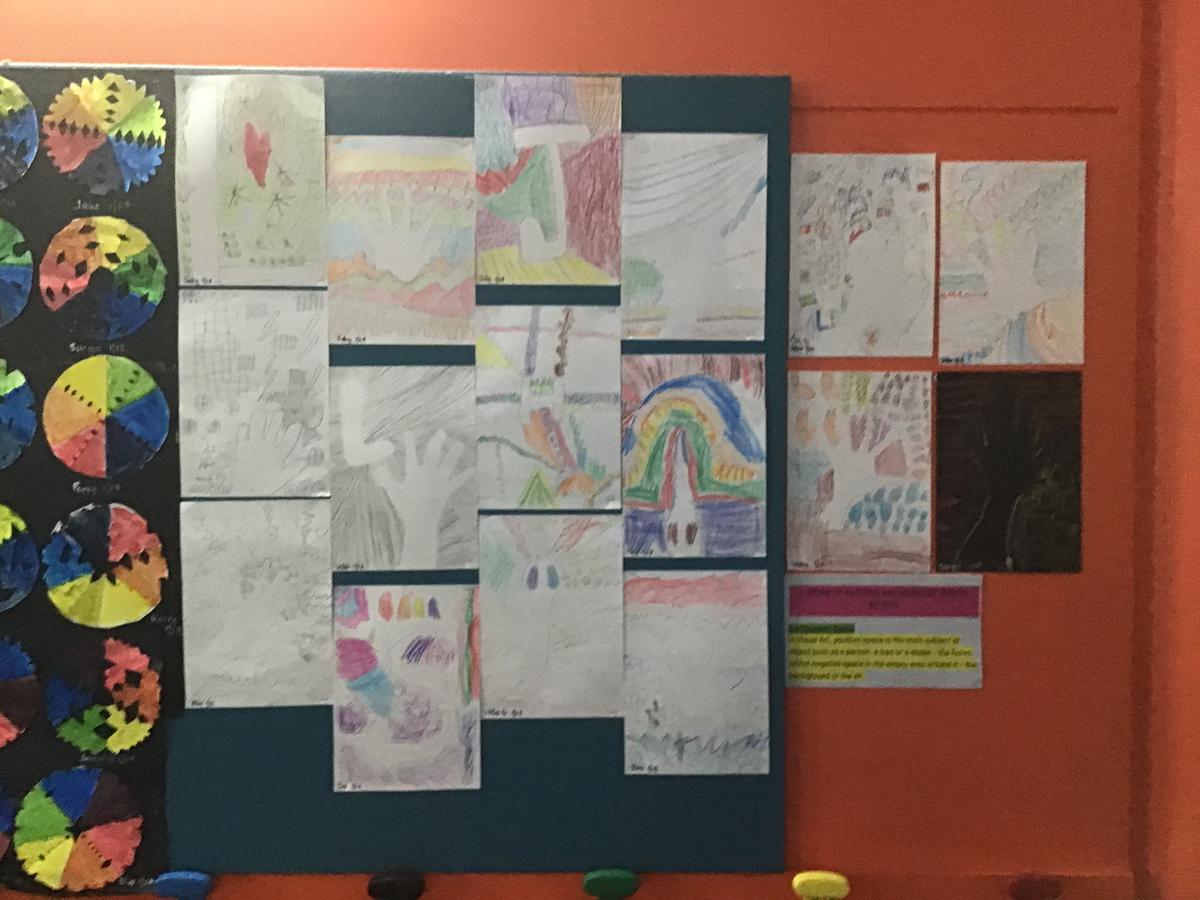
The 3/4s were introduced to Japanese Nōtan Art which is about the harmonious balance between dark and light, positive and negative spaces. They drew simple organic and geometric shapes on black paper and flipped them over to make their mirror images. The 3/4s were amazed with their achievements, they could not believe how something simple could look so striking! They were introduced to Wassily Kandinsky and studied the way he used black lines and complementary colours in his abstract and landscape paintings. The 3/4s enjoyed sharing their interpretations of Kandinsky’s artwork and were inspired to create their own abstract or landscape drawings using oil pastels. They explored monochrome and monochromatic colours and produced paintings of eucalyptus trees in monochrome and drawings of their selfies in monochromatic colours. Take a look at their incredible artwork below.
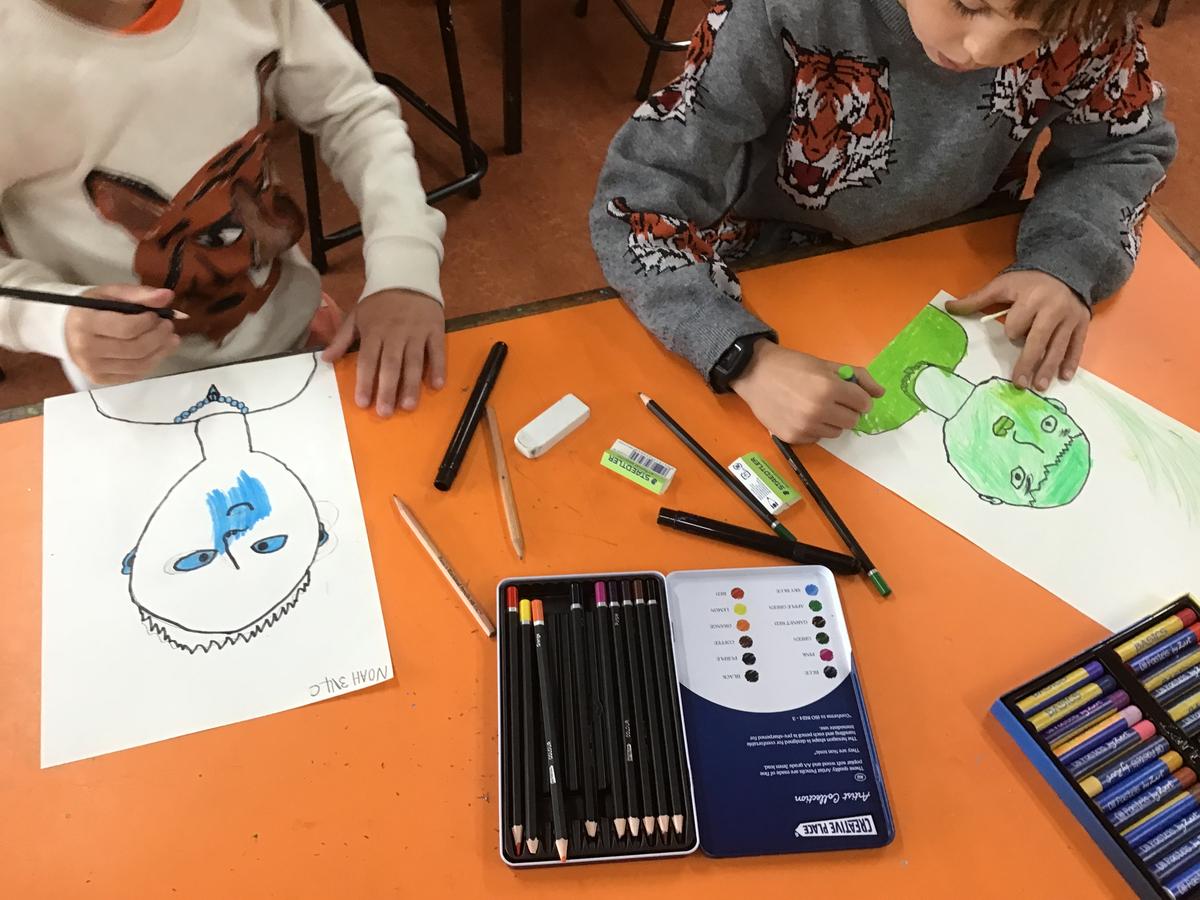
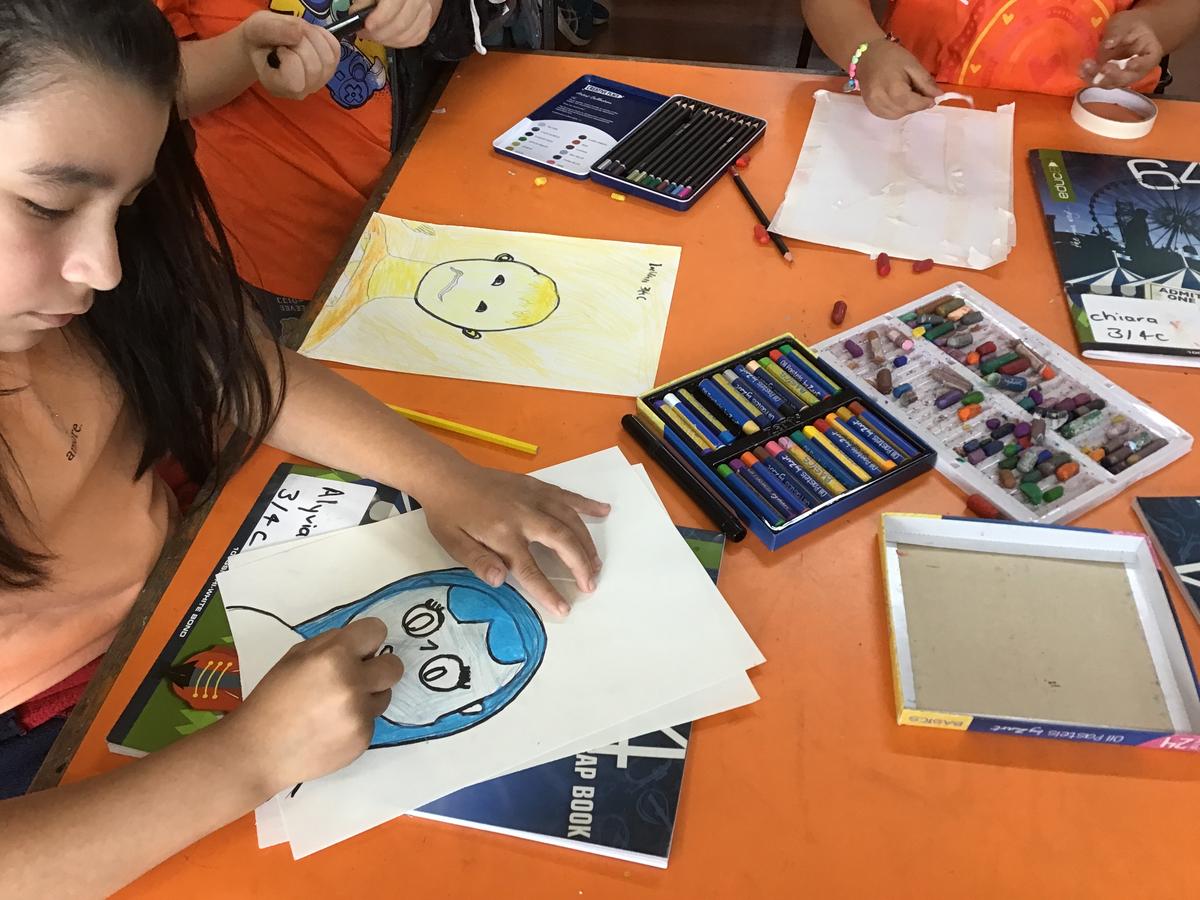
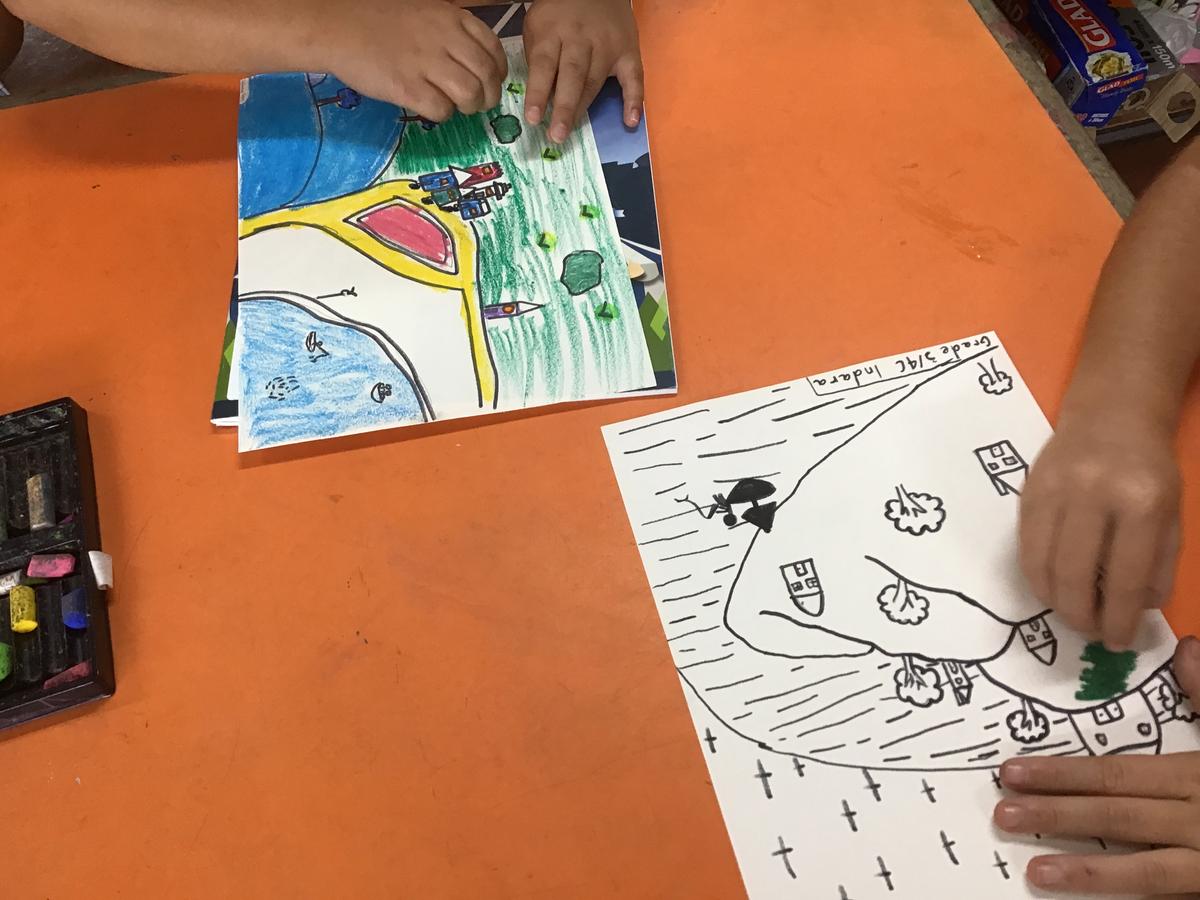
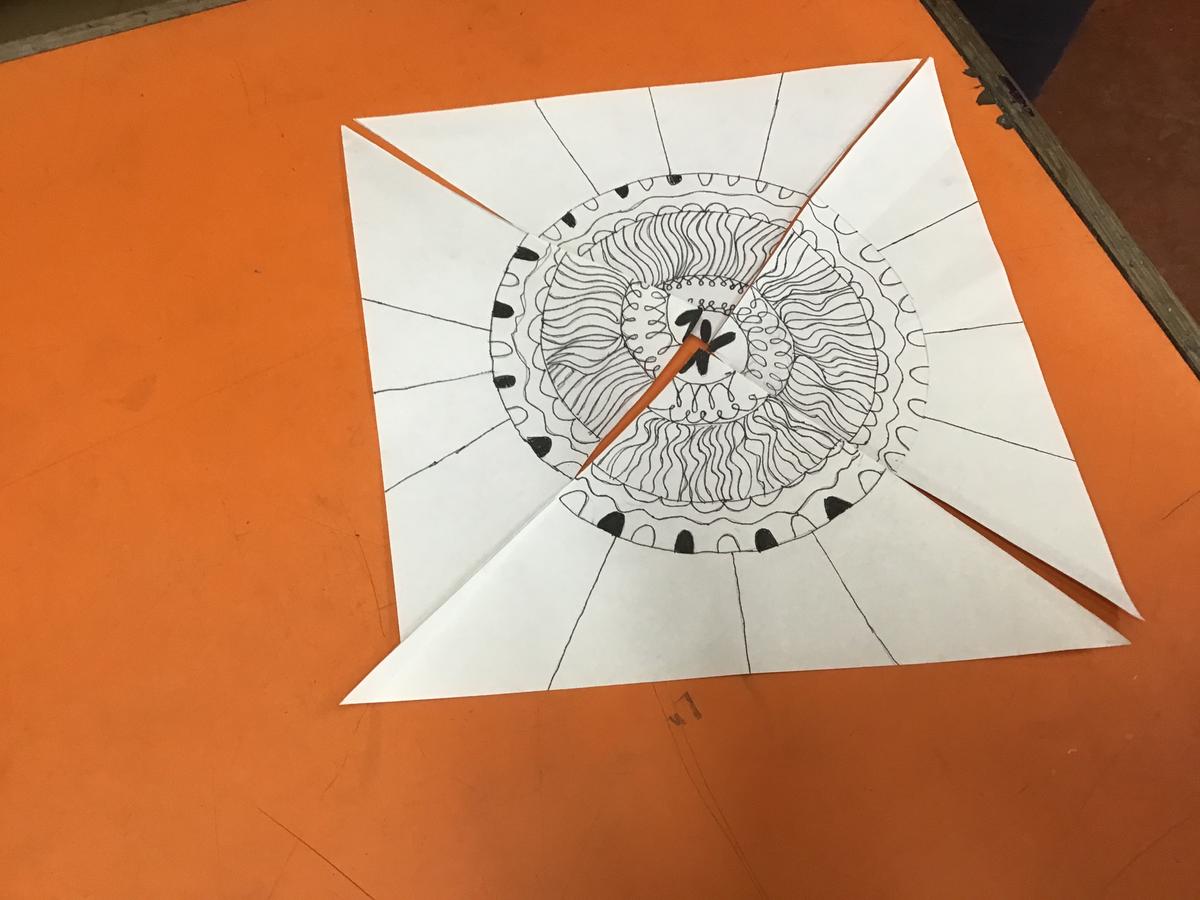
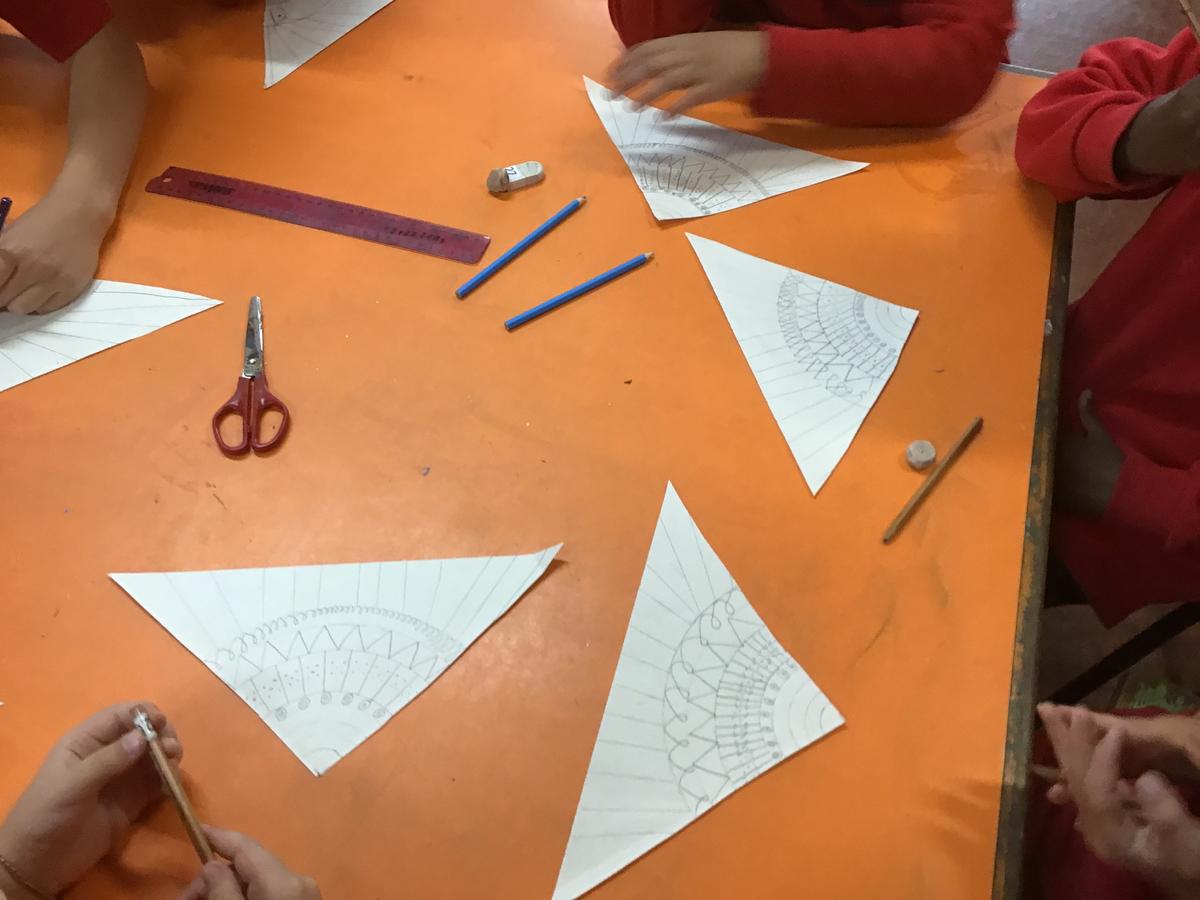
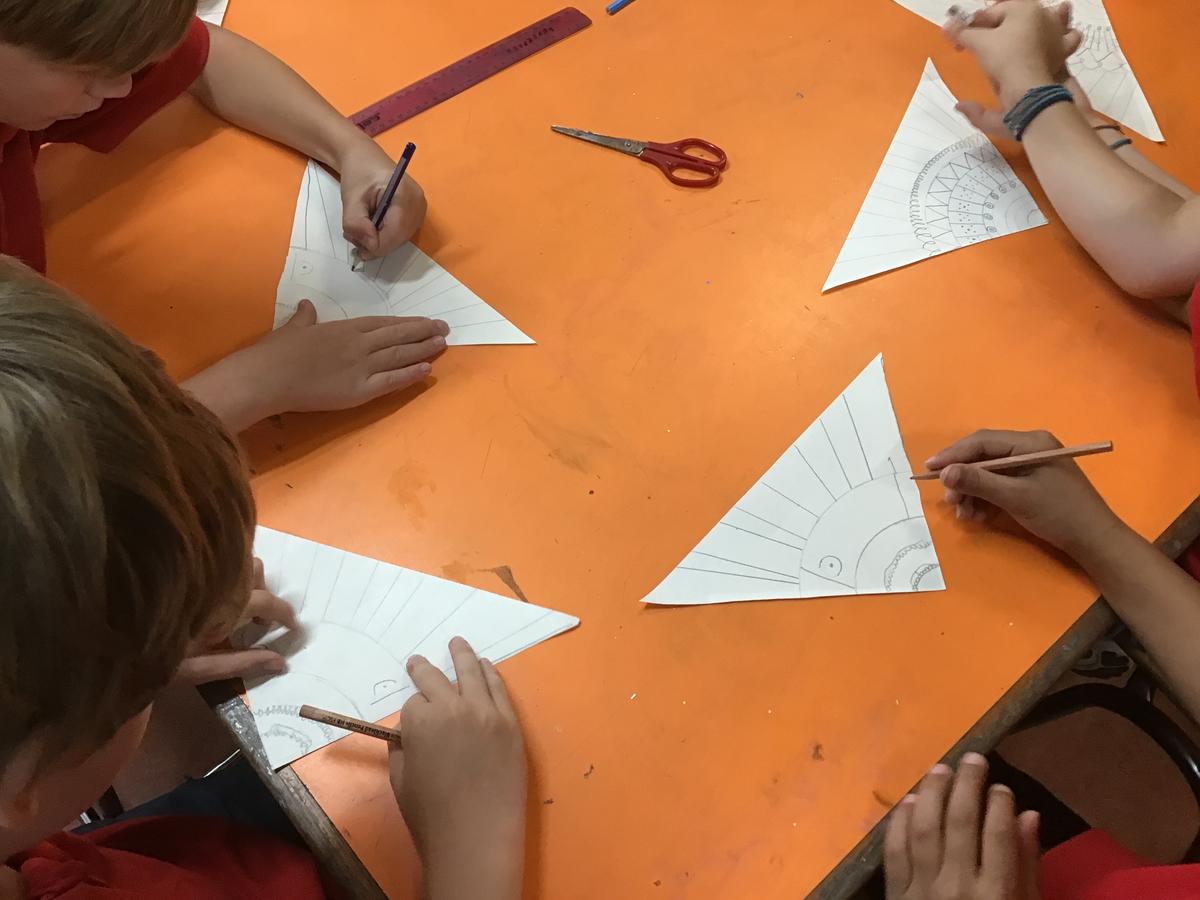
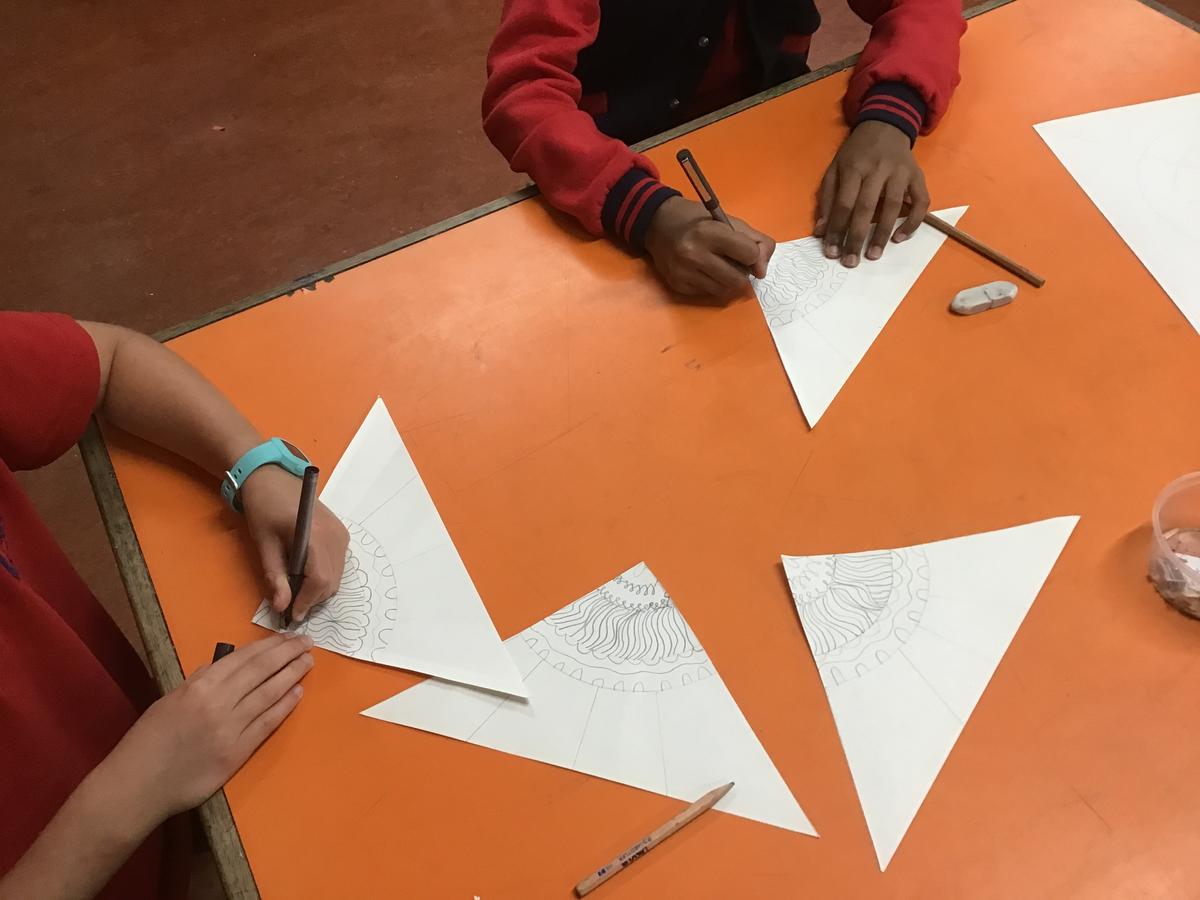
Aside from learning about Japanese Nōtan Art, the 5/6s were challenged to draw and cut the letters in their names and more complicated organic shapes on black paper to make their mirror images. They investigated the term ‘monochromatic’ and painted colour schemes and landscapes in monochromatic colours. The 5/6s particularly enjoyed mixing a primary or secondary colour with white to create tints and with black to create shades. They were introduced to Mandala art and collaborated in groups of four to create one using lines and repeated patterns in monochrome. The 5/6s learnt about neurographic art that was developed by Russian psychologist, Pavel Piscarev, in 2014. They discovered that they could produce something beautiful by simply drawing curved lines with a marker, rounding them out to eliminate sharp corners and decorating them with colours. Here are a few examples of their collaborative work.
Thank you,
Denise Diamantopoulos, Visual Arts Specialist