Year 2
Maths Bulletin
Year 2
Maths Bulletin
In Maths, we have been exploring how numbers are built using tens and ones. Understanding place value helps students see that numbers are not just symbols, but collections of quantities that can be grouped in efficient ways.
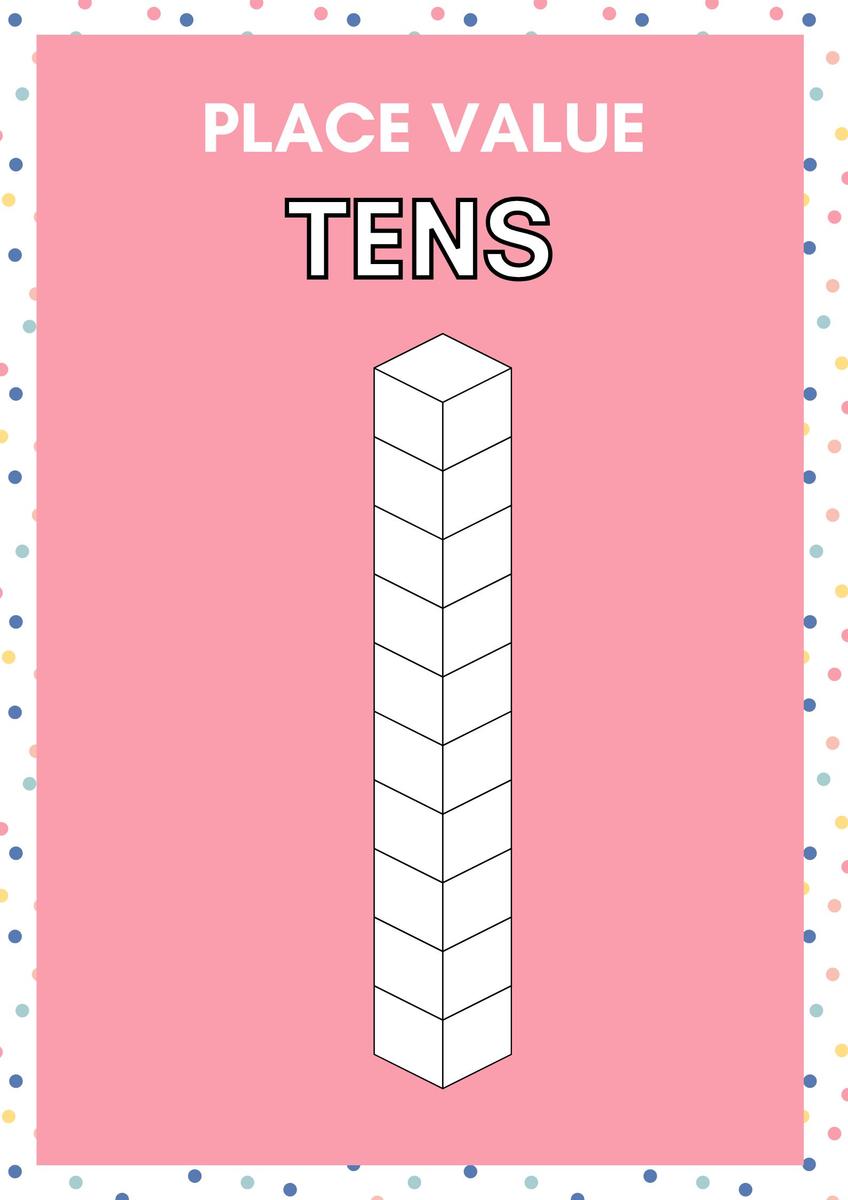
To support this learning, we used MAB blocks (Multibase Arithmetic Blocks). The small cubes represent ones, and the longer rods represent tens. By physically exchanging ten ones for one ten, students can see how numbers are organised and how larger numbers are constructed.
We are learning to recognise and describe the place value of teen numbers.
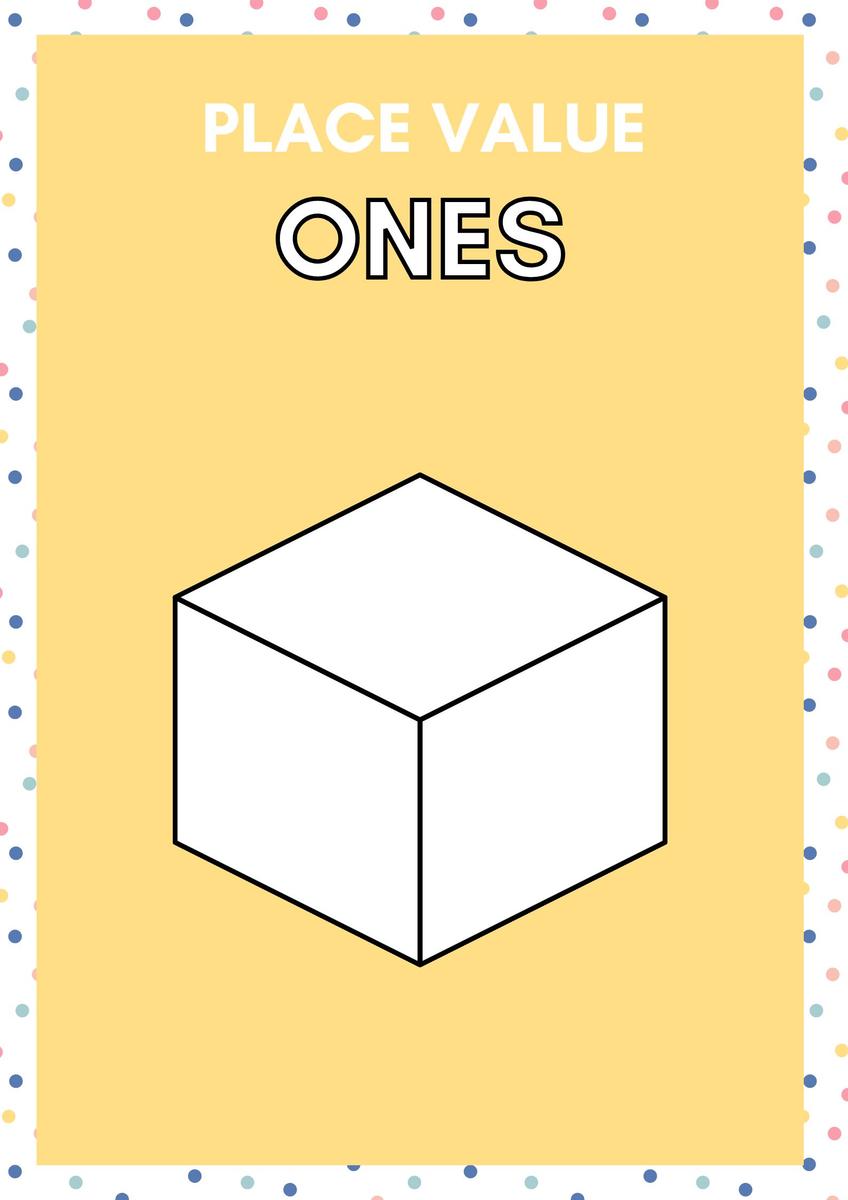
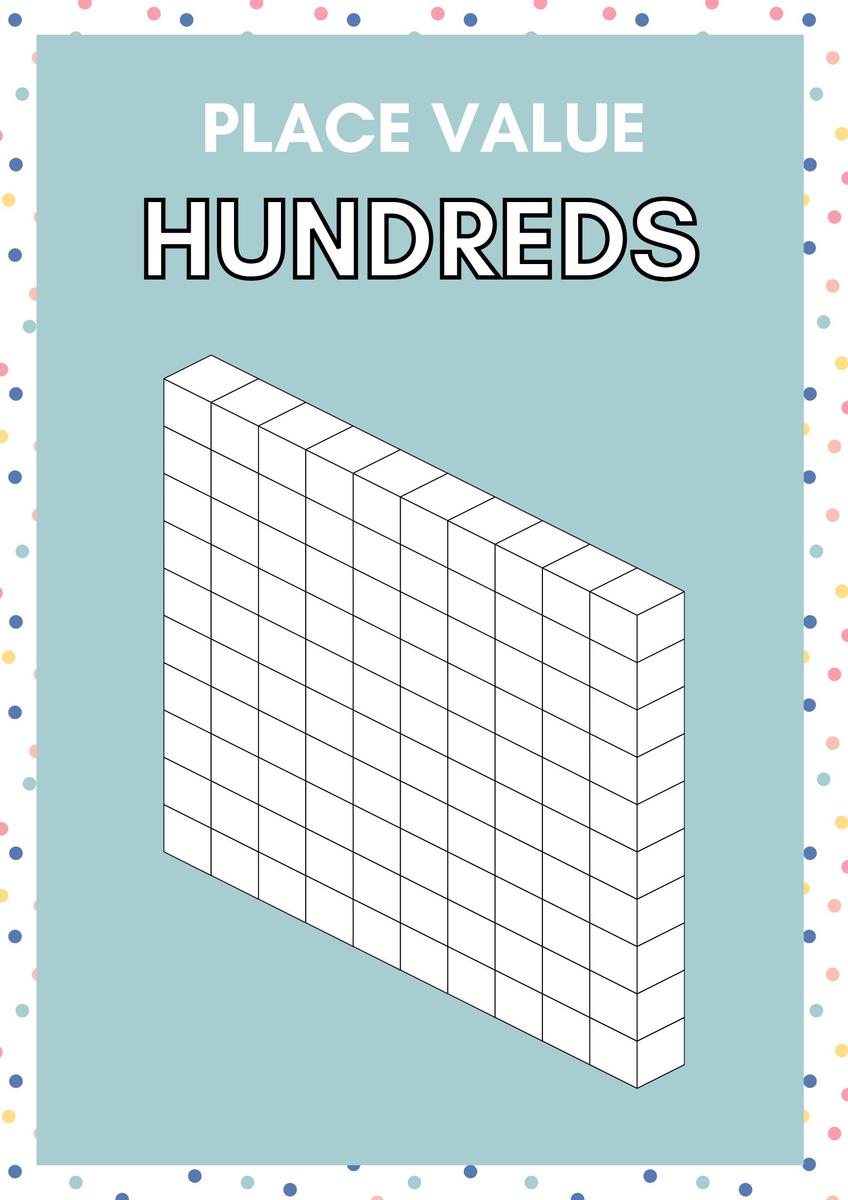
We began our lesson in a circle using a “fishbowl” discussion. A student was given a collection of small MAB cubes and asked to count how many there were.
As we counted together, we discussed different ways to count the blocks. Some students counted by ones, while others began to group and skip count. This led to a conversation about efficient counting strategies.
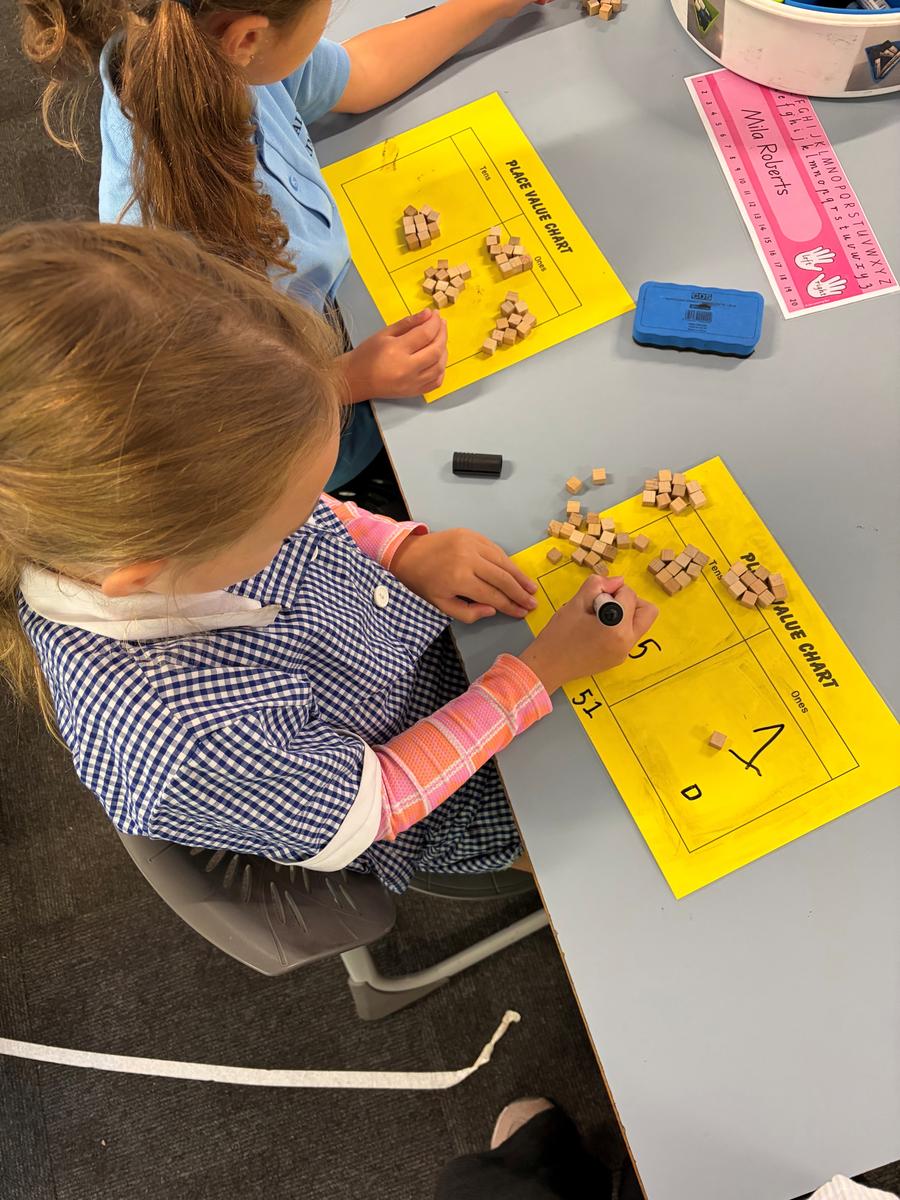
We recorded the numbers on a place value chart, showing how many ones were present. When we reached ten ones, we demonstrated how these could be exchanged for a ‘ten’ block, helping students see how teen numbers are made up of one ten and some extra ones.
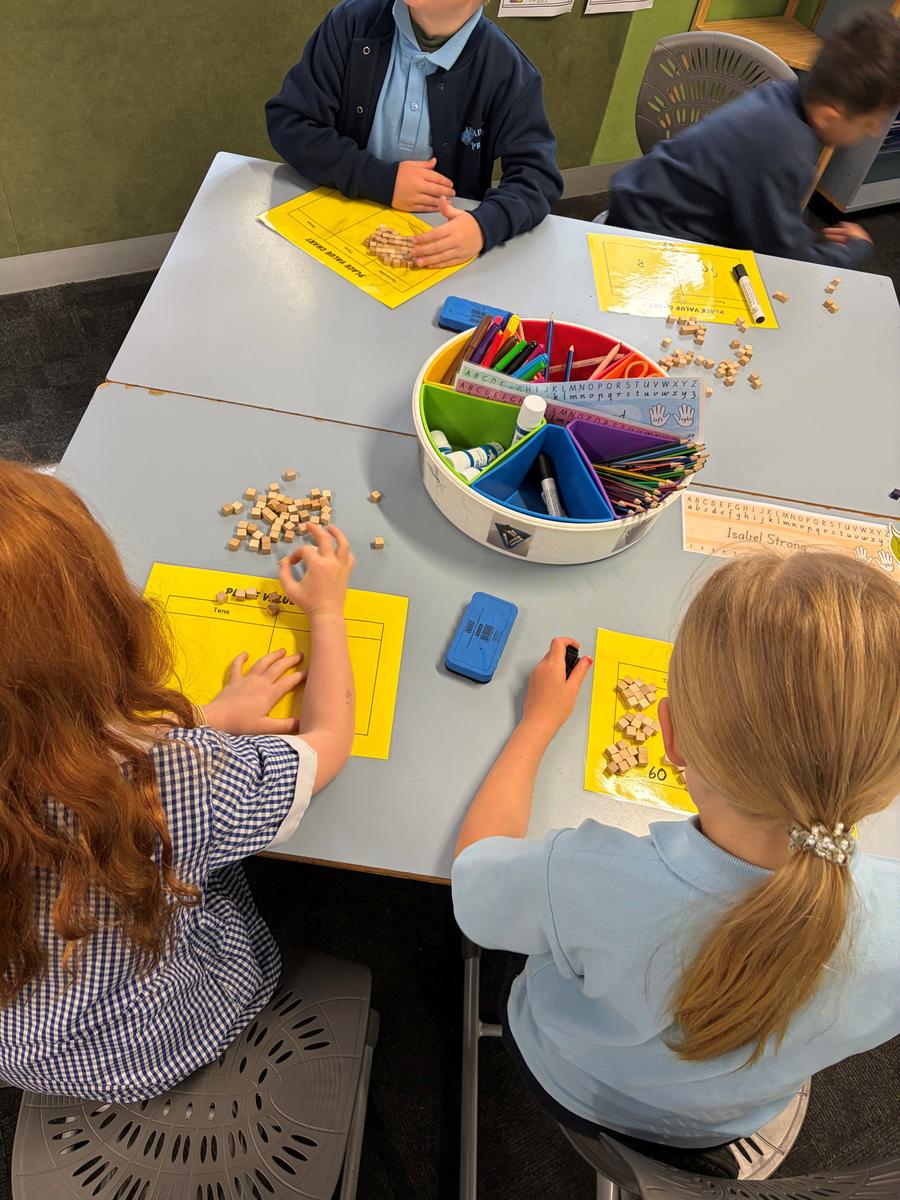
Students then worked in small groups using dice and MAB blocks.
Students rolled a six-sided die and collected that many ones blocks. Each number rolled was recorded on mini whiteboards. As their collection grew, students exchanged ten ones for a ‘ten’ block, reinforcing the idea that 10 ones make 1 ten.
This hands-on activity helped students see how numbers grow and how grouping objects into tens makes counting and understanding numbers easier.
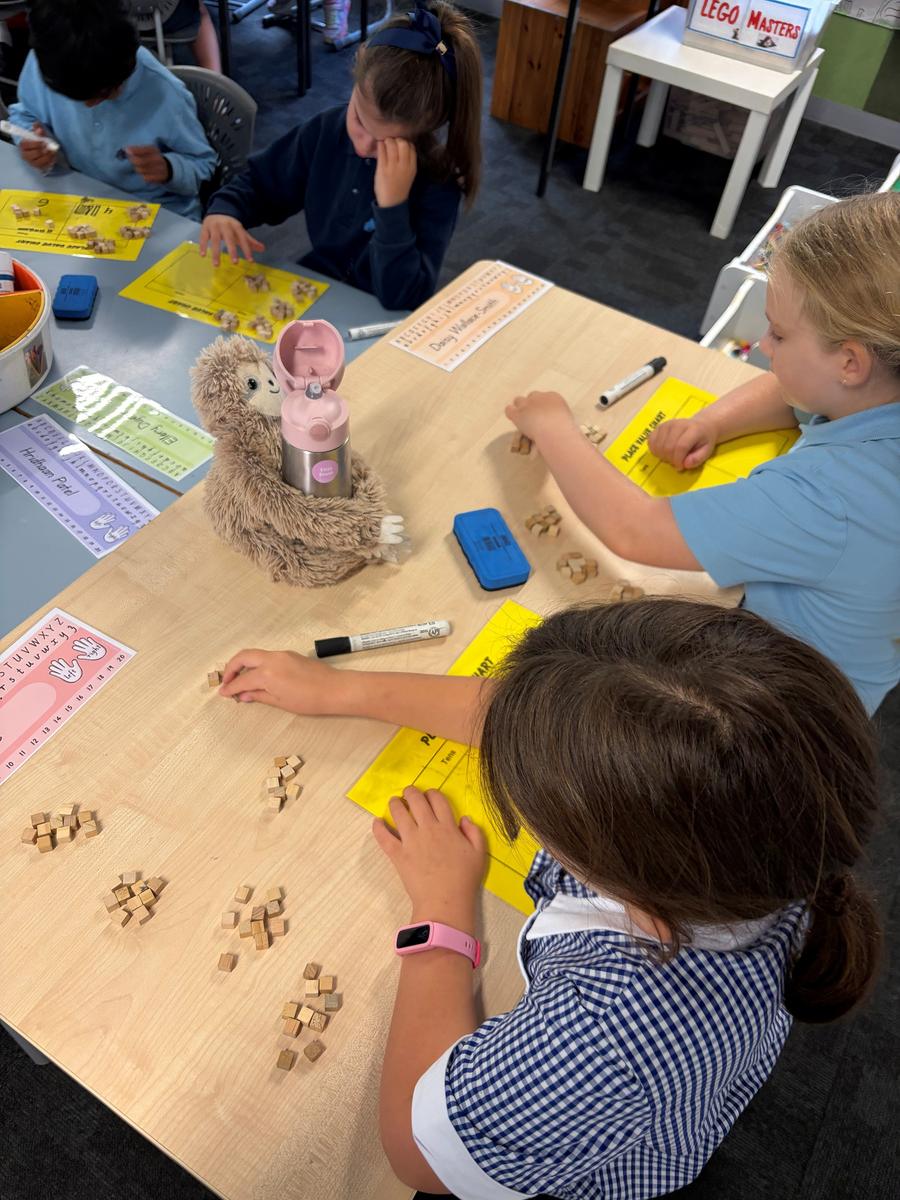
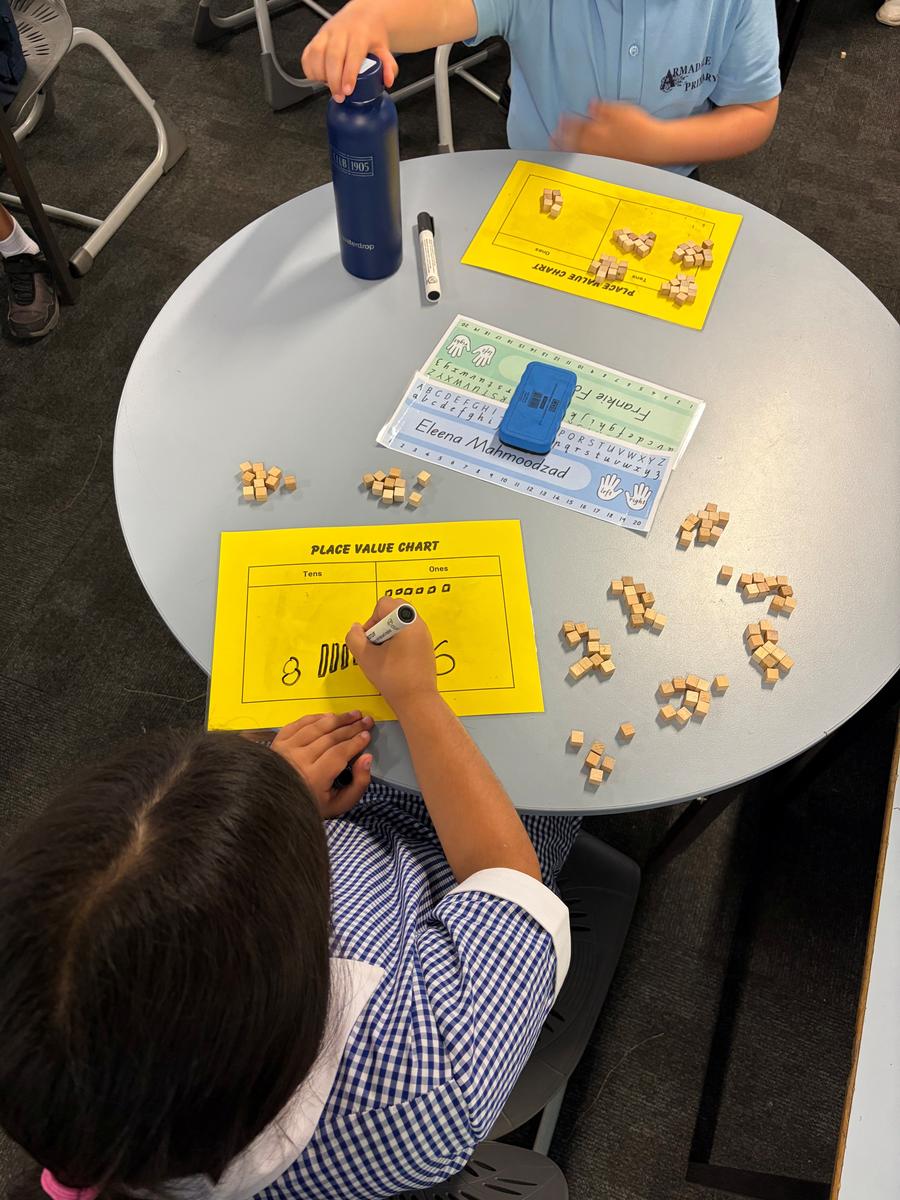
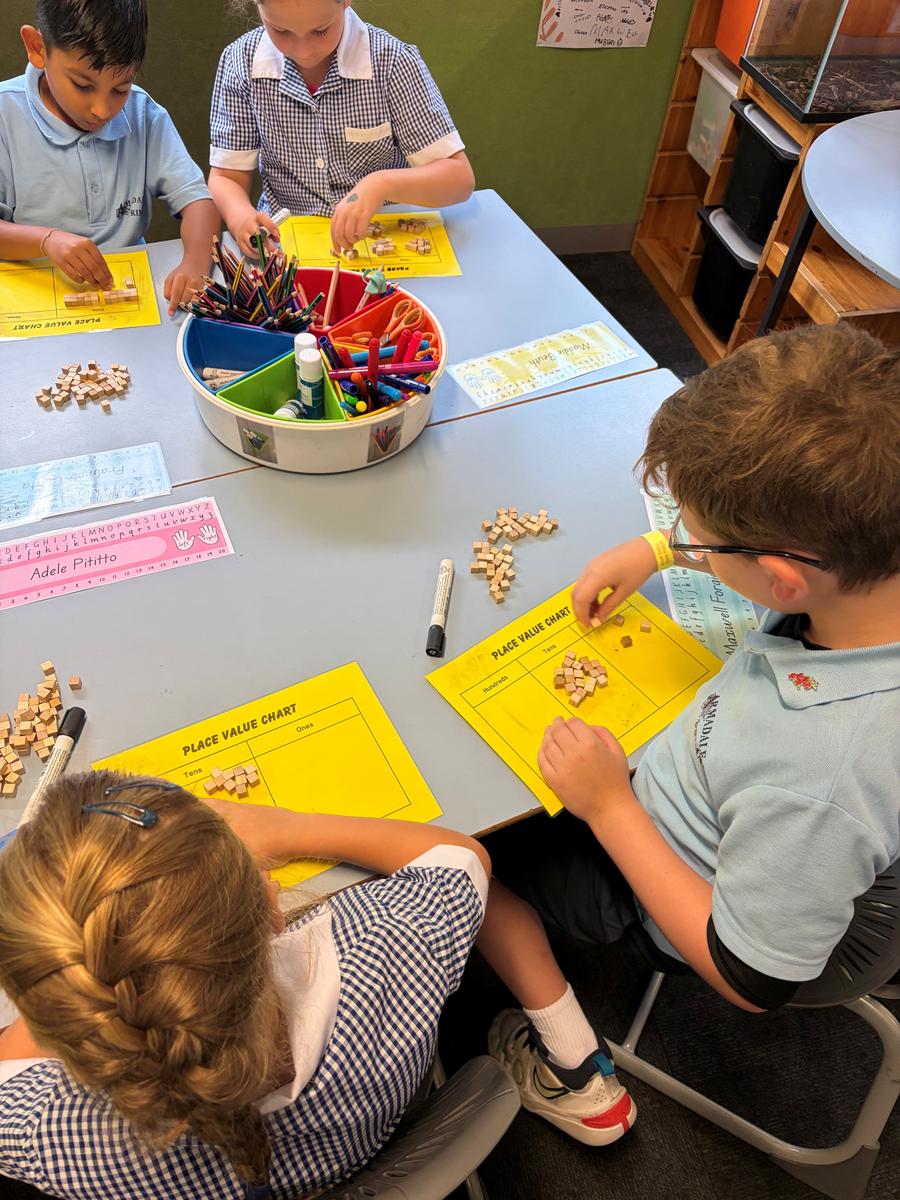
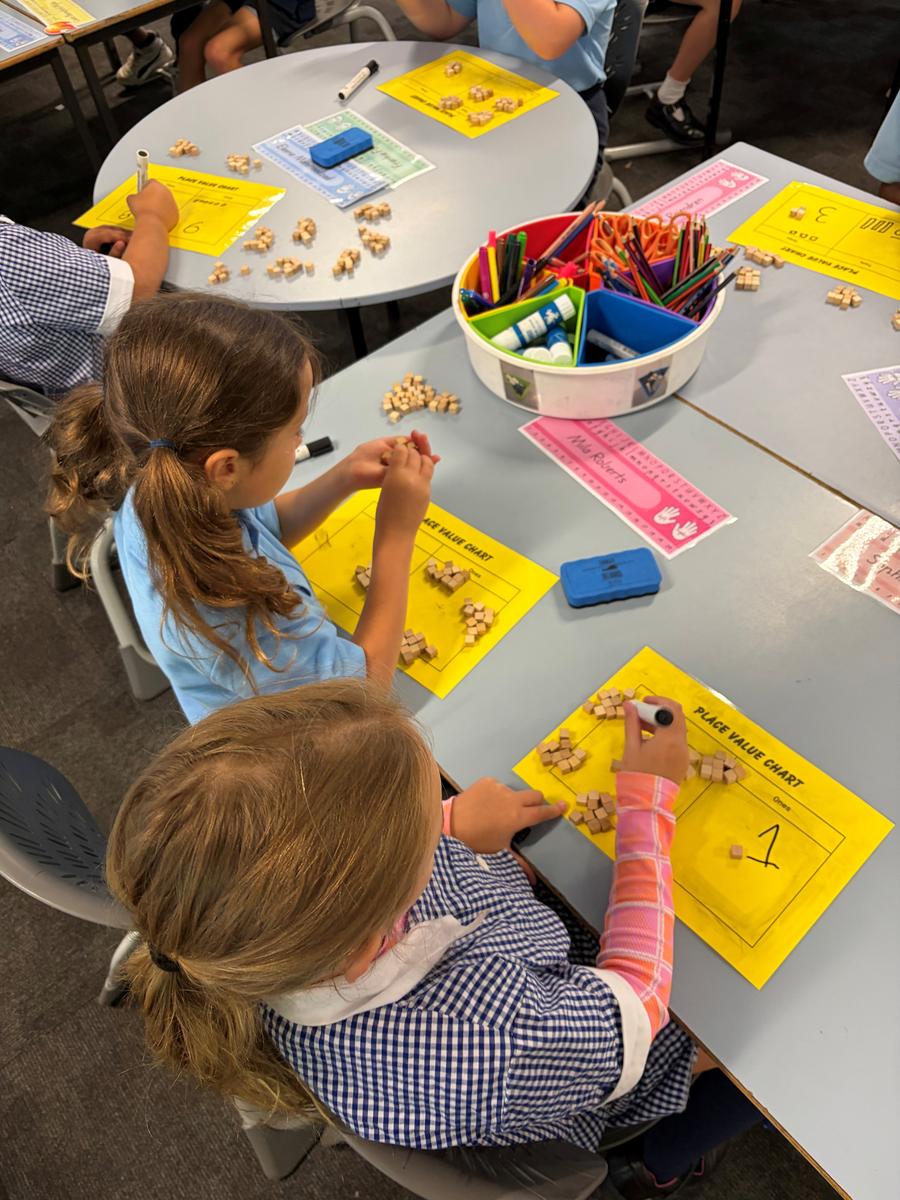
Throughout the sessi, we came back together to share what we noticed.
Students talked about how numbers change when we trade ones for tens, and how teen numbers are made from one group of ten and some ones. Through discussion and demonstration, students explained their thinking and reflected on the strategies they used.
In this learning experience, students are working towards:
You can support your child’s understanding of place value with simple activities at home:
Group everyday objects into tens Use items such as Lego, pasta, buttons, or coins. Ask your child to count them and group them into tens and ones.
Build teen numbers Ask your child to make numbers like 14 or 17 using objects. Talk about how the number is made of one ten and some ones.
Practise counting collections When counting items, encourage your child to make groups of ten first, then count the remaining ones.
Use real-life examples When you see numbers between 11 and 19 (house numbers, prices, page numbers), ask:
Play “Make Ten” Give your child a pile of small objects and ask them to collect exactly ten before trading them for a new pile or container representing a “ten”.
These small conversations and activities help children see how numbers work and strengthen their understanding of place value.
Steph and Georgia
Year 2 Team