
Year 1 Bulletin: Maths
Learning Intention
To use the strategy of counting on to find the difference.
Learning Experience Overview
This lesson focused on continuing to build students’ understanding of informal measurement while reinforcing the previously practised strategy of counting on. The lesson was designed to model the thinking process involved in comparing and measuring the length of objects using unifix blocks. By linking the activity to a familiar counting strategy, students were able to apply prior mathematical knowledge while working within the topic of measurement.
Fluency:
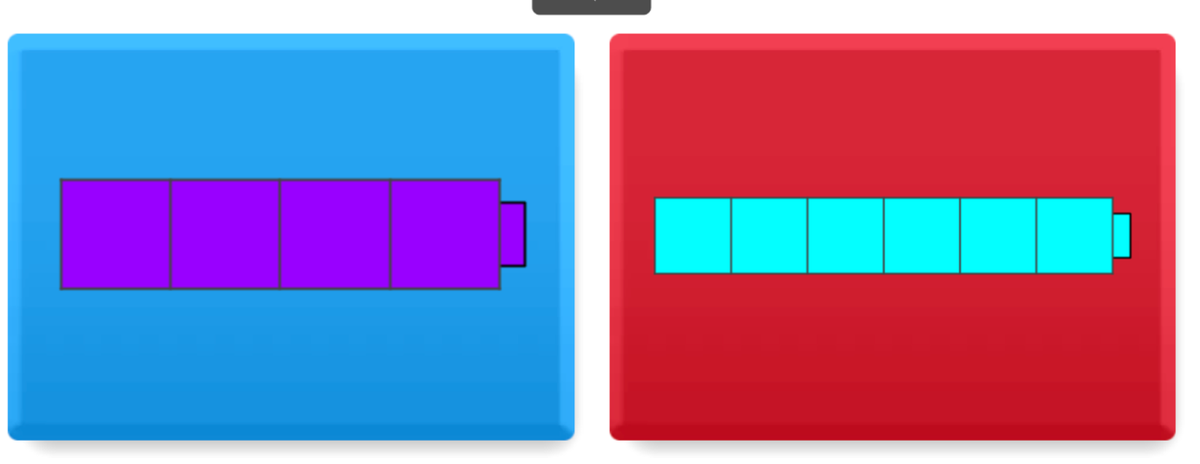
We began the lesson with a Longer or Shorter activity to help students quickly recognise and use words like “longer” and “shorter”. This automatic recall allows them to focus more easily on measuring objects, such as using Unifix blocks. Students were shown pictures like the one below and were asked a question. For example, “Which stick is shorter?”
Whole
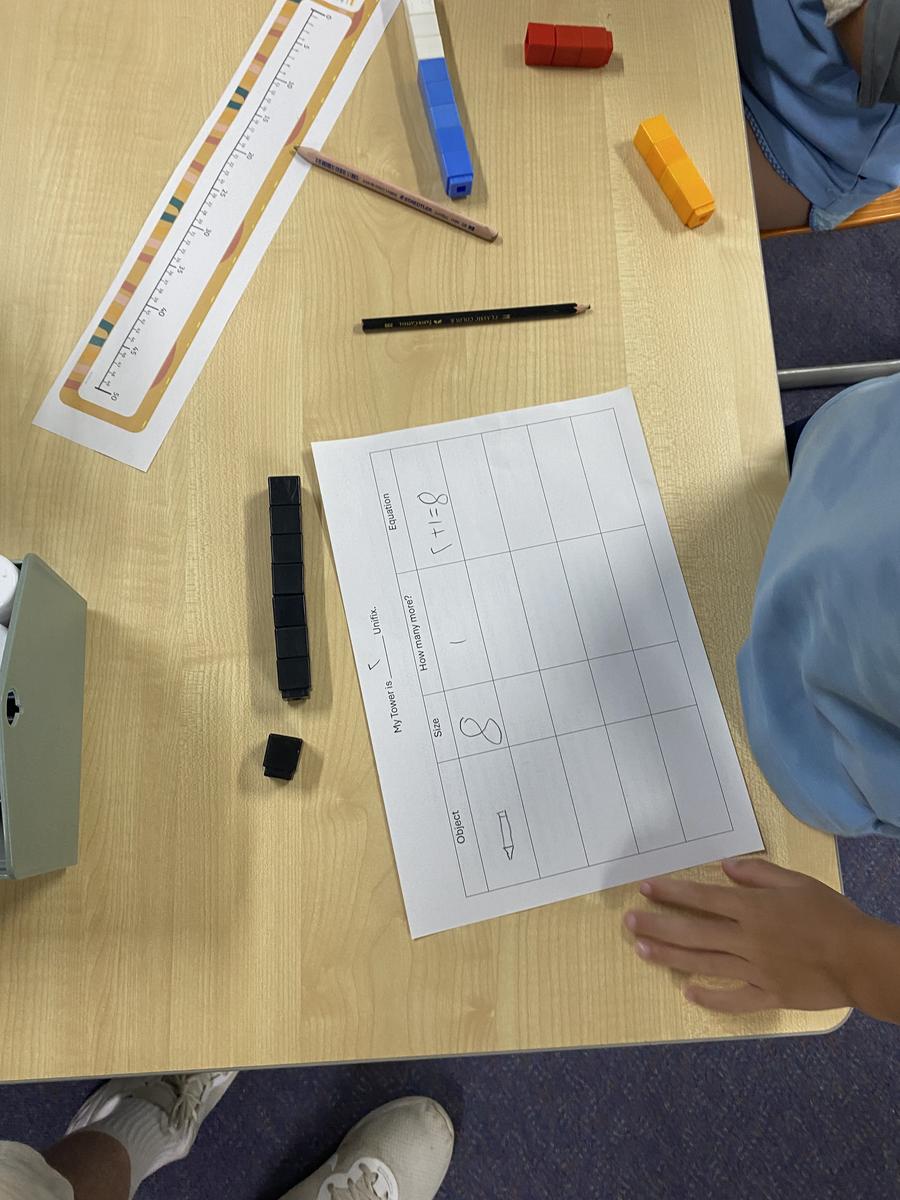
First, we modelled the task together. We started with a tower of 15 unifix blocks and counted them as a class. We then looked around the classroom to find an object that might be longer than the tower, such as a table. We added more blocks and counted on from 15 until the tower reached the end of the object. We then recorded our thinking with a number sentence (for example, 15 + 3 = 18) to show how many more blocks were needed.
Small
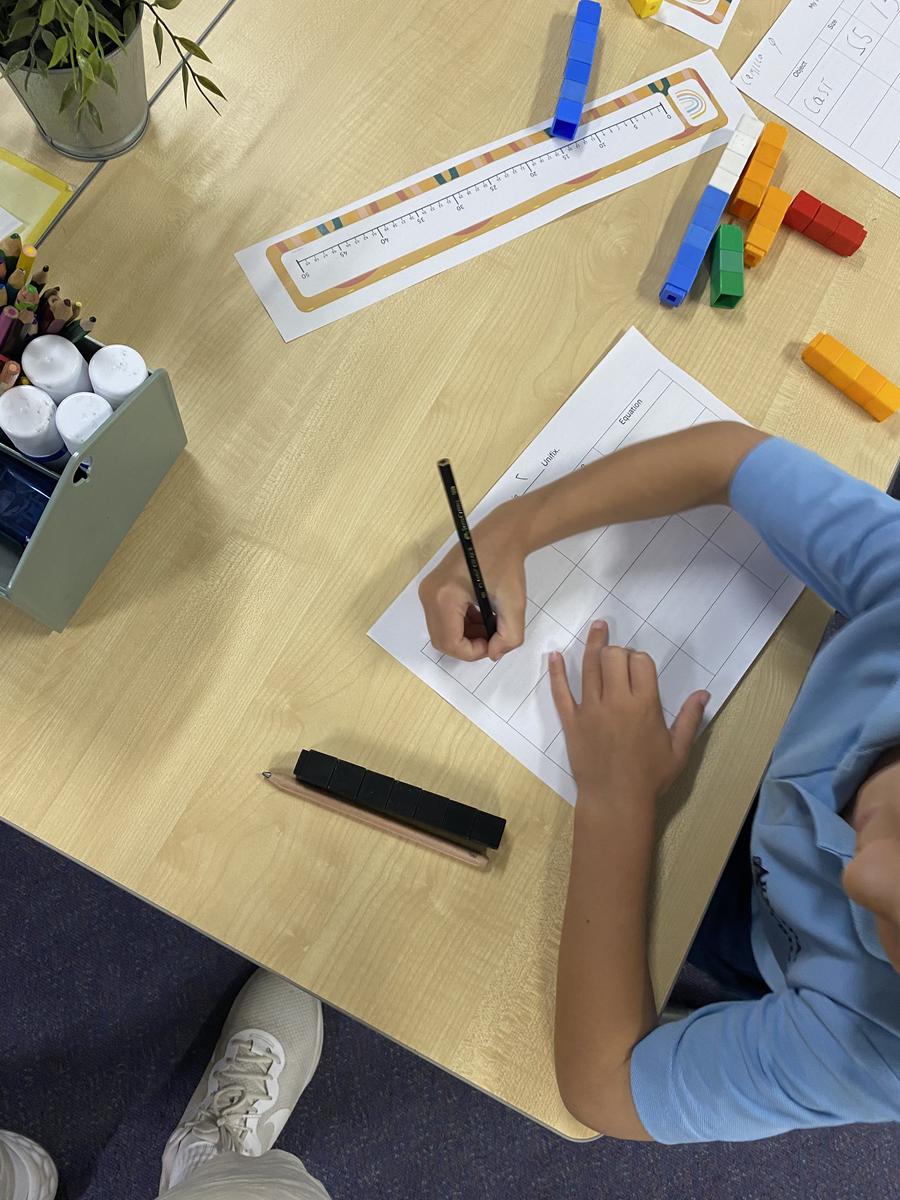
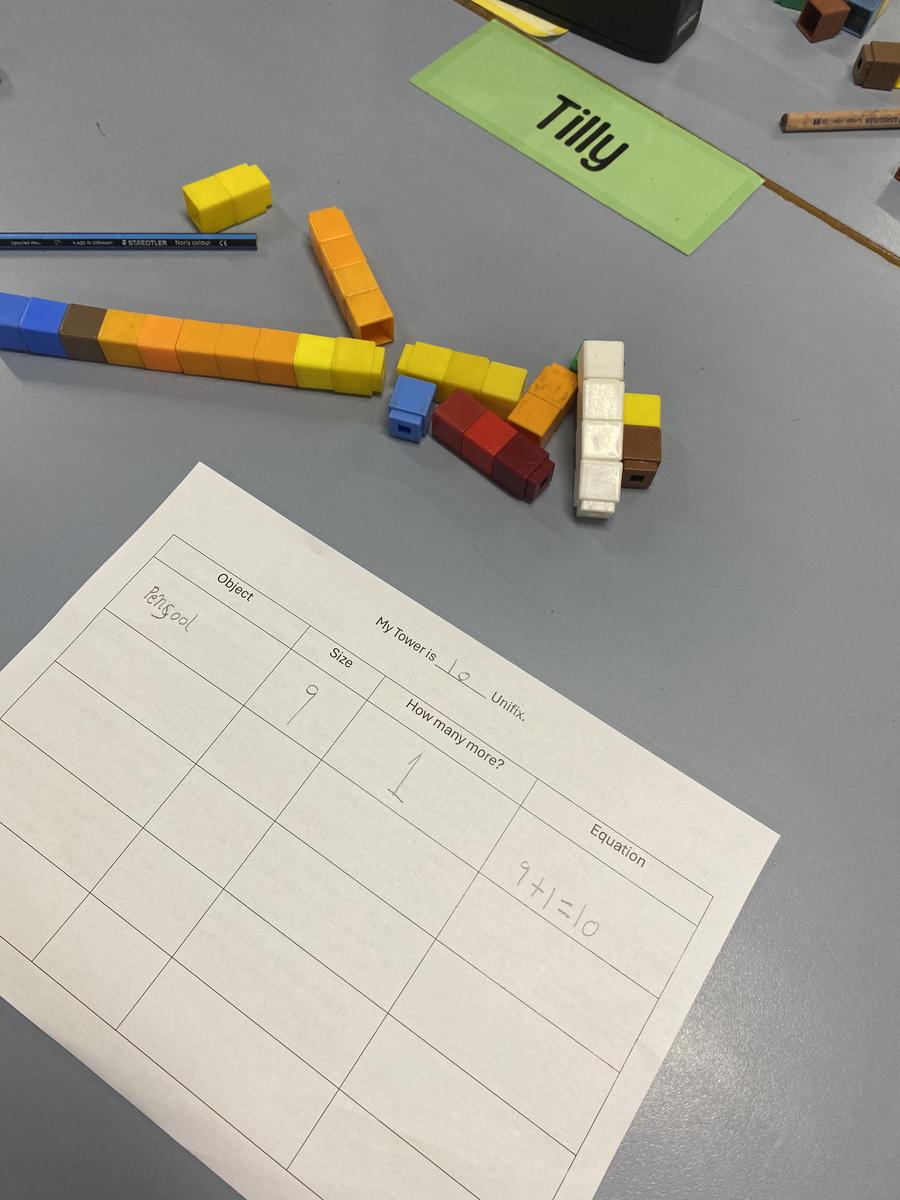
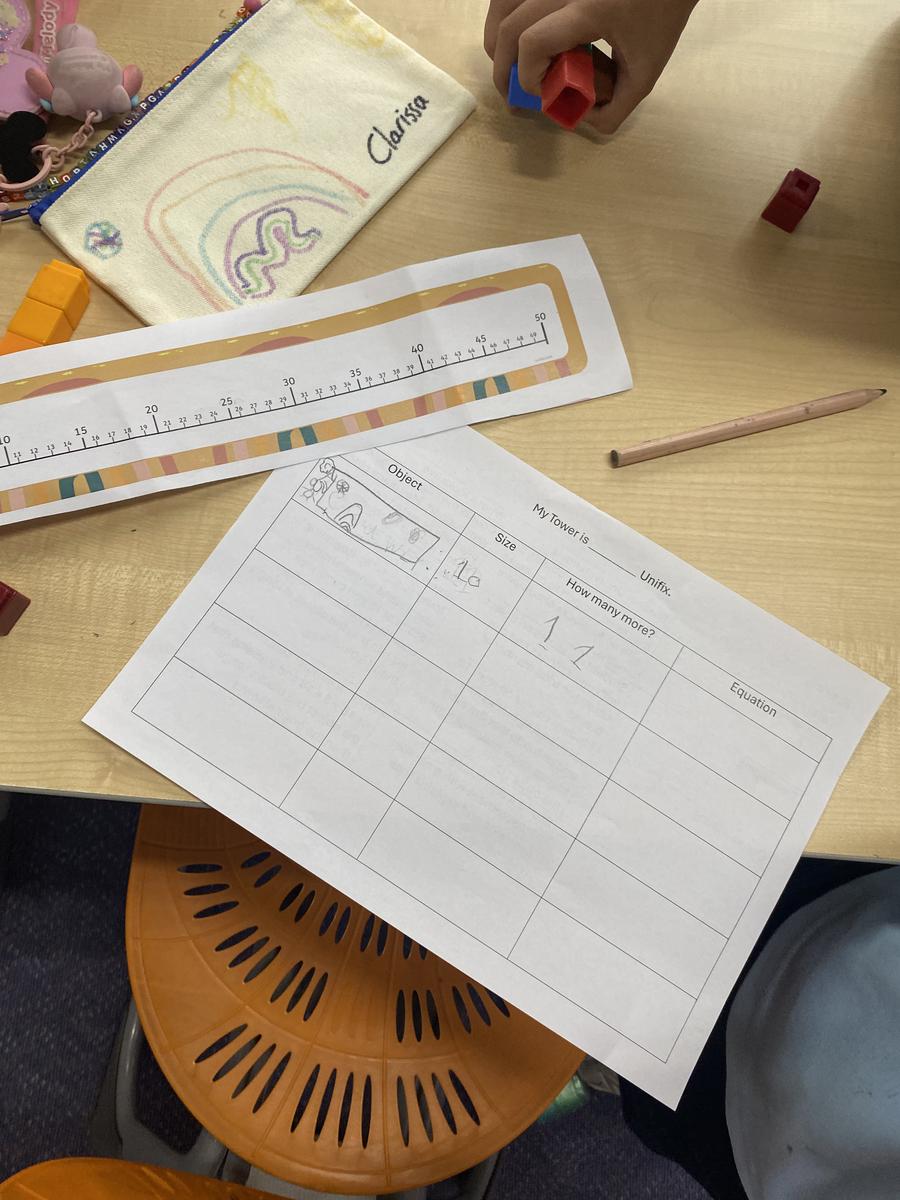
Students then commenced to start building their own towers using the unifix blocks to measure items that are longer than their own towers. Students were able to decide how long their tower is as well as finding particular objects that are longer than their tower. Then the students filled in their table worksheets by writing or drawing what object they are measuring, how long the object is, how many more the object measures to their tower (difference), and the equation that represents their difference in their measurement to their tower. Students completed the sheet by measuring five different objects and filling in each column. We analyse the students and their engagement to the prompts listed, which also aligned with the rubric on the worksheet.
Whole
Throughout the lesson, students were given the opportunity to share the largest difference that they had measured with their tower. When sharing, they needed to explain how they had measured their object and what they discovered. Some shared the equations they had recorded, while others shared what the difference was between their tower and the object they had measured.
Questions asked to prompt students:
- Let’s count the blocks together. How many do we have?
- What objects in our classroom might be longer than our tower?
- Do you think the table will be longer than the tower? Should we test it?
- Our tower didn’t reach the end. What do we need to do now?
- If we have 15 blocks and add one more, what number comes next?
- How many more blocks did we add?
- What is the total number of blocks now?
- How can we show this with a number sentence?
Prompts:
Enabling:
Count the length of the tower to find the size of their object.
Explore:
Share the difference in length of the tower and the object.
Extending:
Write out the equation created through adding the tower and the difference together
How you might like to continue learning at home:
Some great ways to continue this exploration of using the counting on strategy and informal measurement are:
- Find objects around the house and compare which one is longer or shorter
- Use small items (blocks, LEGO, coins, pencils) to measure the length of objects
- Practise counting on when adding more items (e.g., start at 10 and count 11, 12, 13…)
- Ask your child to estimate first – “Do you think this will be longer or shorter?”
- Encourage your child to say or write a number sentence to show their thinking (e.g., 10 + 3 = 13)
Kind regards,
Jarryd and Stef
The Year 1 Team
jarryd.lamb@education.vic.gov.au
stephanie.lampard@education.vic.gov.au