
Student Wellbeing

GEM Leaders update
Our GEM Leaders have begun their first piece of work for the term, with a strong focus on student voice across the school.
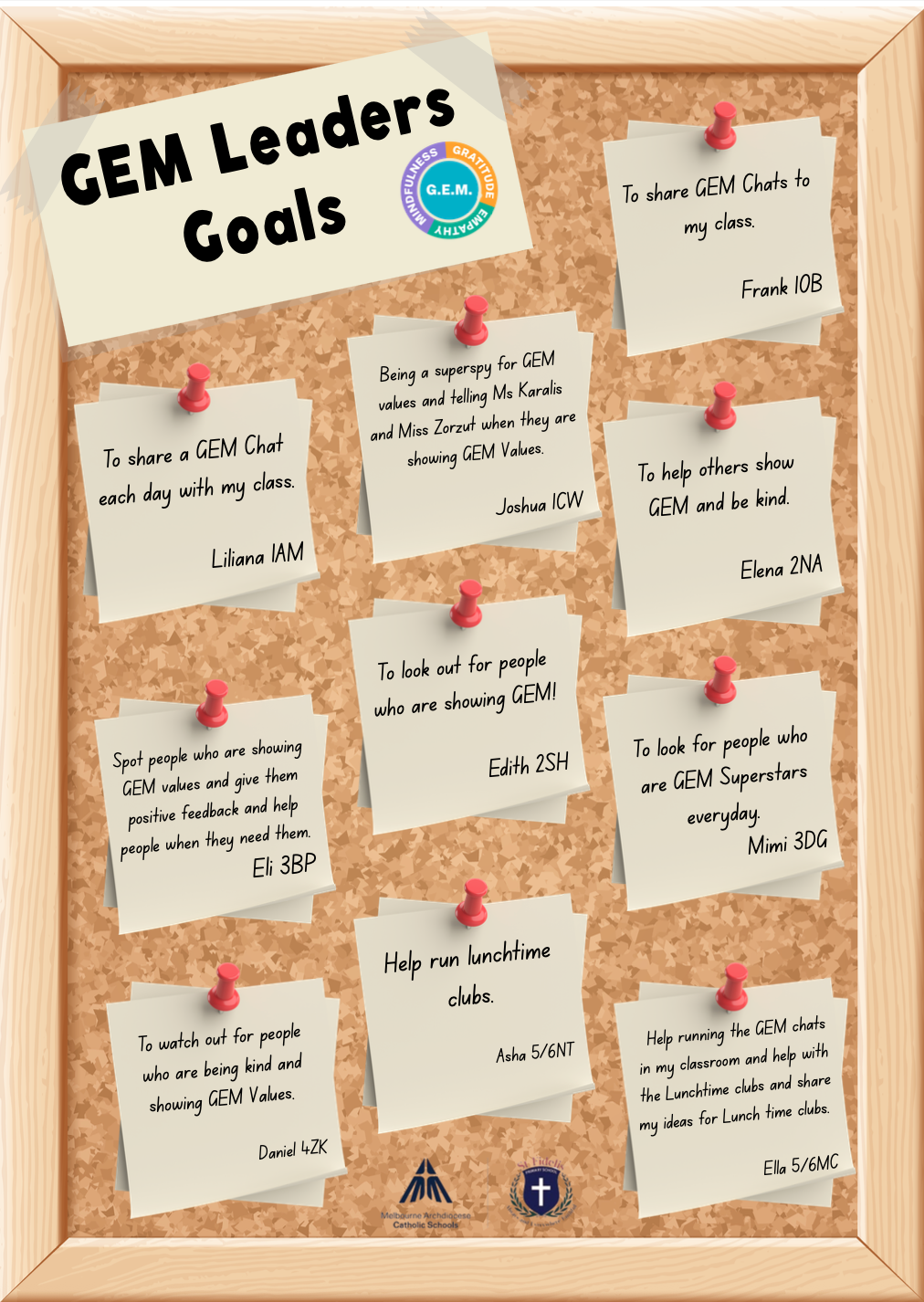
They are developing simple, visible ways to share messages that promote kindness, inclusion and wellbeing within our school community. This work is designed to have an immediate impact, with GEM Leaders actively modelling our values and helping strengthen a positive and connected school culture across classrooms and beyond.
We are excited by the leadership they are already showing and the role they will play in shaping student voice moving forward.
Common School Trends
As we move past the halfway point of the term, we are also seeing some common wellbeing patterns across the school that are important to name and support.
At this stage of the term, it is common to see:
- Increased tiredness and lower patience during the school day
- Stronger emotional responses, particularly at drop-off and after school
- Friendship ups and downs and heightened sensitivity in peer interactions
- Some hesitation around morning routines and separation from home
These responses are very normal at this point in the term as students manage growing learning demands, social energy, and routine fatigue.
How we are supporting students at school
We are taking a consistent, whole-school approach to supporting students through this stage of the term. This includes explicitly teaching and prompting emotional regulation strategies, helping students name and reframe their feelings, and building positive self-talk into everyday classroom language. Staff are also prioritising calm, predictable routines and strong relational support so students feel safe, connected, and ready to learn.
Strategies that can help at home
1. Name it to tame it
Helping children label what they are feeling can reduce intensity and build awareness.
2. Reframe the moment
Gently shift thinking from difficulty to capability (“This feels tricky right now, but you can do hard things”).
3. Build positive self-talk
Simple reminders like:
- “I can do this”
- “I’ve done hard things before”
- “This feeling will pass”
4. Keep routines steady
Predictable mornings and afternoons help children feel grounded and secure.
5. Connection first
Start with calm connection before problem-solving. This helps children regulate and engage more effectively.
We are continuing to support students every day with these strategies, and we really appreciate the partnership with families in reinforcing them at home. Together, these small consistent actions make a meaningful difference in building confidence, independence and resilience.
Thank you for your ongoing support.