Learning Across the ELC
Learning in Banksia Blue
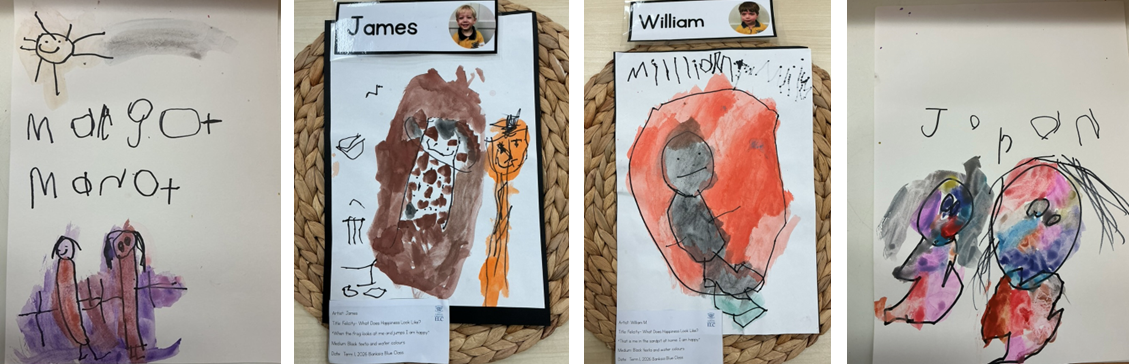
Felicity: What Does Happiness Look Like?
At the beginning of the term, the Banksia Blue children shared stories from their Easter holidays with a deep sense of wonder and awe, noticing seasonal changes, as well as the birds and tiny insects appearing in the garden. Through these moments of noticing, they continued to build meaningful connections with the natural world around them.
Inspired by their observations and conversations, we then invited the children to explore and share their ideas about what happiness is and what it looks like to them. This naturally extended our ongoing inquiry into respecting nature, caring for our environment, and nurturing relationships with one another, with the concept of happiness emerging as a meaningful and natural progression in their learning.
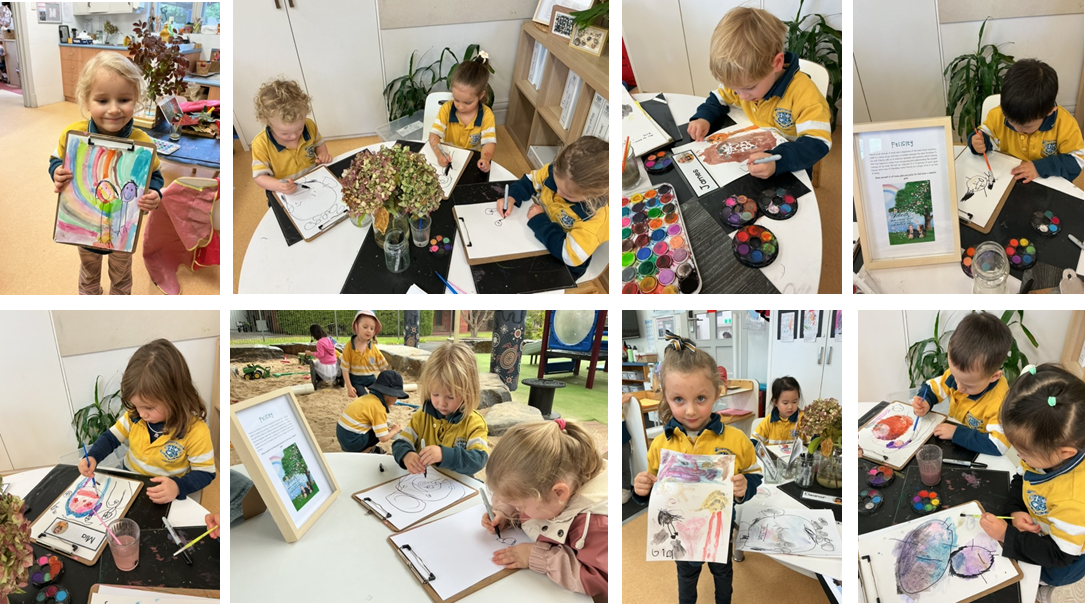
This inquiry also connected with the 2026 Loreto value of Felicity, a value centred around happiness and joy. As the children enthusiastically shared their perspectives, many spoke about how their families make them feel secure, loved and happy. Others reflected on the joy they experience when someone notices them, welcomes them into play, accepts them into their friendship circle, or simply hold their hand. It has been a beautiful journey to witness the honesty, confidence and emotional depth of the children as they expressed what felicity, happiness and joy mean to them.
Life Cycle of a Frog
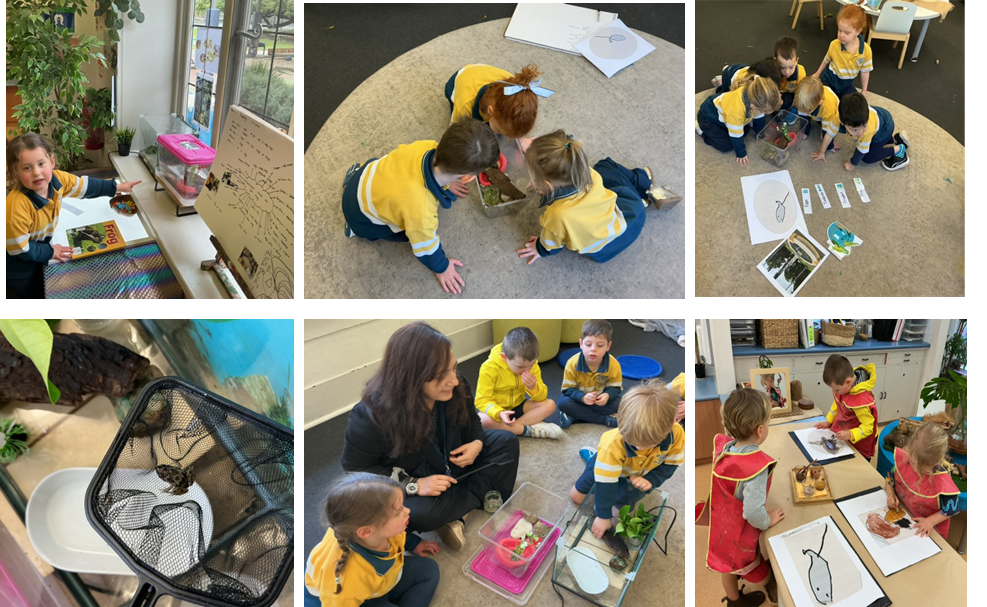
During the past two weeks, there was a lot of excitement in Banksia Blue as the children discovered that one of the tadpoles in the classroom had turned into a frog. Through our exploration of the frog life cycle, the children engaged in experiences of wonder, curiosity and discovery as they observed how frogs grow and change over time. Inspired by the Reggio Emilia approach, the children were invited to express their theories, ideas and understanding through drawing, painting, storytelling and conversation. As we explored tadpoles and frogs within our natural environment, the children developed an emerging sense of ecological literacy, learning to care for living things while noticing the interconnectedness between water, plants, insects and animals in our Nature Garden.
These experiences encouraged the children to become active researchers, collaborating, asking questions and deepening their appreciation for the beauty and rhythms of the natural world.
Banksia Blue Team
Wattle ELC Focus on Learning
Light Table Provocation: Exploring Insects
What Happened?
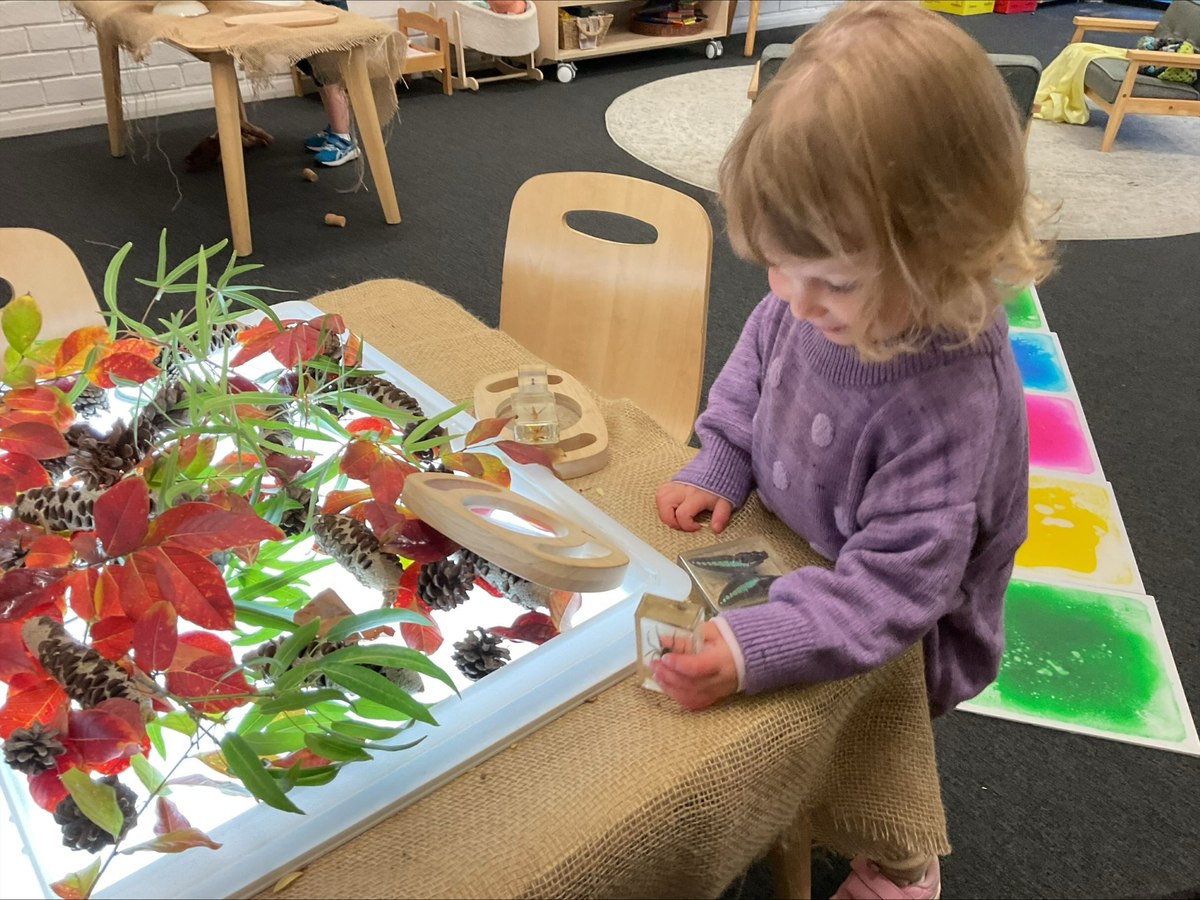
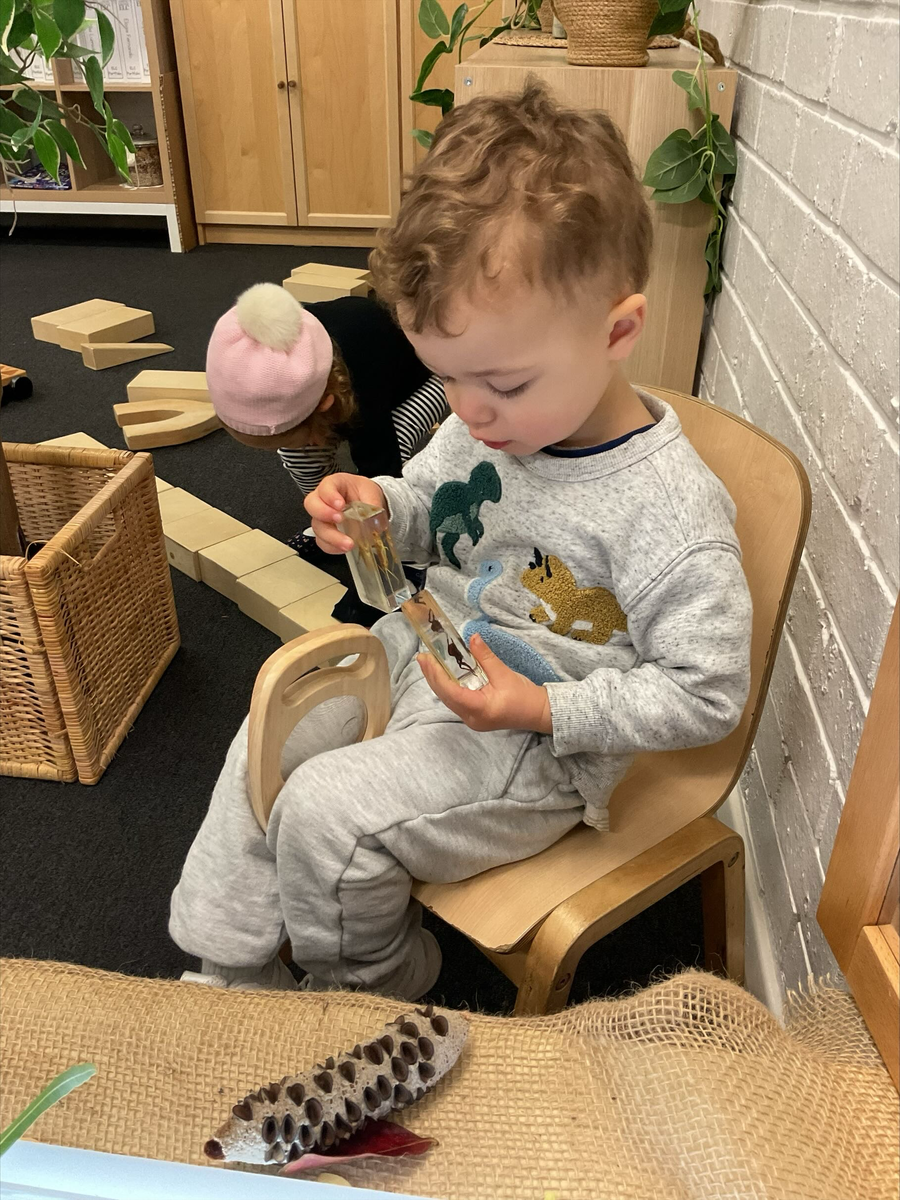
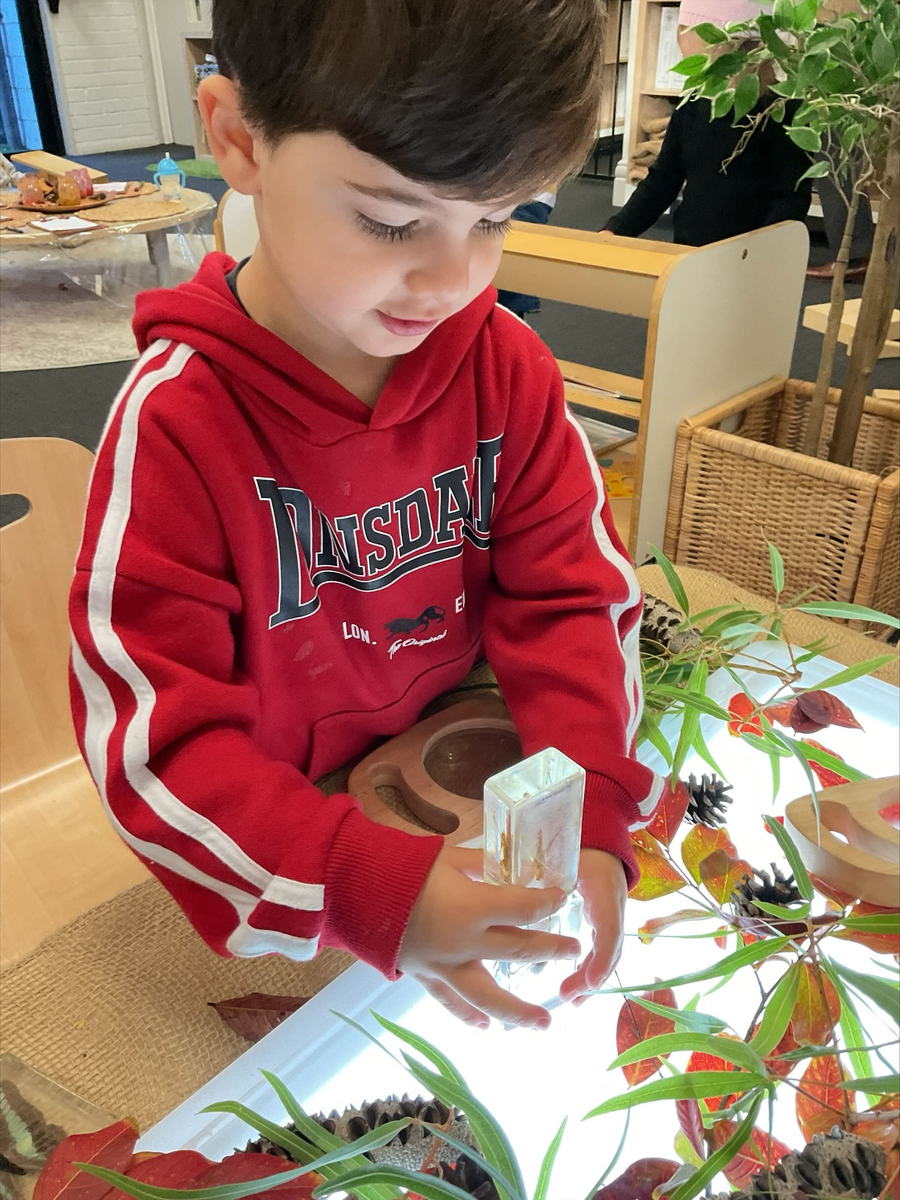
Children were invited to engage in an ‘insect hunt’, exploring various insect specimens arranged in their ‘habitat’ on the light table. Using magnifying glasses and mirrors, they observed details and discussed what they discovered, fostering curiosity and scientific inquiry.
Child Observations:
Astrid: “I want the ant. I need to watch this.” Astrid holds the magnifying glass and carefully examines the ant specimen. She then identifies another specimen, saying, “It’s a spider,” demonstrating her curiosity, focus, and growing ability to recognise different insects.
Eli: Showing curiosity about the specimens and magnifying glasses, Eli observes the spider and the grasshopper closely, demonstrating his interest in exploring different insects and using tools to investigate their features.
James: “I want to hold the spider. I like it. ”James points to the spider specimen and expresses his interest, showing his enthusiasm for interacting with the artefacts.
Darcy: ‘Spider’ and ‘Butterfly’. Exploring at the light table with peers, Darcy names the spider and butterfly, highlighting his growing knowledge and enjoyment of collaborative learning.
Ava: Showing curiosity about the specimens and magnifying glasses, Ava carefully observed each artefact, experimenting with magnification to explore finer details.
Jessica McPhail
Early Childhood Teacher