
Message from the Principal
James Penson
Message from the Principal
James Penson
Join from the meeting link
https://eduvic.webex.com/eduvic/j.php?MTID=me485e9e6af02a73eba4d968bd325e7c4
Join by meeting number
Meeting number (access code): 2654 106 5265
Meeting password: greenhills
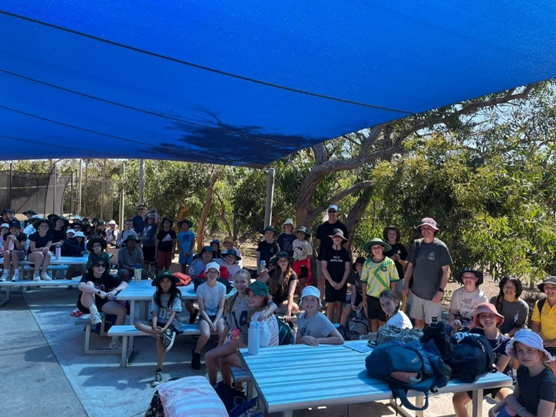
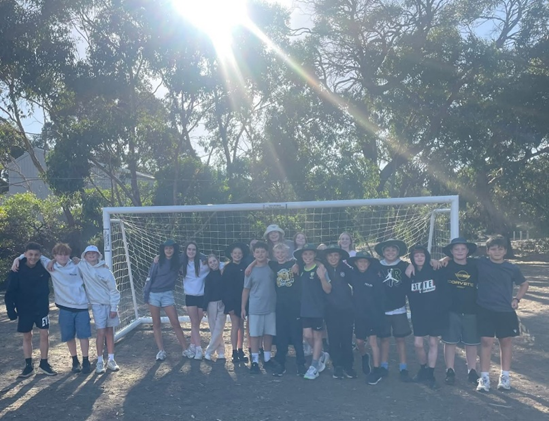
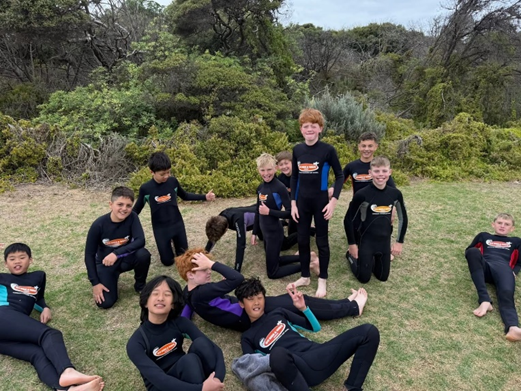
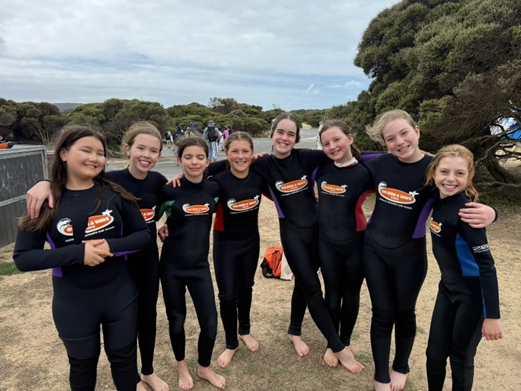
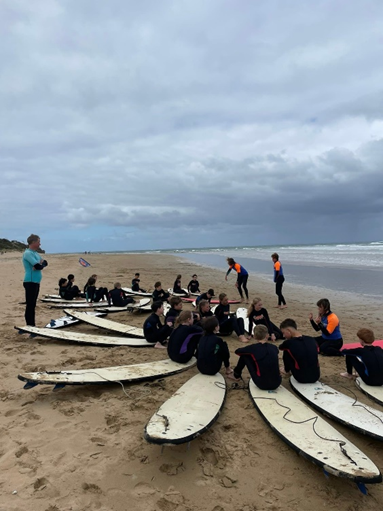
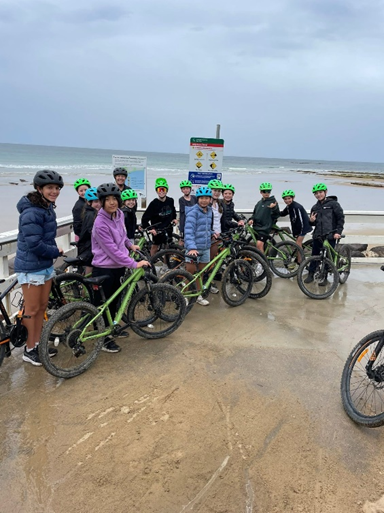
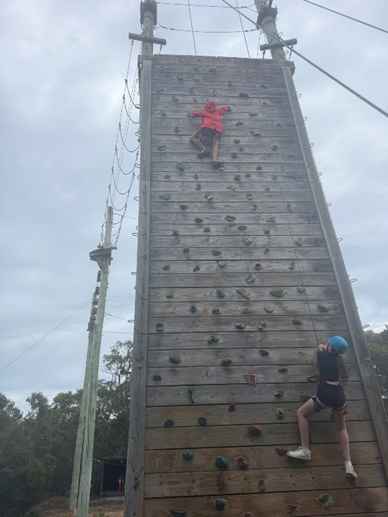
Our Year 6’s had a GREAT Anglesea Camp last week. Camps provide our students with a wonderful opportunity to try new things and challenge themselves. It might be being persistent or acting with courage and being open to trying by having a go on the zipline and facing a fear of heights. It might be engaging in dialogue and connecting with others to share ideas, information or feelings by working with a group of peers to complete a range of initiative activities involving leadership and teamwork. It may even be as simple as being open to the new and asking questions and seeking new connections by being able to meet new friends or broaden a friendship group. Our Year 6 Camp is definitely one of the highlights (or should we say HILAT’s) of the year and I know our students will remember the experience long into the future.
These opportunities are only organised thanks to the dedication and commitment of our staff and of course the parents that attended as well. Many thanks to Ros Mackie, Lynsey Barrett, Samantha Mothersole, Jordan Daley, Brad Ryan, Hayley Tatt, Adam Gellard and Rodney McDonald.
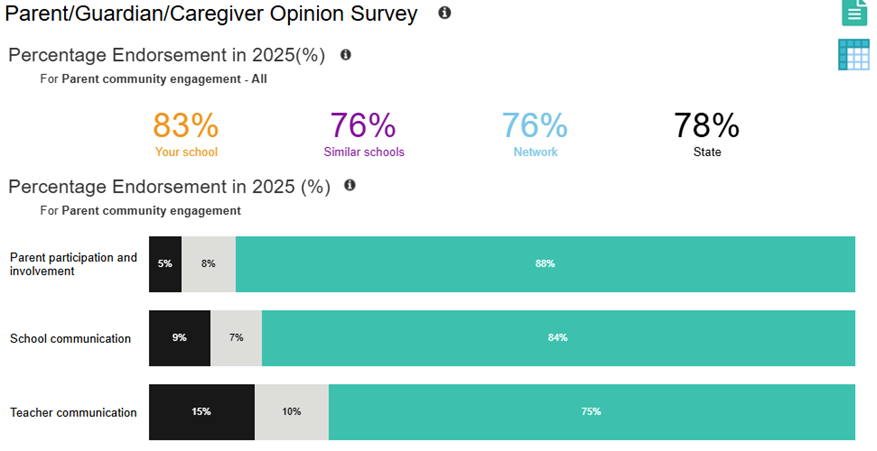
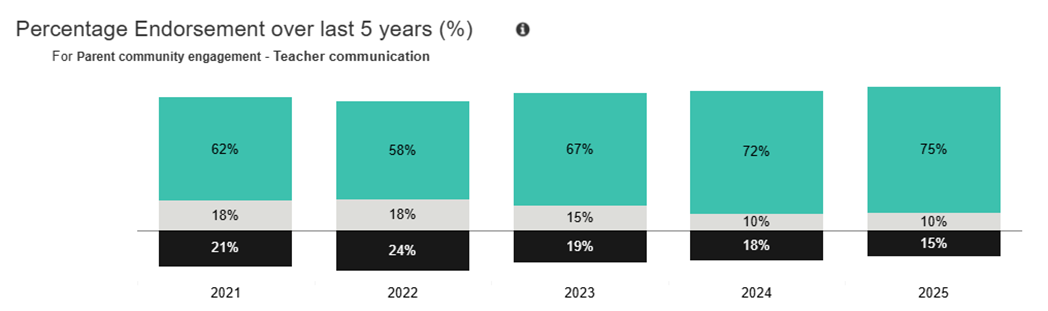
At Greenhills Primary School, we are continuing to strengthen the way we communicate with families about student learning. One of the key ways we are doing this is through our regular term newsletters and our continuous reporting approach. Continuous reporting provides families with samples of student learning and work that have been assessed by teachers, along with feedback that explains what your child can currently do and what their next learning steps are. This helps give parents a clearer and more timely picture of learning as it happens throughout the term, rather than only at formal reporting times.
As you can see from the data tables above, we are pleased to see that the percentage of positive endorsement in the area of “Parent Community Engagement” which is part of the our annual Parent Survey shows that families are noticing this improvement. Over the past four years we have improved this positive percentage by 17% (from 58% in 2022 to 75% in 2025). Please know that we will continue working to make our communication clear, consistent and helpful in supporting every child’s learning.
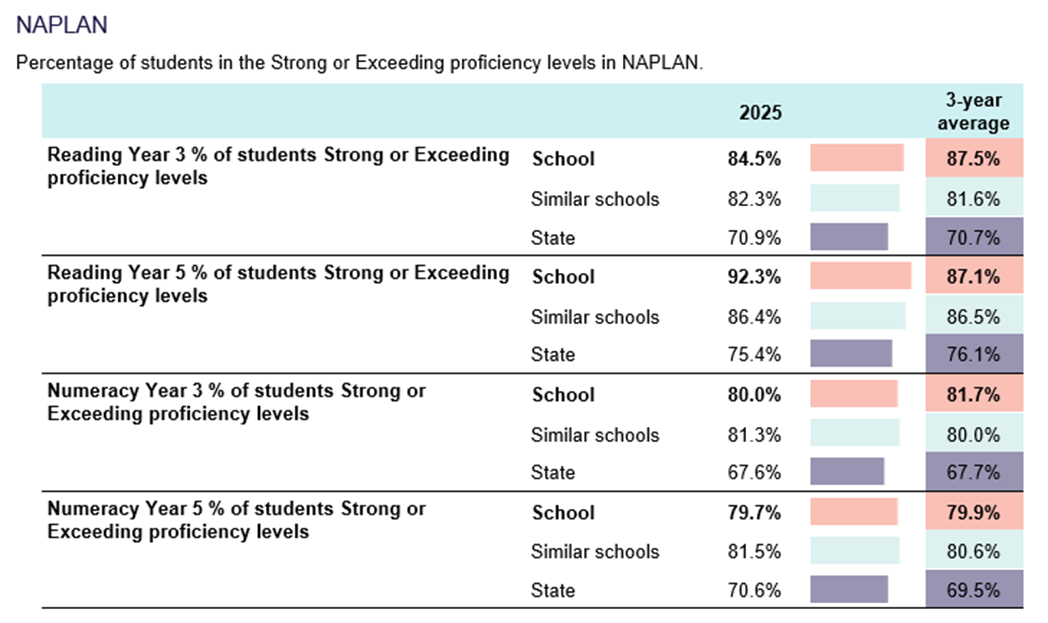
NAPLAN relative growth
The percentage of students in the High and Medium relative growth categories.
Relative growth is determined by comparing a student’s current year result relative to the results of all ‘similar’ Victorian students (i.e., students in all sectors in the same year level who had the same score two years prior). If the current year result is in the top 25 percent, their gain level is categorised as ‘High’; middle 50 percent is ‘Medium’; bottom 25 percent is ‘Low’.
A multi-year average for NAPLAN relative growth will be included in future years as data becomes available.
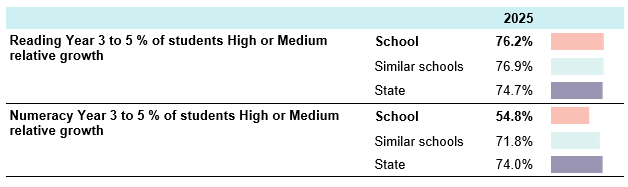
As mentioned in last week’s newsletter, we continue sharing some of the data from our 2025 Annual Report which was presented to School Council on 3rd March.
2025 NAPLAN Learning Data highlights the large percentage of students in Years 3 and 5 achieving in the “Strong or Exceeding” proficiency levels.
All these percentages were well above the State average and importantly three of these four markers were above the Similar School average.
This included 87.5% of Year 3 students in Reading (up from 86.4% in 2024) with Similar School level at 81.6% and State average at 70.7% and 87.1% of Year 5 students in Reading (up from 86.3% in 2024) with Similar Schools at 86.5% and State average at 76.1%.
In Year 3 Numeracy, the school percentage was 81.7% (up from 78.5% in 2024) with Similar School level at 80% with the State average being 67.7%. The Year 5 Numeracy percentage dropped from 83.8% in 2024 to 79.9% in 2025. This was lower than Similar Schools at 80.6% but still above the State average of 69.5%.
The NAPLAN Relative Growth data was not as strong with Reading Year 3 to 5 % of students High or Medium relative growth at 76.2% compared with Similar Schools 76.9% and State at 74.7% respectively and Numeracy Year 3 to 5% of students with High or Medium relative growth at 54.8% as compared with Similar Schools at 71.8% and State at 74%.
These strong learning outcomes were delivered through our continued focus on the FISO dimensions of Excellence in Teaching & Learning and Assessment under two key improvement strategies:
The school prioritises planning times for each teaching team supported by an assistant principal. This leadership structure which also includes a School Improvement Team (SIT) leader at each level supported staff to develop stronger data literacy and planning for learning became more dynamic and focused on the next “two-week” block period.
Over the course of the year common templates and protocols enabled consistency across the school and an increased focus on teachers using data to inform teaching. SIT leaders and teachers reported increased confidence and competence in use of the PLC Inquiry cycle to improve practice and outcomes.
We know that maintaining and extending these strong data sets are a team effort. We value your contribution and seek your continued support.
At home, you can assist your child to find an extra 10 minutes a day to read. It might be as simple as 10 minutes less on technology or reading for 10 minutes before dinner. We know that you can become better at something if you focus on it more. Reading becomes easier and more enjoyable the more you do it! If you need some motivation have a think about this: If your child currently reads for just 1 minute a day, they will read 21,000 words this year. Increasing this by 10 minutes a day will lead to 321,000 words being read in a year. It also works for those students that are already reading for the suggested 15 minutes a day. Currently these readers would be churning through 1.8 million words a year. Ten minutes more would take this to over 2.7 million!
Help your child to choose different types of books to read and take turns to read with them. Talk about the book and look for words to pay special attention too. Most importantly, make the experience as fun and engaging as possible.
This is a reminder that our Student Agency Conferences will be held on Tuesday 31st March. On this day, students only attend school for the duration of their conference. These are 15 minutes each and they will run between 9am and 6.30pm. Bookings are now open via Compass and they will close on Monday 30th March at 12pm.
Please note that the conference structure will be 15 minutes with the teacher, student and parents. As is always the case, should you wish to discuss any issue with your child’s teacher throughout the year, you can contact them to make a suitable time.
This week and last week, our Year 3 & 5 students have been completing the annual NAPLAN assessments. This year, the tests continue to be completed online using iPads. The value of using this platform is that the test will adapt to better match the student’s level as opposed to a one size fits all where often there is only one or two questions that stretch students at the top end. The online platform will also mean that in time schools and families will be able to access the data and results in a timely manner. In the past, NAPLAN results have been sent to schools in September which is well past the used by date for our teachers to use the assessments to guide their teaching and planning.
My “Question Prompt for This Week” focuses on “Curiosity”.
What is something you are curious about or want to learn more about right now?
James Penson,
Principal.