
Deputy Principal News
Our Whole‑School Focus on Writing in 2026
Across each fortnight this year, my newsletter items have aimed to give families a window into the Teaching and Learning practices that shape daily life at St Joseph’s. We have also taken many opportunities to celebrate the wonderful achievements of our students, including the moments of growth, perisistence, and success that occur in our classrooms every day.
In this week’s article, I am pleased to share our continued and strengthened whole‑school focus on the development of writing in 2026. As shared with families earlier in the year, writing is one of the most cognitively demanding tasks students undertake. Research consistently shows that writing draws on a wide range of interconnected skills; vocabulary, sentence construction, spelling, grammar, text structure, idea generation, and handwriting to name just a few. With so many elements working together in the writing process, students achieve the best outcomes when they receive explicit instruction that helps them understand and apply new ideas and concepts.
Throughout this year, our teachers will work collaboratively to engage in professional learning and classroom coaching which strives to deepen their understanding and expand their skillsets to better support students as writers. By drawing on evidence‑based practices grounded in direct, explicit instruction and the gradual release of responsibility, teachers aim to strengthen the way writing is taught across the school, ensuring that every student continues to receive clear, structured, and purposeful writing instruction.
A key component of our approach this year is a strong emphasis on teacher instruction through modelled writing. Modelled writing involves the teacher explicitly demonstrating the writing process in front of students; thinking aloud, showing how ideas are generated, modelling sentences, generating vocabulary and demonstrating how writing decisions are made. This approach makes the invisible work of writing visible and gives students a clear, supportive pathway to follow.
Across the school, writing instruction is carefully sequenced and developmentally aligned:
- Prep: building early concepts of print, simple sentence construction, and idea generation
- Years 1–2: expanding sentence complexity, developing text structure, and strengthening spelling and vocabulary
- Years 3–4: refining paragraphing, organising ideas logically, and applying grammar with increasing independence
- Years 5–6: crafting cohesive extended texts, developing authorial voice, and applying sophisticated language features
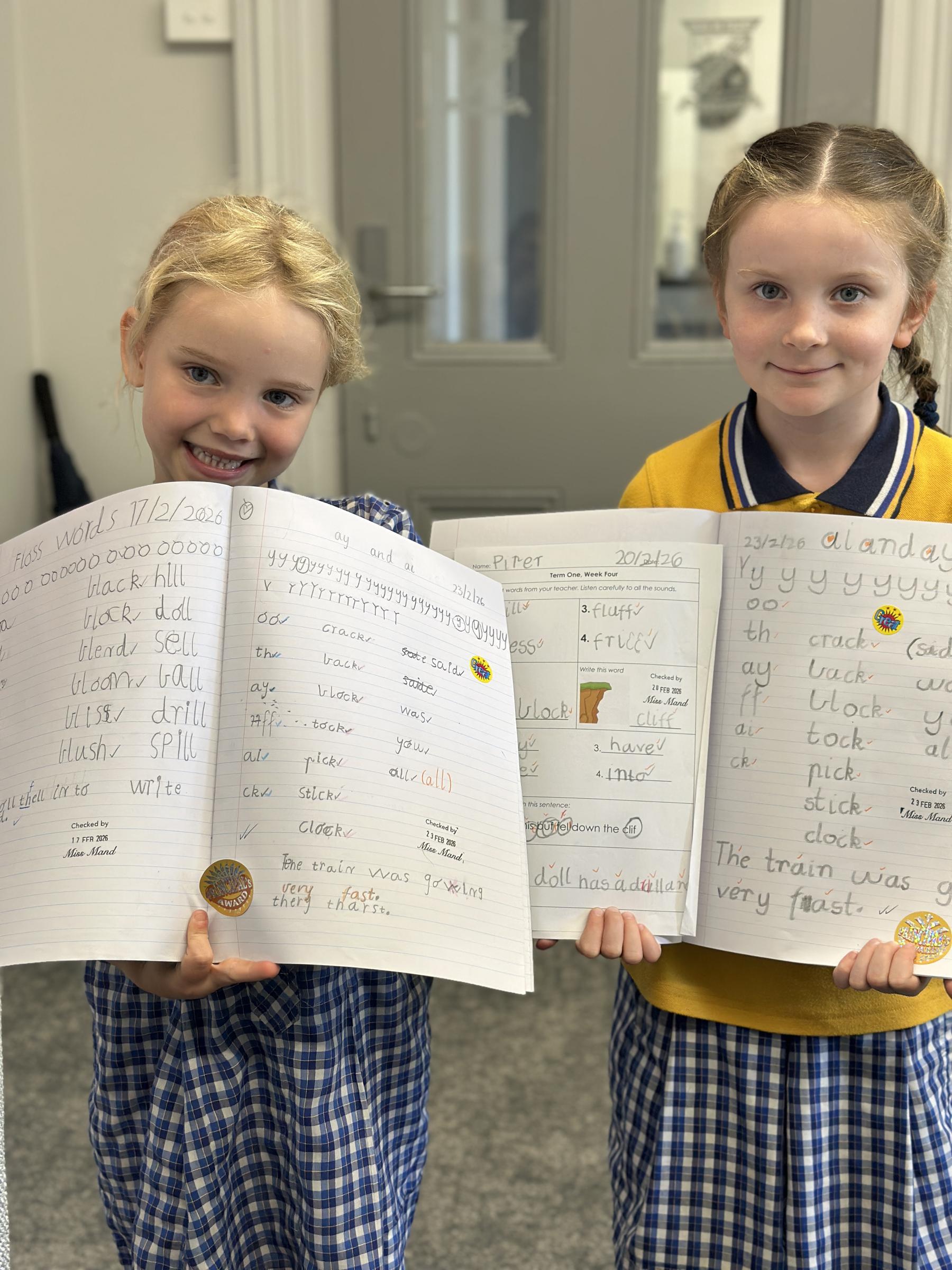
Although students have only been at school for eight weeks, we are already seeing evidence of progress and growth in their writing skills. As we continue our whole‑school focus on writing instruction, we look forward to sharing examples of student learning with families, including opportunities for parents to view writing books and samples of writing.
Mr Daffy
Deputy Principal — Teaching and Learning
ldaffy@sjelst.catholic.edu.au