Mental Health
& Wellbeing update
Mental Health
& Wellbeing update
The Children’s Wellbeing Continuum is an evidence-based tool developed to support conversations around children’s wellbeing. The tool provides a snapshot of a child’s social and emotional wellbeing at a point in time.
The Continuum has four anchor points that range from “Good” through to “Coping”, “Struggling” and “Overwhelmed”.
By enabling parents, teachers and service providers to more easily discuss and reflect on wellbeing, the Continuum can support health literacy, and early identification and action when children are struggling.
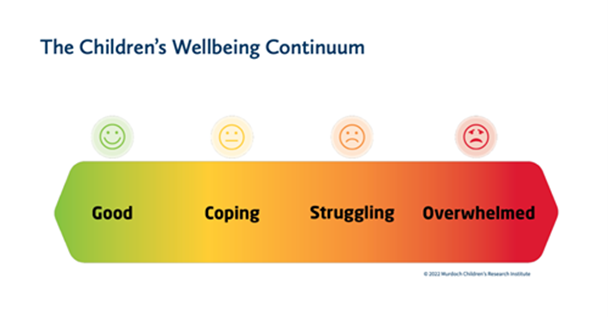
Students have their own individual copy of the Continuum and can use them to identify how they're feeling, why they're feeling this way and help communicate this with others.
The Continuum is a key component of the Resilience Project lessons that students have with Megan and Miss Coffey each Wednesday. Each session begins with students using their Continuum to identify how they are feeling and why, with opportunities to share with their classmates. This reinforces that emotions are a normal part of life, and that recognising how we feel and why helps us to regulate ourselves.
Students know that during the day, their mood can shift up and down- this is very normal. It’s important that we are able to identify when we begin to shift from the “Good” and “Coping” sections and look at strategies to help us manage our emotions.
What can each section on the Continuum mean?
If we are feeling ‘good’ we are:
-happy or content.
-ready to learn.
-feeling safe.
-settled or peaceful.
-excited or full of positive energy.
We can still be ‘good’ even if
-We have a little worry or concern, but we know that we can sort it out, or someone else can help us.
-We aren’t stuck thinking about it.
-We might feel a little bored or annoyed by something, but we can still be ‘good’!
If we are ‘coping’ we could be feeling:
-a bit sad or down.
-frustrated or bothered.
-worried or disappointed about something.
-tired, or feeling like you can’t do your very best.
-you might not be feeling 100%, but you know you’ll be ok.
If we are ‘struggling’ we could be feeling:
-quite angry or upset.
-really disappointed in ourselves or feeling like things are really hard.
- feeling low or anxious/worried.
- feeling like we might need help.
- But, despite struggling, we are using all our energy to keep trying.
If we are ‘overwhelmed’ we could be feeling:
-very angry or extremely sad.
-like it’s hard to manage our emotions.
-feeling like we can’t think properly.
-struggling to solve our problems.
-feeling a bit hopeless.
-feeling unsafe or scared.
-feeling extremely stuck.
To be our best selves, we need to know how we are feeling.
By letting others know how we feel, they can help us, and we can help them!
Bron Coffey
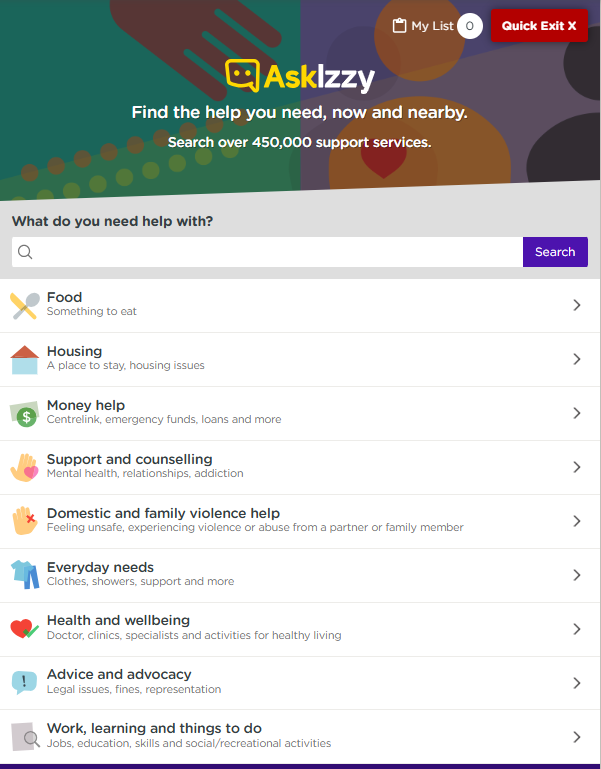
Ask Izzy is a website that connects people in need with housing, a meal, money help, family violence support, counselling and much more.
It is free and anonymous, with thousands of services listed across Australia.
And if you’re on the Telstra or Vodafone mobile networks, you can access Ask Izzy on your phone even if you don’t have credit or access to wifi.
For access to the website, click on the link below.
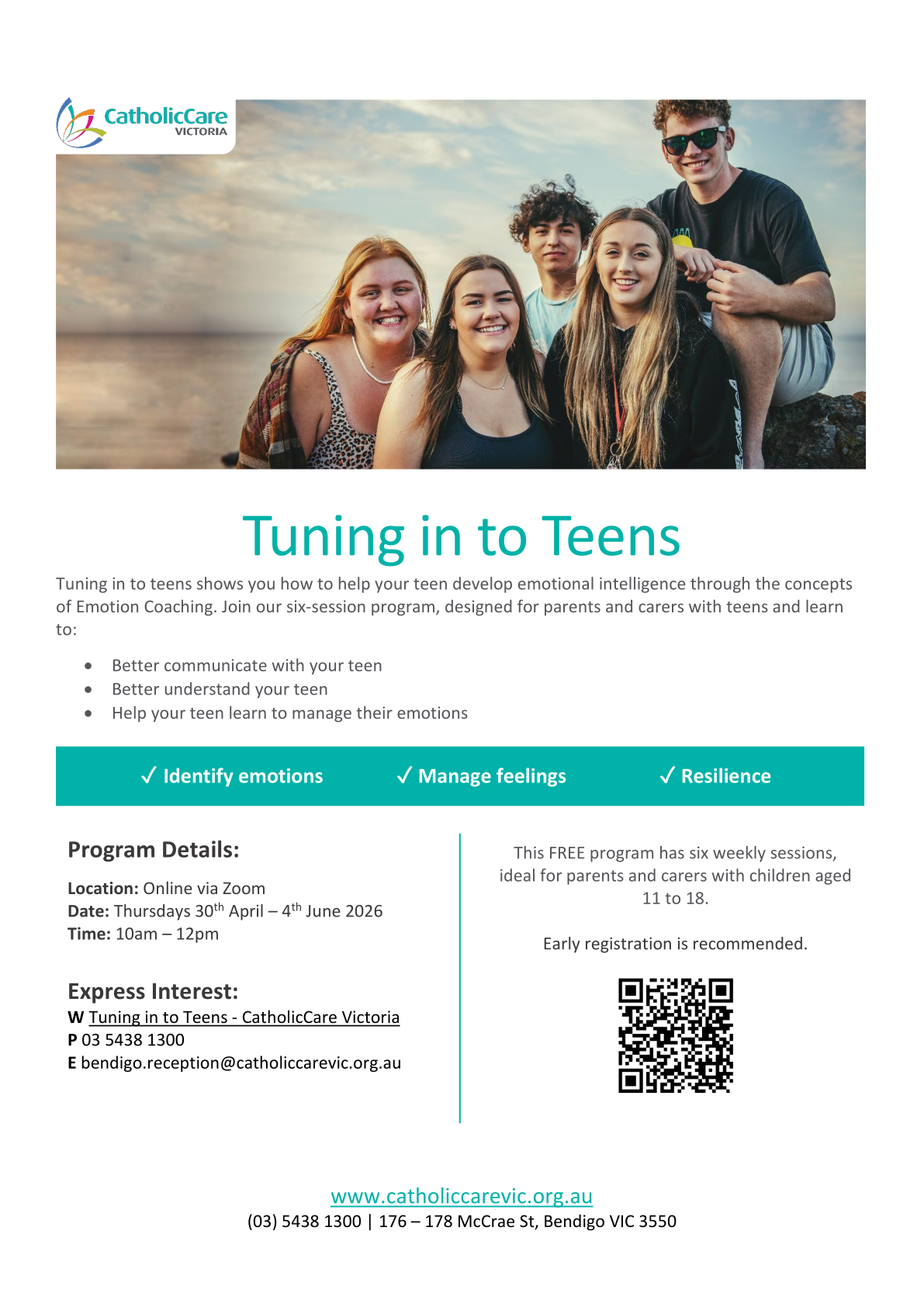
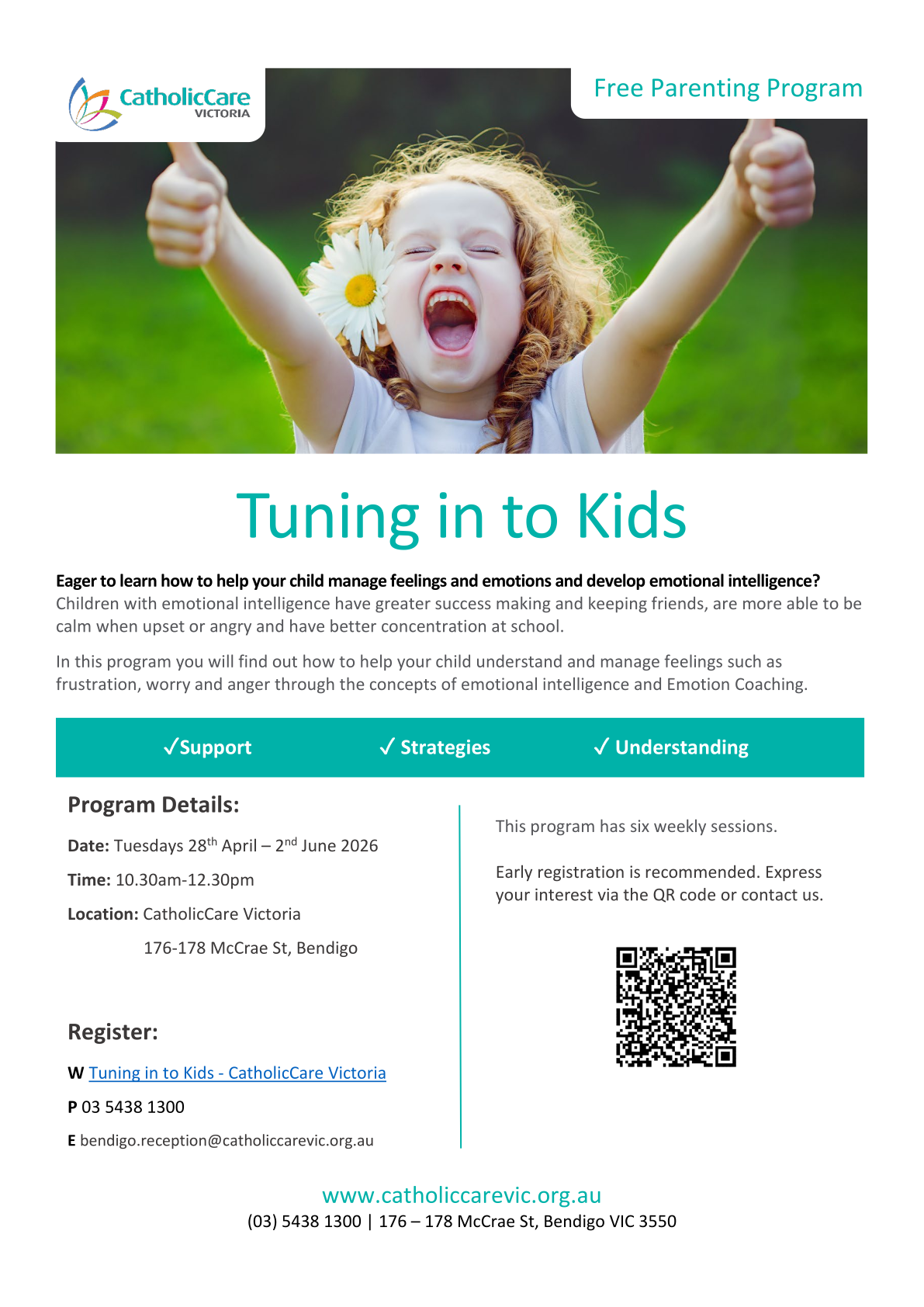
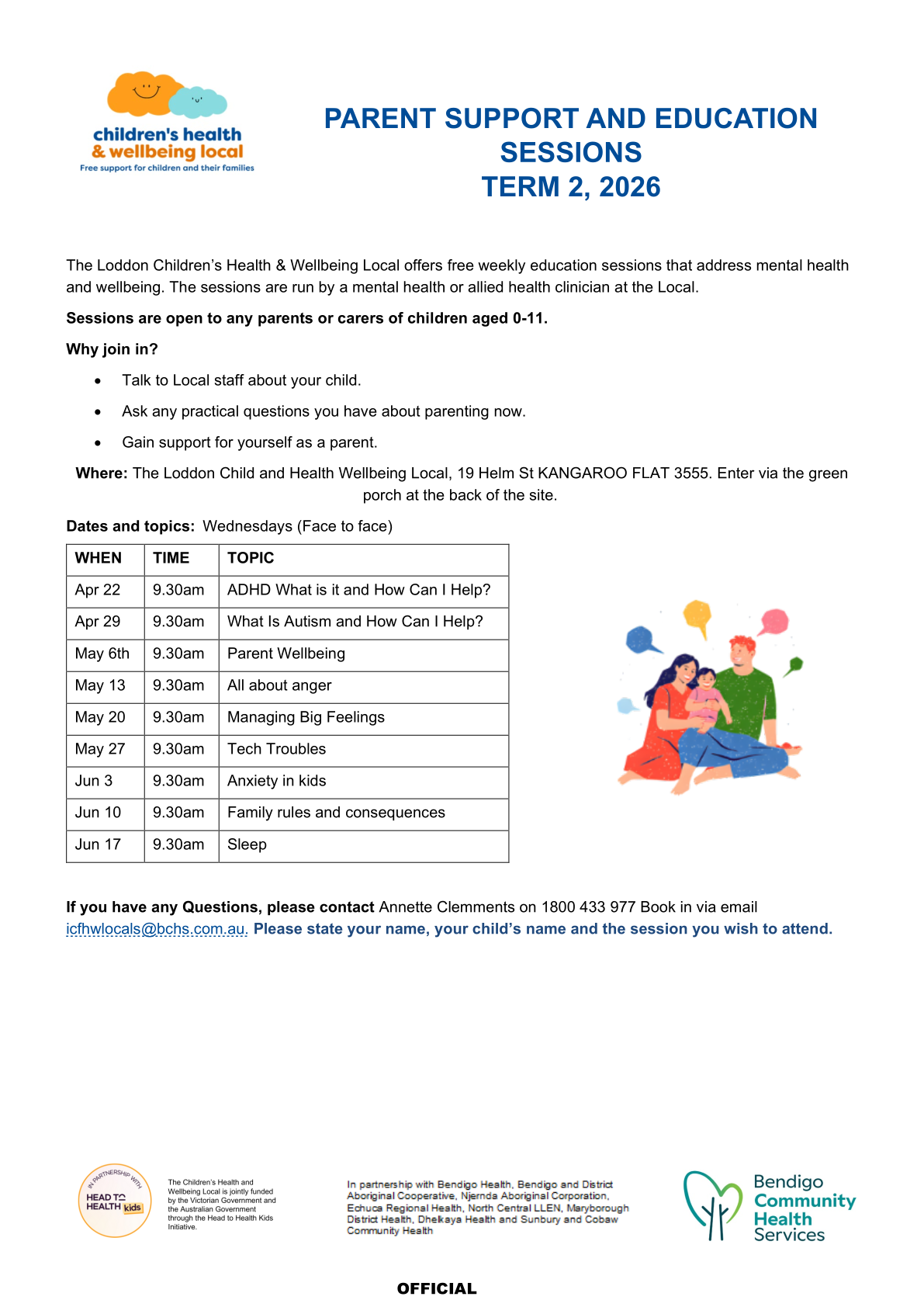
There are also some parent information sessions being run by The Local and CatholicCare in Term 2. Please see their flyers below for more information. Feel free also to reach out to me if you'd like more information, or if you're looking for an opportunity to connect in with Annette (The Local) or Lisa and Julia (CatholicCare).