Wellbeing

Supporting Young People Online
Technology and social media are a big part of young people’s lives today. Online spaces can help students stay connected, learn new things, express themselves, and maintain friendships. At the same time, navigating the digital world can sometimes feel overwhelming, especially for teenagers who are still developing confidence, judgement, and emotional resilience.
As a school community, we recognise the important role families play in helping young people build healthy and safe online habits. Open conversations at home can make a significant difference in helping students feel supported when challenges arise.
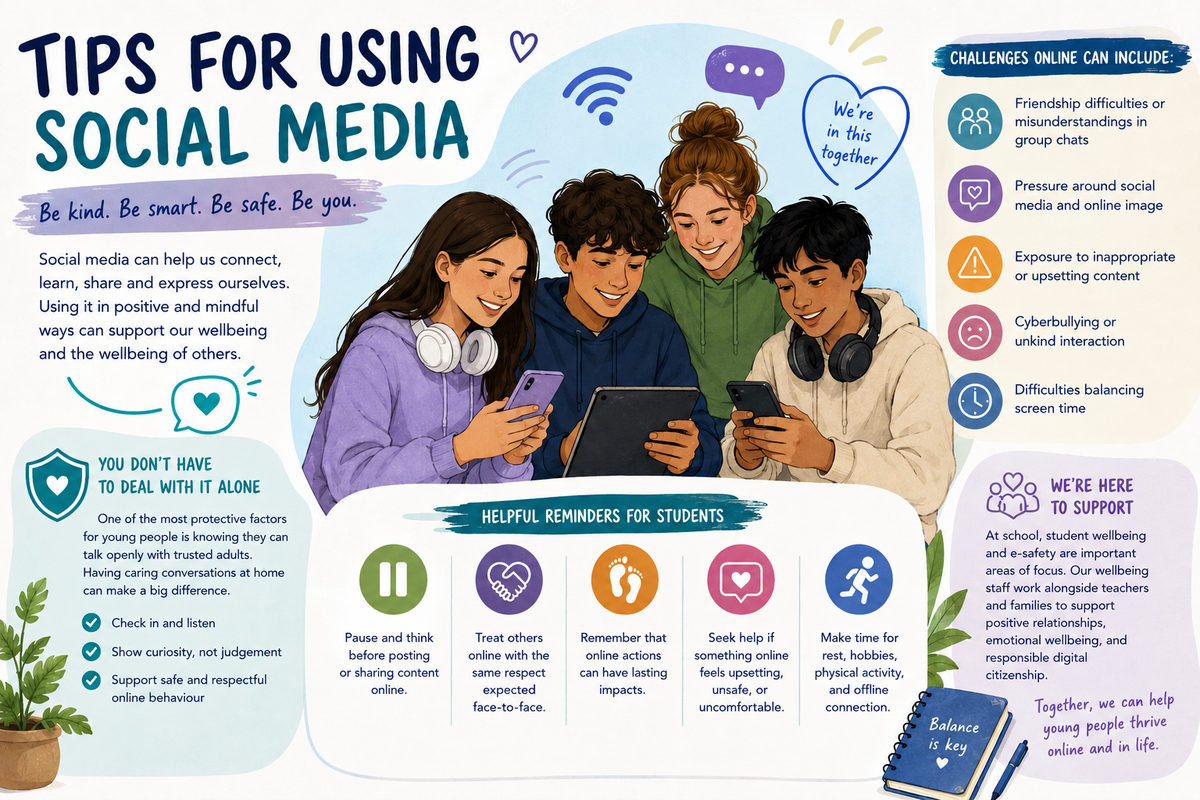
Some of the online experiences young people may encounter include:
- friendship difficulties or misunderstandings in group chats
- pressure around social media and online image
- exposure to inappropriate or upsetting content
- cyberbullying or unkind interaction
- difficulties balancing screen time
One of the most protective factors for young people is knowing they can speak openly with trusted adults without fear of immediate judgement or punishment. Simple check-ins, curiosity about the apps and platforms they use, and conversations about respectful online behaviour can help students feel safe seeking support when needed.
Helpful reminders for students include:
- pause and think before posting or sharing content online
- treat others online with the same respect expected face-to-face
- remember that online actions can have lasting impacts
- seek help if something online feels upsetting, unsafe, or uncomfortable
- make time for rest, hobbies, physical activity, and offline connection
At school, student wellbeing and e-safety continue to be important areas of focus. Student wellbeing staff continue to work alongside teachers and families to support positive relationships, emotional wellbeing, and responsible digital citizenship.