MAGNIFY

Magnify Sandhurst
Welcome to Term 3. As we continue to consolidate the implementation of Magnify Sandhurst at St Liborius, we will be sharing regular insights and reflections for families to consider, with the hope that these shared understandings can strengthen the partnership between school and home in support of each child’s learning journey.
What is the Science of Learning?
To begin, it’s important we clarify what we mean when we say the Science of Learning.
The Science of Learning is a growing field of research that helps us – as educators and parents –understand how human beings learn most effectively. Drawing on evidence from neuroscience, psychology, linguistics, education, artificial intelligence and philosophy, it offers us practical, research-informed strategies that support learning, build memory, and develop expertise. These “best bets” can be applied not only in classrooms, but in homes and everyday life – supporting children and adults alike to keep learning, growing and thriving.
In the meantime, if you would like to learn a little more about the science of learning, please see the following link -
What is retrieval practice, and why do we use it?
The article below provides a short overview of retrieval practice and why we use it as part of our learning and teaching programs, including InitiaLit and Ochre.
Retrieval practice is a powerful learning strategy that helps students remember what they’ve learned by regularly bringing information to mind – rather than simply re-reading or reviewing notes. When students are asked to recall facts, ideas, or processes from memory (even if they don’t get it perfectly right), it strengthens their understanding and improves long-term retention. It’s a bit like exercise for the brain – the more we practise retrieving information, the stronger those memory pathways become.
In classrooms across Sandhurst, retrieval practice often takes the form of short, daily review activities, such as those in the Ochre Daily Review slides. These warm-up questions cover key content from the previous day, week, or term. By revisiting material in this way, students make connections, notice patterns, and build confidence in what they know.
Importantly, retrieval practice is low-stakes – it’s not a test, but a chance to revisit and strengthen learning. Research shows that even a few minutes of retrieval each day can lead to significant improvements in student learning. That’s why it’s embedded in our teaching and why we encourage families to talk to their children about what they’re learning at school – it really does make a difference.
Magnify Matters Podcast:
If you would like to keep up to date with all things Magnify Sandhurst, Catholic Education Sandhurst has a new podcast, Magnify Matters. You can listen to all the episodes on your preferred streaming service.
Easily listen to Magnify Matters in your podcast app of choice
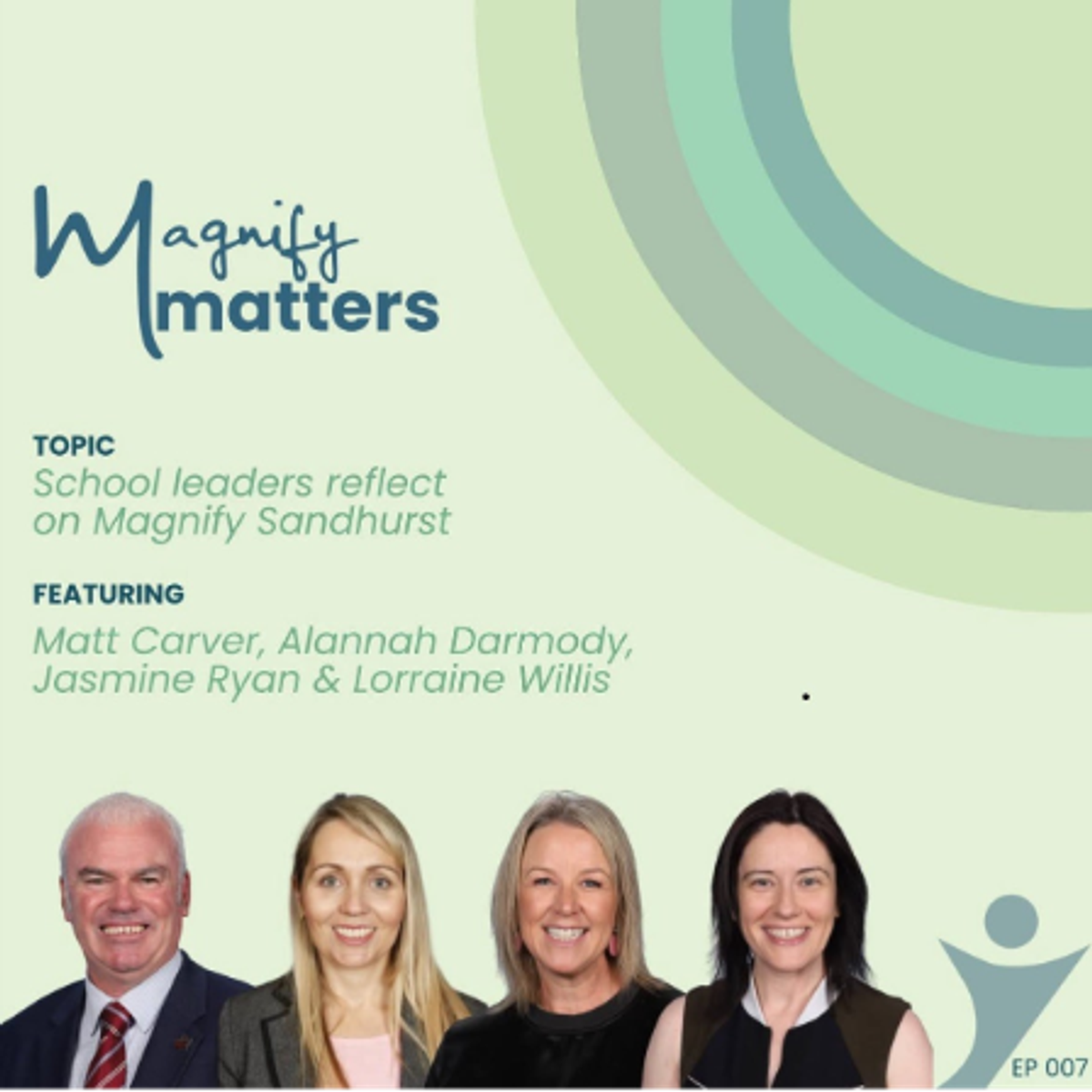
Our very own Alannah Darmody features on the latest episode – What are school leaders noticing as Magnify Sandhurst come to life in our schools and classrooms?
Ebony Maltby
Director of Learning and Innovation