
Teens & Screens
Digital Habits - tips for parents/carers

Teens & Screens
Digital Habits - tips for parents/carers
Does your teen keep digital devices in their bedroom overnight?
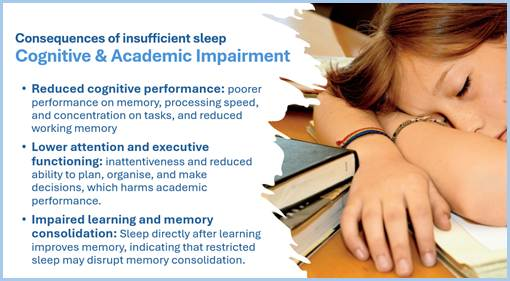
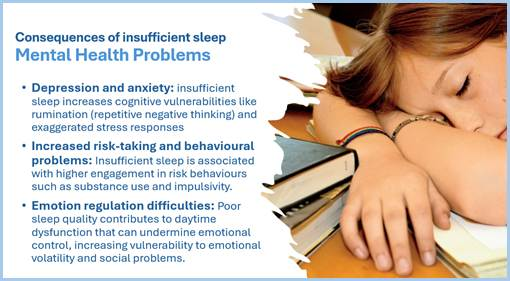
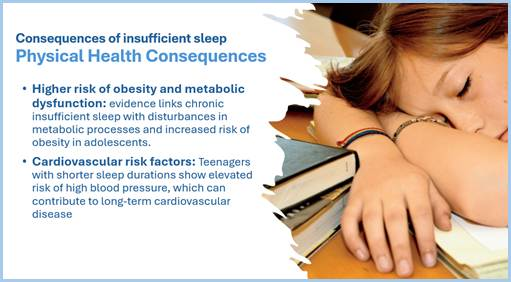
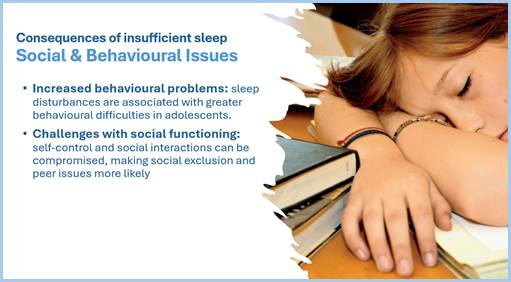
Good quality sleep plays a key role in a teen’s healthy growth and development. It is as vital to health as breathing. Yet therapists and sleep specialists have noted a downward trend in teen sleep, attributing the trend to a ‘perfect storm’ of shifting biology, academic pressure, digital habits and a misconception that sleep is dispensable rather than essential.
“Teens experience a natural shift in circadian rhythm,” according to Johns Hopkins sleep expert Laura Sterni, MD. This makes it more difficult for them to fall asleep before 11 p.m. Add in early school start times and an increase in homework, extracurricular activities and sometimes a part-time job, and sleep deprivation in teens becomes common. The explosion of technology has taken this ‘perfect storm’ to Category 5 hurricane levels. The smartphone is getting harder and harder to put down. Technology is ever more brilliant at keeping teens engaged and connected (teen sleep took a notable dip after 2011 as the smartphone gained popularity).
Interestingly, teenagers need more sleep than adults to help support critical brain development. Recommendations from multiple sleep experts and researchers consistently conclude that teenagers need between 8-10 hours of sleep per night.
The human sleep-wake cycle is a circadian rhythm that mostly takes cues from sunlight. When it is bright outside, people become more alert. When it becomes dark, the body produces a hormone called melatonin that induces sleepiness. But the use of screens before bedtime disrupt this natural process.
Studies show that 57% of teens who use technology in the bedroom suffer from sleep problems, and teens consistently report worse sleep when they have a television or small screen, such as a smartphone, in the bedroom.
Screen time before bed makes it harder to fall asleep, have a good night's sleep and get enough sleep.
Devices emit Blue Light – this tricks the brain into thinking it is still daytime, which delays the release of melatonin (brain chemical that signals sleep time), which also reduces the amount of time you spend in slow-wave sleep and REM sleep, both of which are crucial for cognitive function.
Devices trigger brain activity that are the opposite of what your brain needs for sleep – by becoming alert and engaged, the brain starts working and thinking about what you are reading and watching and clicking on. This tricks your brain into thinking you shouldn’t be asleep.
WATCH THIS VIDEO WITH YOUR SLEEPY TEEN:
Smartphones are KILLING your sleep - here's how you can fix it
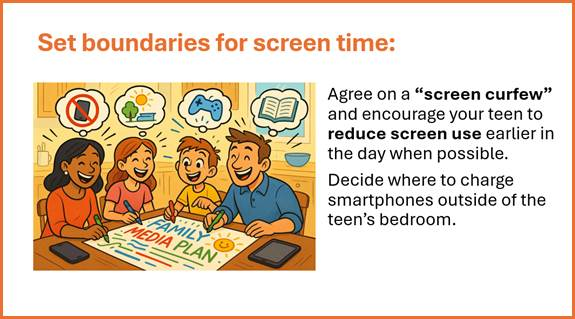
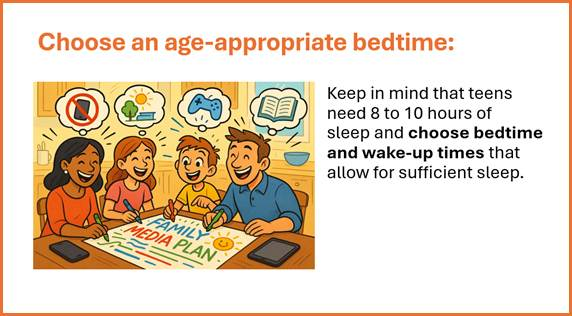
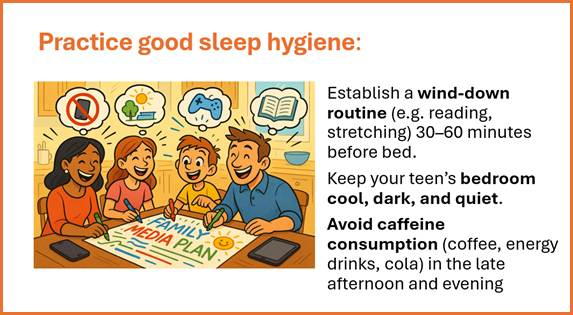
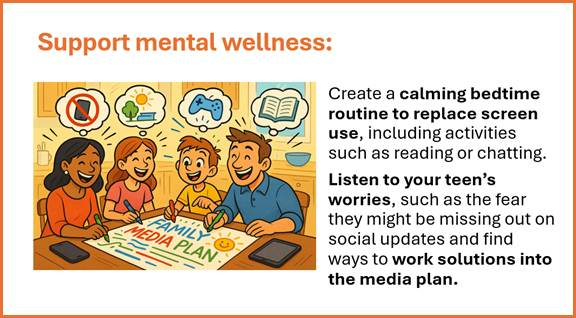
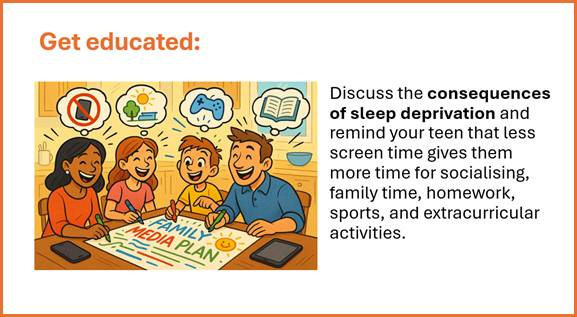
Establish a family media plan to include clear limits on screen time, and allot time for healthy activities such as sleep, family time, schoolwork, and exercise. Teens do best when they are given the chance to participate in creating their own guidelines, so consider sitting down together to make a plan for screen time.
There are several sleep-promoting strategies which can improve your teenager’s screen use habits and sleeping environment, including:
Ideally, the bedroom should be a screen-free zone. Reserving the bedroom for sleep helps the brain wind down and associate the space with sleep. However, it is not always feasible to keep technology out of the bedroom. If your teen must use technology in the bedroom, ask them to turn their devices off about an hour before bedtime. Glasses or applications designed to filter out blue light also appear to minimize disruptions to teenagers’ sleep.
Please reach out to our Student Services team if you feel your family needs support in addressing the screen or sleep habits of your teen.
Sources:
Royal Children's Hospital Melbourne
Tanya Moran
Leader of Professional Practice