Wellbeing and Inclusion Update
Resilience, Rights and Respectful Relationships (4Rs)
The Resilience, Rights and Respectful Relationships Curriculum is an evidence-based whole school approach to social and emotional learning, designed to develop the personal and social capabilities of students, including self-awareness, self-management, social awareness and social management.
Part of this whole school approach intentionally focuses on the importance of building respectful relationships.
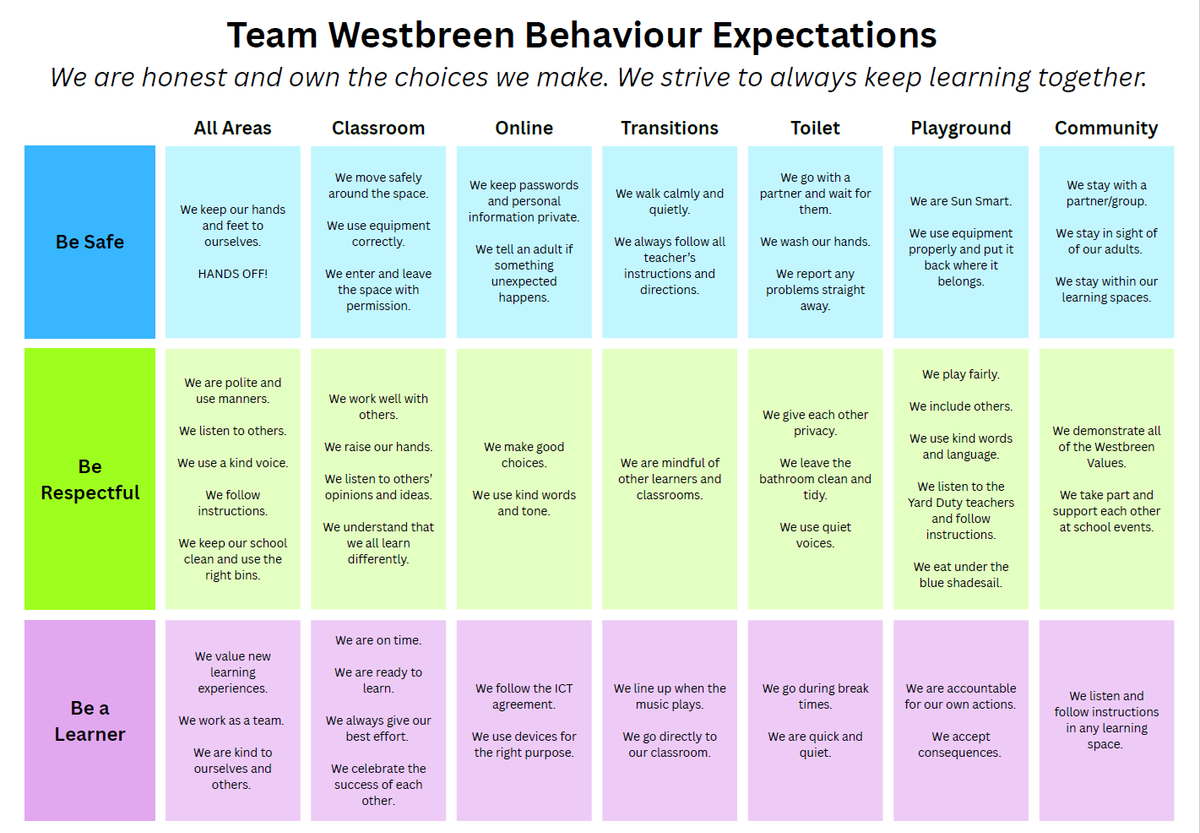
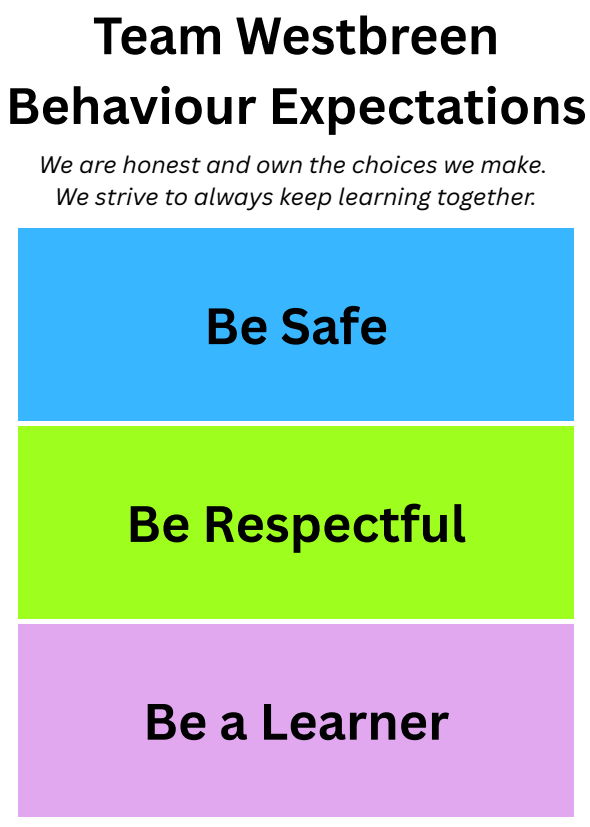
Our classroom teachers will continue to intertwine this program along with our other wellbeing programs (School Wide Positive Behaviours Support) through the teaching of the 4Rs in 2026.
Over the next few weeks, all classes will be participating in introductory activities linked to the 4R’s program. These activities will assist students to continue to learn simple rules and agreements they need to support a safe and friendly learning environment in their class, and at school.
Stayed tuned throughout the year to the school newsletter for topic updates on the 4Rs program.
External Allied Health
The school environment can be the ideal location for our students to engage with allied health professionals such as occupational therapists, speech pathologists, behaviour specialists and psychologists. We, at Westbreen Primary School, are keen to build relationships with the allied health professionals who work with our students in order to create a safe and supportive environment in which all adults are working on the same goal(s) and using the same strategies to support each child’s development.
The Wellbeing & Inclusion Team are currently finalising our External Allied Health - Expectations and Agreements Policy. This policy will be shared with the school community once approved. It will involve parents/carers and visiting allied health professionals to complete information and consent forms.
Existing families that have allied health professionals that visit the school, we will email you the policy along with the appropriate forms to be filled out. For future allied health visits supported by the NDIS, we encourage parents/carers to contact Miss Tamie Florence (Disability Inclusion Coordinator) - tamie.florence@education.vic.gov.au

We rely on the internet for almost everything in our lives, so online safety is more important than ever.
As online abuse and new risks continue to grow, it's important to educate ourselves and others at work, at home, at school and in the community on how to be safer online.
Everyone can follow the eSafety Commissioner's top 5 tips to help make the internet a safer, more positive place for all.
Be kind
Show empathy, respect and kindness in every online interaction.
Balance time online
Make space for offline connection, rest and reflection.
Speak up
Report online abuse and harmful content to eSafety.
Protect your space
Use privacy settings, strong passwords or parental controls to keep you and your kids safe online.
Start the conversation
Talk about online safety with your networks - family, friends, colleagues, communities.