
Apollo
Grade 4

Apollo
Grade 4
Reading
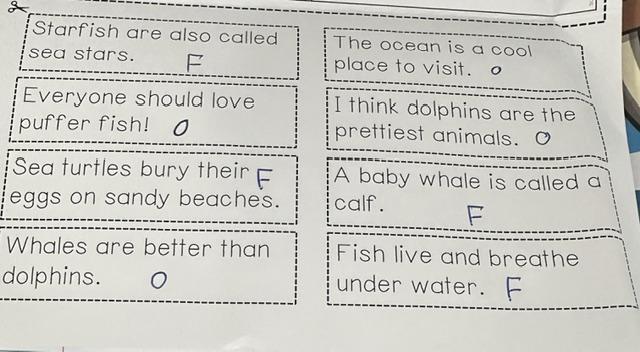
In Term 2, students developed a range of comprehension and language skills through engaging texts, poems, and class discussions. They have learned to identify facts, opinions, and feelings in stories, recognise how punctuation is used to show dialogue, and expand their vocabulary by exploring word meanings, synonyms, and antonyms. Students practised answering literal questions by locating information directly in texts and summarising key ideas using the Somebody, Wanted, But, So, Then (SWBST) framework. They also explored how text connectives help link ideas and show sequence, and analysed how poets use descriptive and emotive language to create imagery and evoke feelings. Students strengthened their comprehension by making text-to-self, text-to-text, and text-to-world connections, helping them develop a deeper understanding of what they read. In addition, they examined how authors create engaging characters through their feelings, choices, and actions, and investigated how verb tenses influence meaning by identifying and using past, present, and future tense forms. We are proud of the thoughtful discussions, growing confidence, and strong reading skills students have demonstrated throughout these learning experiences.
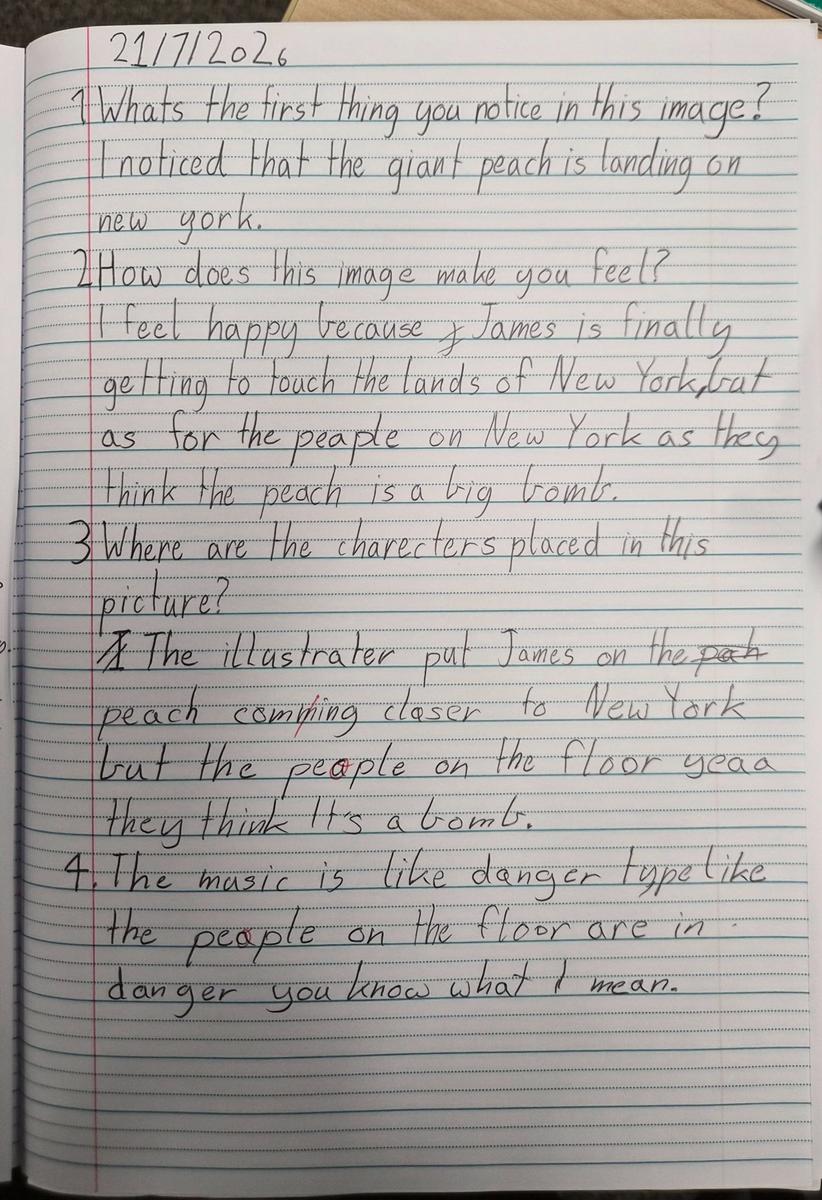
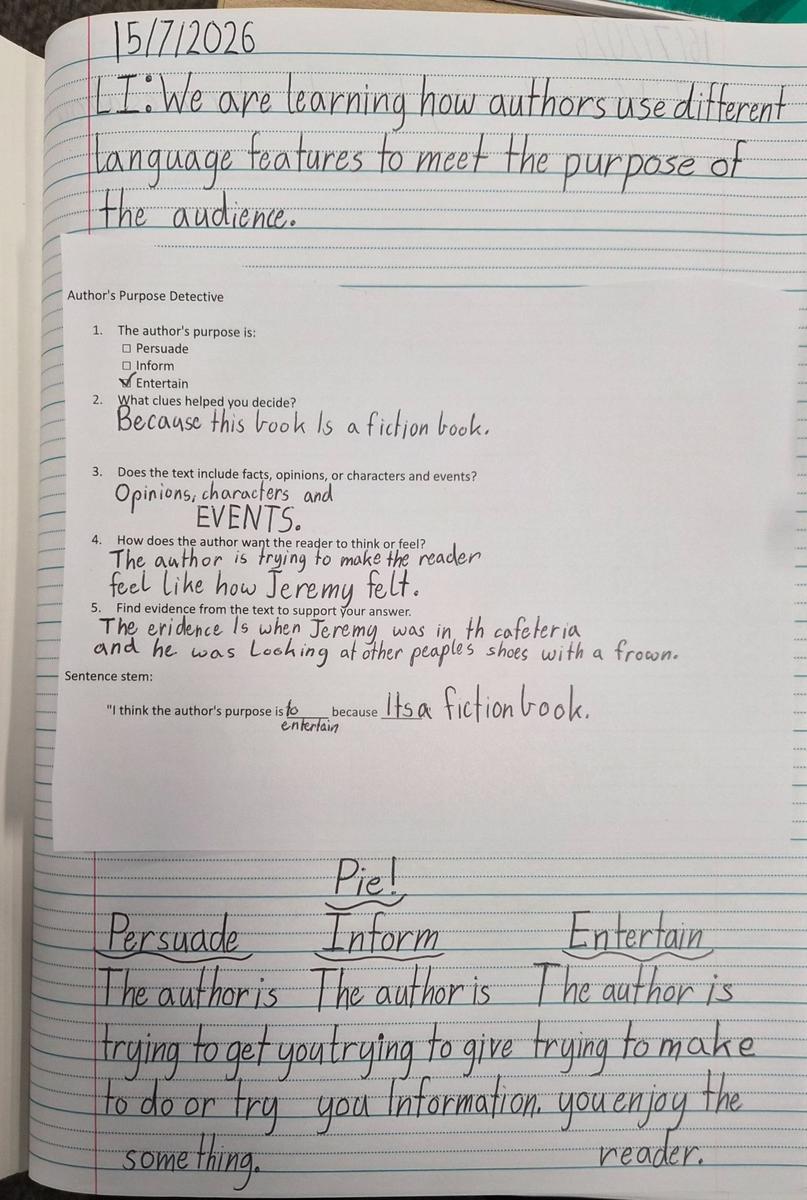
This term students have been exploring how characters use language to build relationships and made inferences by using clues from the text and illustrations to explain characters' thoughts and feelings. They identified the main idea of stories, described relationships between characters, and made connections to their own experiences. Students also examined how sound, image framing, and the placement of people and objects in picture story books create meaning. Finally, they investigated how authors use language features to entertain, inform, persuade, explain, or describe, and discussed how these choices influence the reader.
Student work samples-
Sunshine Online
At Aitken Hill Primary School, students have access to Sunshine Online, a digital reading platform. The classroom teacher will provide login details this term so students can practise reading at home.
Here is the attached link : https://www.sunshineonline.com.au/
Writing
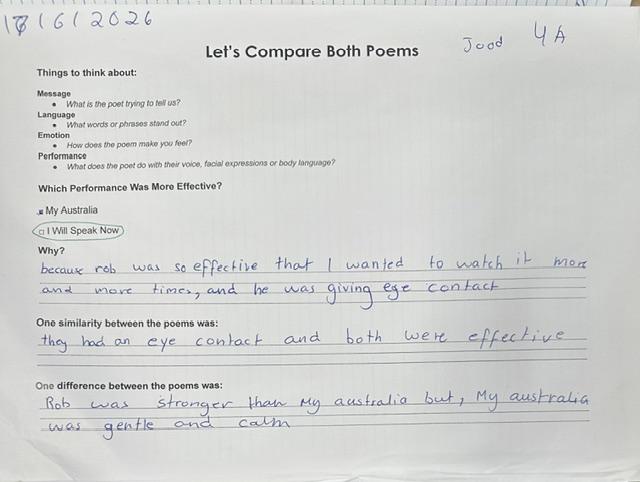
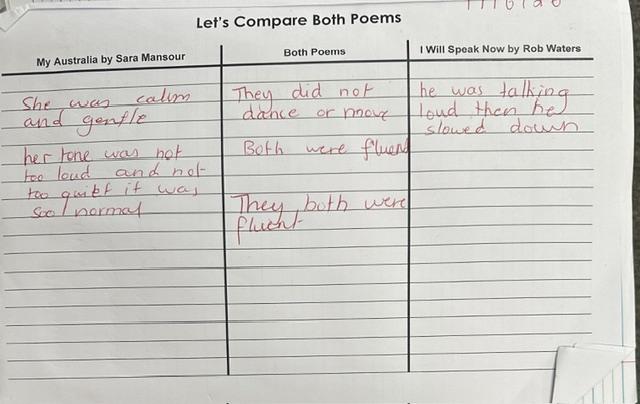
In Term 2, Grade 4 students explored a variety of writing forms, including Realistic Fiction and Poetry. In Realistic Fiction, students developed engaging narratives featuring believable characters, settings and events, while focusing on creating strong story structure, dialogue and descriptive language. In Poetry, students experimented with a range of poetic forms and techniques, including rhyme schemes, couplets, haiku, limericks and Slam Poetry. Through reading, analysing and creating their own poems, students learned how poets use language, rhythm and imagery to communicate ideas, emotions and experiences. The term culminated in students writing and performing their own original Slam Poems, demonstrating creativity, confidence and a growing understanding of the power of words.
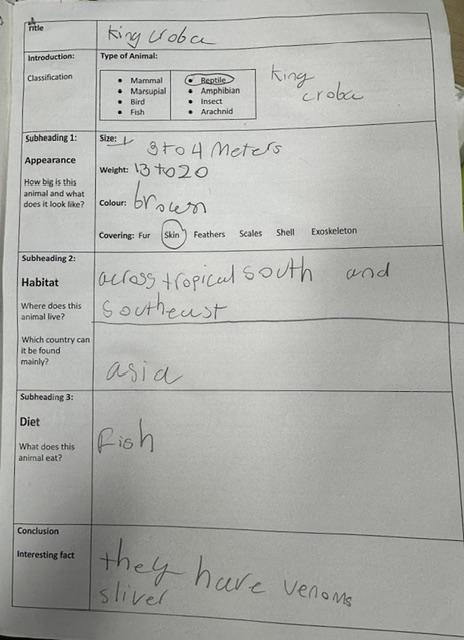
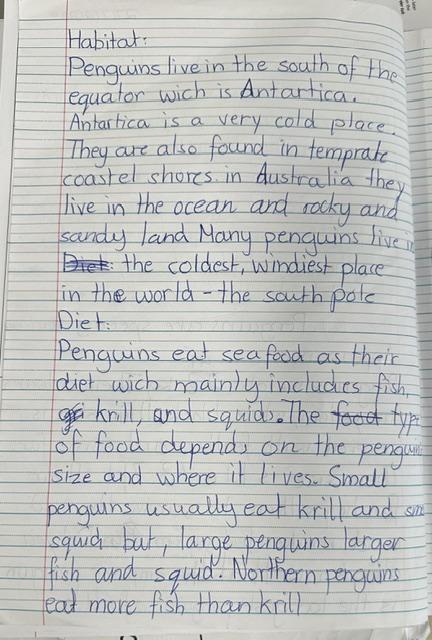
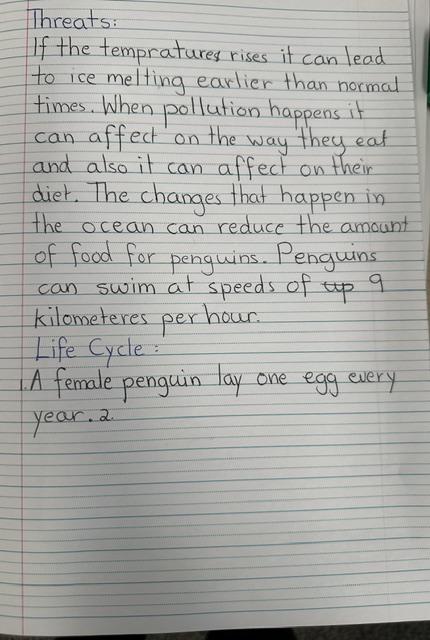
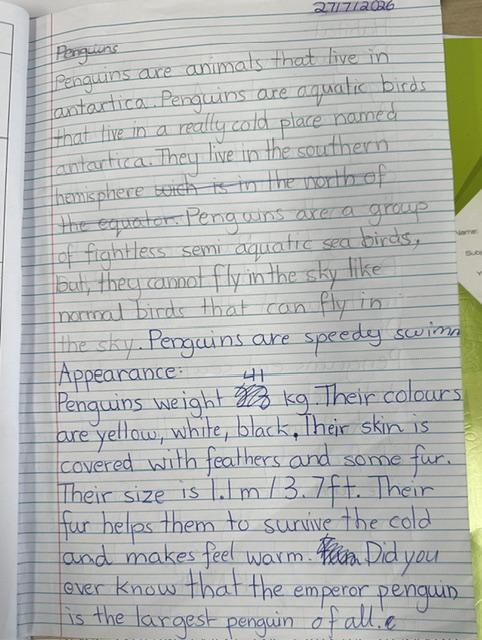
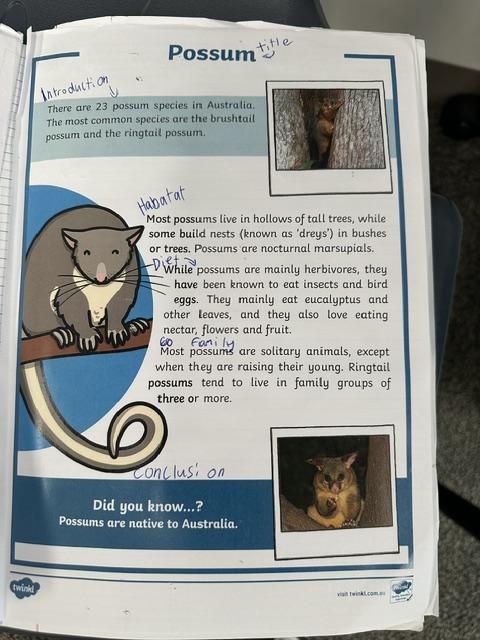
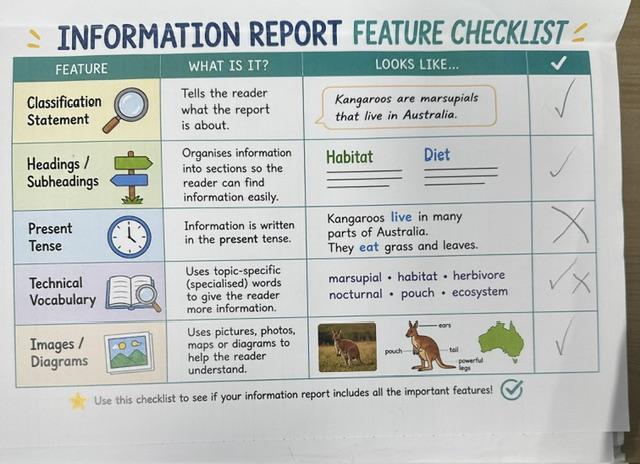
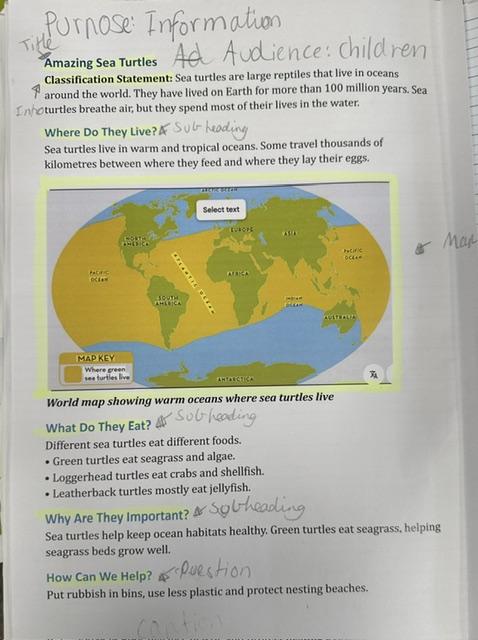
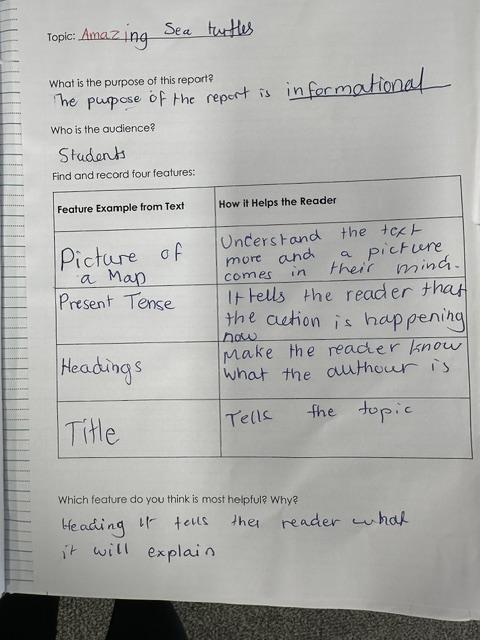
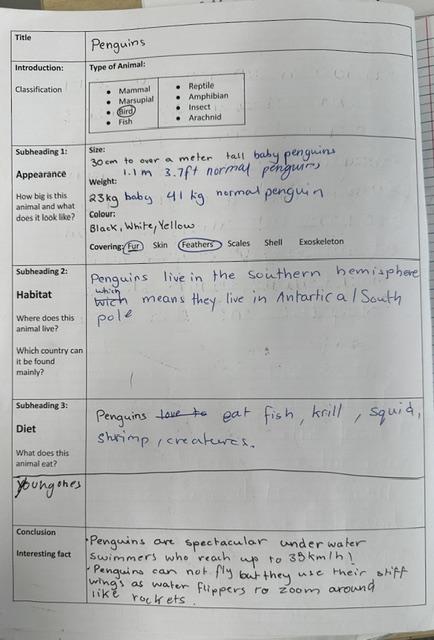
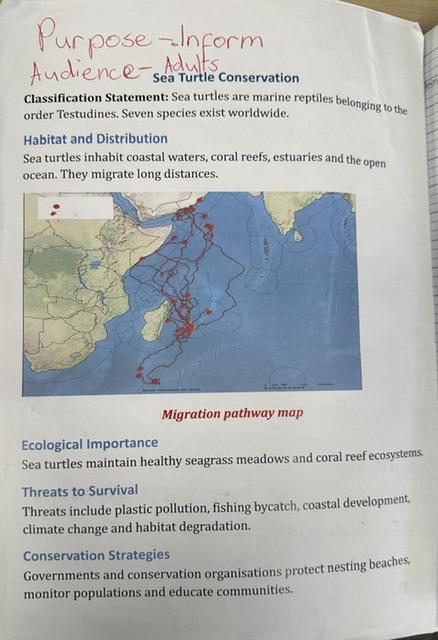
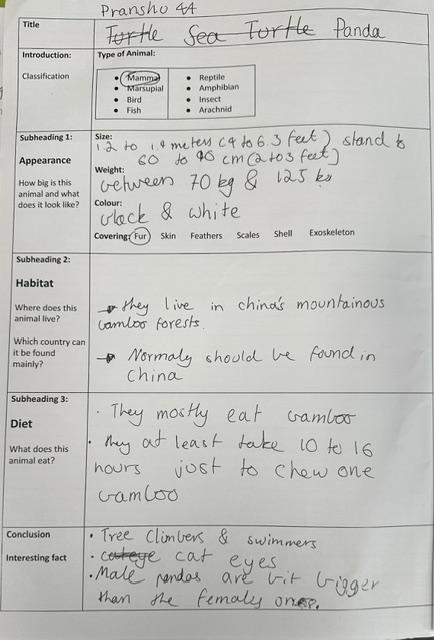
This term, our Year 4 students have been developing their information report writing skills. They have explored how to identify the purpose and audience for their writing, brainstorm and develop clear ideas, organise information into a logical sequence, and use precise topic-specific vocabulary. As they continue to improve their writing, students are revisiting their drafts to strengthen their ideas, organisation and word choice. They are also focusing on sentence fluency by varying sentence structures, using transition words to link ideas, and ensuring their writing flows smoothly to engage and inform the reader.
Student work samples -
Spelling:
This term, our Grade 4 students have been exploring how prefixes and Latin roots help us understand the meaning of unfamiliar words. They investigated the prefix per-, learning how it changes the meaning of words and using these words confidently in their own sentences.
Students also explored the related roots join, junct, and joint, discovering how these word families connect to the idea of joining or linking things together. They practised building new words, defining their meanings, and applying them in meaningful sentences.
To extend their vocabulary even further, students investigated the Latin roots cept and ceiv, learning that these roots relate to taking or receiving. Through engaging word-building activities and sentence writing, they strengthened their understanding of word origins while expanding their spelling and vocabulary skills.
By exploring prefixes and roots, students are developing strategies to decode unfamiliar words, improve their spelling accuracy, and become more confident readers and writers.
How families can help at home
Practising spelling words at home makes a big difference! It helps students remember patterns and feel more confident when writing in class.
You can support your child by:
Short, regular practice (5–10 minutes) is best. Thank you for supporting your child’s learning at home!
Numeracy -
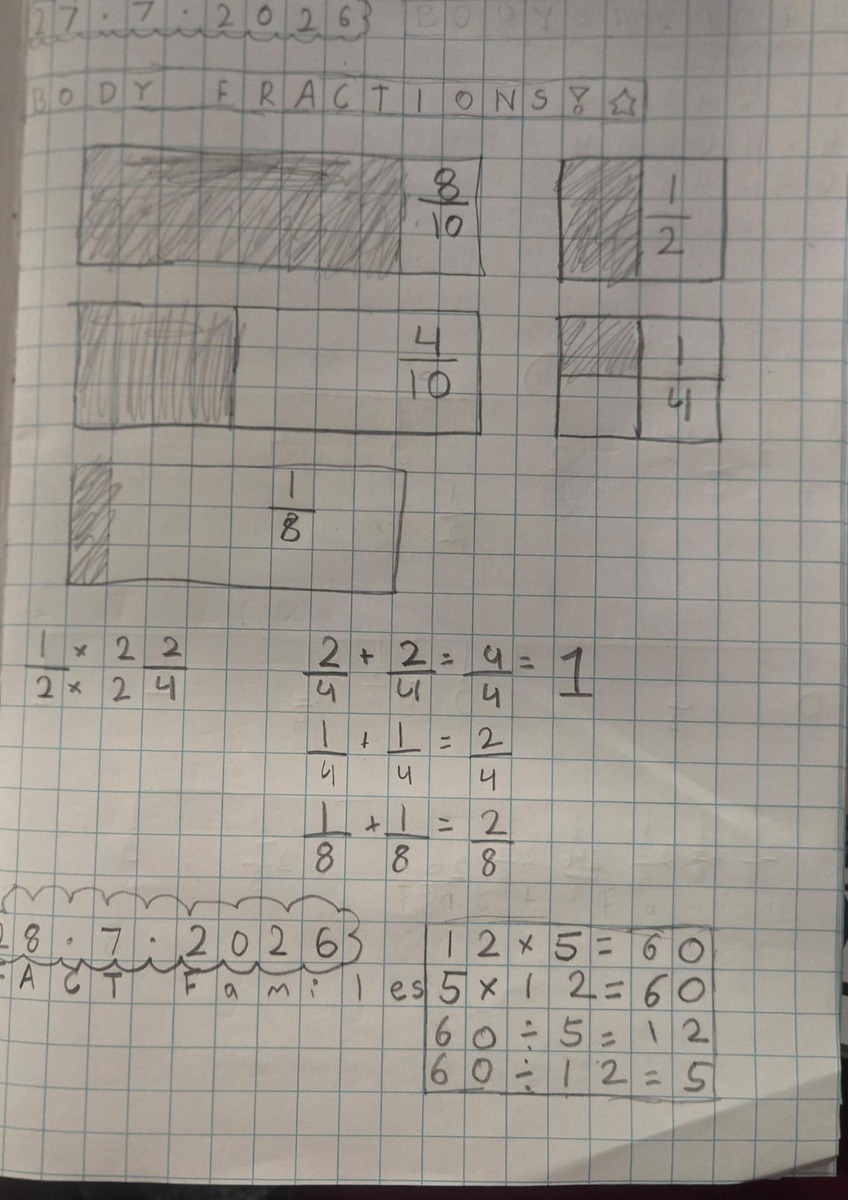
In Term 2, students have developed their understanding of decimals, money, angles, symmetry, and multiplication. They explored tenths and hundredths by representing decimals using pictures, place value charts, and number lines, and learned to identify the value of digits within decimal numbers. Students applied their knowledge of money to solve real-world problems involving purchases, calculating totals, and finding change using efficient strategies such as partitioning and number lines. They investigated different types of angles, including acute, right, obtuse, straight, reflex, and revolution angles, and identified these in shapes and everyday objects. Students also explored lines of symmetry and rotational symmetry by creating, analysing, and reflecting shapes and patterns. In multiplication, students developed their understanding of equal groups and practised a range of multiplication strategies, including repeated addition, arrays, area models, and the vertical algorithm. They learned to select appropriate strategies to solve problems and explain their mathematical thinking using correct mathematical language.
Students were encouraged to explain and justify their mathematical thinking using appropriate mathematical language. They worked collaboratively to solve open-ended problems and applied their learning to authentic, real-world contexts, including planning a school fundraising event. Through hands-on activities, investigations, and problem-solving tasks, students strengthened their confidence in selecting efficient strategies and communicating their reasoning. It has been wonderful to see students demonstrating persistence, creativity, and resilience as they tackled increasingly challenging mathematical concepts throughout the term.
This term, students investigated place value through an inquiry project centred on one number, exploring different representations, patterns, powers of 10 and real-world applications. They are now bringing their learning together by creating a Place Value Think Board that showcases their understanding through clear mathematical explanations and multiple representations.
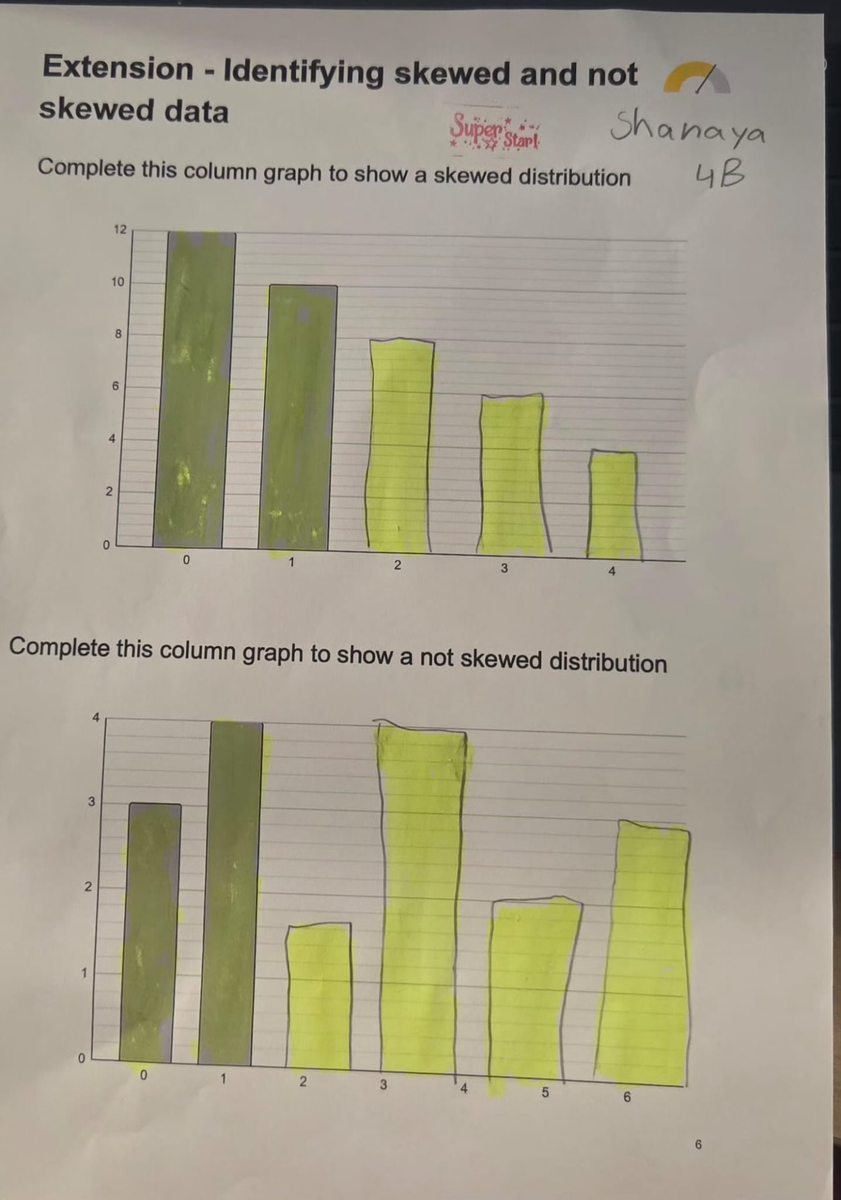
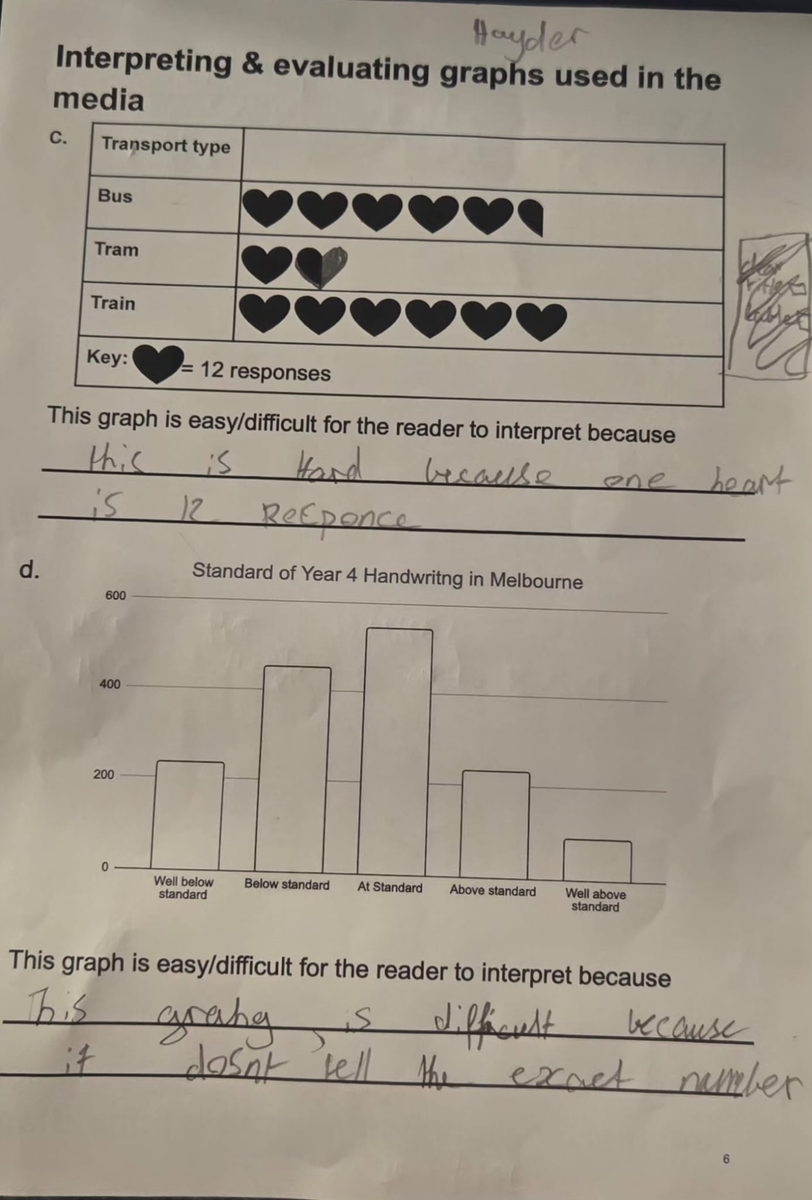
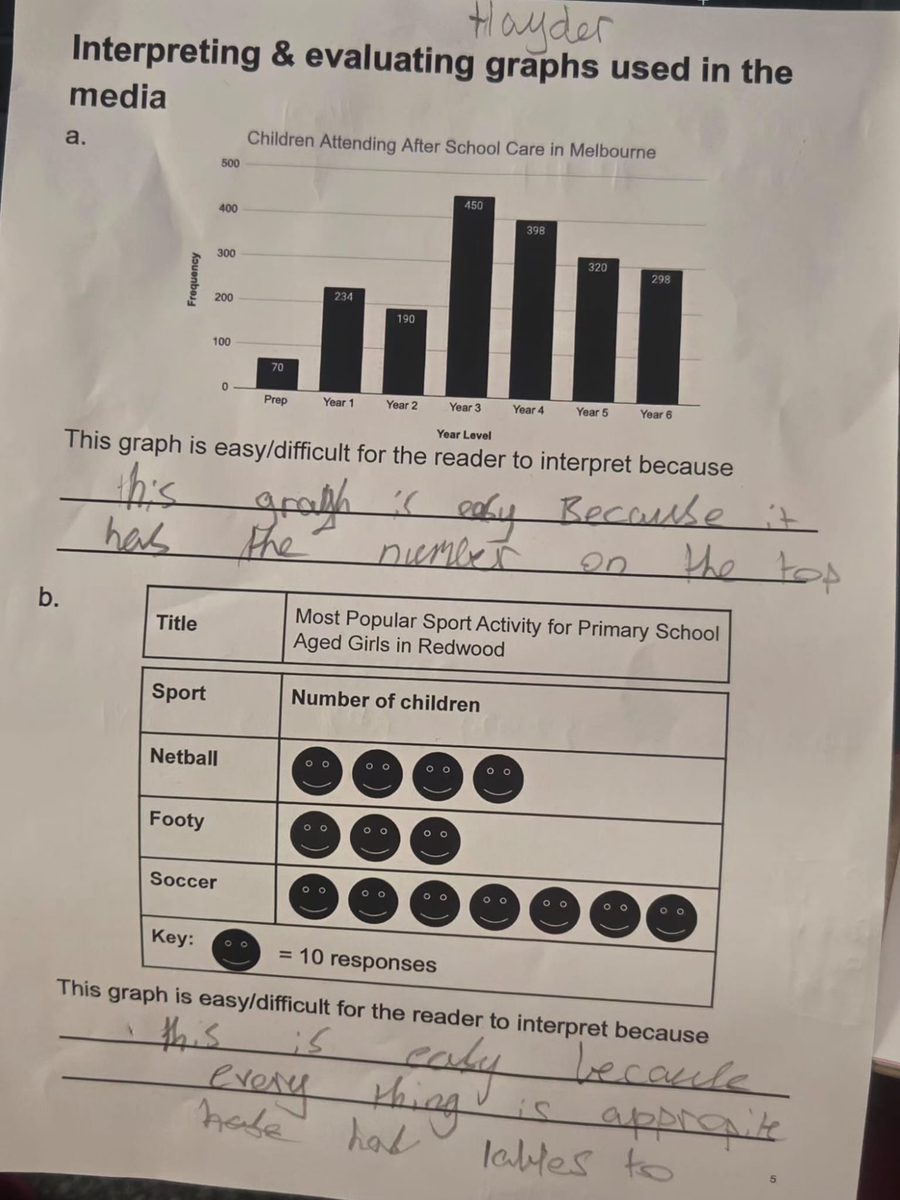
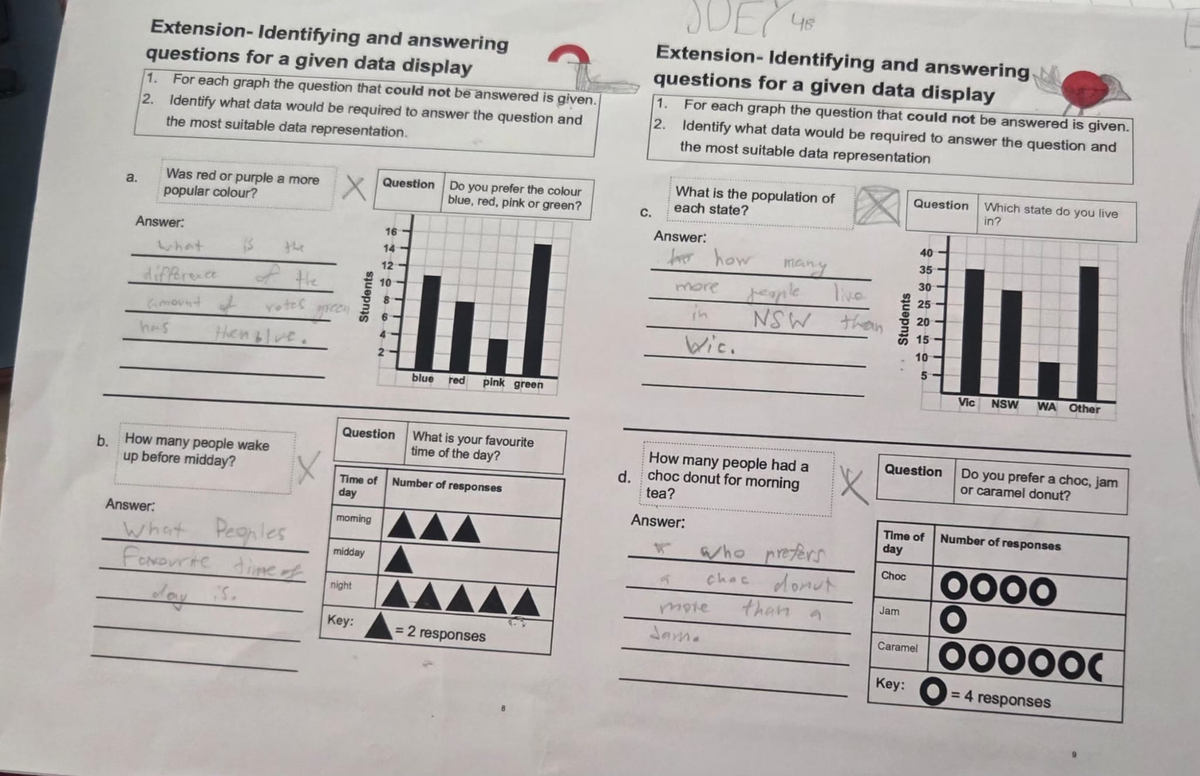
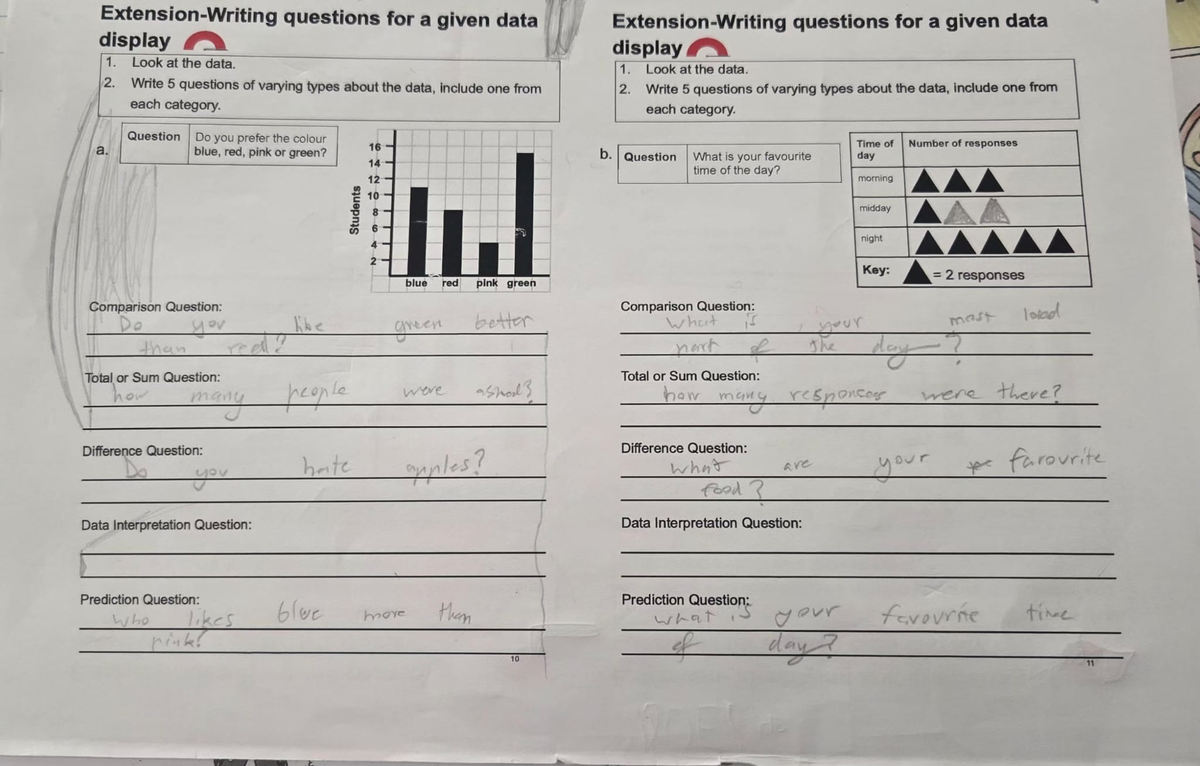
Students have been developing their statistical thinking by learning how to identify questions that can be answered using different data displays, compare graphs that represent the same data, evaluate how effectively graphs communicate information, and describe the shape of data distributions, including recognising when data is skewed or evenly spread. Through collecting, organising and interpreting data, students are building their ability to analyse information, justify their thinking, and make informed conclusions using a range of graphs and data displays.
Student work samples -
Inquiry
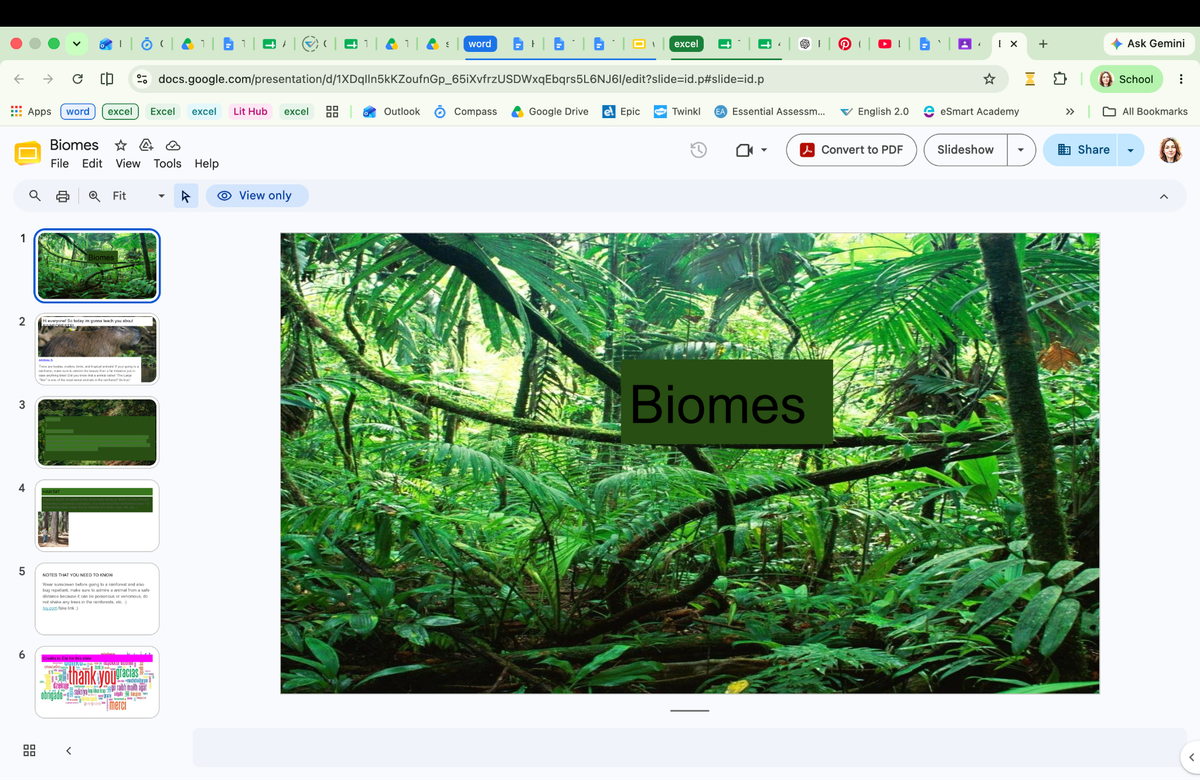
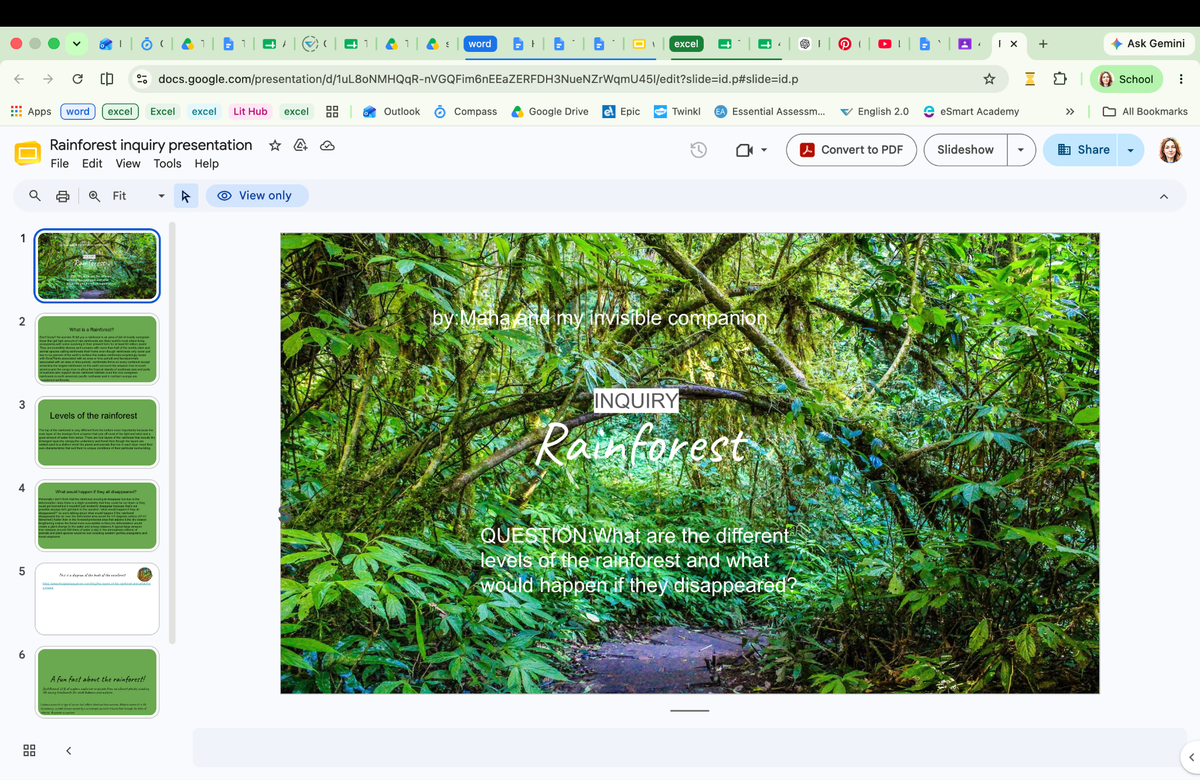
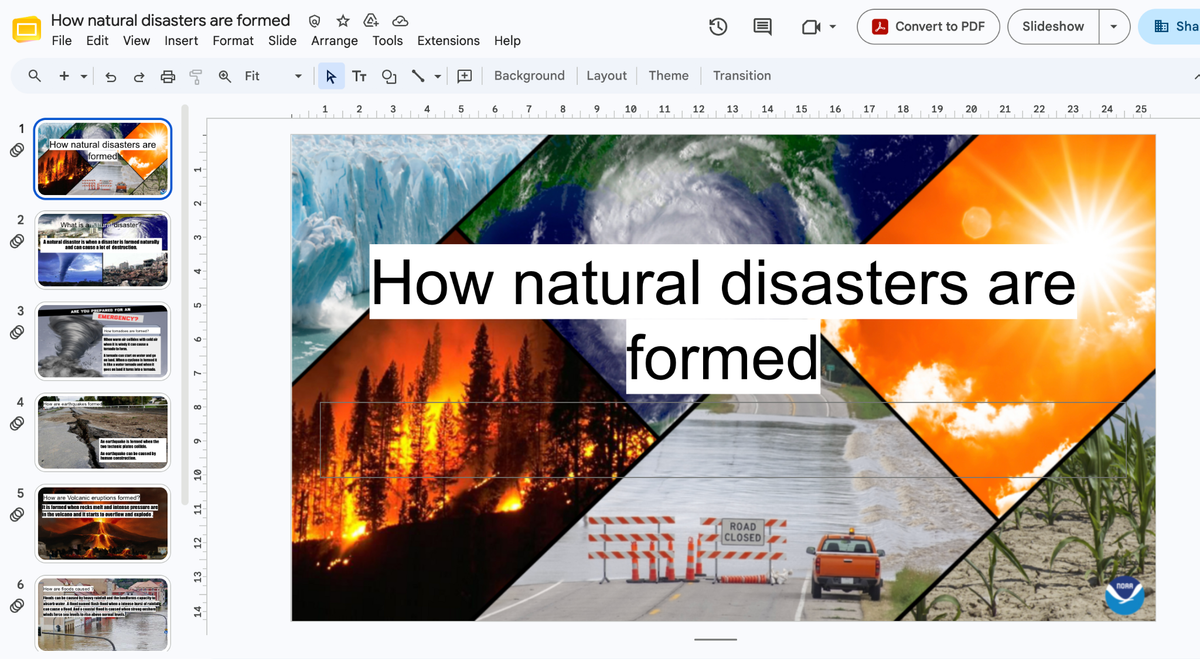
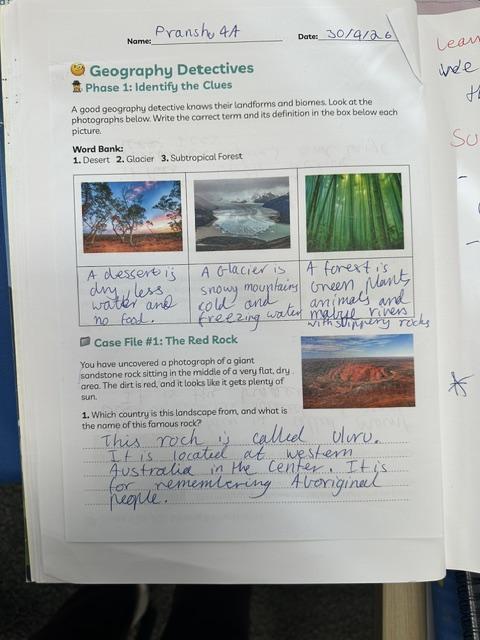
In Term 2, Year 4 students explored the fascinating world of Geography. Through research, discussions, and collaborative learning, students investigated landforms, biomes, climate, weather, natural resources, and sustainability. Students compared Australia, China, and Iceland, learning how different environments influence the way people live, work, and adapt to their surroundings. They explored a variety of landforms, including deserts, mountains, volcanoes, glaciers, and rainforests, and discovered how climate and weather affect communities around the world.
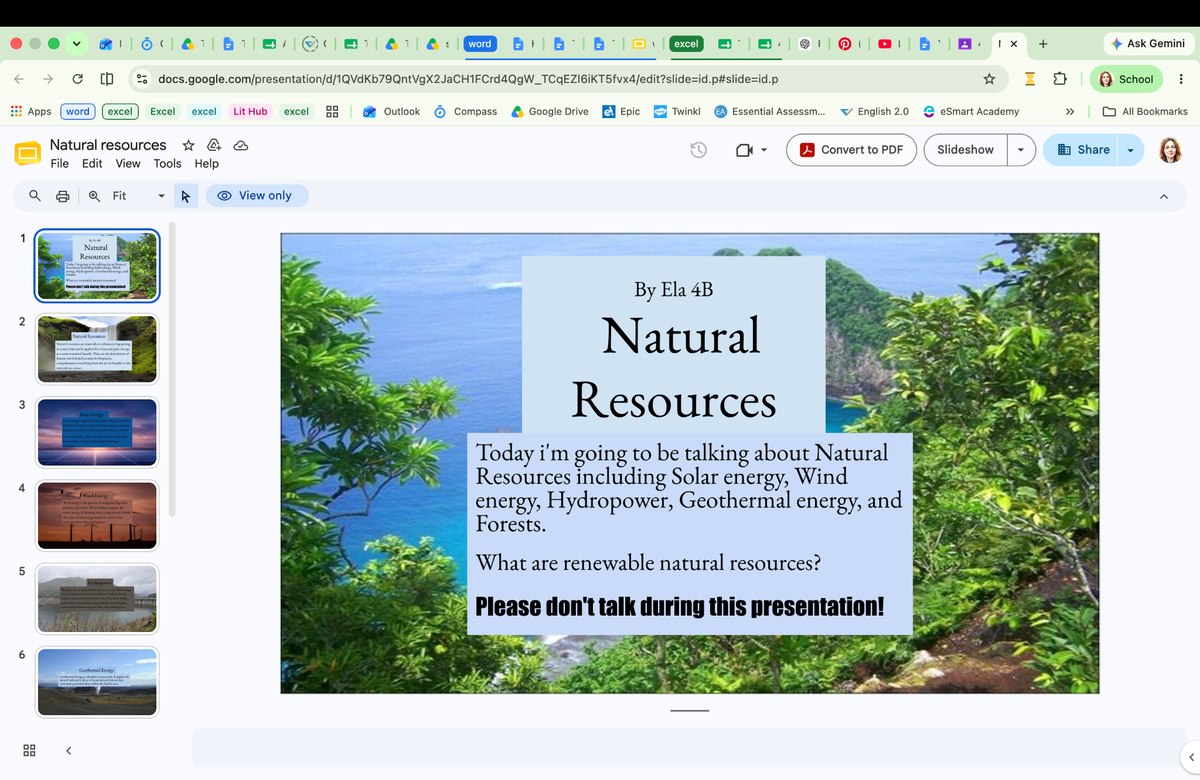
As part of their inquiry, students also examined natural resources and investigated how countries use renewable energy sources such as solar, wind, water, and geothermal energy. They learned about sustainability and discussed ways people can protect the Earth's resources for future generations.
To showcase their learning, students worked together to prepare and present at a whole-school assembly. They confidently shared their research, interesting facts, and comparisons between Australia, China, and Iceland, demonstrating their growing understanding of how people and environments are connected across the world. We are incredibly proud of the enthusiasm, curiosity, and presentation skills our Year 4 students demonstrated throughout this unit.
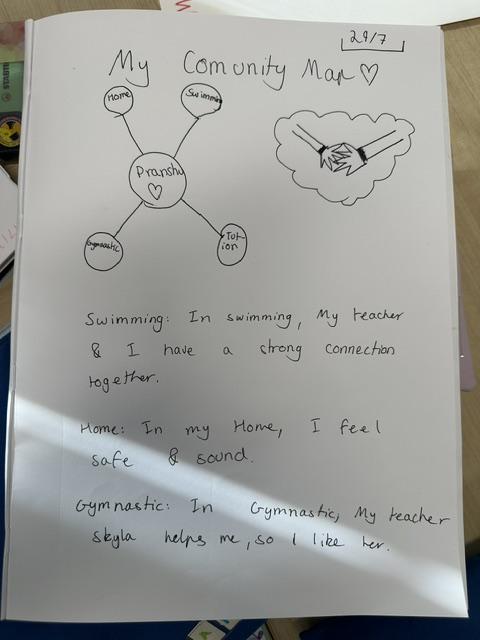
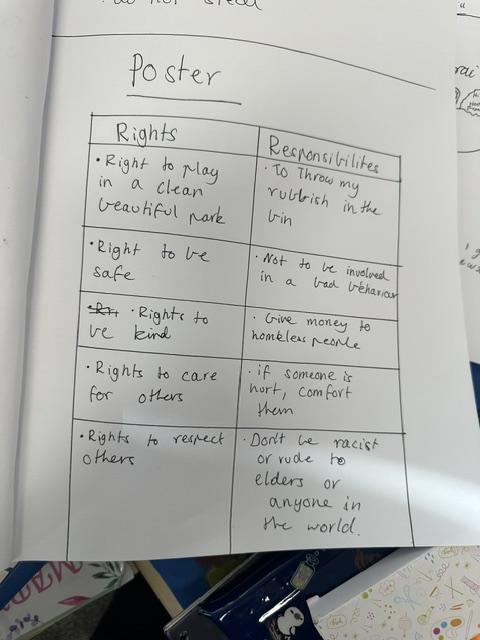
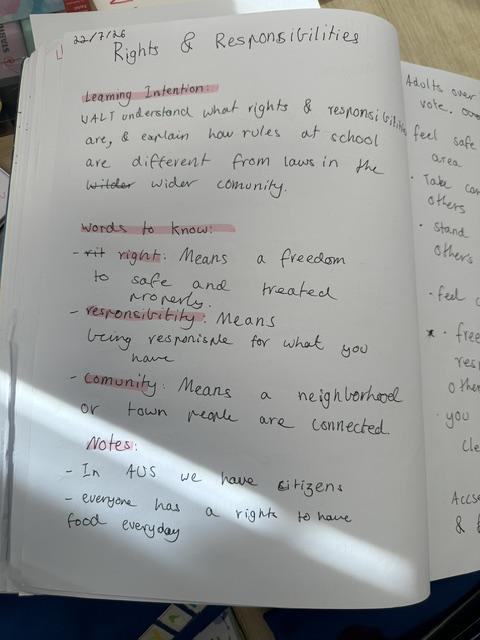
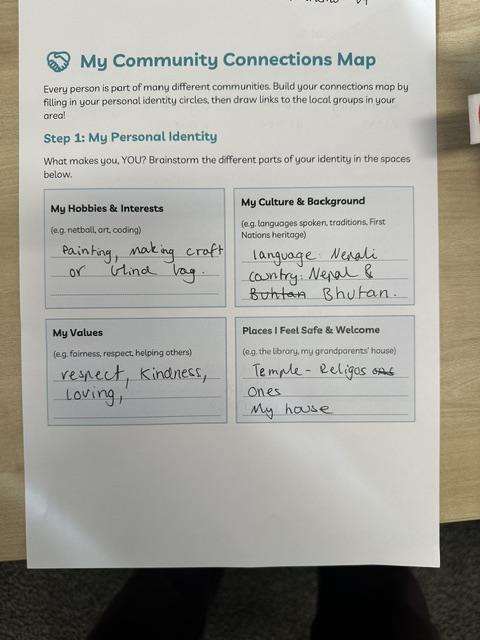
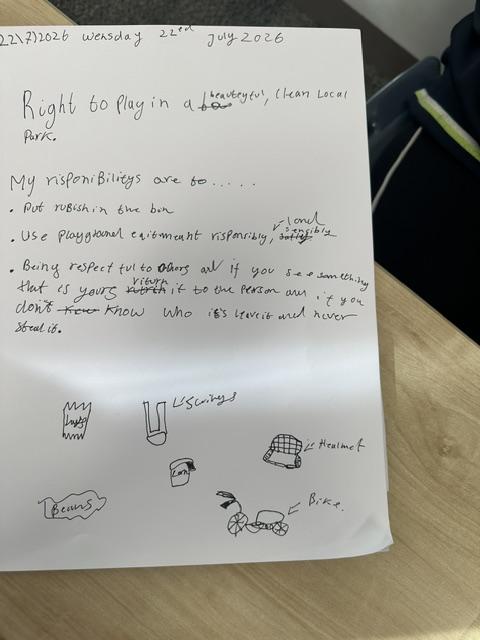
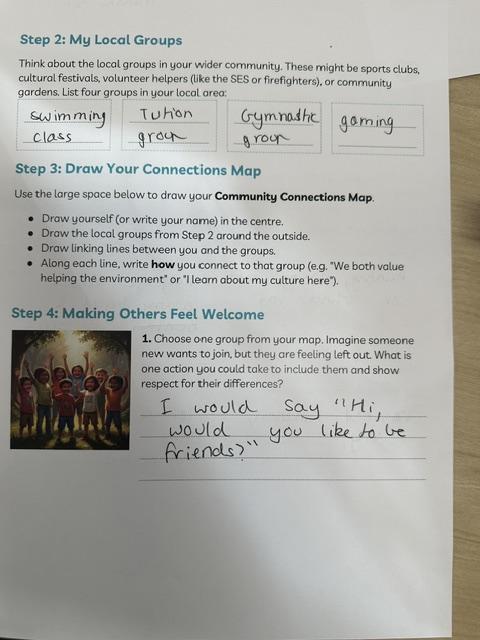
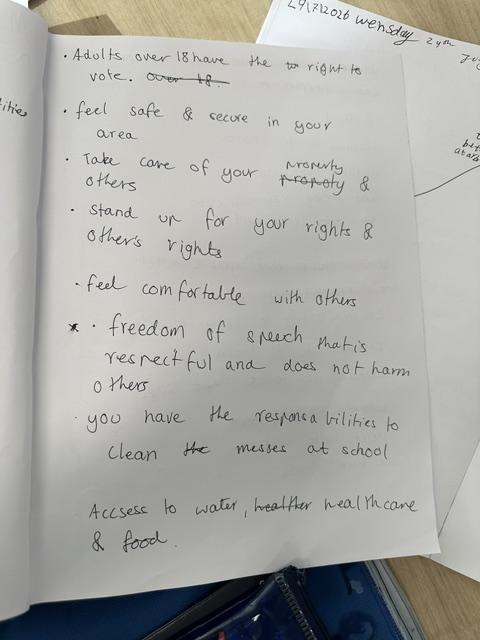
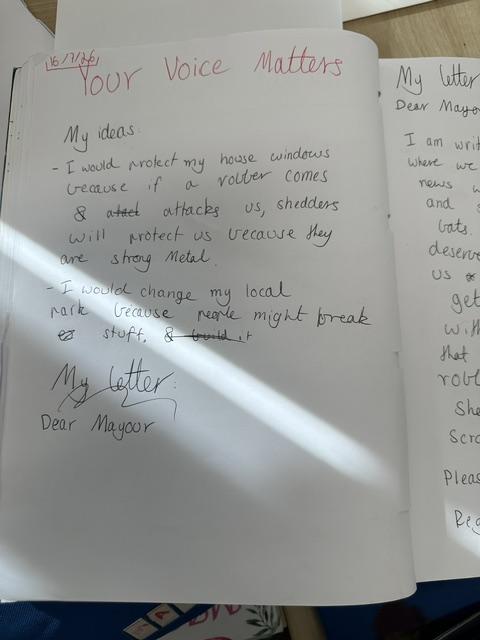
This term, students have been exploring how communities work and the important role we all play in creating safe, respectful and inclusive environments. They have investigated the role of local governments and the services they provide, learned how decisions are made, and explored the rights and responsibilities of citizens. Students have also compared school rules with community laws, developed an understanding of First Nations Lore and its importance in caring for people and Country, and examined how respectful relationships, teamwork and positive actions strengthen communities. Through these learning experiences, students have gained a deeper appreciation of how individuals can contribute to a connected and supportive community.
Student work samples:
SEL
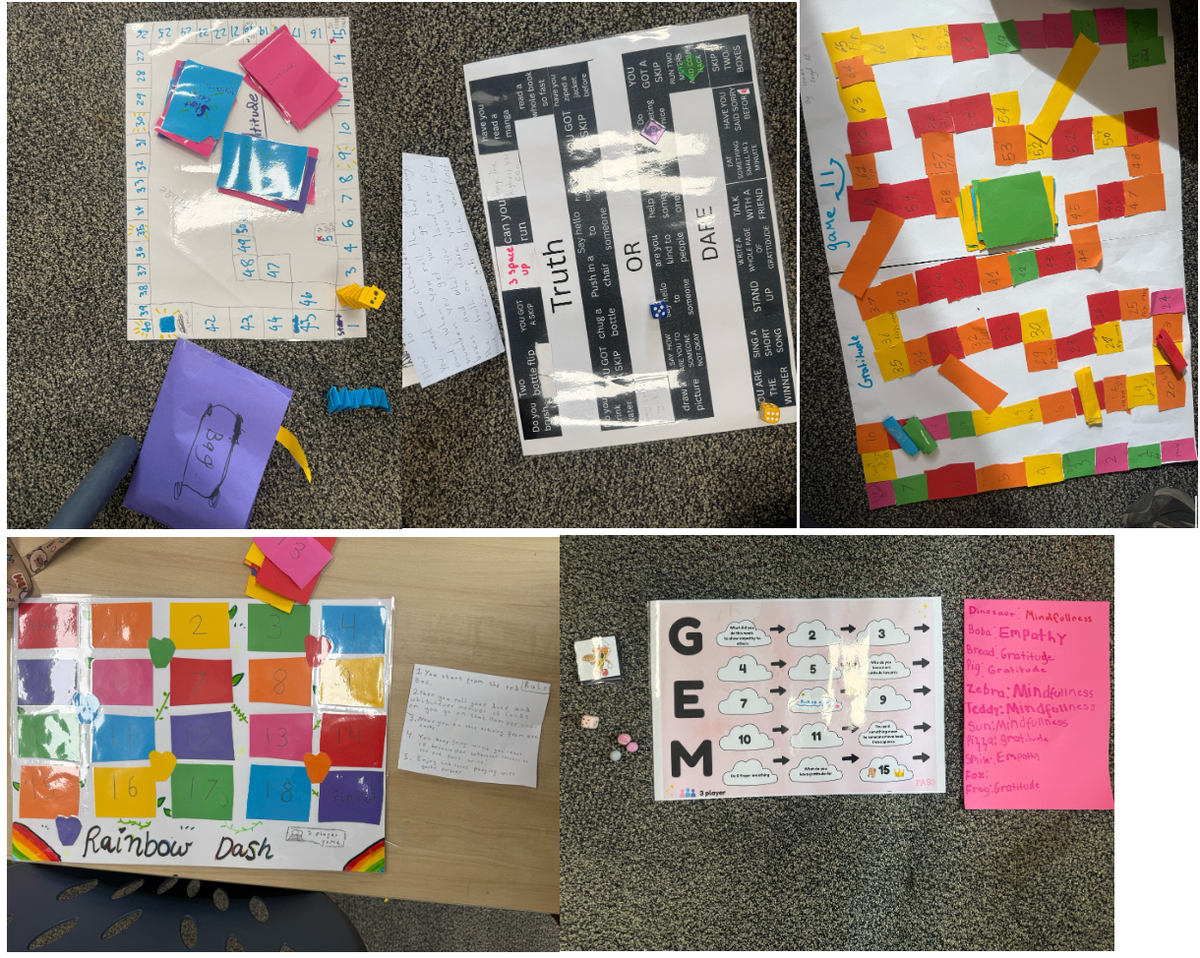
This term, our Grade 4 students have been developing important skills to support their emotional wellbeing and build positive relationships. Through The Resilience Project, students participated in the Gratitude Board Game, where they reflected on meaningful gratitude questions, discussed their ideas with classmates, and recognised the positive qualities of others. To extend their learning, students also had the opportunity to design and create their own Gratitude Board Games, encouraging creativity while developing thoughtful questions that promote kindness, appreciation and connection.
Throughout the term, students have also explored a range of self-calming strategies, including relaxation techniques and calming games, to help manage strong emotions. They learned practical ways to support friends, recognise when someone may need help, and understand the importance of seeking assistance from a trusted adult. Students also discussed the difference between everyday challenges and serious problems, helping them identify situations where it is essential to seek support from a trusted adult. These lessons continue to build resilience, empathy and confidence, equipping students with valuable life skills both inside and outside the classroom.
Term 3 Homework
For homework this term we expect that for 4-5 nights per week students complete the following tasks.
Please remember after LISTENING to your child read, they need to use their Student Diary to keep a record of what they have read. We ask you to please sign or initial their reading log entry each night.
The spelling work and diary is to be completed and kept in the Homework Folder and/or Homework Book. This Homework Book and Student Diary is to be handed in on a day set by their teacher.
Thank you in advance for your support!
The Grade 4 Apollo team ☺