
Engagement & Wellbeing Page
Kellie Hewson & Mel Lonergan (Mental Health & Wellbeing, and Disability & Inclusion, Leaders)

Engagement & Wellbeing Page
Kellie Hewson & Mel Lonergan (Mental Health & Wellbeing, and Disability & Inclusion, Leaders)
At this time of year students start to look ahead to what next year might bring—new classrooms, new classmates and sometimes new routines. For some children this brings excitement; for others, a sense of uncertainty. Both are completely normal.
Behind the scenes, teachers are already preparing for 2026. Teams are will share information about each child’s strengths, learning needs and interests so that next year’s teachers are equipped to support students from the very first day. Our aim is for every child to feel known, settled and ready to learn.
Transitioning into a new year level can stir up a range of feelings. Children may wonder what their new teacher will be like, whether the work will feel challenging, or what friendships will look like next year. These questions are part of the natural process of adapting to change.
To support your child during this time, here are practical strategies families can use at home:
Keep discussions open and low-pressure. Ask gentle questions like, “What are you curious about for next year?” or “Is there anything you’re unsure about?” Listening without rushing to fix the problem helps children feel heard and safe.
Children cope better when they have a sense of what to expect. You might talk about:
Remind your child of times they adapted well—starting a new sport, joining a club, or settling into school earlier in the year. Connecting past successes to future challenges helps build self-trust.
Children cope better when they have a sense of what to expect. You might talk about:
Predictability at home reduces stress at school. Try to keep:
If your child is worried about friendship changes, reassure them that friendships often continue across classrooms. Encourage simple steps such as:
If your child seems unusually anxious, withdrawn or overwhelmed, please connect with us. Our wellbeing team is here to support families, answer questions and help children settle smoothly.
During the last weeks of school (Tuesday 2nd and Tuesday 9th Dec) students will participate in structured transition activities to help them get to know new spaces, routines and teachers. These experiences are designed to reduce worry and give children a sense of familiarity before the new year begins.
Students will not find out their class groupings, teachers or classroom location for 2026 until the second transition day on Tuesday the 9th December.
We are incredibly proud of our students and the resilience they have shown throughout 2025. With gentle preparation and consistent support, they can approach 2026 with confidence, curiosity and a strong sense of readiness.
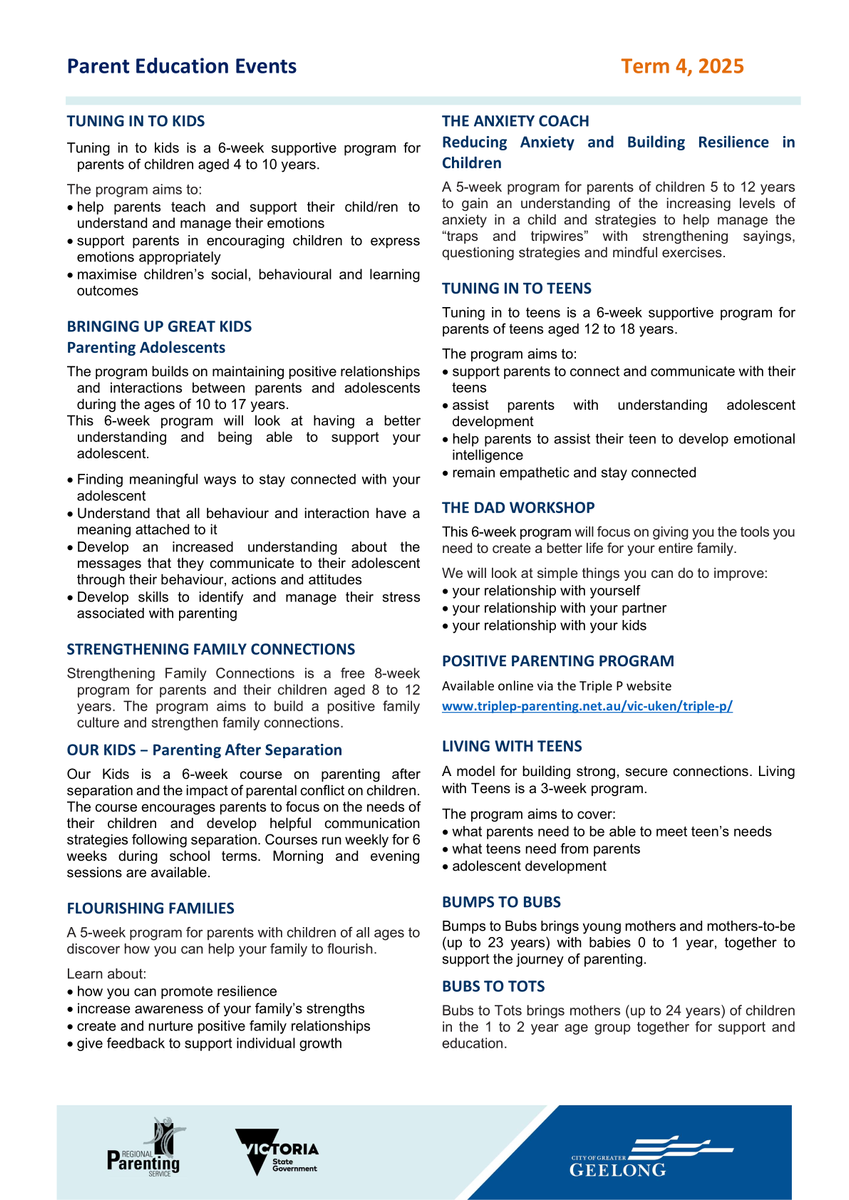
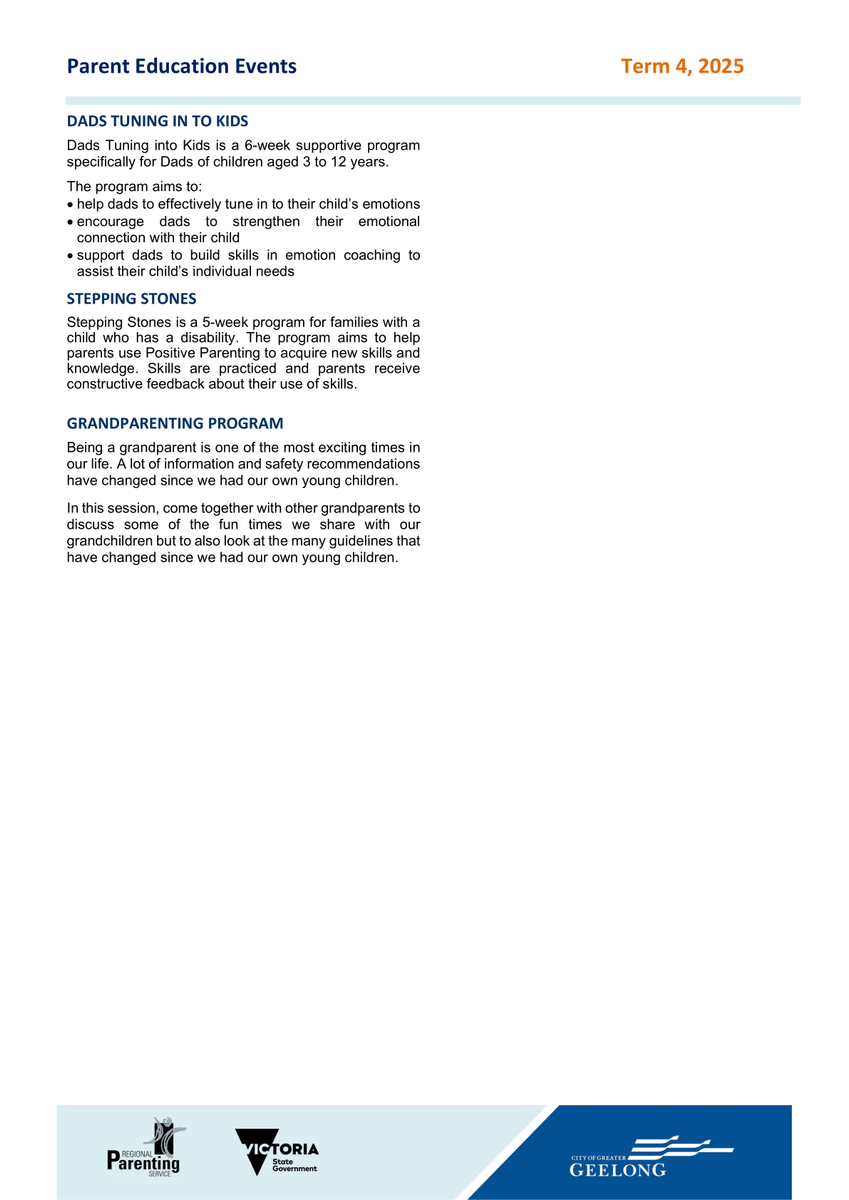
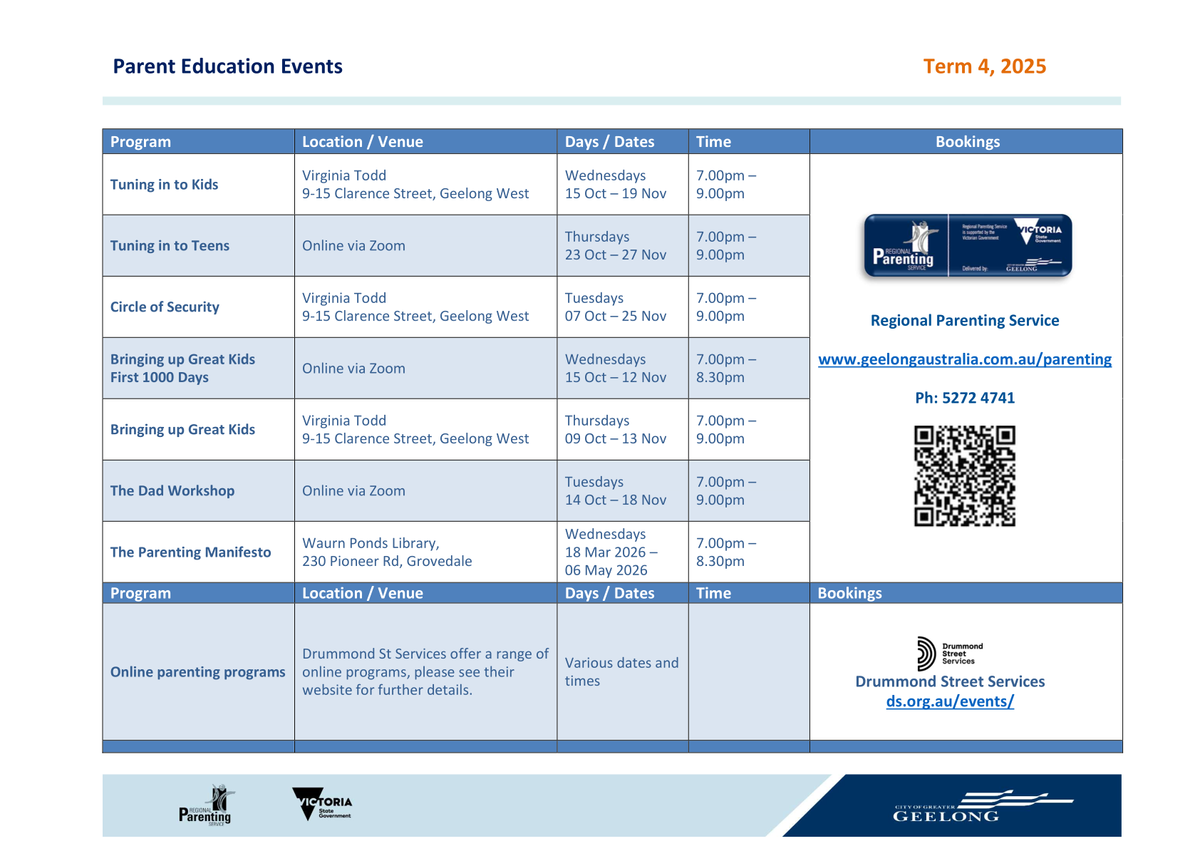
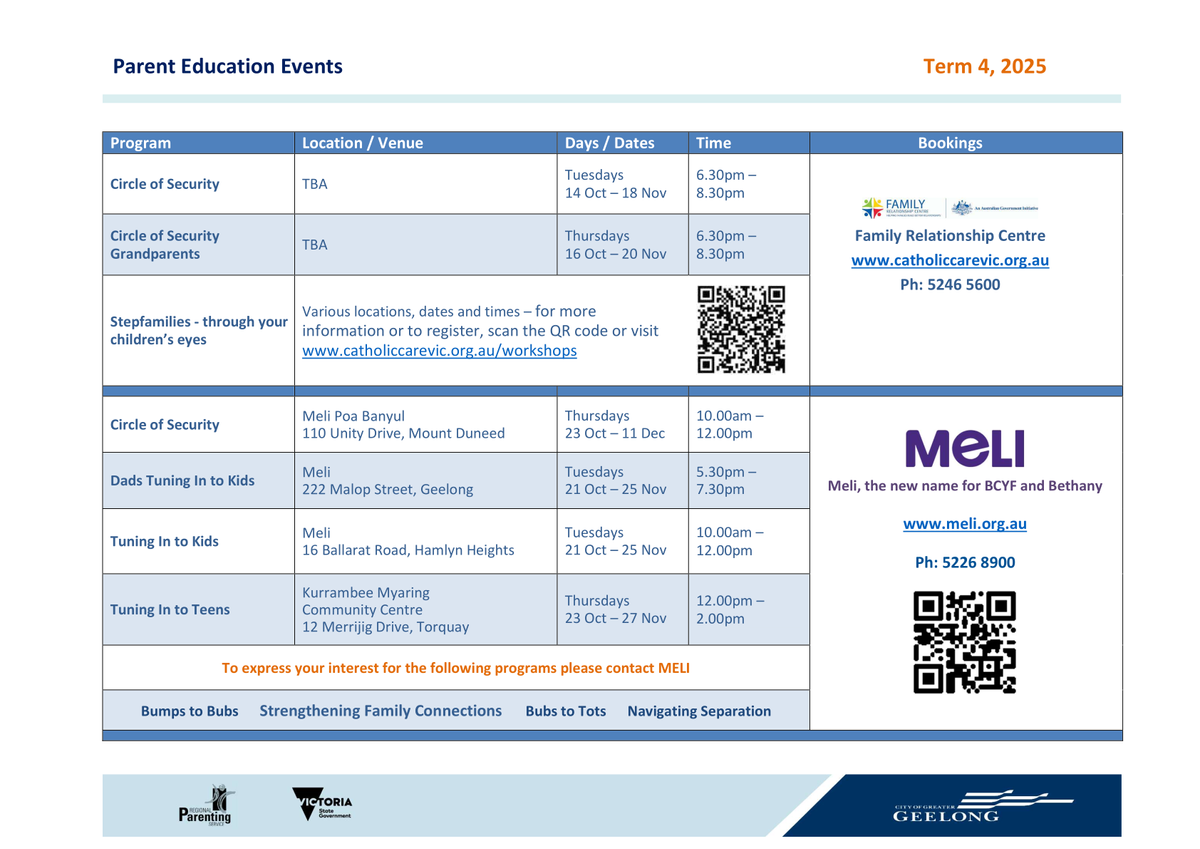
If you’d like extra strategies or support, there are some excellent free local parenting programs available to help families build confidence and connection. These programs offer practical tips for supporting your child’s wellbeing and managing anxiety.
See the Geelong regional Parenting Calendar for term 4 below
We encourage all families to take advantage of these wonderful resources. A little guidance can make a big difference for both children and parents.




As we come to the end of the school year, children may be feeling overwhelmed by the many changes that will happen over the next few weeks and into the start of the new year.
In our daily life we all experience change, such as changing activities, or going to different places. Another word to describe change is transition. Transition is a word often used by schools to talk about changes in routine and the ability to stop one activity and start another.
Some people find change and transitions more challenging than others. Transitions may appear more difficult on some days or in some places due to other pressures and expectations. Each young person will cope with transitions and change in a different way. Your child may encounter the following transitions:
The following ten tips may help to support your child during these times of transition.