
Year 2
Reading
Literacy: Interpreting, Analysing, Evaluating
Comprehension Strategies: Visualising & Summarising (Map It!)

Year 2
Reading
Literacy: Interpreting, Analysing, Evaluating
Comprehension Strategies: Visualising & Summarising (Map It!)
Learning Intention:
To create a visual representation of a narrative, in the form of a story map
TEXT:
Day Break written by Amy McQuire and illustrated by Matt Chun
Learning experience overview
‘Map It!’ is a reading comprehension strategy that uses visual representations, like story maps or concept maps, to help readers understand text. This approach combines visualization with summarising, allowing students to actively engage with the text by identifying key elements like settings, characters, and relationships between ideas. Mapping turns passive reading into an active, engaging process by encouraging students to interact with the text and make connections. It requires readers to identify and summarise key information, which strengthens memory and recall.
Whole:
As we had previously explored this mapping strategy, we began this session ready to map together, as the story was read aloud.
We noticed the sequencing of a series of events, in different locations, and were mindful of the beginning, middle and end of the story.
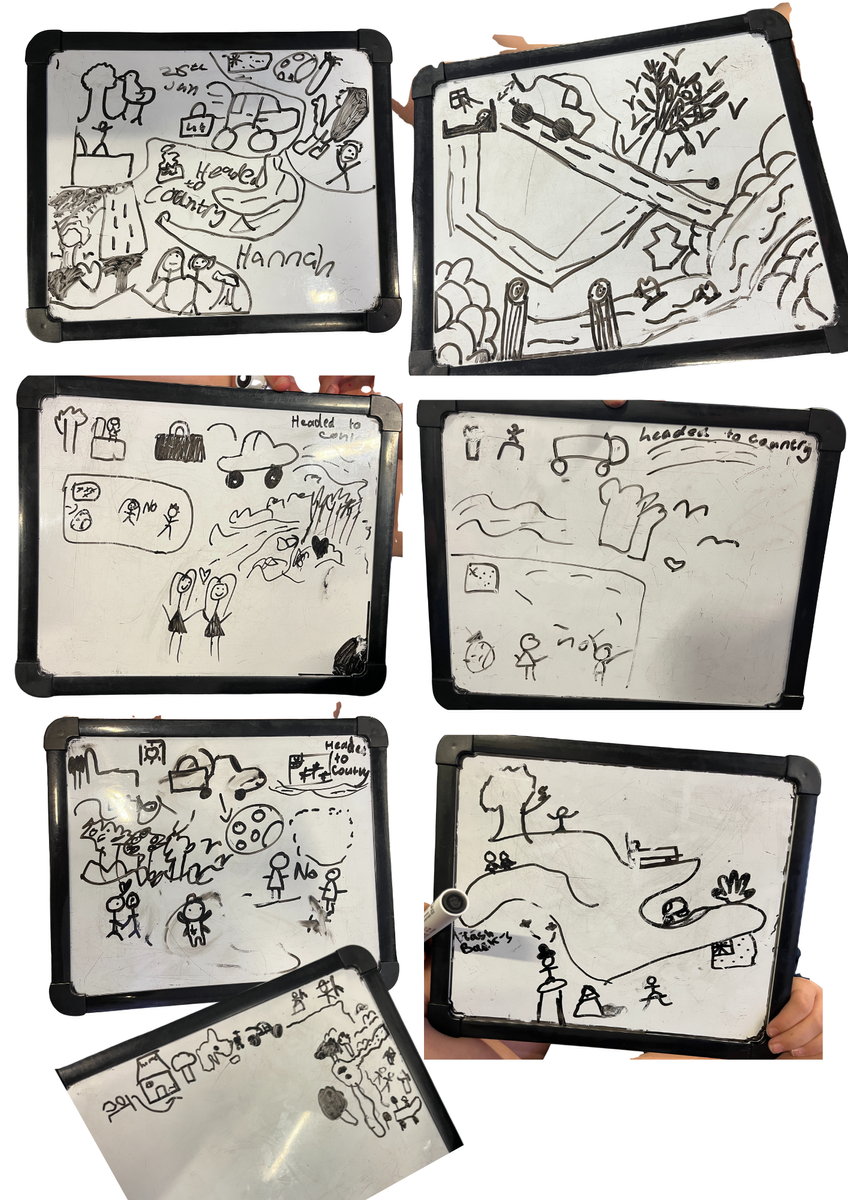
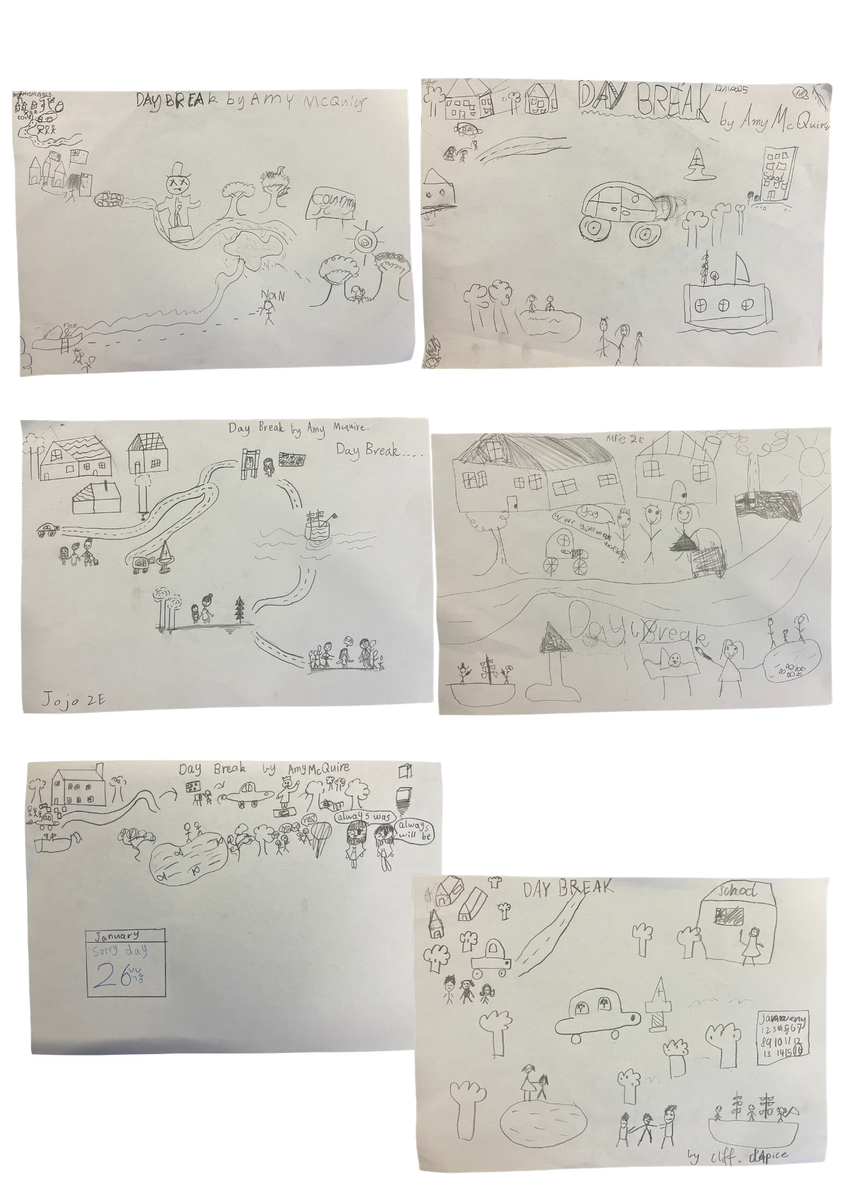
Whilst the story was read aloud, students used mini w/boards/ pencil and paper to sketch a map of the setting(s), based on the details the author provided and what they visualized. They added on to their map any time the character went to new places, so that in the end, they were able to use their own map to track the character's journey.
Students created a visual representation of the story, that showed the text's structure, major plot points, different settings and the story flow.
Small:
We continued the lesson with our Reading Rotation groups.
Prompts/questions/responses:
Helpful questions to ask when mapping/summarising (including retelling) are:
Recall the place(s) you've read about. Draw a map showing all those places.
To continue the learning at home from this experience:
Continue to encourage your child/ren to read for pleasure at home, and share their thoughts about the text with you. Begin by asking them to retell the story, identifying the key points, being mindful of the sequence of events. Use some of the question prompts, above, to help with their recall. Remind them of the importance of the order of events, and how that aids meaning.
Pausing to take time to draw a map will be most helpful for students reading books with complex or unfamiliar settings like those in fantasy or historical fiction. In some books, especially fantasy fiction, authors may include a map of the world of the story. For children reading books like this, draw their attention to the map, encourage them to study it before reading, and reference it while reading to stay oriented to the setting and setting changes.
Discuss what the author might have been inferring – not specifically stating, but hints they may have been giving about the text.
Most of all, have fun sharing texts together.
Jocelyn and Steph
Year 2 Team