Prep Bulletin

A Snapshot into Reading
Learning Experience Overview:
In Prep, we are exploring our Big Idea, “Seasons affect how the world works and influence the way we live.” Over the course of the term, students unpack the Big Idea and driving questions through various learning experiences in a range of curriculum areas, such as in our Reading.
Driving Questions
What are seasons?
What makes up our world?
How do seasons affect living things?
Learning Experience
Whole
Learning Intention: To use the strategy of ‘whole and teeny tiny details’ to help us understand a text.
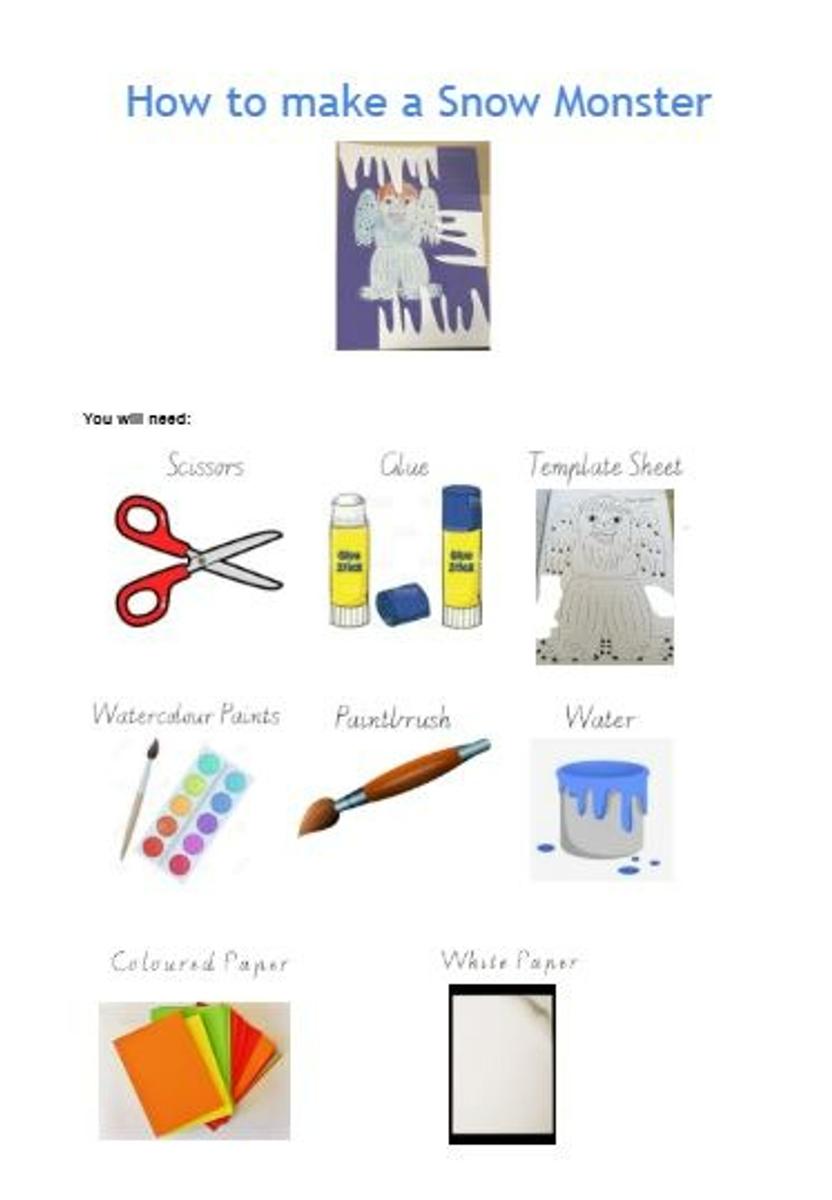
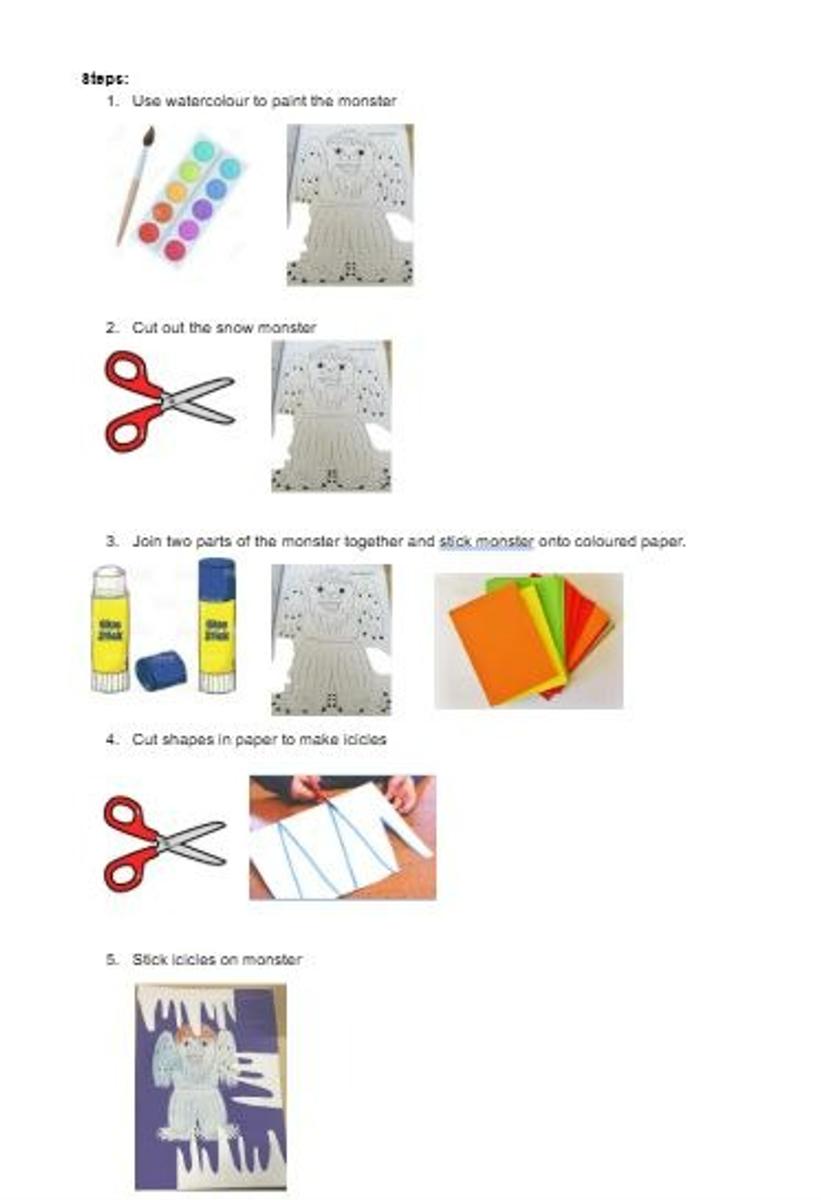
As a class, we practiced paying attention to both the whole page and the small details to help us better understand what we read. We looked at a procedural text titled How to Make a Snow Monster. First, we swept our fingers across the whole page and talked about what it was mostly about (the instructions for making a snow monster.) Then, we zoomed in on the teeny tiny details, such as each step and the pictures that helped explain what to do. This strategy helps students notice both the overall meaning and the important little details that build understanding.
Prompts:
- Use your finger. Sweep it across the whole page.
- Say, “this whole page is about…”
- Now zoom in on a small part. Say what you’re learning.
- Turn the page and try it again.
- Move your finger to another part. What else did you learn?
- What’s the same about all the parts on this page?
- Touch one part. What did you learn? Touch another part. What did you learn?

In this learning experience, students worked towards:
- Developing their comprehension skills by identifying the main idea and supporting details in a text.
- Understanding how each part of a text contributes to the whole message or purpose.
Small (Reading Groups)
Our 4 small group activities explore either a letter, word and/or text focus.
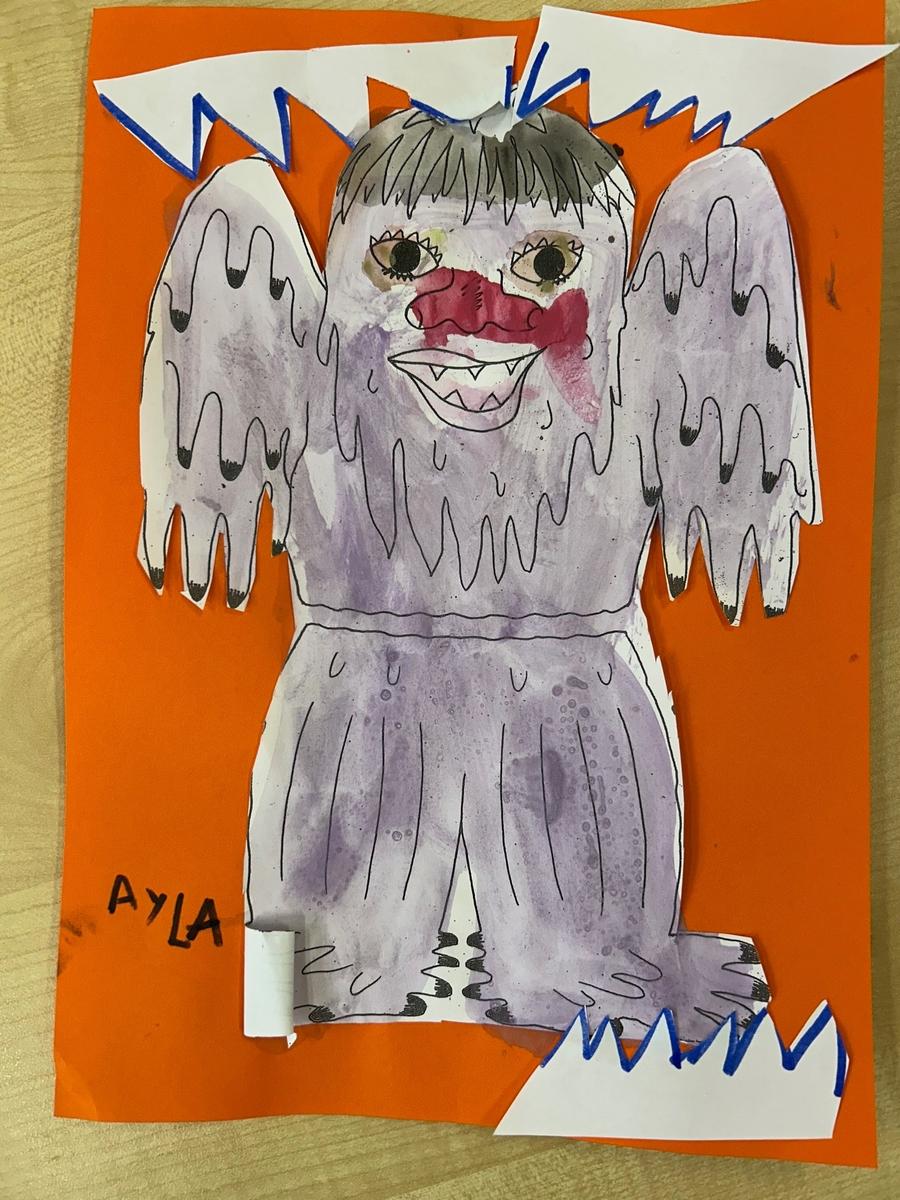
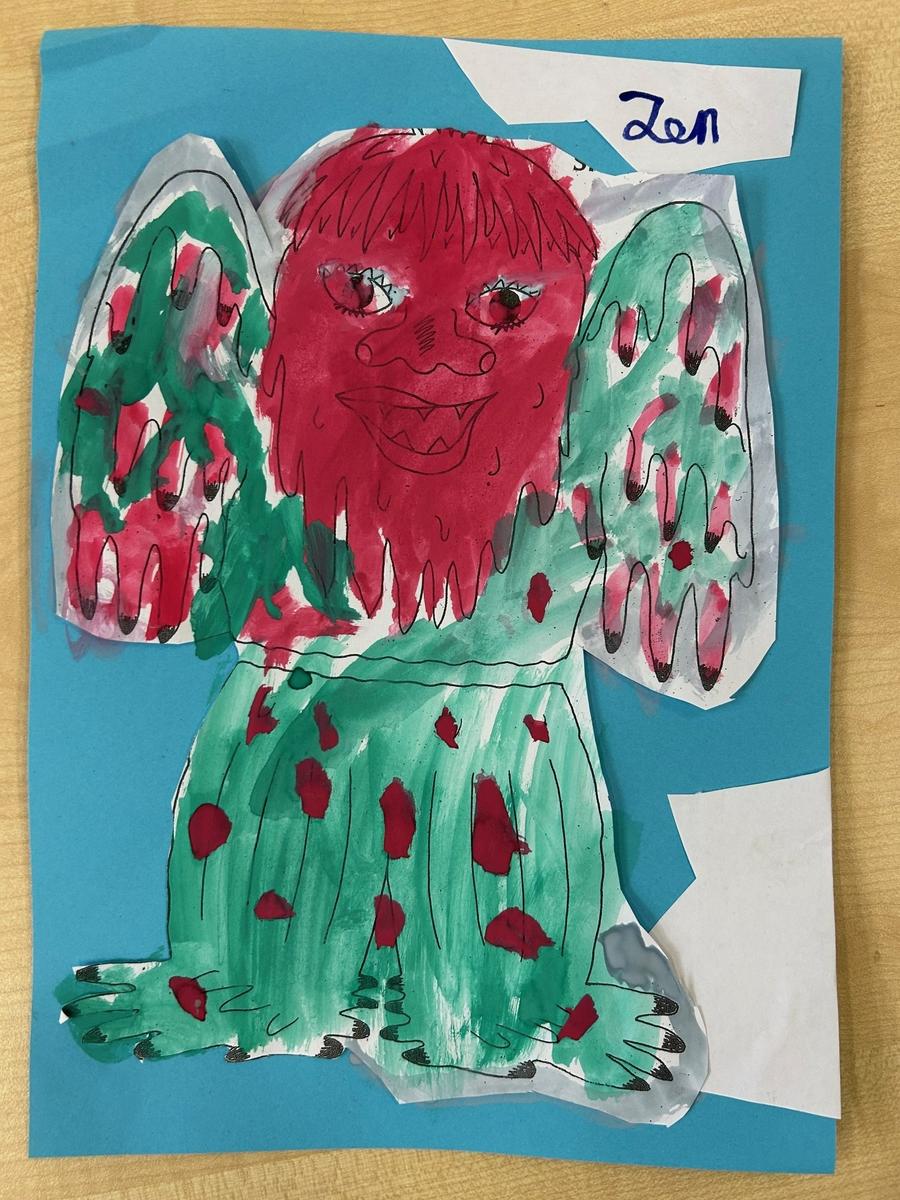
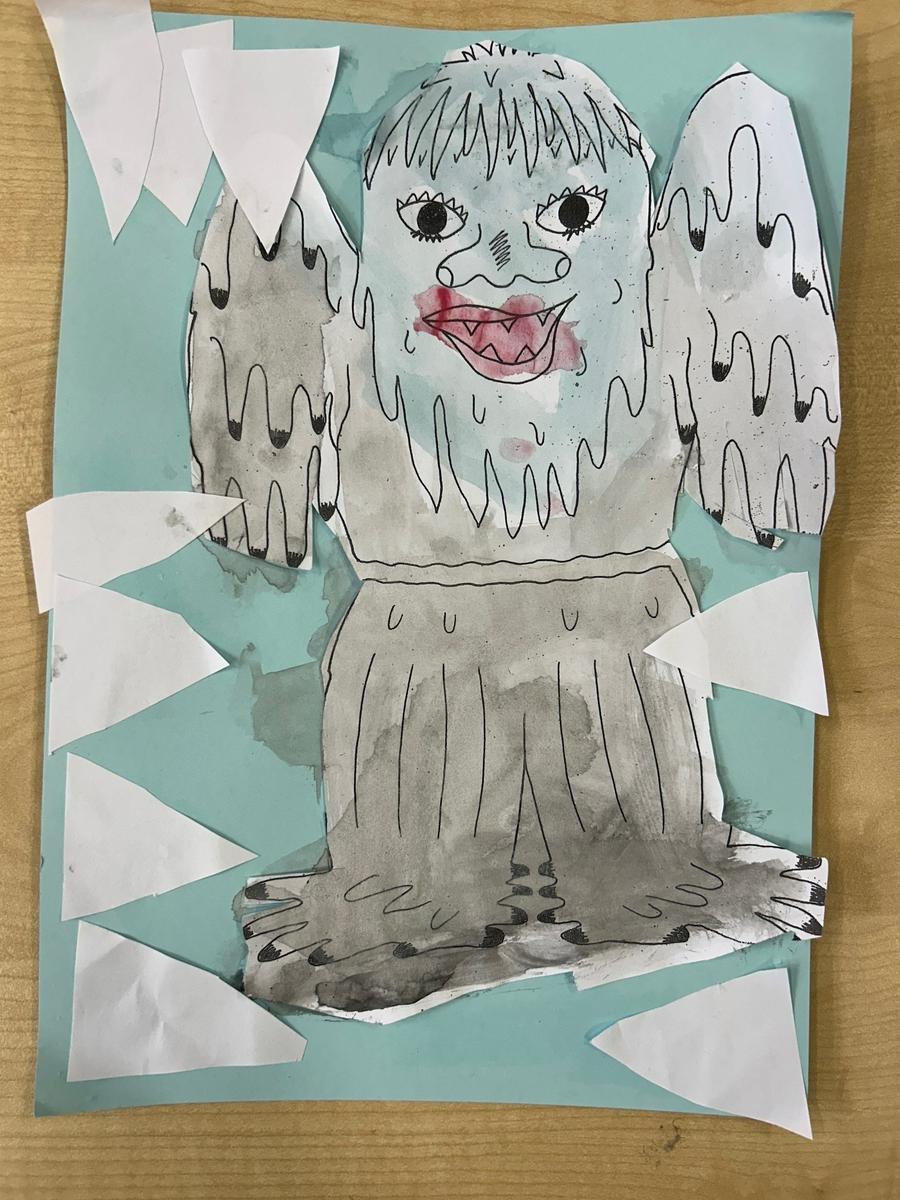
Activity 1 – How to Make a Snow Monster
Learning Intention: To use letter, word, number, and picture clues to help decode and follow a set of instructions.
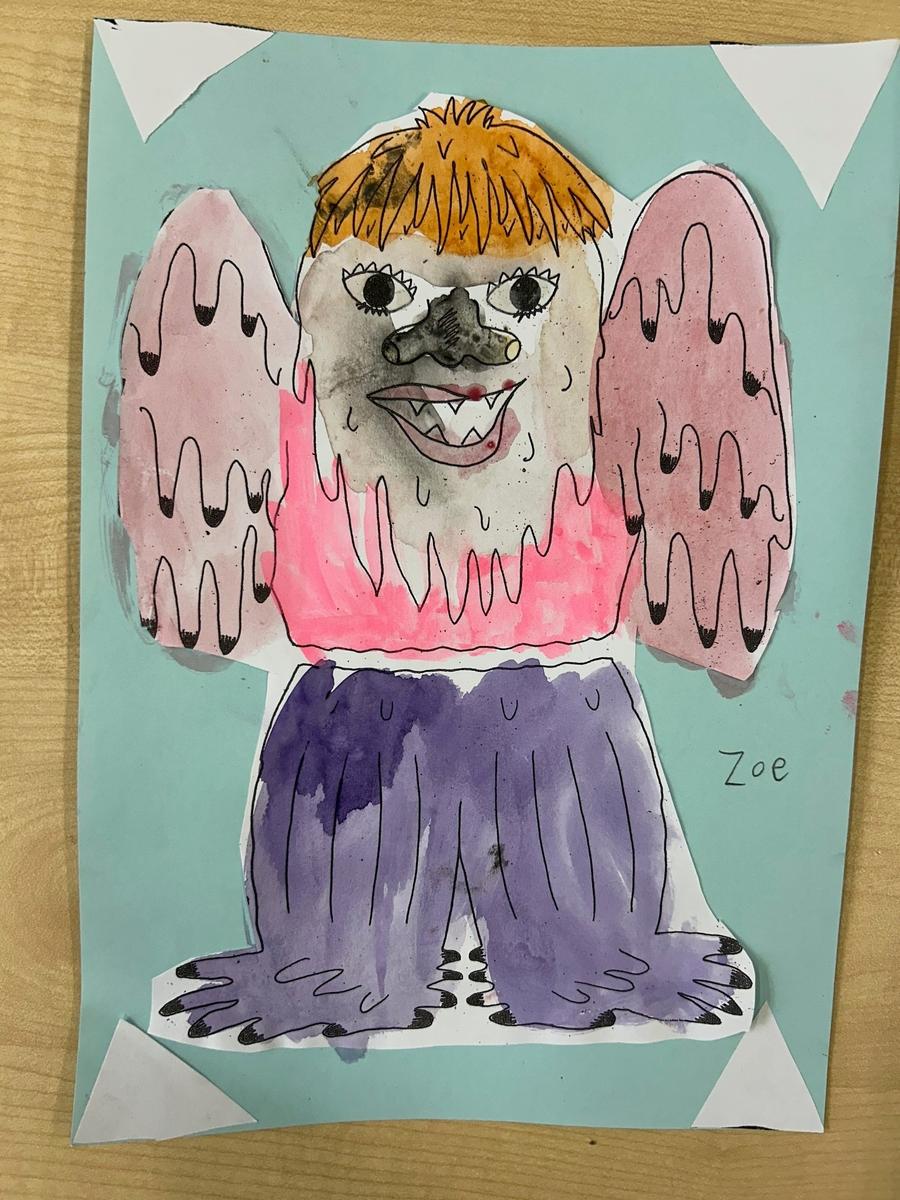
In this activity, students explored how to use different clues within a text, such as letters, words, numbers, and pictures to make meaning and follow a procedure. They read and interpreted the steps in How to Make a Snow Monster, using these clues to guide them as they created their own snow monsters.


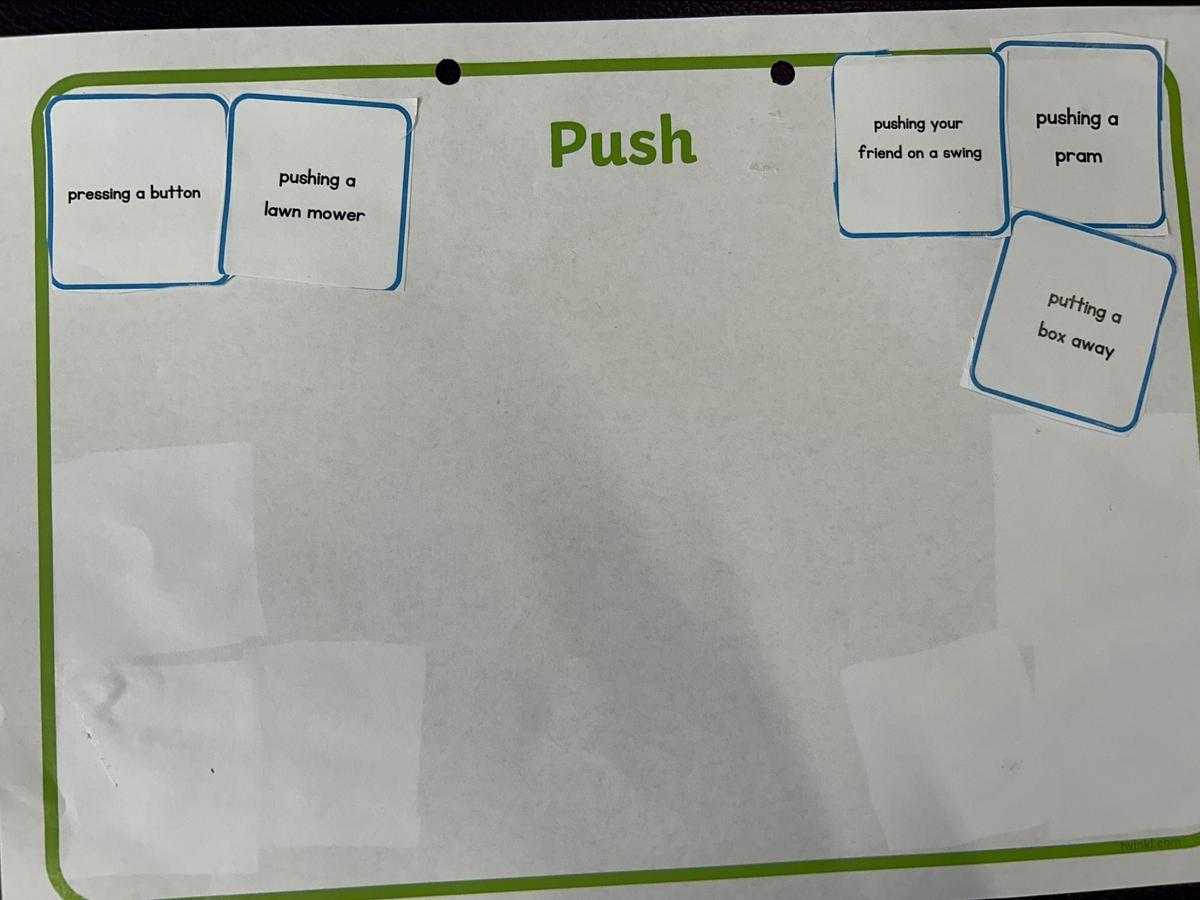
Activity 2 – Push and Pull Sort
Learning Intention: To apply what I know about a topic.
Students built on their learning about different types of forces. They applied their understanding by sorting a range of everyday actions into categories of either push or pull. This helped students to consolidate their knowledge of how forces work and recognise examples of pushes and pulls in the world around us.
Enabling: The key word (push or pull) is written for students to match the word.
Explore: Students were given sentences and pictures to sort.
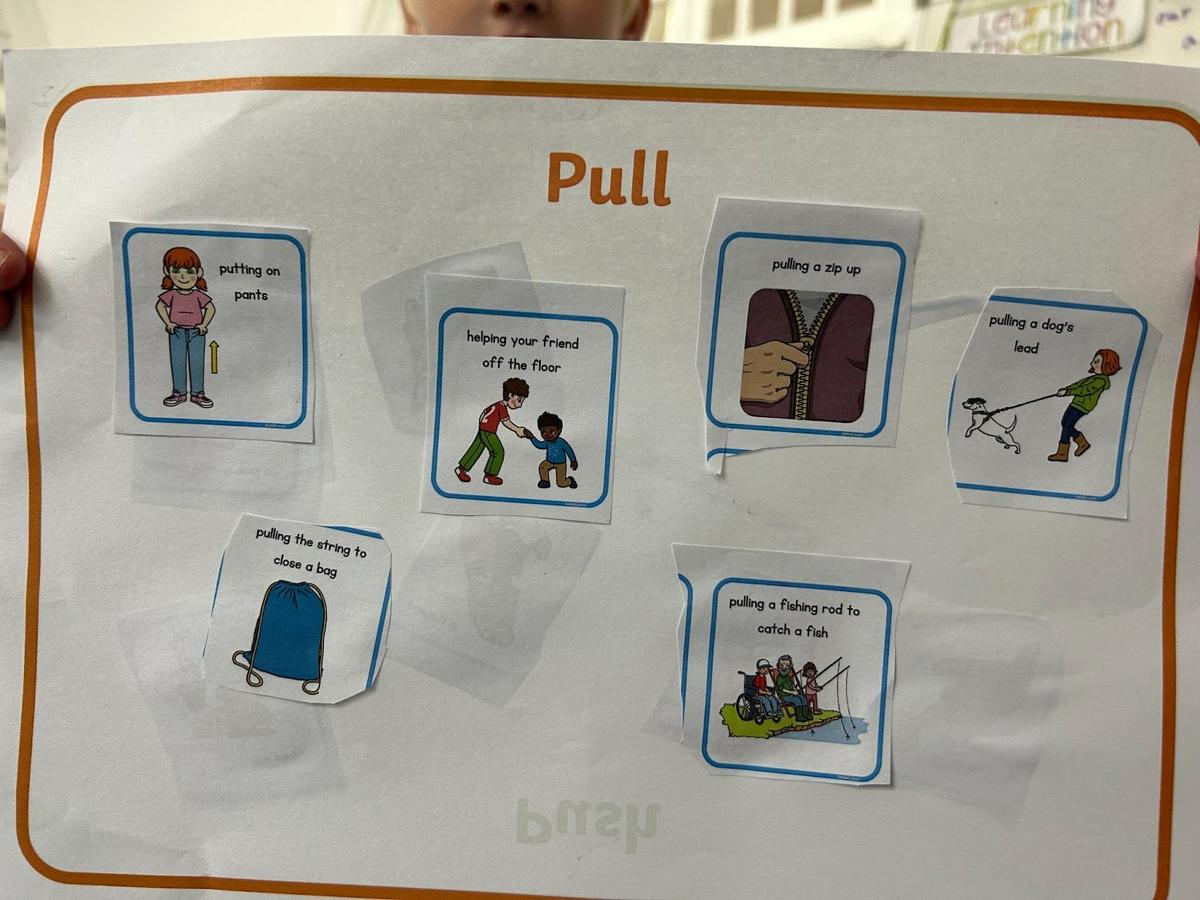
Extending: Students were given only sentences to sort.
Activity 3 - Alphabet Scrapbook ‘Ss’
Learning Intention: To match the phoneme to the grapheme.
In this activity, students did a cut and paste activity to create a capital ‘S’ in the shape of a snail. Then, they wrote a lowercase ‘s’. They were given a range of pictures and were required to pick the ones that start with the /s/ sound and glue them into their Alphabet Scrapbook.
Enabling: Students were given pictures and words to support them with sorting.
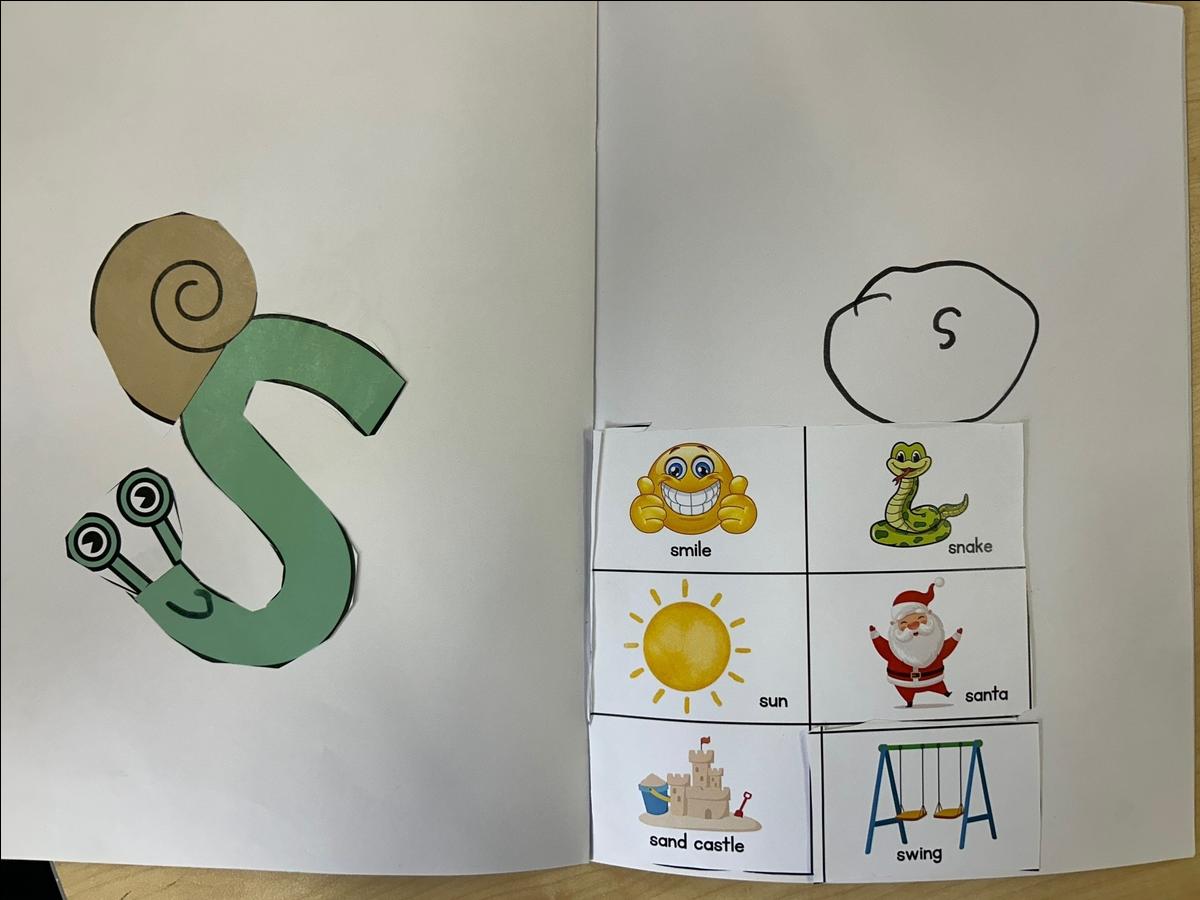
Explore: Students were given only pictures to sort.
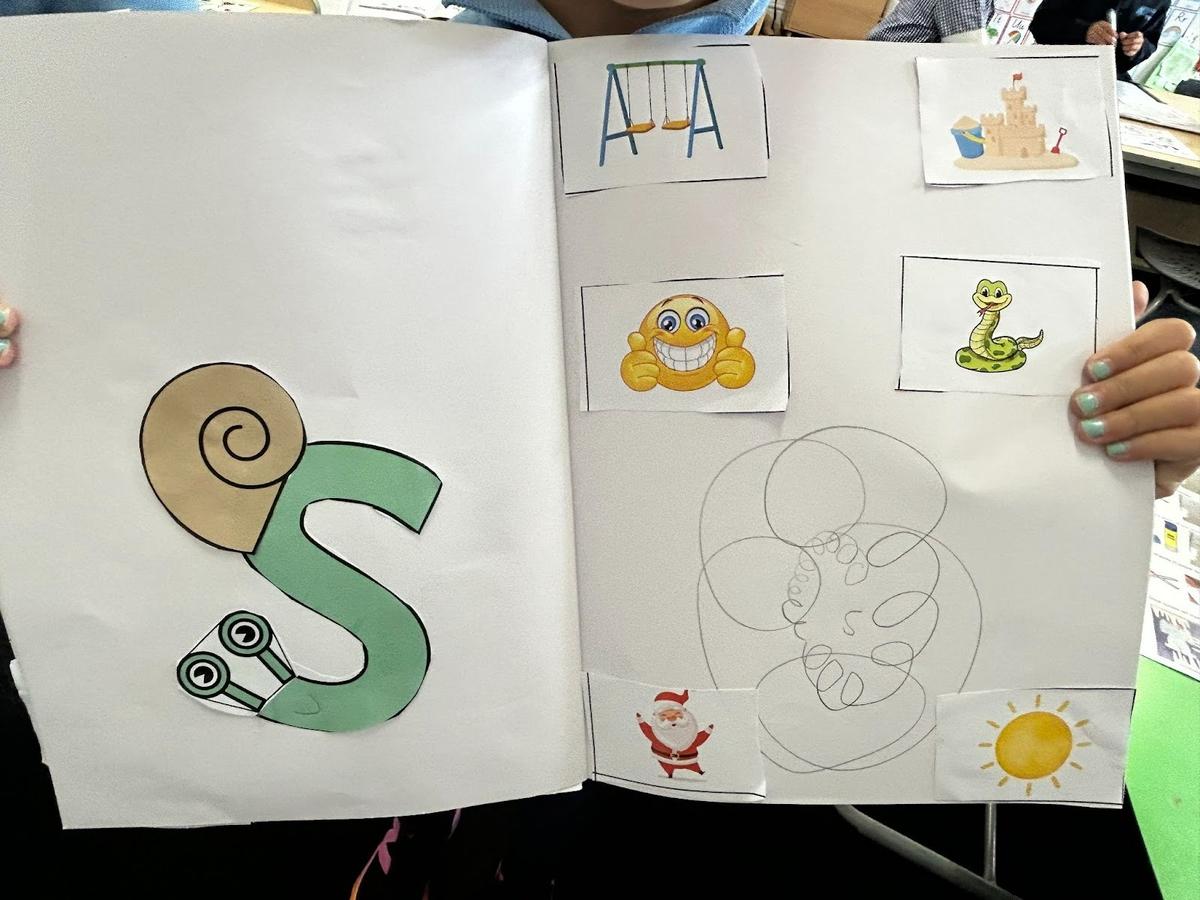
Extending: Students were given only pictures to sort and were encouraged to draw some of their own.
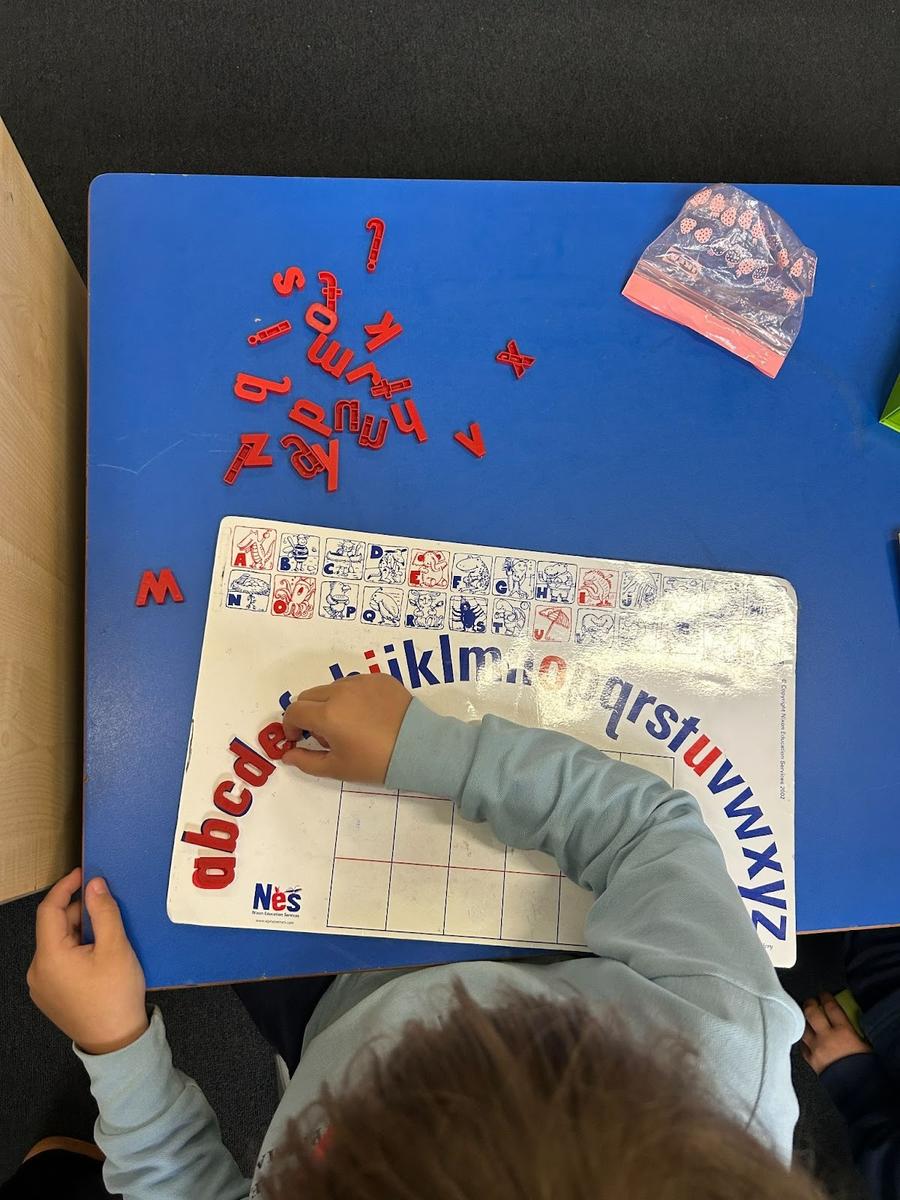
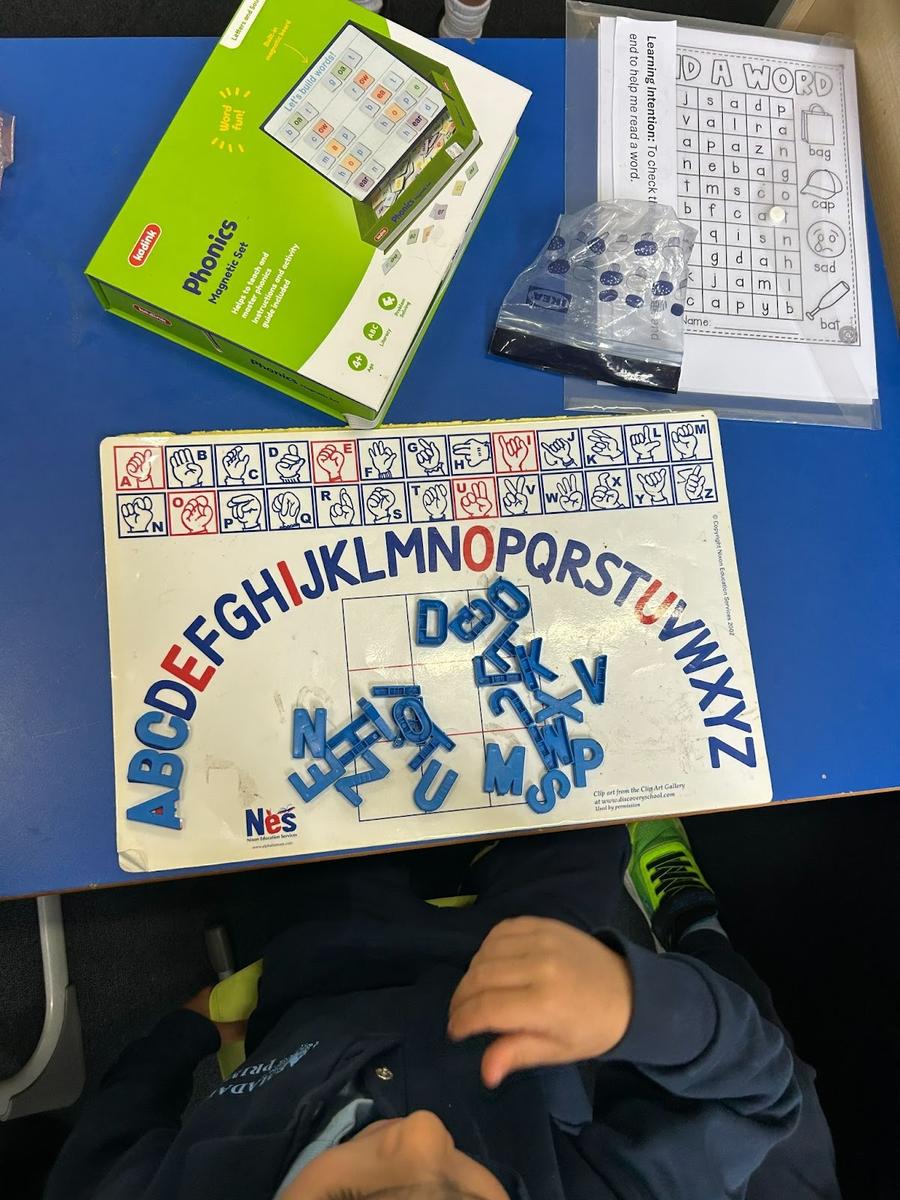
Activity 4 - Alphabet Mat
Learning Intention: To identify the name and common sound of each letter of the alphabet.
In this activity, students used an alphabet mat to match the uppercase or lowercase letters. Once they matched the letters, they pushed each letter up and said the letter name. It is important that students do not sing the alphabet, but instead say the name of the letter. They said each letter name starting from ‘A’ and repeated this but starting from ‘Z’ and working backwards. They then did the same thing but said the most common sound the letter makes.
When finished, students completed another letter activity (Find A Word) involving checking the beginning, middle and end of the word to help read the word.

What you can do now to continue the learning at home from this experience:
- Encourage your child to follow simple instructions at home (e.g., cooking, building LEGO, or craft activities). Talk about how they can use clues such as words, numbers, and pictures to help them.
- When reading, ask your child to look at the whole page and then zoom in on the small details, just like we did in class.
- Discuss push and pull forces you notice in everyday life. For example, pushing a swing, pulling open a door, or pushing a shopping trolley.
- Practice uppercase and lowercase letter recognition when looking at everyday things. Discuss the letter/s that come before and after. Discuss what sounds the letter makes.
Warm Regards,
Alyssa, Ruby and Julian
Prep Team
Alyssa.Thermos@education.vic.gov.au