
Learning Partnership

This Week's Learning Bulletin: Reading
Reading Success at Armadale Primary
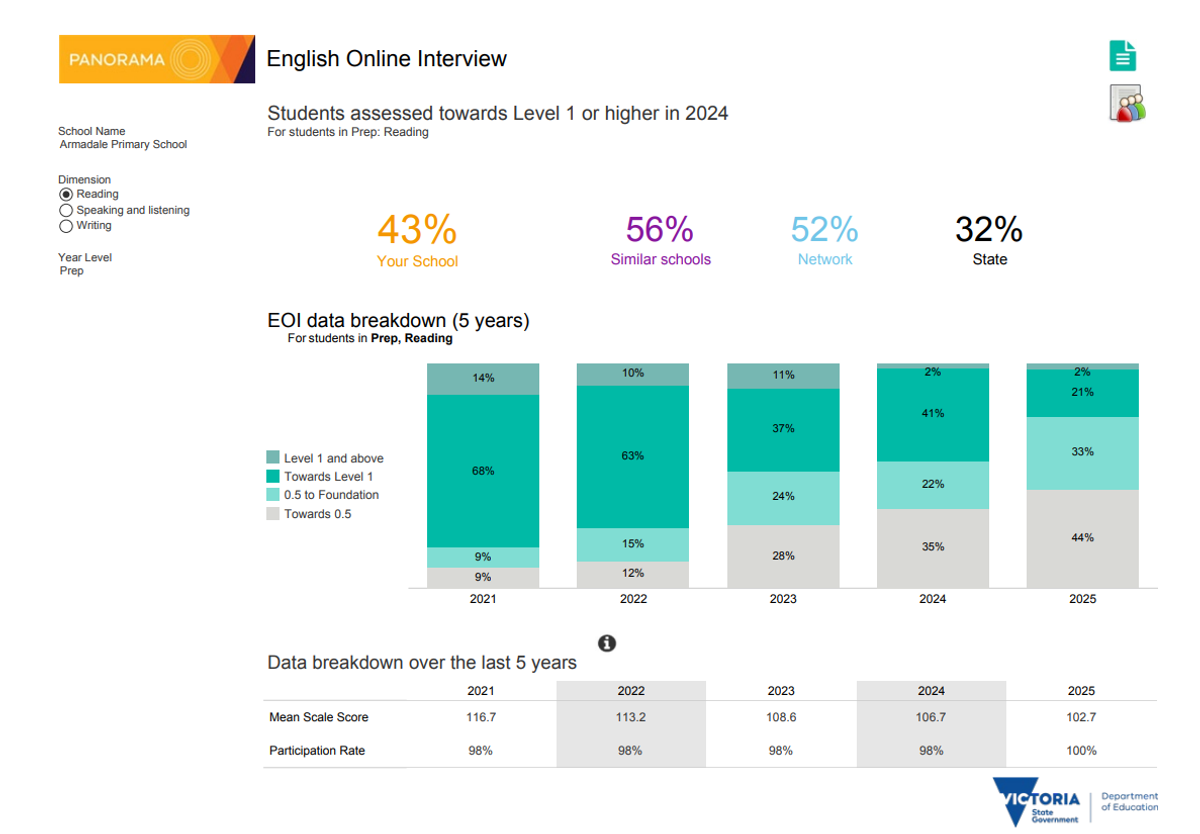
Many of our Prep students are still developing early reading skills when they start school, as shown by the English Online Interview below, where the children's skills are assessed in the first week of starting school. These are the entry skiils that our Prep team build on to strengthen and grow. This work continues in Year's 1 and 2. Then in Year 3 when those same children are assessed for Reading you can see the strength of our reading program as students progress through the years, by looking at our NAPLAN results.
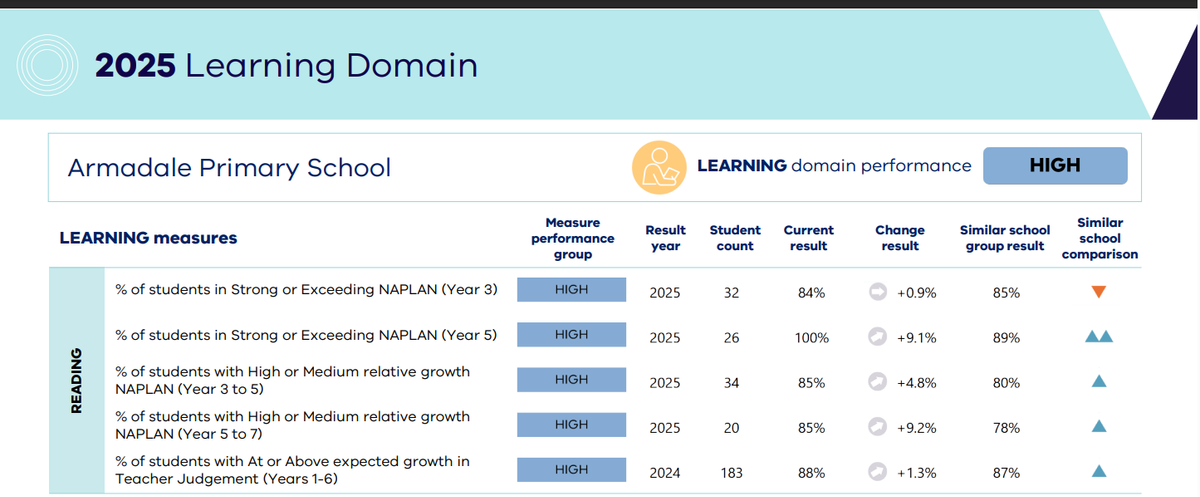
In 2025, 84% of our Year 3 students and 100% of our Year 5 students achieved in the top 2 bands; Strong or Exceeding levels for Reading. Both year levels performed at or above similar schools, demonstrating the effectiveness of our consistent focus on phonics, comprehension and fluency.
Students also showed strong growth, with 85% of Year 3 to 5 and 85% of Year 5 to 7 students achieving high or medium relative growth in Reading. These excellent results highlight how our evidence-based reading approach supports students to develop into confident, capable readers who continue to make strong progress over time.
THE READING PROGRAM AT APS
Our program is underpinned by the goal to promote willing and enthusiastic readers. However, this goal cannot simply be achieved at school. It is a partnership between home and school. Books alone do not teach children to read. Our program at school addresses a child’s ability to decode, comprehend and develop fluency. The video below outlines what we do at school, the role you can play at home and how you can support to promote a positive outlook towards reading.
The following snippet is taken from PETA (Primary English Teaching Association Australia) and offers some excellent advice on how you can support your child.
Children need ongoing quality experiences with books. Providing a regular, reading routine at home assists children in their quest for reading success.
The media often overstates the need to teach phonics. Phonics is the relationship between letters and sounds and is not the only strategy children use when reading unfamiliar words. There are other effective ways to assist children identify unfamiliar words, which includes the practice of encouraging children to look for meaning. Prior to saying anything to assist the reader, allow sufficient wait time. Readers need to look around for clues. The aim is to move the reader towards independence as quickly as possible and that does mean getting out of the way.
The Reading Journal, that your child brings home, is designed to support you to better understand how you can guide your child towards becoming a willing and enthusiastic reader.
Connie Apostolos-Thermos
Assistant Principal