STEM News

Dear fellow scientists,
Prep students are comparing the features of animals and humans, such as mouths, ears, and legs. Students worked independently to draw the missing animal parts (ears, mouths, or legs) and then coloured in their pictures.

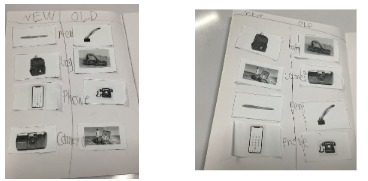
Grade 1 students are comparing how technology has changed from the past to the present by observing differences between old and new technology, such as cars, TVs, phones, bags, and cameras. Students worked independently to draw a T-chart in their workbooks with the headings old and new, and glued pictures in the correct column.
Grade 2 students are identifying how sound travels from a source to our ears. Students learned that sound travels in vibrations and labelled a diagram to show how sound travels through vibrations.

Grade 3 students are identifying sources of heat and describing how they heat objects. Students were able to name different sources of heat, including warm-blooded animals (e.g. humans), heated wheat bags, the inside of the Earth (e.g. lava), friction, the Sun, lamps, irons, candles, ovens, and kettles. Students also learned that jumpers, doonas/quilts, and blankets are not sources of heat; instead, they help keep our body heat close to us by stopping it from moving into the surrounding air, which helps keep us warm. Students used arrows to show the flow of heat when an object is heated. Listen or read this book on investigating heat: https://www.getepic.com/app/read/48405
Grade 4 students are learning to identify common materials and their properties. They can name the material and explain the main property that makes it useful. Watch this video: https://www.youtube.com/watch?v=TwXq9bLlZEM Materials and Their Properties for Kids (Educational Video for Kids).
Students in Grade 5 use words such as rotation and axis to explain how night and day occur on Earth. Working with table partners, students used the app Scratch to create an animation showing night and day and to draw a labelled diagram of Earth. Use this webpage to create your very own night and day animation: https://scratch.mit.edu/projects/editor/?tutorial=getStarted
Grade 6 students are learning to apply Science Inquiry Skills through an investigation exploring how temperature affects the diffusion of dye in hot and cold water. Students followed teacher guidelines to demonstrate their inquiry skills and worked safely and responsibly throughout the investigation.

STEM Team