
Faith and Mission
Today our College community celebrated Comfy Day, with students and staff wearing comfortable clothing as a simple sign of support for those in need of comfort and care. Donations will go to LifeLink, Catholic agencies that support a wide range of services across Perth, including assistance for families, young people and those experiencing hardship. In this simple act, we live our call to be people for others with compassion and generosity.
During the week, we gathered to celebrate NAIDOC Week, beginning with a Welcome to Country with Noongar Traditional Owner Mathew McGuire and coming together at our Secondary Assembly. During the assembly, we listened to Scott Darlow, who is a regular part of our Year 8 Reflection Days. Scott is an Aboriginal singer songwriter, public speaker and educator from Yorta Yorta Country, now based in Naarm Melbourne. Through music, storytelling and presentations, he works with schools and communities to share First Nations culture, history and perspectives. His message of FLUTE, Forgiveness, Love, Understanding, Tolerance and Empathy, offered a meaningful invitation for our community to reflect on reconciliation and unity. These moments invited us to recognise and celebrate the history, culture and contributions of Aboriginal and Torres Strait Islander Peoples, and to continue to listen, learn and grow in respect.
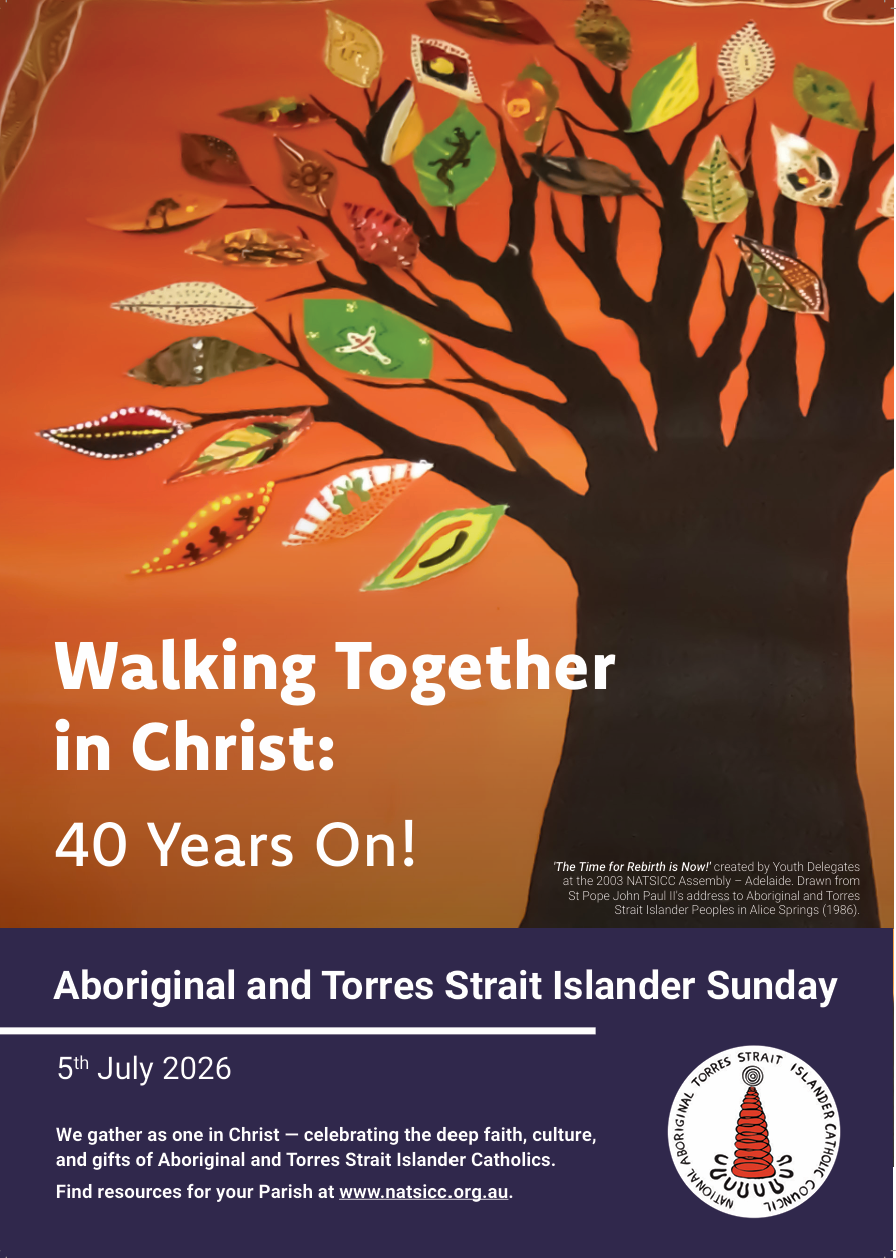
This coming Sunday is Aboriginal and Torres Strait Islander Sunday, a significant moment in the life of the Church in Australia. This year marks forty years since St Pope John Paul II addressed Aboriginal and Torres Strait Islander Peoples in Alice Springs and fifty years of NAIDOC Week. These milestones invite us to look back with gratitude and to move forward with hope, walking together in Christ with humility and care. As Pope John Paul II reminded us, Aboriginal and Torres Strait Islander Peoples are part of Australia and essential to the life of the Church, which is only fully alive when their contribution is received with respect and joy.
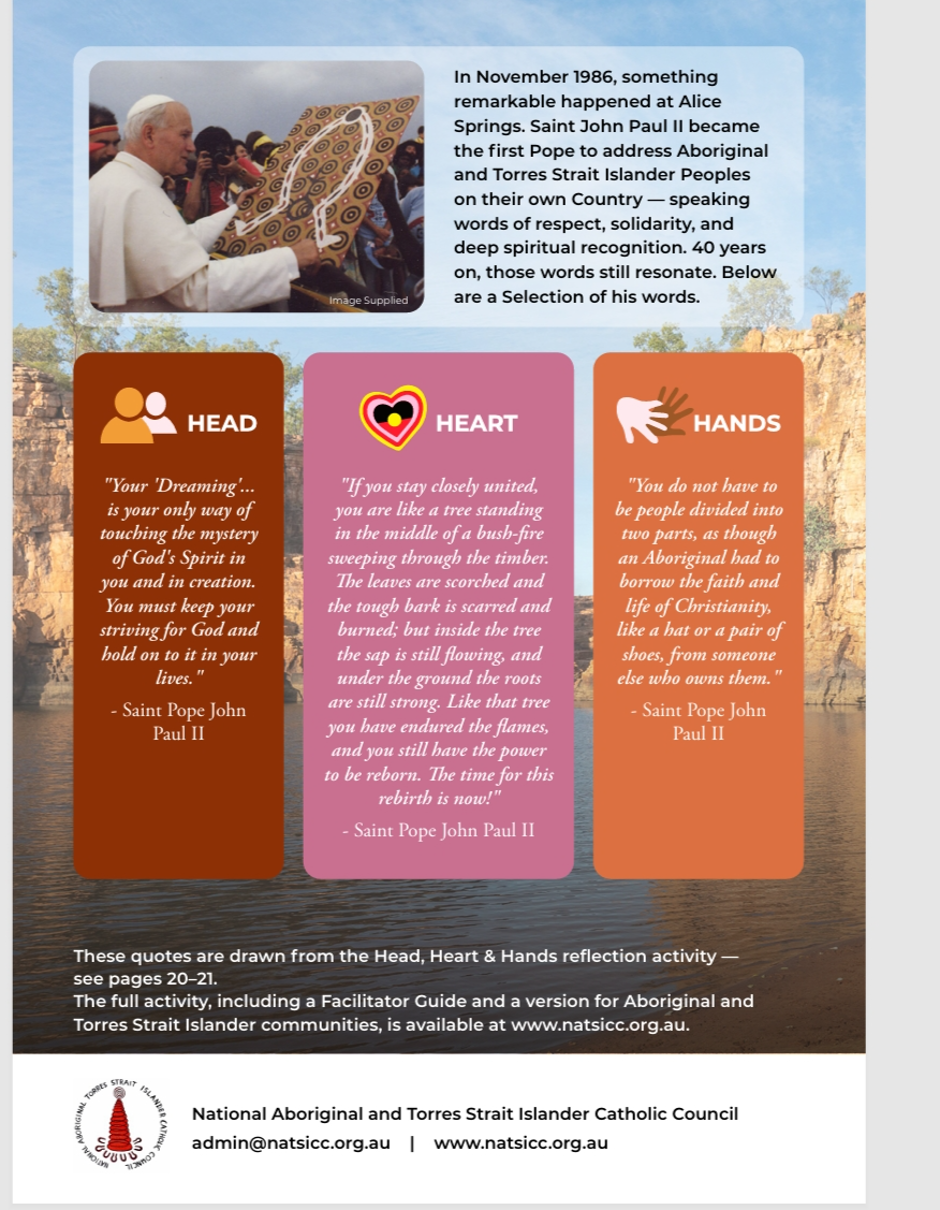
Families are encouraged to explore the NATSICC resources, including the reflection image above and the clip Deacon Boniface Reflection on Culture and Spirituality, taking time to reflect on how we can each contribute to a more welcoming Church.
Further resources can be found here: Aboriginal and Torres Strait Islander Sunday Resources 2026 — NATSICC

Janeen Murphy
Deputy Principal Faith and Mission
Community Mass
Thank you to the amazing Year 8 students who prepared this morning’s Community Mass, as we look ahead to NAIDOC week and Aboriginal and Torres Strait Islander (ATSI)[1] Sunday this weekend.
In Australia, on the first Sunday of NAIDOC week, the Church celebrates ATSI Sunday. This year’s theme, Walking Together in Christ: 40 Years On! looks back to the landmark address given by Pope St John Paul II at Alice Springs in 1986. The full speech can be found here: To Aborigines and Torres Strait Islanders of Australia in Alice Spring (November 29, 1986). Jesuit Fr Andrew Hamilton reflects on the Pope’s words in the context of today and notes that there is still unfinished business for all Australians, including our Church.
Looking ahead to next term, our first Community Mass will be on Friday, 24 July.
Community Mass details
- College Chapel
- All welcome!
- Fridays in term time
- Starts at 8:00am; concludes at 8:30am.
[1]ATSI Sunday is an initiative of National Aboriginal Torres Strait Islander Catholic Council (NATSICC), the Peak Advisory Body to the Australian Catholic Bishops on issues relating to Aboriginal & Torres Strait Islander Catholics.
Aboriginal & Torres Strait Islander Sunday
This year, Aboriginal and Torres Strait Islander Sunday celebrates the fortieth anniversary of Pope John Paul II’s powerful address to the Indigenous community at Alice Springs. It speaks just as powerfully to our own day.
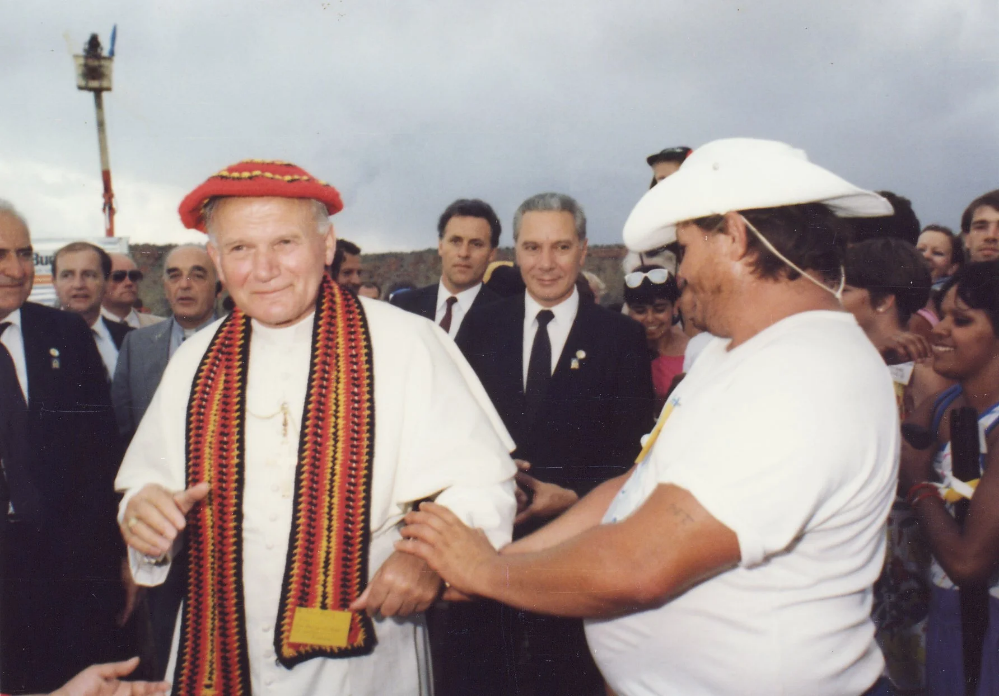
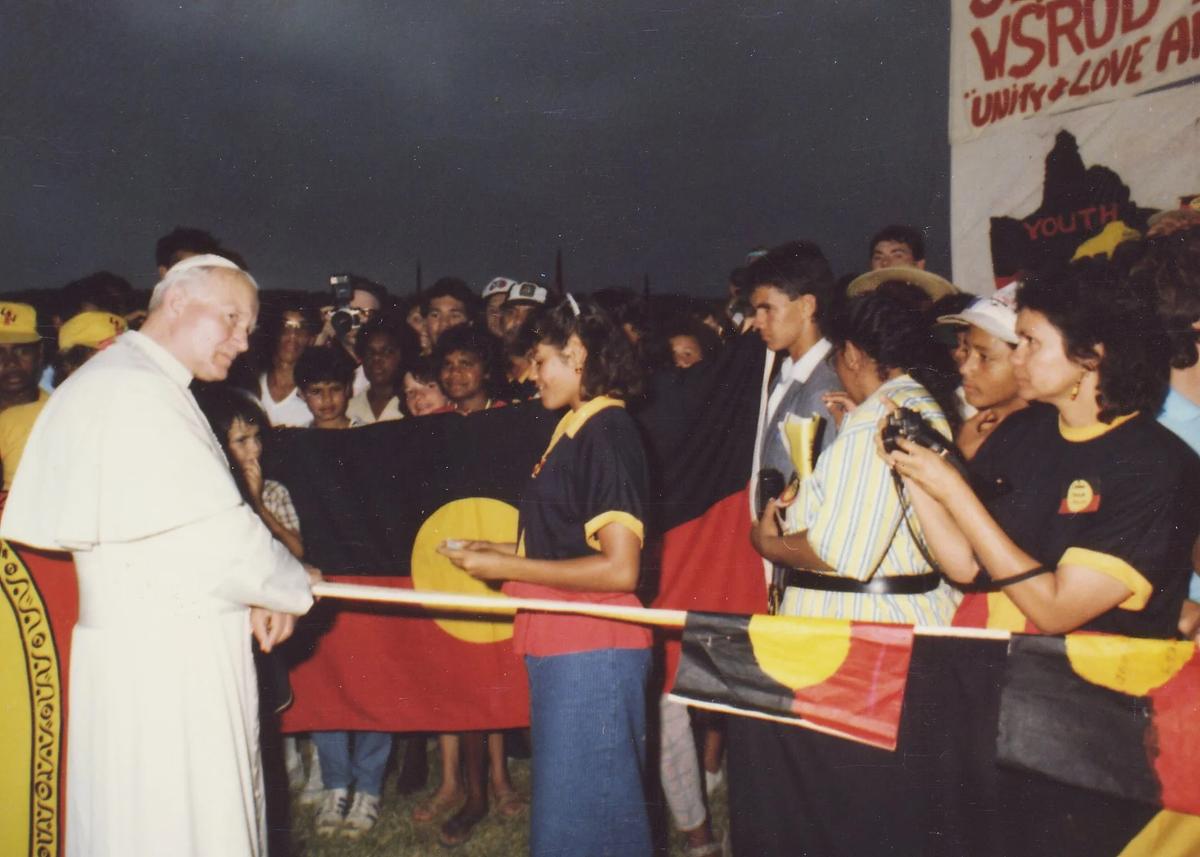
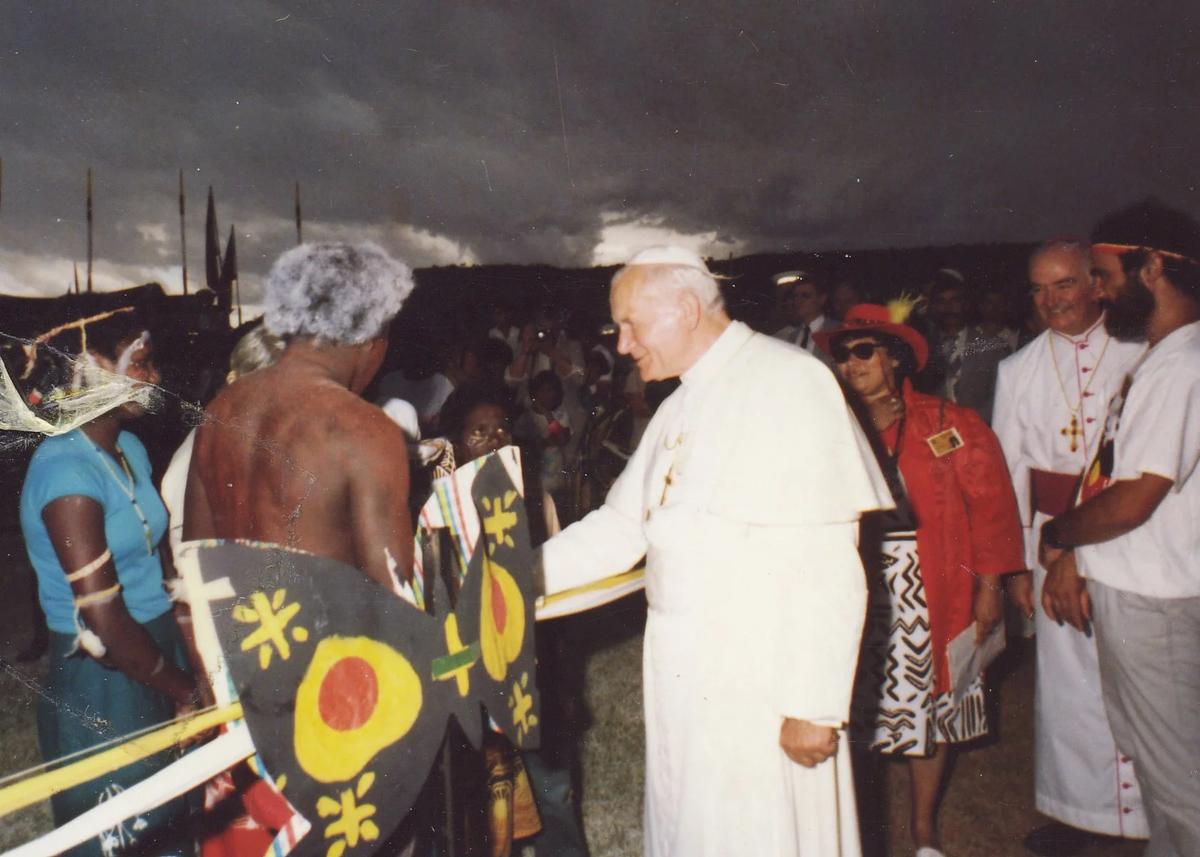
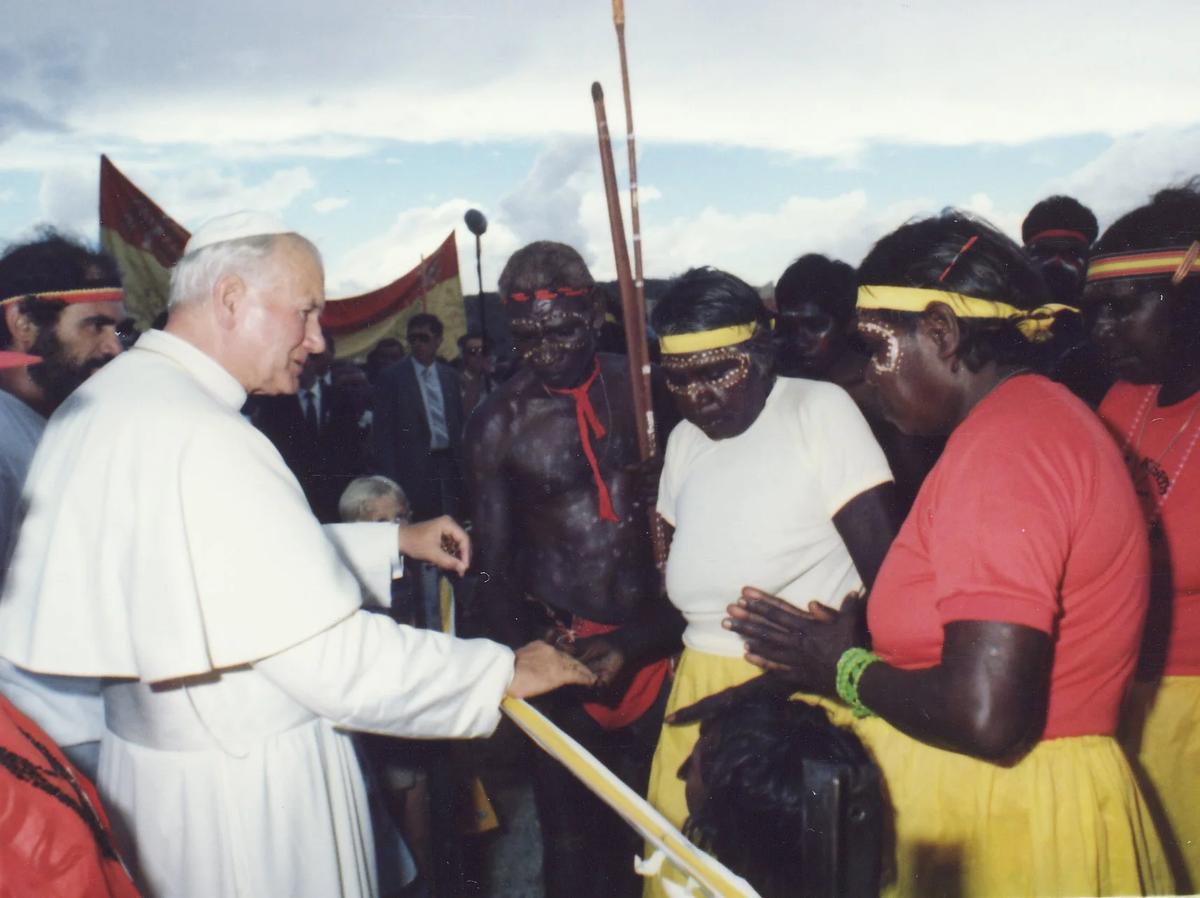
The Pope’s speech contrasts strongly with the message of many politicians and commentators today. They deny the distinctive claim that Indigenous Australians make on all Australians today. They wish to abolish welcome ceremonies, treaties and other signs of difference. For them the gap between the lives and opportunities of Indigenous Australians and others are evidence of inferiority.
In contrast to this contemptuous view of Indigenous lives from outside, the Pope attempted to represent Indigenous cultures from within and expressed wonder at what he saw. Their communities and culture are a continuing gift to be nurtured and not an annoying relic of an inferior race.
The Pope also appealed to a view of the world that is shared by Christian and Indigenous visions. Both Christians and Indigenous Australians inherit belief in a reality beyond the boundaries of our universe. The Pope said:
Your 'Dreaming', which influences your lives so strongly that, no matter what happens, you remain for ever people of your culture, is your only way of touching the mystery of God's Spirit in you and in creation. You must keep your striving for God and hold on to it in your lives.
Respect for the land in Indigenous culture mirrors the Christian respect for God’s presence in creation. It has much to say to a world threatened by the consequences of its unbounded trust in technology. The Pope told his audience:
You lived your lives in spiritual closeness to the land, with its animals, birds, fishes, waterholes, rivers, hills and mountains... You did not spoil the land, use it up, exhaust it, and then walk away from it. You realised that your land was related to the source of life.
(John Paul, 2)
When surveying the effects of European invasion on Indigenous peoples, Pope John Paul sees them through the colonists’ and Indigenous eyes. He avoids seeing them as enemies. He is unsparing, however, in listing the effects of colonisation on Indigenous cultures – dispossession of traditional lands and loss of customs, the forced separation of children from parents, migration to towns with no space for kinship practices, inability to find work, restricted access to education, and daily experience of discrimination.
The culture which this long and careful growth produced was not prepared for the sudden meeting with another people, with different customs and traditions, who came to your country nearly 200 years ago. They were different from Aboriginal people. Their traditions, the organization of their lives, and their attitudes to the land were quite strange to you. Their law too was quite different. These people had knowledge, money and power; and they brought with them some patterns of behaviour from which the Aboriginal people were unable to protect themselves.
The effects of some of those forces are still active among you today. Many of you have been dispossessed of your traditional lands, and separated from your tribal ways, though some of you still have your traditional culture. Some of you are establishing Aboriginal communities in the towns and cities. For others there is still no real place for camp-fires and kinship observances except on the fringes of country towns. There, work is hard to find, and education in a different cultural background is difficult. The discrimination caused by racism is a daily experience.
(John Paul, 6-7))
If Pope St John Paul II were to speak today, he would certainly also note the tireless work of the leaders of Indigenous communities to preserve culture and secure justice, and the beneficial effects of the access to higher education of future leaders. He would also have deplored the racism evident in Australian society and promoted by politicians.
At Alice Springs Pope John Paul addressed the Indigenous Catholic community. His message was radical in affirming the rights of people to pray in the words and images of their communities.
All over the world people worship God and read his word in their own language, and colour the great signs and symbols of religion with touches of their own traditions. Why should you be different from them in this regard, why should you not be allowed the happiness of being with God and each other in Aboriginal fashion?
(John Paul, 12)
This question is heartfelt. It continues to hang in the air today and has been difficult because there were almost no Indigenous priests. In addition, the bishops and priests appointed to the churches where Indigenous Catholics met had generally little or no familiarity with Indigenous language and culture. There is unfinished business.
The Pope’s speech continues to challenge all Australians today. In response to a political culture that encourages hostility and blanket dismissal of people and positions with which we disagree, it urges us to attend to the people who differ from us and to ask where their hostility comes from. Politics is about winning people, not winning arguments. To do that we need to seek to understand our opponents from within.
© Andrew Hamilton SJ