
Learning and Teaching
Dear Families,
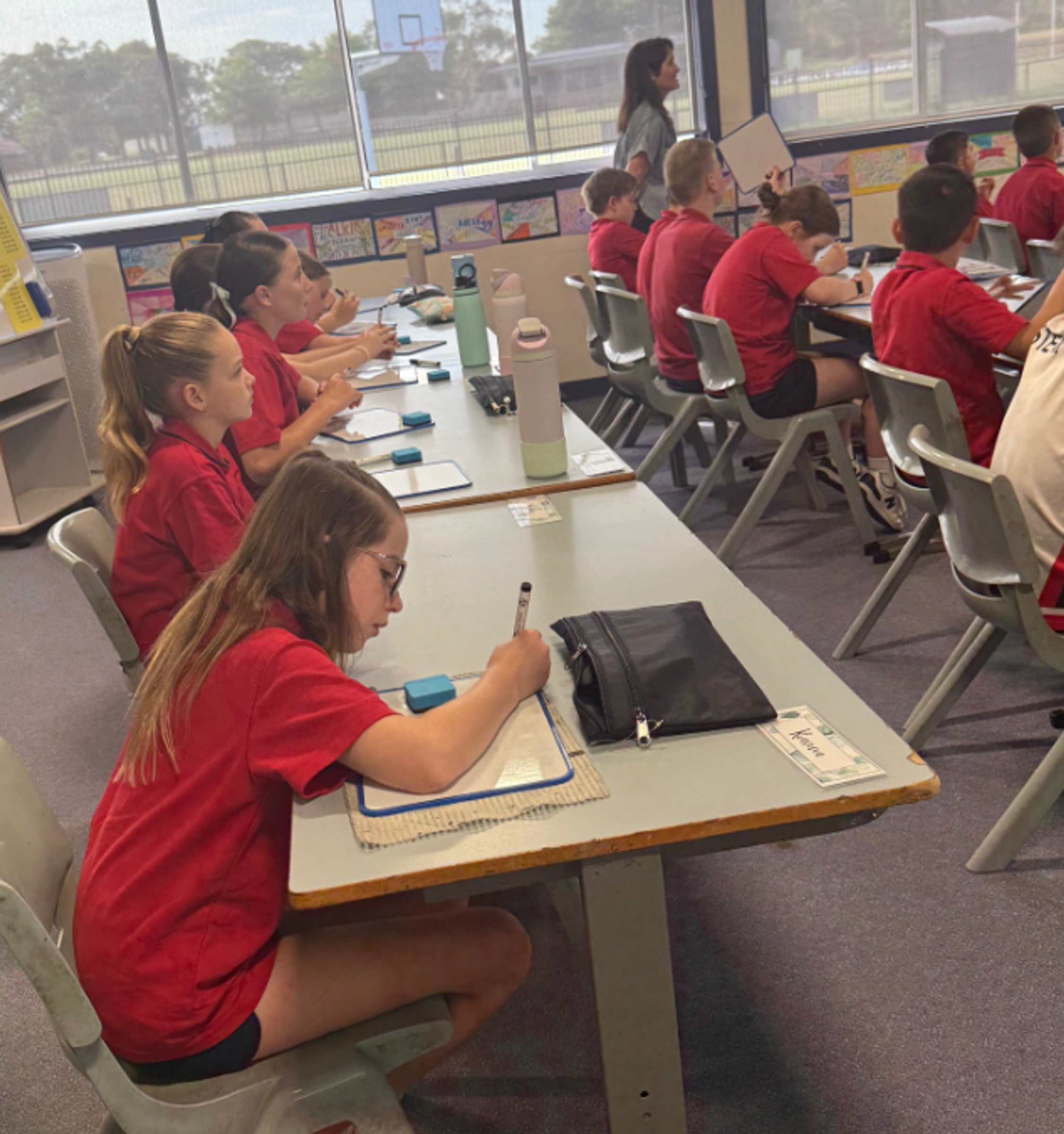
You may have noticed, or your children may have mentioned, that our classrooms at Lysterfield Primary School look a little different this year.
Calmer walls.
Desks in rows.
Teachers at the front more often.
Clear routines.
Structured lessons.
Students sitting, listening, practising, thinking.
From the outside, it could be mistaken for a step backwards; a return to “back to basics.”
You may even have heard:
“What happened to the creativity?”
“My child says school is boring.”
These questions are understandable. They deserve to be taken seriously.
So let us reassure you clearly: This is not a step backwards. It is a step forward - grounded in what we now know about how children learn best.
The move to explicit instruction might feel different at times, especially when your child talks about lessons being straightforward or repetitive. But that is intentional: they are building fluency and understanding first so they can apply their learning to deeper, more creative thinking later.
This shift is not about narrowing the curriculum. In fact, it allows us to expose students to greater depth, precision and challenge than ever before.
🤔 So Why Do Some Children Say They’re “Bored”?
When children report that something is “boring,” it doesn’t always mean the learning isn’t valuable. Here are a few common reasons this can happen in a rigorous curriculum:
⭐ They’re working in a zone of mastery first: Explicit instruction often starts with foundational skills and guided practice. This can feel repetitive because students are intentionally building fluency before tackling open-ended tasks.
⭐ They’re engaging in retrieval practice: Students who are retrieving learnt information might feel like 'I already know this', but that is a good thing! Consolidation, review, retrieval and purposeful practice all work to ensure learning sticks in long term memory.
⭐ They’re comparing it to unstructured learning: When children move from discovery-based tasks to structured, teacher-led instruction, it sometimes feels different and less instantly exciting - even though it’s more effective at helping them learn and retain knowledge.
⭐ They’re ready for the next step: Sometimes a child may actually be ready for extension. Classroom teachers use ongoing assessment to provide deepening tasks or enrichment for students who demonstrate mastery.
So what may feel “boring” in the moment to a child can actually be the bedrock upon which confident, independent thinking is built.
If your child comes home saying they are bored, it might be a great chance to ask:
📌 “What exactly were you learning today?”
📌 “Was it something you already understand really well?”
📌 “Is there a part that felt easy or a part that made you think hard later in the lesson?”
It is valuable to engage in conversations that help your child understand the importance of practise in the learning process - that engaging in regular and ongoing practise may not feel novel or exciting, but it will significantly support their future learning.
These conversations can help us work together to ensure your child is both supported and challenged in their learning.
Have a wonderful weekend,
Zahra Harvey | Learning Specialist