
From the Deputy Principal
Lyndal Tewes

From the Deputy Principal
Lyndal Tewes
Building Positive School Communities: Understanding Restorative Practices and SWPBS
As parents and caregivers, you play a vital role in shaping not only your daughter’s academic success, but also their social and emotional development. Schools today are increasingly adopting approaches that focus on building respectful relationships, teaching positive behaviour, and repairing harm when things go wrong.
As you would be aware, School-Wide Positive Behaviour Support (SWPBS) is a proactive approach that our College has adopted to create safe, supportive learning environments. Rather than focusing only on correcting misbehaviour, SWPBS emphasizes:
Clearly teaching expected behaviours
Recognizing and reinforcing positive actions
Using consistent responses to behaviour across the school
Restorative Practices focus on relationships and repairing harm. When conflict or wrongdoing occurs, the goal is to:
Help students understand the impact of their actions
Encourage accountability
Restore relationships between those involved
This might involve a guided conversation where students reflect on questions like:
What happened?
Who was affected and how?
What can be done to make things right?
These conversations help students develop empathy, responsibility, and problem-solving skills which are important tools for life.
SWPBS and Restorative Practices compliment each other. SWPBS builds a strong foundation by teaching and reinforcing positive behaviour, while Restorative Practices provide a meaningful way to respond when things go wrong.
These two frameworks, help create a school culture where:
Expectations are clear
Positive behaviour is celebrated
Mistakes are treated as opportunities for learning and growth
When schools and families work together, children receive consistent messages about behaviour, relationships, and responsibility. By supporting Restorative Practices and SWPBS, we help young people grow into respectful, resilient, and compassionate individuals.
Together, we can continue building a positive and inclusive community for all students.
Helping Keep Children Safe: Understanding the “Tell Someone” Campaign
As parents and carers, nothing is more important than the safety and wellbeing of our children. A Tasmanian initiative called the Tell Someone campaign is working to support families, children and communities to recognise, respond to and prevent child sexual abuse.
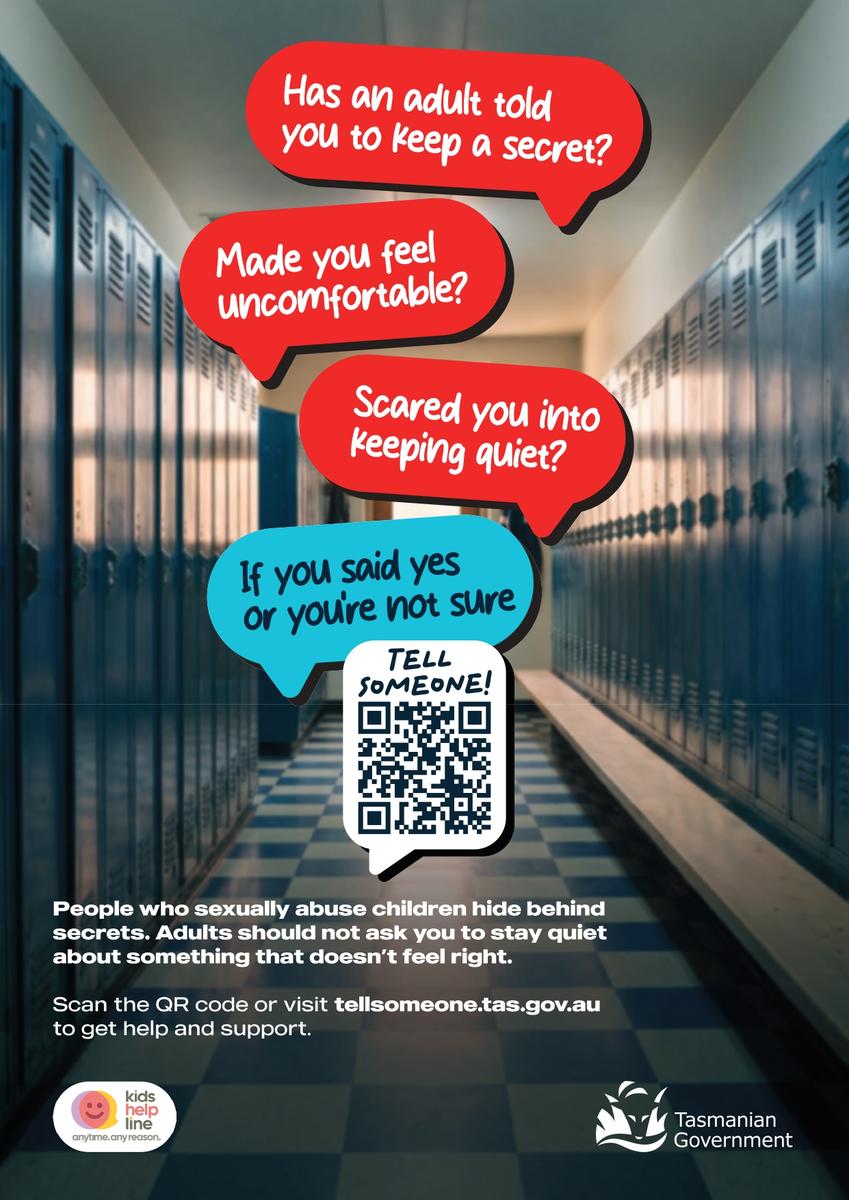
The campaign delivers a simple but powerful message: if something doesn’t feel right, it’s important to speak up and tell someone. The Tell Someone campaign is a statewide awareness initiative designed to help both children and adults identify unsafe situations, including grooming and abuse, and take action early.
It provides clear, age-appropriate information for young people and practical guidance for parents and carers. The goal is to ensure children feel confident to speak up and that adults are ready to listen, believe them, and act. We have adopted this campaign as a College and posters have been distributed around the College.
The Tell Someone campaign aims to break this silence by:
Encouraging children and young people to seek help when they feel unsafe
Supporting adults to recognise warning signs
Promoting a community culture where concerns are taken seriously
When children know they will be heard and supported, they are more likely to speak up and early action can prevent harm.
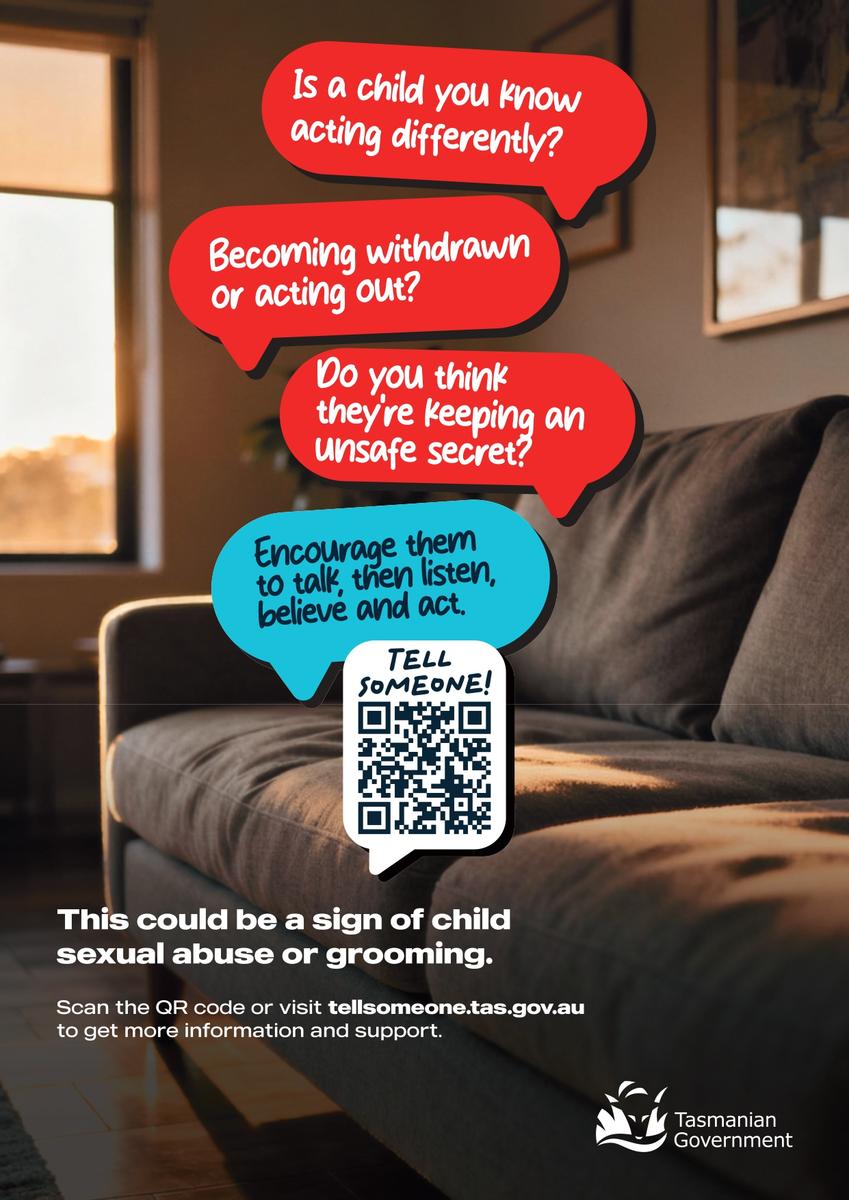
How parents and carers can help
Parents play a crucial role in keeping children safe. The campaign offers guidance to help you:
1. Start open conversations: talk regularly with your child about safety, boundaries and respectful relationships. Use simple, age-appropriate language and reassure them they can always come to you.
2. Know the signs: changes in behaviour, withdrawal, fear of certain people or places, or unusual knowledge about adult topics may be signs that something is wrong.
3. Listen and believe: if a child shares a concern, stay calm, listen carefully, and reassure them they’ve done the right thing by speaking up.
4. Take action: if you are worried about a child’s safety or wellbeing, it’s important to report concerns and seek support.
Keeping children safe is a shared responsibility. Schools, sporting clubs, community groups and families all play a part in creating environments where children feel safe, respected and heard. The Tell Someone campaign empowers all of us to act early and protect children from harm by raising awareness and encouraging open conversations.
To access resources and learn how you can support your child, visit: Tell Someone website
Locker Reminder for Years 8–10 Students
I would also like to thank families for their ongoing support in helping us maintain a safe and organised school environment. As communicated via EdSmart last week, all students in Years 8–10 are required to have a lock secured on their allocated locker. Using a lock is an important step in protecting personal belongings and supporting a respectful and secure shared space for all students.

If your daughter does not yet have a lock, these are readily available for purchase at most supermarkets, Officeworks or Office National. A standard 3- or 4-digit combination lock is recommended for ease of use. For students who may need immediate assistance, a limited number of combination locks are available to borrow in the short term from Student Services.
If a lock has not been arranged as yet we will complete an audit and the College will provide one at a cost of $15.00, which will be added to your April Fees Invoice. If you have any questions or require support, please don’t hesitate to contact the College Office.
We appreciate your cooperation in helping us keep our school community safe and organised.