
Literacy
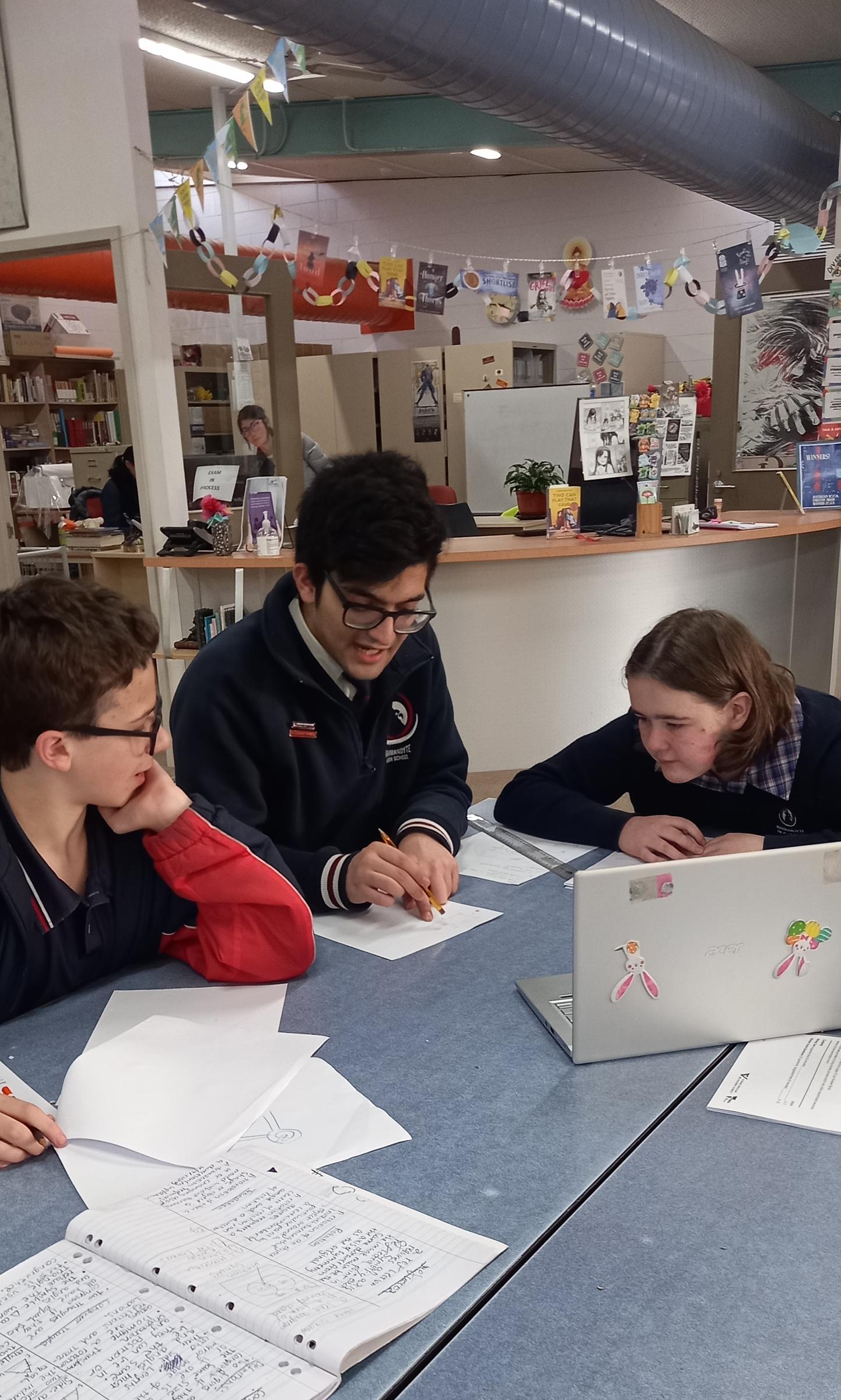
The importance of writing
Writing is so incredibly important: It keeps your thinking clear, and your communication precise.
But don’t just take my word for it – NTNU (Norwegian University of Science and Technology) analysed neurons of participants in a study and confirmed that writing “reinforced memory and learning pathways.”
Vanderbilt University confirmed: writing creates a conscious action that builds on existing knowledge and “made it easier to stay engaged and grasp new concepts”. They realised that writing words by hand creates “widespread connectivity across multiple brain regions.” Typing, however, led to minimal activity (if any!) in some areas of the brain.
So, what can we learn from this? We need to write it down if we want to remember things!
At Warrandyte High School we utilise the 6 + 1 Traits of Writing (ideas, organisation, voice, word choice, sentence fluency and conventions), which is grounded in more than 70 years of research by the Northwest Regional Education Laboratory. We utilise ‘Write to Learn’ strategies in all subjects across the curriculum. This means our students are encouraged to write low stakes responses regularly to help students learn subject matter, clarify and organise their thoughts and improve their retention of content.
Currently in English, our junior students are using their ‘Write to Learn’ strategies to persuade other students that their pizza topping is best as part of the persuasive and creative unit. Our senior students are looking at exemplars of good pieces of writing to then emulate and mimic the writing style.
But these strategies are not just used in English classes!
Across the curriculum, we use a range of strategies, including graphic organisers (such as lotus diagrams and mind maps), note-taking approaches (such as Cornell notes and outlines), reflective activities (such as exit slips and think-pair-share), and structured lists (such as diamond nines, ABC lists, and top ten rankings).
So, what can you do to help your young person write more at home?
- Encourage your teenager to complete their homework by hand where practical. As well as supporting their learning, this can reduce distractions from devices and limit reliance on AI tools.
- Encourage your young person to read extensively so they become familiar with different styles of writing.
- Utilise professionally published texts (rather than self-published books, eBooks or web novels. These can be fun to read but are frequently lacking in the ‘good grammar’ department.)
- Practise emulating these different styles of writing.
- Encourage them to write often.
- Assist them to edit their work thoroughly.
- Promote the idea of them reading their work out loud (even if it’s only to the pet dog) – it’s easier to pick up mistakes when you read aloud.
Use writing prompts – your English teacher probably has a whole collection of them, and they’re just waiting to be used to write something fun!
Having strong writing skills isn’t just something we use in school – it’s a life skill. It will allow our students to communicate clearly, think critically, and express their ideas with confidence. With ongoing support, all our young people can make meaningful progress and develop confidence with their writing.
“Start writing, no matter what. The water does not flow until the faucet is turned on.” ― Louis L'Amour
Fiona Dzur
Literacy Learning Specialist and Coach