Numeracy Update
Welcome back to term 2. I hope you and your family had a lovely break and enjoyed quality time together.
Around the school, we are learning:
Our Foundation students are learning to break collections of up to 10 objects into different parts and describe the part-part-whole relationship. For example, they might split a group of 6 counters into 4 and 2 and say, “6 is 4 and 2 more,” or “6 is 2 and 4.” They also explore other ways to make the same number, such as 5 and 1 or 3 and 3.
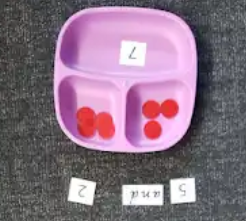
You can support your child at home by using everyday items like pegs, counters, blocks, or LEGO. Ask your child to split a small collection into two parts and describe what they see, for example, “4 and 3 make 7.”
These simple activities help build a strong foundation in number sense and early addition skills.
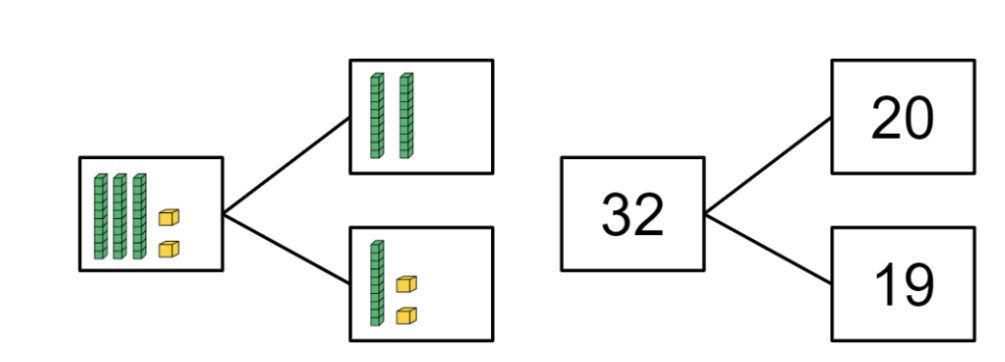
Our Grade 1 students are learning to connect number names, numerals, and quantities, and to order numbers to at least 120. They are also exploring how numbers can be broken into parts, particularly understanding that two-digit numbers are made up of tens and ones.
You can support your child at home by using everyday collections. Ask them to gather a group of items larger than 10 and make groups of ten. Then have them describe how many tens and ones they can see. For example, 37 is made up of 3 tens and 7 ones, or 30 and 7.
If your child is ready for an extra challenge, they can explore different ways to rename the same number. For example, 37 can also be thought of as 2 tens and 17 ones, or 1 ten and 27 ones.
You could also ask your child to work out what is one more or one less than a number, and if they are ready, ten more or ten less. Encourage them to use materials to help—adding one, taking one away, adding ten, or taking ten away to see how the number changes.
These activities help build a strong understanding of place value and support confidence when working with numbers.
Our Grade 2 students are currently learning to order and represent numbers to at least 1000. They are also developing their understanding of place value by breaking numbers into hundreds, tens, and ones, and learning how to rearrange and rename numbers to support their calculations.
You can support your child at home with simple activities. Try reading three- and four-digit numbers aloud and asking your child to write them down. You could also give them a few numbers to order from smallest to largest.
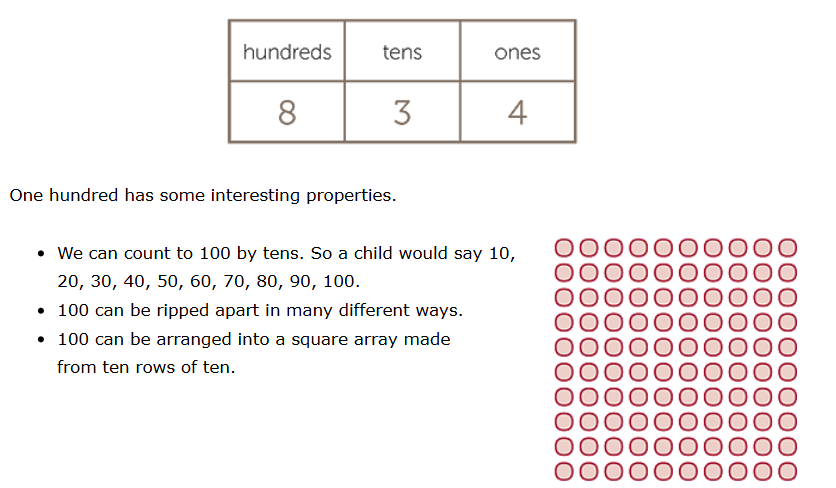
Another helpful activity is to explore how numbers can be expanded and renamed. For example, 348 can be broken into 3 hundreds, 4 tens, and 8 ones. It can also be renamed as 34 tens and 8 ones.
These activities help strengthen your child’s understanding of place value and build confidence when working with larger numbers.
Our Year 3 students are currently learning to identify and work with fractions such as ½, ⅓, ¼, ⅕ and 1/10. They are exploring fractions of collections and shapes, and learning how fractions can be combined to make a whole.
You can support your child at home through everyday experiences. Try cutting food like sandwiches, toast, oranges, or apples into different fractional parts and ask your child to describe what they see. You could also ask questions like, “Which is larger—one sixth of an apple or one quarter?”
Encourage your child to combine fractions, for example, “One fifth plus two more fifths equals how much?” You can also explore missing parts by asking, “If you eat 2 fifths of the apple, how much more do you need to eat to make a whole?”
These simple conversations help build your child’s understanding of fractions and how they relate to real life.
Our Grade 4 students are currently learning about decimals. They are exploring how place value extends to tenths and hundredths, and using decimal notation to read, write, and represent these numbers.
A great way to support your child at home is by using money. While money is helpful, it’s important to remember that it’s just one way to represent decimals. Because decimals can be quite abstract, students benefit from using visual models and hands-on experiences to build a deeper understanding. 100 grids are also very good to use as are Decimats.
You might like to try an activity like this: Milly has $1.35 in her wallet. What different combinations of dollars and cents could she have? Record all the possibilities you find.
Through activities like this, children begin to see important place value relationships, such as:
- 10 one-cent coins make 10 cents
- 10 ten-cent coins make 1 dollar
These understandings help students make sense of how decimals work and build confidence in using them in everyday situations.
Welcome back from camp our Senior students. I look forward to working with you this week.
Dates to remember: APSMO - Olympiad one- Thursday May 7th
Leader | Colleen Monaghan