
Numeracy Update
Our children in years 4-6 have been preparing for the Australasian Problem Solving Mathematics Olympiad this term. The first event will be on May 6th
Parent Discount
There is also a 10% discount available for parents who wish to purchase any resource books to support their child at home. Their discount code is included in the 2026 Letter to Parents, which can be found in the Welcome Package for Maths Olympiad, Maths Games and Maths Explorer teams in the Portal (under the Contest Administration menu). Please ensure that you have downloaded the letter and sent a copy home with participating students.
I read this blog recently and thought it was worth sharing. I know most home learning encourages students to practice their times tables, counting, skip counting and basic facts, and hopefully, after reading this, you will see why we harp on about the need to have students fluent with these skills.
Happy reading and happy holidays.
Leader | Colleen Monaghan
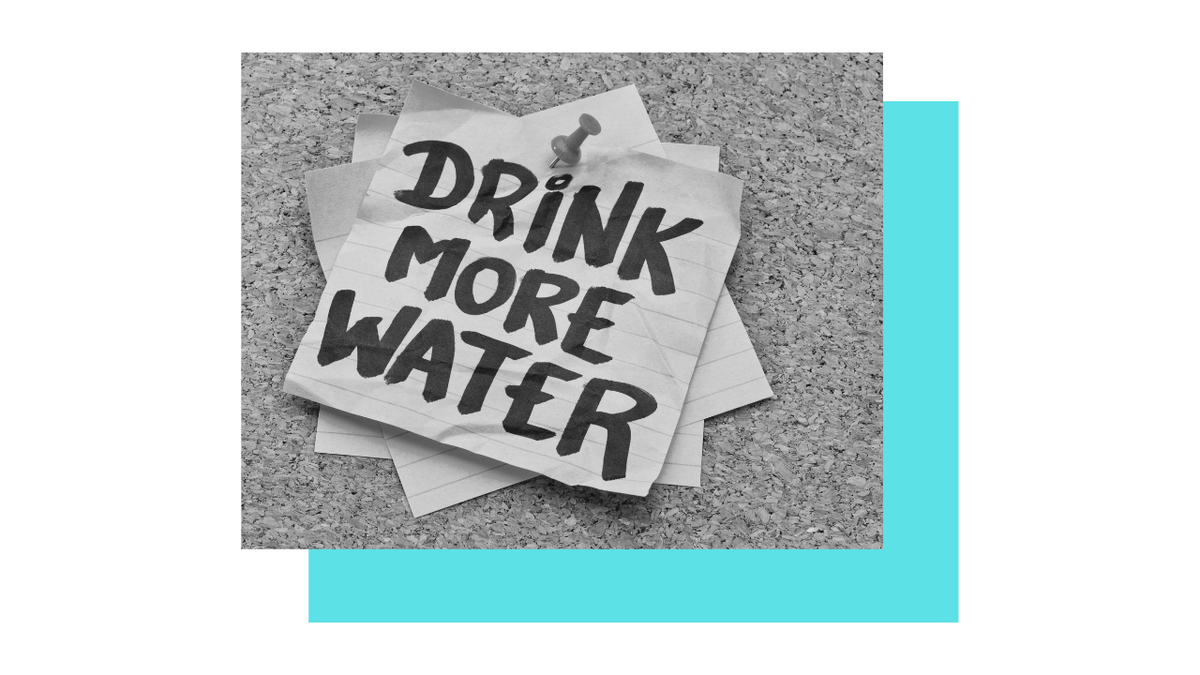
Drinking Water | Jul 24, 2025 by Dr Ange Rogers
I am terrible at staying hydrated. I don’t drink enough water, and as a consequence, I often end up with a headache.
A few weeks ago, I was having a routine check-up at the doctor, and she asked how much water I drink per day. My answer was ‘hardly any’.
I think she was mildly horrified, considering I had just told her I run 10km most mornings!
She advised me to make a concerted effort to drink more water. Since then, I have tried really hard to stick to this plan. I now have a drink bottle next to me and am (more) regularly sipping throughout the day.
When I looked up the daily recommendations for water intake, the rule of thumb that stuck with me was 1 litre per 30kg (maths is everywhere!). According to Google, this needs to increase in hot/humid climates, with exercise, when you are sick, pregnant or breastfeeding.
When I was breastfeeding my children, I remember imagining that my body was magically transforming the water I was drinking into milk. While physiologically this isn't quite accurate, (breast milk is made from the nutrients in your blood... nonetheless, I still think the whole process is absolutely amazing!). Imagining the water-milk transformation appealed to my visual brain and certainly made me prioritise hydration!
Since my breastfeeding days are behind me, I have slowly dropped off the 'hydration bandwagon'. But going to the doctor reminded me to hop back on!
Since drinking more water, I have been amazed at how much better I feel. While my action (drinking water) achieved the intended benefit of reducing my headaches, I am most surprised by the unintended benefits- I feel like I have more energy, I feel less 'stiff' in my joints, and I seem to have a 'clearer' brain (mostly)!
These unintended benefits that made me think about other scenarios where we may experience the same 'bonus' perks.
Maths fluency immediately popped into my mind.
Fluency has a variety of definitions in the research space. From the Behaviourist perspective, fluency is: a combination of accuracy plus speed that characterises competent performance (Binder, 1988b, 1990a).
From a Constructivist perspective, Procedural Fluency is defined as the ability to apply procedures accurately, efficiently, and flexibly (NCTM 2014, 2020).
These are two similar, but different, interpretations of essentially the same word. In a way, it is like 'fluency' is a homonym. It is the same word but can have different meanings for different people. As you can imagine, this can easily lead to confusion and misinterpretation.
My definition of fluency is being able to respond with ease and speed. Whether this is in the area of basic facts, renaming numbers in place value or being able to read 6-digit number, I believe students need to be given the opportunity (through targeted and repeated practice) to develop the fluency required to perform key skills and procedures in maths. Do I want students to display flexibility with numbers? Absolutely, I do, but I believe this develops alongside being able to respond with ease and speed.
For me the intended outcome of developing fluency is to improve student achievement in mathematics, however, like with staying hydrated, I see several other 'unintended' benefits that emerge from a focus on fluency.
These are:
1. Increased confidence - correctly or incorrectly, students consider classmates who are 'fluent' at maths to be 'good' at maths. Of course, as teachers, we need to challenge this mindset and help students to see we also value deep thinking, but the reality is, it is much easier to do the deep thinking if you have fluency!
2. Reduced Maths Anxiety - Maths anxiety can be a bit of a chicken or egg scenario. Many students with Learning Difficulties in Maths display characteristics that suggest they may have maths anxiety. Do these anxious feelings arise because the student struggles with maths, or do they struggle with maths because of their maths anxiety? For me there are many contributing factors, but in my experience helping students to develop their fluency (when and only when they have moved through the Aquisition phase of the Instructional Hierarchy) increases their confidence and feeling of self-worth and thus reduces their feelings of maths anxiety.
3. Improved Flexibility with numbers- The more students develop fluency, the more they can begin to see the 'forest through the trees'. They begin to see the 'big picture', because they are not taking up huge amounts of working memory trying to 'remember' disconnected, random facts. Making connections and developing flexibility is key to developing Number Sense.