Curriculum Update

Blending
Helping Your Child Learn to Read: Blending Sounds
At school, one of the most important skills children develop when learning to read is blending. Blending is when your child puts together individual sounds (phonemes) to read a whole word. It’s a key step in learning to decode words and become a confident reader.
What is Blending?
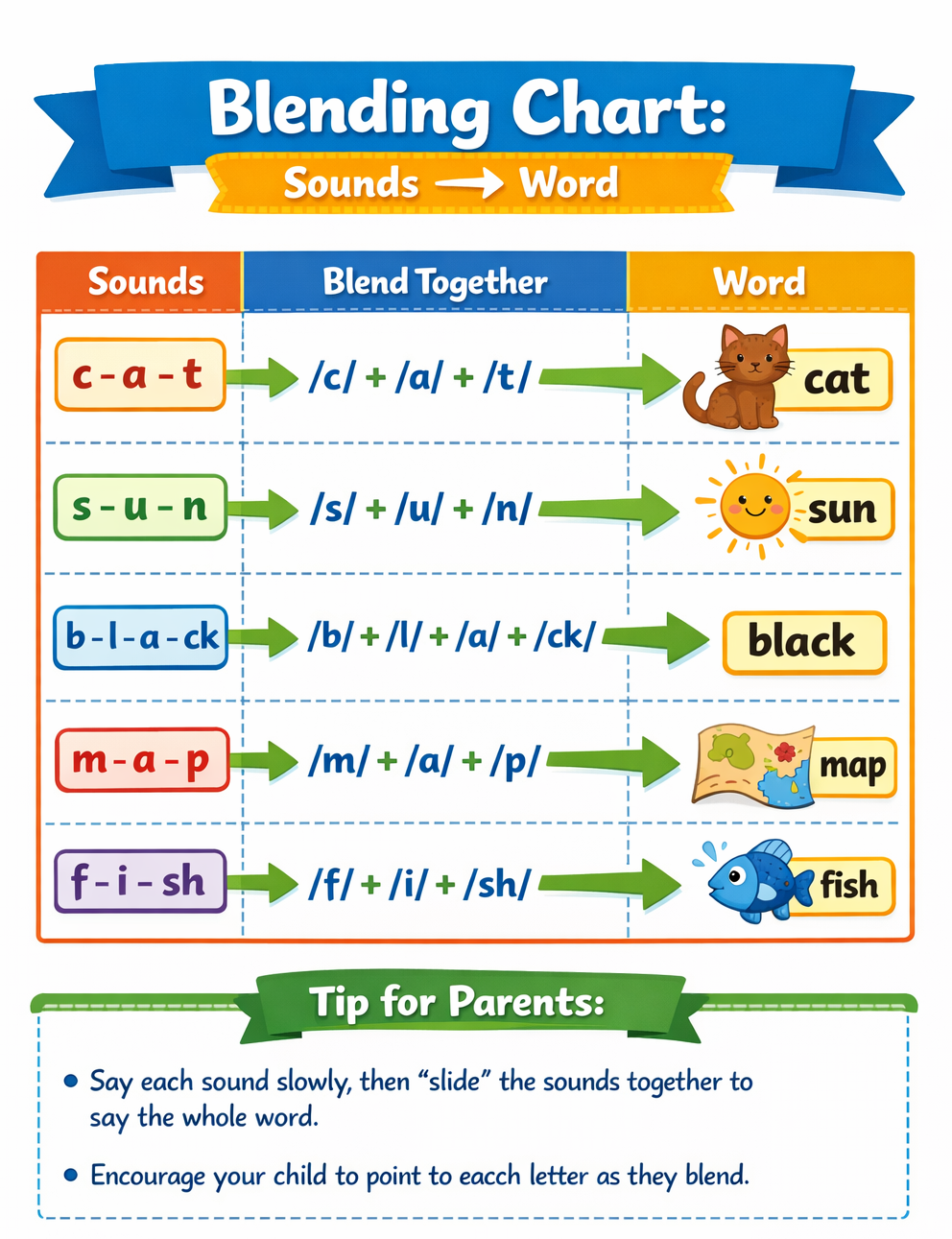
Blending is like a “sound puzzle.” Your child listens to each sound in a word and then combines them to say the word. For example:
- c – a – t → “cat”
- s – u – n → “sun”
- b – l – a – ck → “black”
At first, children may sound out each letter slowly. With practice, they start saying the whole word more quickly.
Why Blending Matters
Blending is a building block for reading fluency. Children who practice blending can:
- Read new words independently
- Recognise words faster
- Enjoy reading more because it becomes easier
Even a few minutes a day can make a big difference in your child’s reading development.
How to Help at Home
Here are some simple ways you can support blending at home:
- Sound it out together: Say each sound slowly and let your child put them together.
- Example: You say “d – o – g” and your child says “dog.”
- Use everyday words: Pick words your child sees every day—like “cup,” “hat,” or “bag.”
- Read aloud and point to words: As you read, stop at simple words and ask your child to sound them out.
- Make it fun: Turn blending into a game. For example, write sounds on cards and mix them up. Ask your child to blend them to find the word.
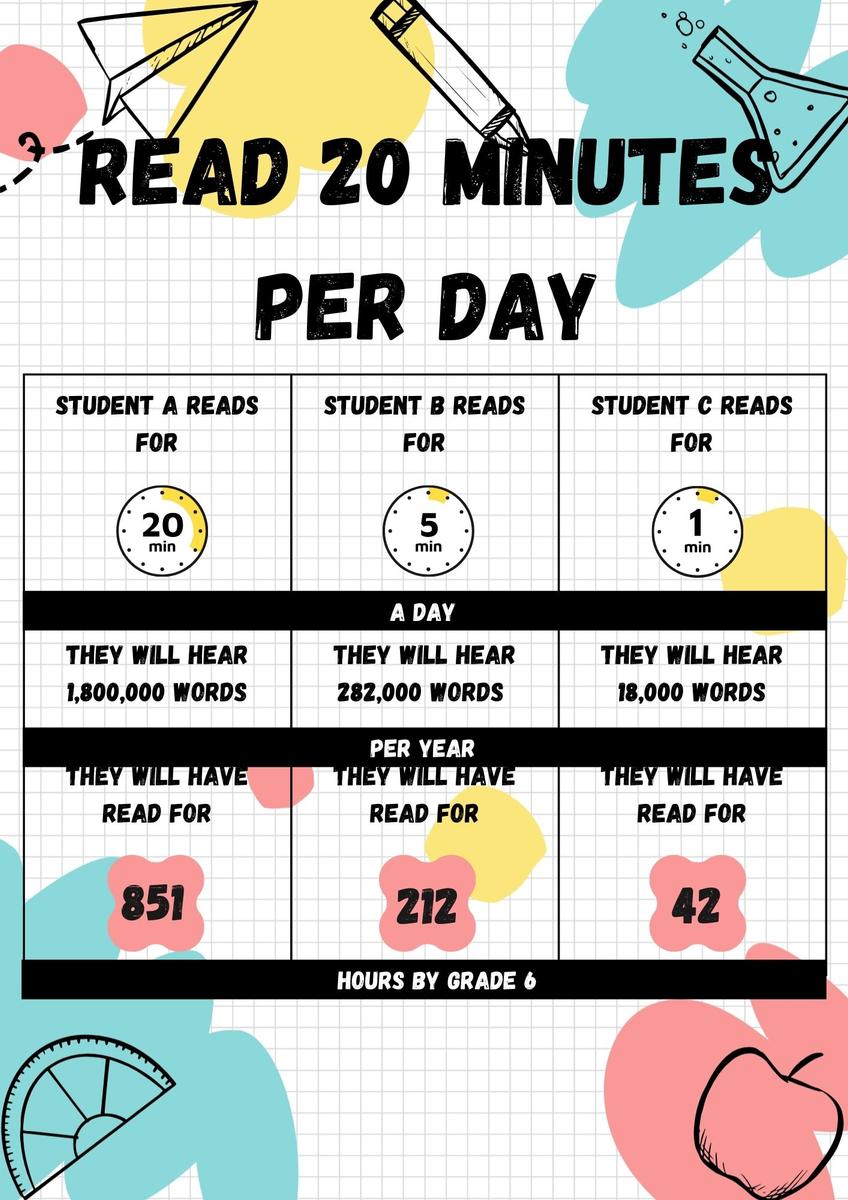
Reading for just 20 minutes each day can make a significant difference in a child’s learning and development. Regular reading exposes students to a vast number of words each year, helping to build a broad vocabulary and deepen their general knowledge. As they engage with different texts, students strengthen their comprehension and critical thinking skills while also developing their imagination and creativity. These skills support learning across all curriculum areas and contribute to improved academic outcomes, including stronger test results.
Daily reading also nurtures important personal and social capabilities. Through stories and characters, students learn to develop empathy and better understand the world around them. Reading aloud and discussing books enhances communication skills, while the quiet, focused nature of reading can also help reduce stress and promote wellbeing. Encouraging children to read for 20 minutes every day fosters confident, capable learners and instils a lifelong love of reading.
Supporting Your Child After Reading at Home
Listening to your child read each day is a wonderful way to support their learning. After reading, a few simple follow‑up activities can help build your child’s comprehension, confidence, and enjoyment of books. Here are some easy ideas you can try at home:
1. Chat About the Book
Ask your child a few questions about what they have read:
- What was your favourite part?
- Who was your favourite character? Why?
- What do you think will happen next?
2. Retell the Story
Encourage your child to retell the story in their own words. They can share the beginning, middle, and end. Younger children might like to draw pictures to help them retell.
3. Go on a Word Hunt
Choose 3–5 interesting or tricky words from the book:
- Talk about what the words mean
- Find them in the text
- Use them in new sentences
4. Make a Connection
Help your child link the story to their own life:
- Does it remind you of something you’ve done?
- Does it connect to another book or movie?
- Can you link the content to real world events, issues etc?
5. Draw a Scene
Ask your child to draw their favourite part or a character from the story. They can label their picture or write a sentence about it.
6. Act It Out
Role‑play a scene from the book or use toys to retell the story. This is a fun way to build understanding and expression.
7. Change the Ending
Get creative! Ask your child to come up with a different or silly ending to the story.
Reading at Home