
Curriculum, Learning & Engagement
Leading Teachers
Curriculum, Learning & Engagement
Leading Teachers
Term 1 in Social and Emotional Learning (SEL)
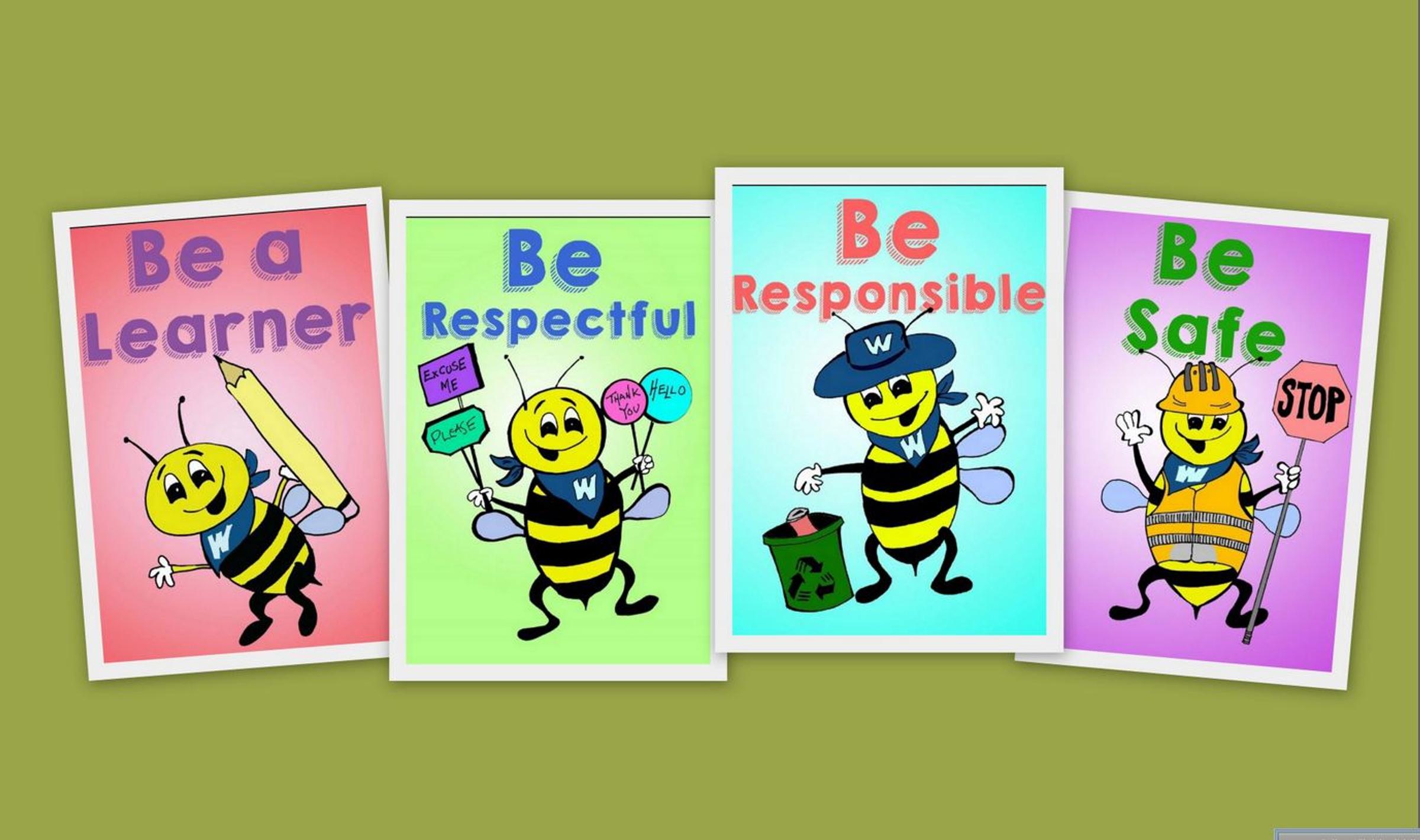
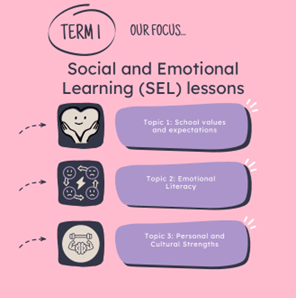
Students will begin by revisiting (or learning, for our Foundation students) our school values and behaviour expectations. They will take ownership for this by creating their own classroom matrix that reflects both the school's values and their unique classroom environment.
Our first official topic for SEL is emotional literacy, whereby students will explore a range of emotions they might have and how these might look and feel. They will explore a range of ways to help them when they are having ‘hard to have feelings’ or those that feel tough.
Our last topic for Term 1 is Personal and Cultural strengths, where students will, you guessed it, reflect on their own experiences and strengths and how they can use them to their advantage.
Term 2 in Social and Emotional Learning (SEL)
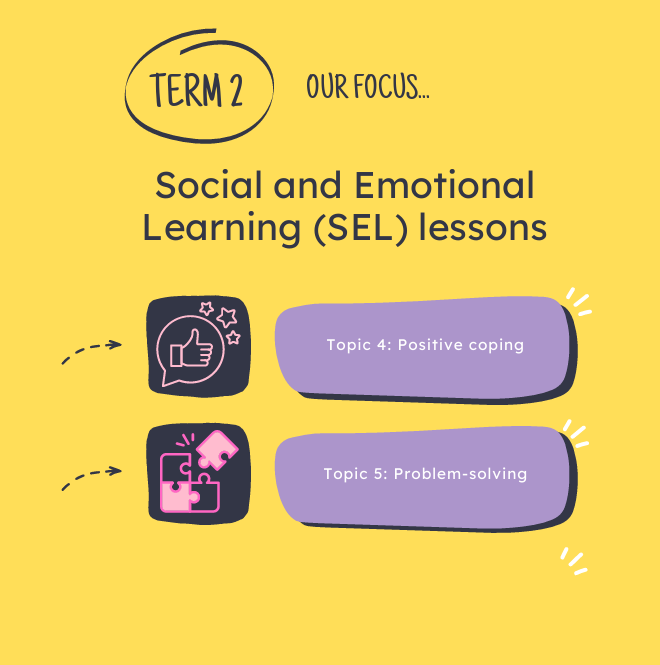
Term 2 will involve students exploring a range of positive coping strategies that will enable them to move forward in a productive way when faced with challenges. For positive coping, this might be things like mindfulness, meditation, reflection, active listening, discussion and sharing. Our unit on problem-solving will involve the students working out the size of a problem, strategies to use and when to seek help.
Term 3 in Social and Emotional Learning (SEL)
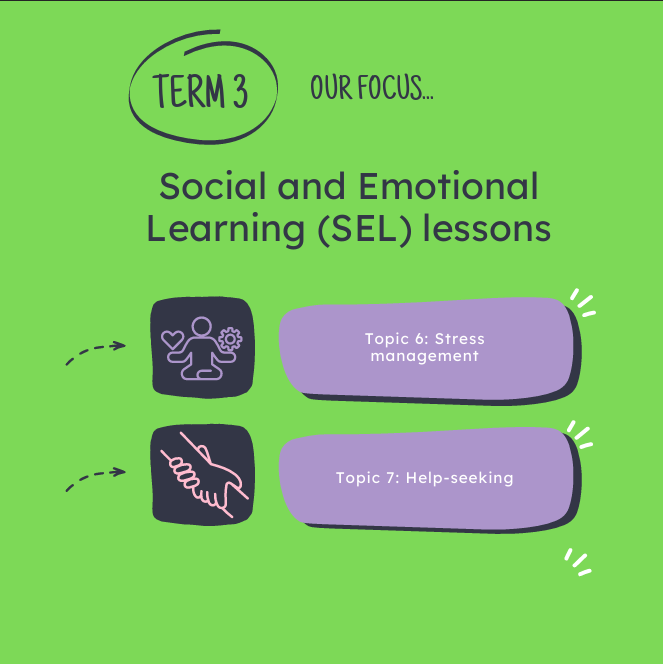
To start our second Semester of learning in SEL students will be looking at stress and stress management strategies. They will explore what stress looks like and feels like, when they might experience it and how to help themselves feel less so.
Following this, we will dive head-long into help-seeking. Students will explore when to ask for help, who to ask and practice asking for help. The key here is that they will practice using their voice in a safe space, so that when the need arises in ‘real-life’ they will already have had a bit of practice and it hopefully won't seem as hard.
Term 4 in Social and Emotional Learning (SEL)
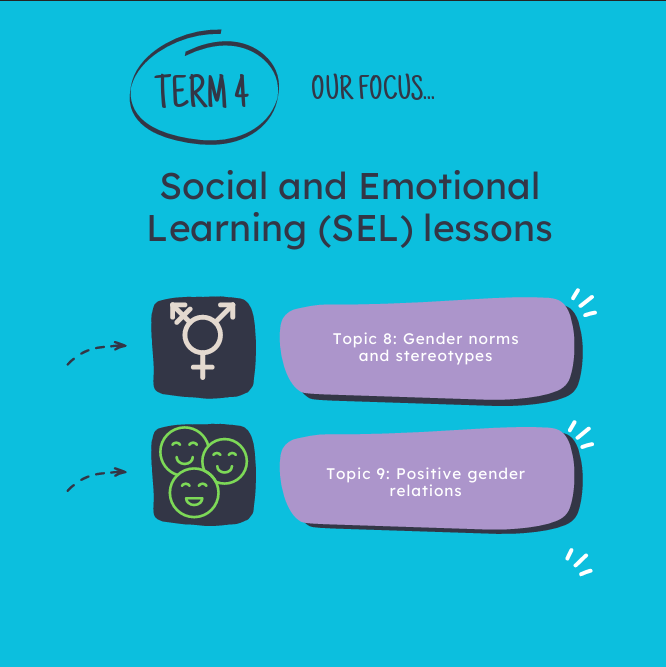
After 3 terms of learning in SEL, students are ready to pop on their ‘maturity hats’ and delve into the complex world of gender and positive relationships. Across the school, students will explore what gender looks like in 2026, challenge stereotypes and learn how to be a supportive to those around us. In our positive gender relations unit, we look at violence and how we can use our voices to say no to keep ourselves safe. Students look at safe and unsafe secrets, as well as practicing using the ‘no, go, tell’ strategy when things are making us feel scared or uncomfortable. Whilst these topics are hard, it is crucial that students engage with them in a safe space, so that if something happens to themselves or their friends, they have the tools to make it stop. It also provides a prompt for students to get help if they are struggling with something.
Libby Tobin