
Pathways and Transition
Jane Hedley, Head of Pathways and Transition, can be contacted on 08 9383 0416 or pathways@johnxxiii.edu.au You can make an appointment to see Ms Hedley using this booking link (which is also on the student SEQTA Splash page) .
In this week’s Pathways and Transition newsletter read about:
- Careers resources for families
- University news
- Scholarships
- Australian Defence Force careers
- Medicine news
- Training and VET news
- Growth and development opportunities
- People with a disability news
- Weekly spotlight: planning for a future in medicine
FOR FAMILIES
The Morrisby Profile
All John XXIII College students in Years 10, 11 and 12 have completed their Morrisby Profile (in Years 9 or 10) and have a valuable resource to delve into for career exploration and pathway planning. Students are encouraged to log back into their Morrisby Profiles regularly to view new career matches and information. Morrisby can also be a useful tool to facilitate career discussions between young people and their parents. Troubleshooting with logins can be directed to Ms Hedley, Head of Pathways and Transition.
MyFuture – your one stop shop for career information
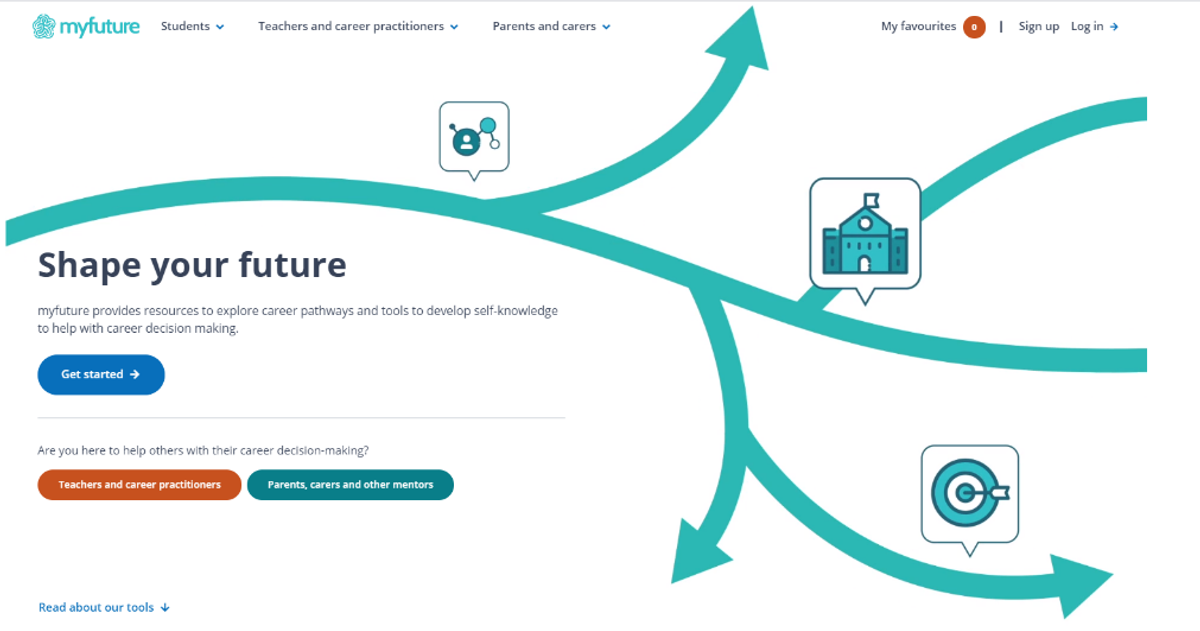
Do quizzes, watch career videos, check out courses, and see what happens when you get into the job. MyFuture takes you on a career exploration pathway.
- MyFuture is thorough and delivers loads of free information.
- It is supported by ALL Australian governments.
- The information is not biased by someone trying to sell you something.
- They have a strong privacy policy and DO NOT share your data.
You can register HERE.
Your Career – The home of career information

Search industries and occupations to find a career that’s right for you and what you can do to get there. Explore fee-free TAFE. Take an interactive quiz to see what literacy and numeracy skills you’ll use in your chosen industry.
Click HERE to explore.
UNIVERSITY NEWS
Go to Open Days 2025
All students who might be interested in attending university post-school are encouraged to attend university open days this term- go to at least two, so you get a point of comparison.
University Open Day Calendar 2025
30 March | ||
5 April | ||
6 April | ||
Check HERE for dates
| ||





Changed timing for early university offers
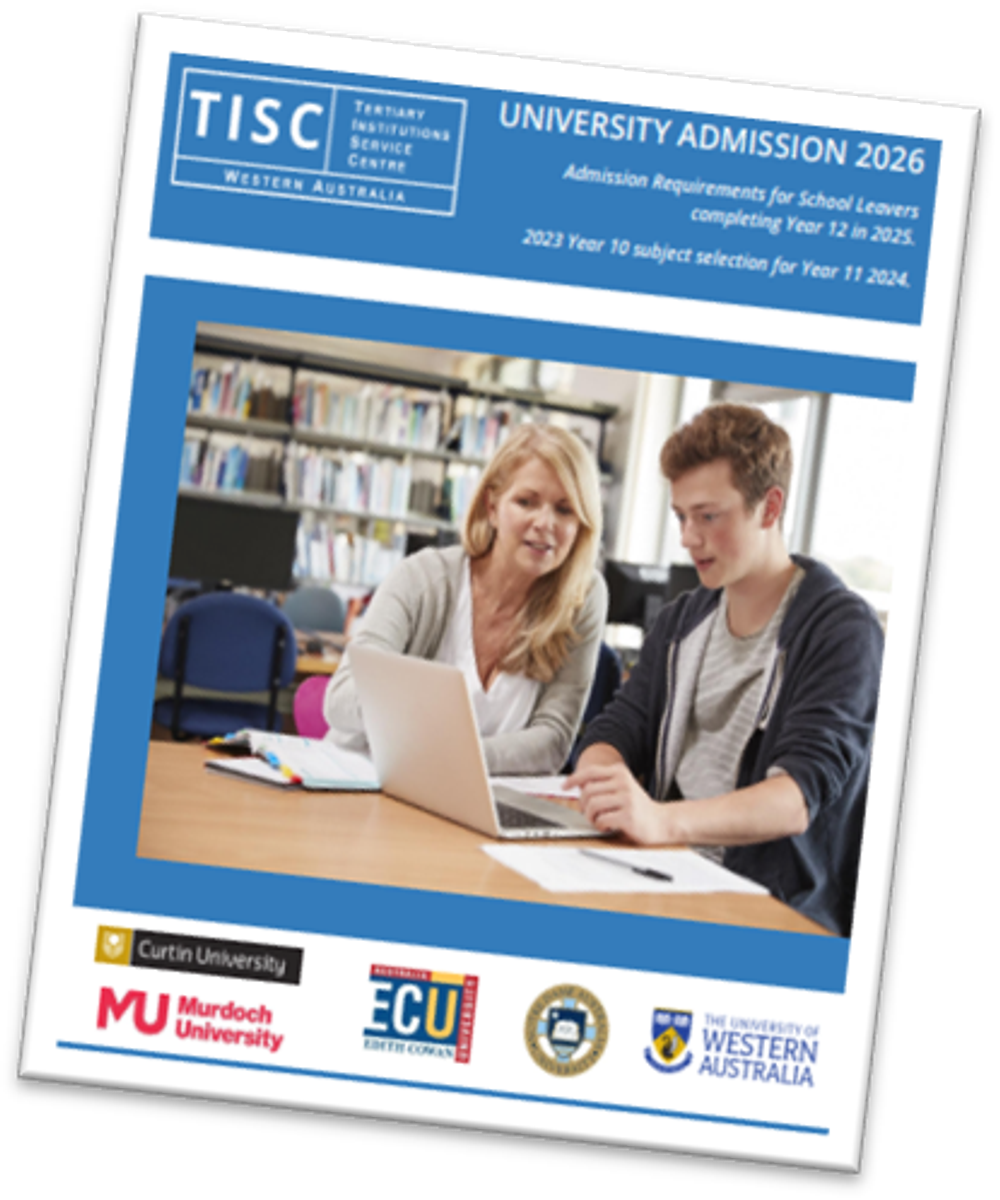
In 2025, Year 12 students can apply to Western Australian university courses via TISC from Tuesday, 3 June. Offers will not be made until later in the year, most likely from September onwards.
Check out the TISC University Admission Guide for 2026 HERE.
University Rankings

Read about how WA universities performed, according to student satisfaction data, in the Good Universities Guide and via QILT/CompareEd.
Pathways to University are Changing
Harmonisation of vocational and uni qualifications happening now

There is a government strategy called the Universities Accord. One of the goals of the Accord is to ensure that qualifications earned through VET are recognised by universities.
For example, a Diploma in Work Safety and Health may be recognised by universities that offer a degree in Occupational Health and Safety.
Identifying these opportunities under the Accord began in late 2024 and will gain momentum in 2025.
When thinking about your pathway to university, consider doing a VET qualification and then seeking credit for your VET qualification at university.
Advantages of this pathway:
- Many VET qualifications that are in high demand are free or heavily subsidised.
- Vocational education classes are usually more like school classes rather than big lectures with hundreds of students.
- When you get your VET qualification, you can work in your field, getting paid for your qualifications, while you study for your degree.
Case Study
A vocational education and training Diploma of Nursing takes 18 months and is currently fee-free in Western Australia. Graduates can work as Enrolled Nurses while they undertake their Bachelor of Nursing degrees. Notre Dame already offers one year of credit towards the Bachelor of Nursing at Notre Dame upon completion of the diploma.
SCHOLARSHIPS
Register for Scholarship Alerts
You can create scholarship alerts through the Good Universities Guide and Curtin. They send you emails so that you get information about scholarships as they come up:
UWA Scholarships
UWA Fogarty Foundation Scholarship
Open now – closes 20 May 2025
- Up to 10 scholarships for WA Year 12 students*
- Predicted ATAR of 98+ (or 95+ for Broadway UWA schools)
- $12,500 per year for undergraduate study + $10,000 per year for postgraduate study
*Be enrolled as a domestic student in Year 12 at a Western Australian secondary school at the time of application
More details here.
UWA Winthrop Scholarship
Open now – closes 20 June 2025
- Up to five scholarships available
- Domestic* Year 12 students with an ATAR of 95+
- Recognises academic excellence, leadership vision, and community involvement
- $10,000 per year for undergraduate and postgraduate study
*An Australian citizen or permanent resident or holder of a Permanent Humanitarian Visa or a New Zealand citizen.
More details here.
ANU Tuckwell Scholarship
Organisation: Australian National University
Location: Australia
Value: $26,000 AUD per year
Close Date: April 10, 2025
Hansen Scholarship online information sessions
Students, families and teachers are invited to learn more about the Hansen Scholarship Program. Worth over $108,000, this scholarship offers fully funded accommodation at Little Hall, a living allowance, and tailored mentorship for your undergraduate degree in Melbourne.
Applications are open now to Year 12 students looking to start their undergraduate degree in 2026.
Join the online information session on Wednesday, 19 February or Thursday, 13 March. Hear from the program director and current Hansen Scholars, who'll share their experiences and provide tips on submitting a competitive application by the 31 March 2025 deadline.
AUSTRALIAN DEFENCE FORCE CAREERS
Become a Cadet
Schools and community groups run cadet programs in the Navy, Army and Air Force.
Join your school cadet program or go here to find a community cadet program.
Defence Force Work Experience

Defence Work Experience Program provides young Australians interested in Defence as a future career, the opportunity to sample life in Defence and learn more about the Australian Defence Force (ADF) and the Australian Public Service (APS).
The Defence Work Experience Program is pleased to advise that Defence is offering opportunities for work experience activities. As placements are planned and confirmed, they will be advertised through the “Placements” tab. We encourage you to check the website regularly.
Immersive Days for School Students:
Click here to browse face-to-face and online events from ADF Careers. Events take place every week regularly and are repeated throughout the year. Here are some happening soon:
Part Time Army for 17+ year olds

If you would like to join the army on a part-time basis, consider joining the Army Reserves.
You can choose to work from 20 – 100 days per year, in a block or on weekends.
The hours are flexible, and training is provided.
Check out what being a reservist involves HERE.
Have Defence Pay For Your Degree
The ADF can pay students a salary and benefits while they study at university.
- Aviation.
- Engineering.
- Software engineering.
- Systems engineering.
- Information technology.
- Cybersecurity.
- Space studies.
- Data science.
Find details HERE.
Australian Defence Force Academy
Have your career paid for and earn a salary while you complete your degree at the University of NSW in Canberra.

You can study lots of courses in the ADF; the video on the webpage has a medical and a dental student talking about their pathways.
Check out the opportunities HERE. Then make an appointment to see an ADF recruitment officer.
MEDICINE NEWS
NIE Available programs for Year 9, 10, 11 and 12 students
- Future Doctors Program: Medicine (4-day attendance: Brisbane, Sydney, Melbourne).
- Academic Insights Program: Medicine, Psychology Engineering, Business Management, Creative Writing and Veterinary Studies (11-day residential summer holiday program in Sydney).
- Intensive Interview Preparation Workshop
- UCAT Preparation Workshop - 4 UCAT sections covered + full mock exam under timed conditions + introduction to medical interviews.
- UCAT Training Course - various levels of preparation and options available to meet individual student needs.
2025 Medicine - University Clinical Aptitude Test (UCAT) Dates
If you want to apply for medicine in 2026, you will need to undertake a UCAT assessment. Book (when bookings open) via the UCAT ANZ website.
These are the important dates for UCAT in 2025:
| Concession Scheme opensAccess Arrangements open | 3 February 2025 |
| BOOKING OPENS | 4 March 2025 |
| Concession application deadline | 9 May 2025 |
| Access Arrangements application deadline | 16 May 2025 |
| BOOKING DEADLINE | 16 May 2025 |
| Late booking deadline | 30 May 2025 |
| FINAL late booking deadline | 6 June 2025 |
| Cancellation deadline | 11 June 2025 |
| Testing begins | 1 July 2025 |
| Last testing date | 5 August 2025 |
| Results delivered to universities | Early September 2025 |
Year 12 Opportunities
Curtin Entry to Medicine for 2026

In Western Australia, only Curtin University takes students into medicine straight from school.
Candidates from rural and regional areas and Aboriginal and Torres Strait Islander students and those from disadvantaged backgrounds will be prioritised.
- Rural and remote applicants: TheMedicine Faculty at Curtin is keen to address the shortage of doctors in the bush in WA. Contact Associate Professor Keith McNaught - Rural Academic Lead, Curtin Medical School at Keith.Mcnaught@curtin.edu.au
Application Process
- Applicants need to have an ATAR of 95 or higher, including Chemistry with a final score of 50 or higher. (See P4 of the Admission Guide for details.)
- A competitive score on the Universal Clinical Aptitude Test. Bookings for the Test open 4 March. Testing begins 1 July.
- Applicants then take the Casper Test which was introduced by Curtin last year.
- Finalists then undertake Multiple Mini Interviews (See P8 of the Guide)
Please refer to the Domestic admissions guide for information.

School leavers with an outstanding ATAR may be granted an Assured Pathway into post-graduated medicine or dentistry degrees at UWA.
TRAINING AND VET NEWS
New Apprentice and Trainee Connect Providers
These are the WA organisations that connect apprentices and trainees with employers, and that support them through their training.
Apprentice Connect Australia Providers formerly the Australian Apprentice Support Network.
- BUSY At Work – The Apprenticeship Community (Women in male-dominated trades specialist) 13 28 79, Perth and Surrounds
- Apprenticeship Support Australia (ASA) (Clean Energy specialist) 1300 363 831 Perth and Surrounds, Outback Western Australia
- Apprenticeship Support Australia (ASA) (First Nations specialist) 1300 363 831 Perth and Surrounds, Outback Western Australia
- Apprenticeship Support Australia (ASA) (Women in male-dominated trades specialist) 1300 363 831, Perth and Surrounds, Outback Western Australia
- BUSY At Work – The Apprenticeship Community (Generalist) 13 28 79, Perth and Surrounds
- Apprenticeship Support Australia (ASA) (Generalist) 1300 363 831 Perth and Surrounds, Outback Western Australia
- MEGT (Australia) Ltd (Generalist) 13 6963 Perth and Surrounds, Outback Western Australia
Green Future Apprenticeships
Australia is gearing up to have skills required for green futures. Apprenticeship Support Australia has been identified to provide information and support to help West Australians to fill jobs of the future.
You can register for information HERE.

GROWTH AND DEVELOPMENT OPPORTUNITIES
Keeper Careers School Holiday Program
Organisation: Perth Zoo
Location: Perth Zoo
Date: April 16 to April 23, 2025
Have you always dreamed of working with the world's most wondersome animals?
Join our keepers for a day focusing on some of Perth Zoo’s most amazing animals. See parts of the Zoo that you've never seen before, learn about the best job in the world and be introduced to some of our incredible residents.
Suitable for students in Year 9 to Year 12.
UWA+ Starter Microcredentials for Year 11 Students
John XXIII College is a UWA+Starter Partner School. Check the UWA+Starter Website for more information about the benefits of studying a UWA micro-credential while you are in Year 11. You can also browse course availability in Term 2, 3 and 4. Expressions of interest for courses in Term 2 close on Friday, 14 March and must be indicated in THIS EOI FORM.
Overview of the application process:
| Fees | Students at partner schools pay a 50% discounted fee of $247.50 per Microcredential. |
|---|---|
| Registration Process |
|
| Enrolment Support |
|
| Completion |
|
Experience university with Oxford Royale Summer School
Oxford Royale is the most experienced and professional summer school in the UK and US, giving high school students from around the world the chance to experience student life at some of the world's top universities, including Oxford, Cambridge, and Imperial London in the UK, and Yale and Berkeley in the US.
What are the benefits of Oxford Royale Summer School?
Their 2-week courses will allow you to:
- Get a taste of a career area
- Immerse yourself via debates, seminars, guest speakers, and site visits
- Learn about a top UK institution and get a taste of living on campus
- Have fun with students from all over the world – social activities are included
- Learn about how to craft an application to get into the best universities in the world
- Attend inspirational venues and exclusive events
- Network with students from all over the world
What courses are on offer?
Oxford Royale offers courses in a variety of different areas, catered for students 13-15 years old and 16-18 years old, which include:
- Law and Politics
- Medicine
- Engineering and Technology
- Mathematics
- And many more - you can see their full list of courses here.
When do courses run?
Courses are typically run 2-3 times a year in July and August and are 2 weeks in length. This makes it possible for international students to travel and attend during the school holidays.
Where can I find out more?
Learn more about the Oxford Royal Summer School and browse upcoming courses on their website here.
Weekly WA Police Recruitment Sessions – Saturday mornings
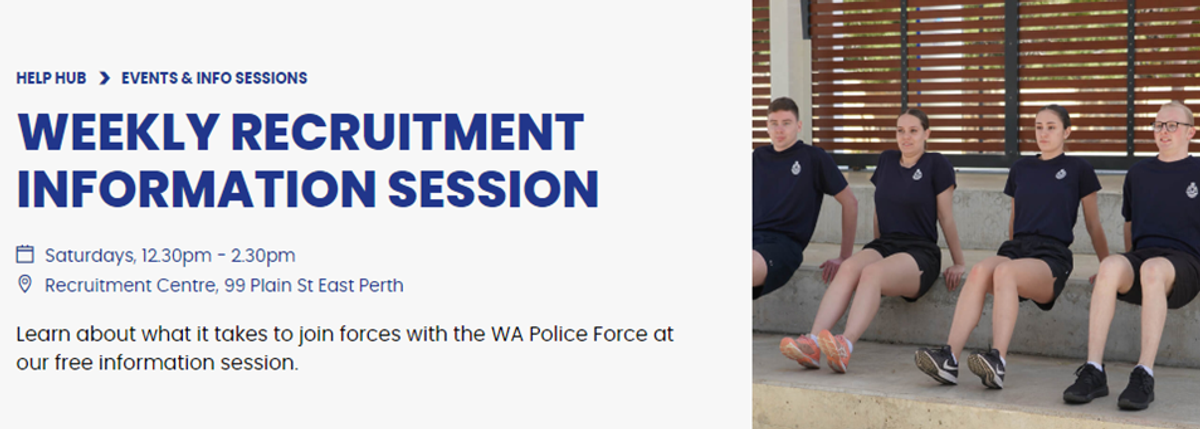
There is no age limit for applying for the WA Police Force. You must be 17 years and 6 months or older to apply for a Police Officer (Entry-level) and over 17 to apply for Cadet or Police Auxiliary Officer roles.
You can register for a session HERE.
UWA Years 10 & 11 Science, Health & Engineering Camp – July school holidays
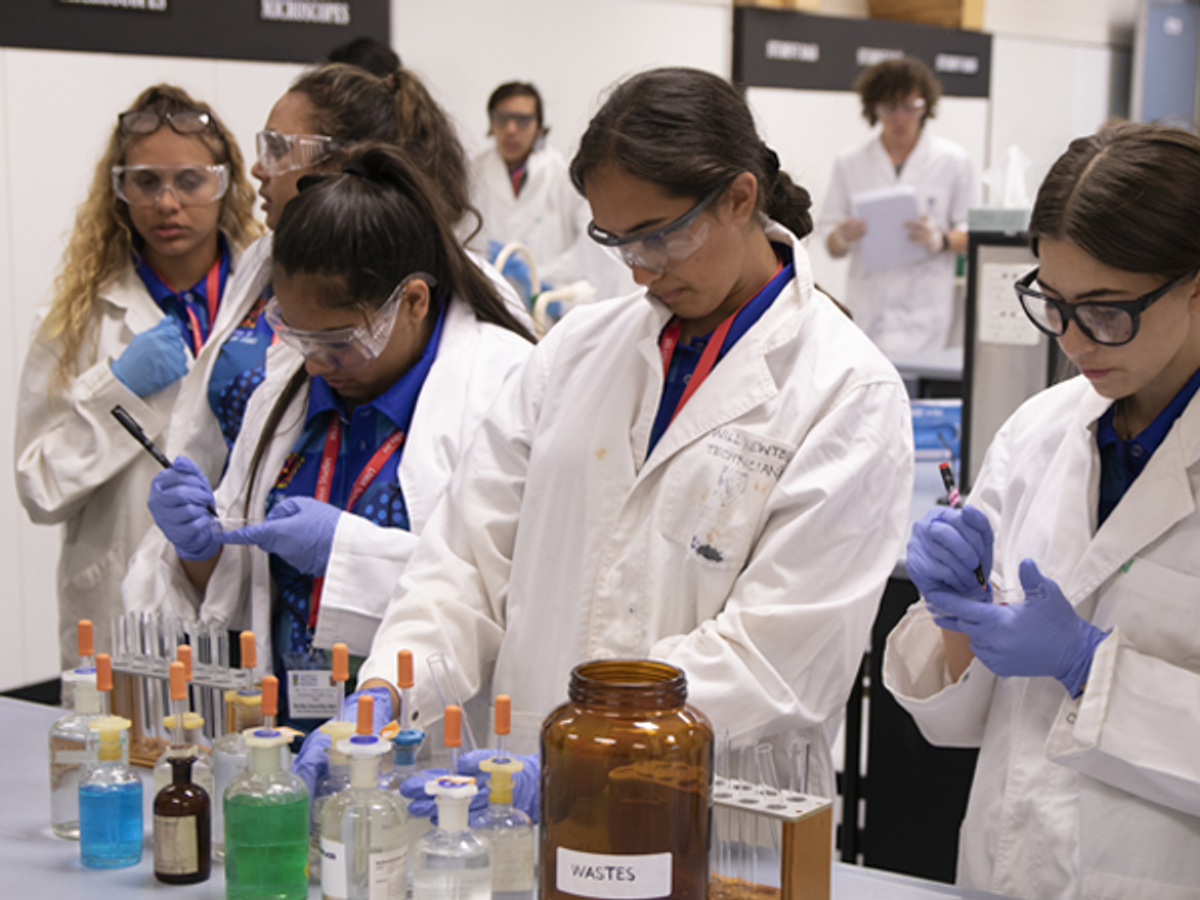
This year both Years 10 and 11 students who are interested in any area of science are invited to attend.
The residential camp is usually held annually in July for students in Years 10 and 11. It is held in Perth and includes visits to The University of Western Australia and other locations of scientific interest around the city.
Find details HERE.
PEOPLE WITH A DISABILITY OPPORTUNITIES
Applications Close 5 March: LeadAbility Course
The LeadAbility Course is a fully funded development opportunity to grow the potential of people with disability and those within the sector who have the potential to lead and generate change.
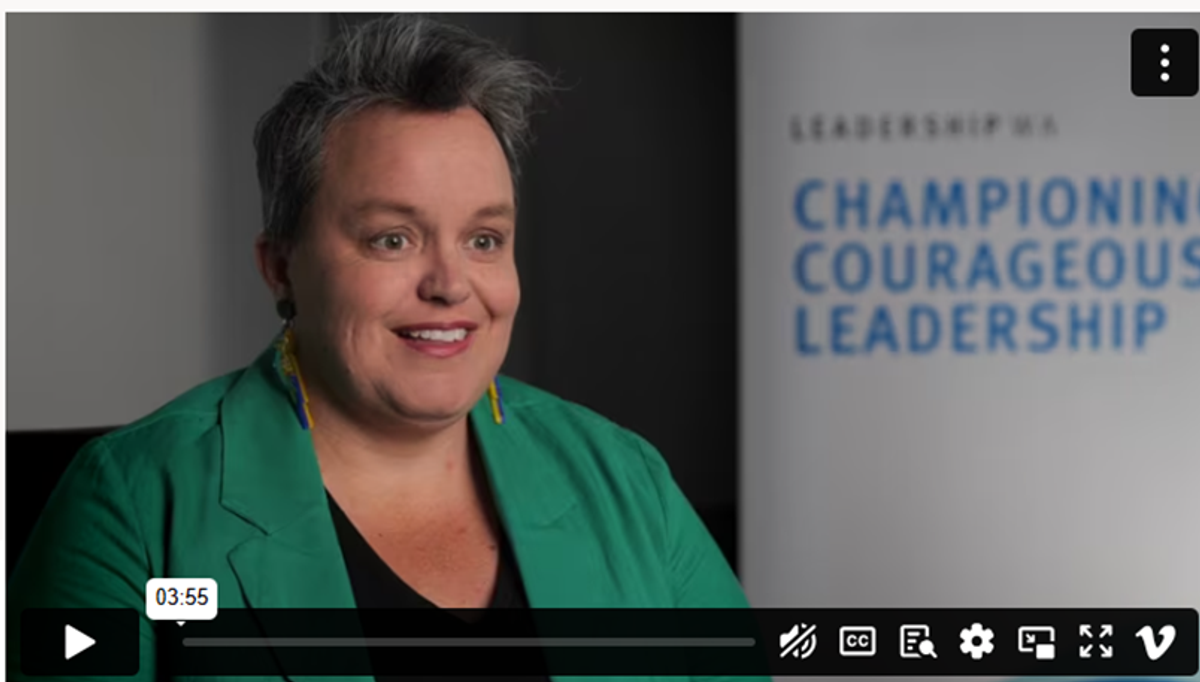
Taking place over 7 days across three months, LeadAbility is delivered in person in the CBD. It is designed to build your skills and enable you to become a more influential, confident and effective leader. The Course includes dynamic activities and Community Projects, focusing on understanding leadership, effective communication, teamwork, and community.
Find details HERE.
CanDo Training

Long-time WA career professional Marilyn Garbin has been focusing on supporting school leavers with a disability. You can contact her at. admin@candotraining.com.au or go to https://candotraining.com.au/.
Support for Australian Apprentices with Disability
The Australian Government provides support to Australian Apprentices with disability to help them to reach their full potential as skilled workers. A range of assistance is available including tutorial, mentoring and interpreting services as well as the Disabled Australian Apprentice Wage Support (DAAWS) incentive, which is paid to employers.
Find out more and how to claim HERE.
Employment Pathways for People with Intellectual Disability

Everyone Can Work is a website designed to help people with intellectual disability and their families understand the support available to get into open employment.
SPOTLIGHT
Planning for a future in medicine
Some of the most popular and visible careers throughout our childhood tend to be in health related fields. We've all visited the doctor and dentist at some point - some of us may have even spent time in hospital, either as a patient or a visitor. And lots of people have relatives and friends who work as health professionals. So it's understandable why for many students, one of the most appealing and impactful fields to explore is medicine. The prospect of improving people’s lives through healthcare is both inspiring and rewarding. However, the path to a career in medicine can be competitive and complex, requiring some careful planning and foresight.
Embracing the competitive nature of medicine
Universities and medical schools around the world have rigorous selection processes, with limited spots available each year. Admission requirements typically include excellent academic performance, especially in science subjects, a passion for helping others, and extracurricular activities that demonstrate your dedication, leadership, and ability to work in a team.
In many countries, such as the US, Canada, the UK, and Australia, prospective medical students are often required to take entrance exams like the MCAT (Medical College Admission Test) or UCAT (University Clinical Aptitude Test), in addition to maintaining a high GPA. Furthermore, medical schools often look for students with clinical experience, volunteer work, or research projects that show your commitment to the field.
Sounds tough, right? And it can be. But with some hard work and commitment to your dream, it's definitely achievable.
How to start preparing in high school
University might still seem like it's ages away, but having a solid foundation of skills and experiences early can be incredibly helpful. Here are some things you can do right now to start planning for a future in medicine:
Focus on your grades
The foundation of your application will be your academic performance. High school subjects such as biology, chemistry, physics, and mathematics are crucial for pursuing a career in medicine. Aim to push yourself in these areas and seek extra help if you need it, as they will not only help you meet prerequisites, but also prepare you for the rigorous coursework in medical school.
Get involved in extracurricular activities
Medical schools look for well-rounded students, not just those with book smarts. So in addition to your academics, it's essential to get involved in extracurricular activities that can set you apart from other applicants. Consider volunteering at hospitals, clinics, or local health organisations. These experiences will give you valuable insight into the medical field and help you develop the communication and interpersonal skills that are vital for a career in medicine.
Prepare for the additional testing and interviews
Many universities require standardised entrance exams or testing for medical school applicants, so start familiarising yourself with these exams early. Take practice tests, review study materials, and consider enrolling in prep courses to help you build the skills necessary to succeed. You could also start practicing for the interviews that are often part of the application process. By planning ahead, you can reduce stress and give yourself ample time to improve in areas where you may be weaker.
Build strong relationships with mentors
Throughout your high school years, it’s important to build relationships with your careers advisors, counsellors, teachers, and (if possible) professionals in the medical field who can guide you in your journey. Their advice and insight could be invaluable in helping you through the admissions process, and may also be useful when it comes time to request letters of recommendation.
Stay informed
The medical field is always evolving, so it's important to stay informed about new developments, breakthroughs, and trends. Read books, journals, and news articles related to medicine, and try to attend events like health fairs or medical conferences to deepen your knowledge and network with professionals.
Have a back-up plan
Because of the competitive nature of the field, there's always a possibility that you may not immediately gain acceptance into medical school. That's why it’s important to have a back-up plan in place if you miss out on your first application, to ensure you stay motivated and have alternative pathways to a fulfilling career. Here are some options to consider:
Alternative entry routes to medicine
Some medical schools offer alternative entry programs for students who may not meet all of the standard requirements but show potential in other ways. These can include pathways like foundation years or preparatory courses. Research these options to see if they might give you a second chance to fulfil your dream of becoming a doctor or dentist.
Other careers in healthcare
Medicine isn't the only career in the healthcare field to consider. There are a multitude of other professions within the healthcare system that require similar skills and passion for helping others. Consider becoming a pharmacist, nurse, aged care worker, public health specialist, or medical researcher. All of these roles are crucial in healthcare, and some may even have different or more flexible entry routes. Then after a few years of experience, you could always apply for medicine with more experience and qualifications under your belt.
Graduate programs
If you don’t gain admission into medical school right away, consider pursuing a related undergraduate degree (such as biomedical science or health science) and applying to medical school as a graduate. Many universities have graduate-entry programs that are only open to students who already have a bachelor’s degree. The good news is there's no age limit on these degrees, so there's always going to be an opportunity if you change your mind later in life.
Explore other career paths
After careful consideration and research, you might realise that healthcare may not be the right fit for you, so it's a good idea to have a secondary career path in mind. You could explore areas like psychology, social work, sport and fitness, or medical technology. These careers also offer opportunities to contribute meaningfully to your community.
Balancing your ambition
Pursuing a career in medicine is a long, demanding journey that requires resilience, dedication, and a genuine passion for the field. While applications for medicine are competitive, it's also a field that rewards those who are willing to put in the planning and determination needed to succeed. Yes, the hard work begins now, but remember not to let it consume you and keep some balance in your life to enjoy your other interests and hobbies, and nurture your relationships and mental health.
Good luck on your journey to becoming a healthcare professional, and keep an eye out for the updated Entry to Medicine Guide for 2025 with more information and details to help you prepare.

Jane Hedley
Head of Pathways and Transition
Direct: (08) 9383 0416
Email: Jane.Hedley@johnxxiii.edu.au